
In science and history, consilience [kun-sil-ee-ehns] (also convergence of evidence or concordance of evidence) refers to the principle that evidence from independent, unrelated sources can ‘converge’ to strong conclusions. That is, when multiple sources of evidence are in agreement, the conclusion can be very strong even when none of the individual sources of evidence are very strong on their own. Most established scientific knowledge is supported by a convergence of evidence: if not, the evidence is comparatively weak, and there will not likely be a strong scientific consensus.
The principle is based on the unity of knowledge (a thesis in philosophy of science that says that all the sciences form a unified whole); measuring the same result by several different methods should lead to the same answer. For example, it should not matter whether one measures the distance between the Great Pyramids of Giza by laser rangefinding, by satellite imaging, or with a meter stick – in all three cases, the answer should be approximately the same. For the same reason, different dating methods in geochronology should concur, a result in chemistry should not contradict a result in geology, etc.
read more »
Consilience
Consilience
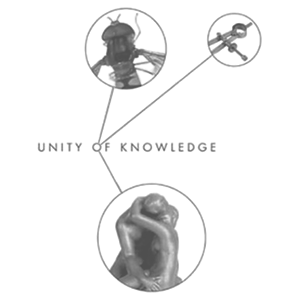
‘Consilience [kun-sil-ee-ehns]: The Unity of Knowledge’ is a 1998 book by biologist E. O. Wilson on the unification of scientific fields of inquiry and the potential unification of hard and soft sciences (humanities). Wilson uses the term to describe the synthesis of knowledge from different specialized fields of human endeavor.
He defines it as: ‘Literally a ‘jumping together’ of knowledge by the linking of facts and fact-based theory across disciplines to create a common groundwork of explanation.’ Examples include the unification of Darwin’s theory of evolution with genetics; the unification of forces in modern physics; Einstein’s work unifying Brownian motion with atomic theory; Rene Descartes’ unification of geometry and algebra; and Newton’s universal gravitation, which unified the laws of falling bodies with the laws of planetary motion.
Bruce Conner

Bruce Conner (1933 – 2008) was an American artist renowned for his work in assemblage (artistic compositions made by putting together found objects) and film, among other disciplines. He attended Wichita University (now Wichita State), and received his B.F.A in Art at Nebraska University in 1956.
He then attended the University of Colorado on scholarship; also there was Jean Sandstedt, whom he had met at Nebraska and who would become his wife. In 1957 the two married and immediately flew to San Francisco. There, Conner quickly assimilated into the city’s famous Beat community and founded the Rat Bastard Protective Association, an underground, arts organization. His first solo shows in San Francisco, in 1958 and 1959, featured paintings, drawings, prints, collages, assemblages, and sculpture.
read more »
Counter-economics

Counter-economics is a term originally used by libertarian activists Samuel Edward Konkin III and J. Neil Schulman, defined as ‘the study and/or practice of all peaceful human action which is forbidden by the State.’ The term is short for ‘counter-establishment economics.’
Counter-economics was integrated by Schulman into Konkin’s doctrine of agorism (a philosophy that advocates the goal of the bringing about of a society in which all relations between people are voluntary exchanges). The first book to portray counter-economics as a strategy for achieving a libertarian society was Schulman’s novel ‘Alongside Night’ (1979).
read more »
Crypto-anarchism
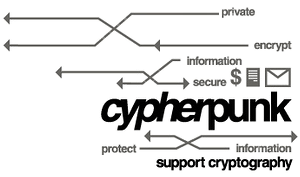

Crypto-anarchism refers to the use of cryptographic software to evade prosecution and harassment while sending and receiving information over computer networks, thereby protecting privacy and political freedom. In a sense, the encrypted anonymous networks (the ‘cipherspace’) can be regarded as an independent lawless territory or as an autonomous zone. However, participants may in theory voluntarily create new laws using smart contracts (computer protocols that facilitate, verify, or enforce the negotiation or performance of a contract, or that obviate the need for a contractual clause) or, if the user is pseudonymous, depend on online reputation.
The ‘crypto’ in crypto-anarchism should not be confused with the use of the prefix ‘crypto-‘ to indicate an ideology or system with an intentionally concealed or obfuscated ‘true nature.’ For example, some would use the term ‘crypto-fascist’ to describe an individual or organization that holds fascist views and subscribes to fascist doctrine but conceals their agenda so long as these doctrines remain socially unacceptable. However, Timothy C. May’s ‘Cyphernomicon’ (one of the philosophy’s founding documents, posted in 1994) indicates that the term ‘crypto-anarchist’ was partially intended as a pun on this usage, even though he did not intend to conceal his beliefs or agenda.
read more »
Common Sense

Common sense is ‘sound and prudent judgment based on a simple perception of the situation or facts.’ Thus, ‘common sense’ (in this view) equates to the knowledge and experience which most people already have, or which the person using the term believes that they do or should have. It is ‘the basic level of practical knowledge and judgment that we all need to help us live in a reasonable and safe way.’
However, identifying particular items of knowledge as ‘common sense’ is difficult. Philosophers may choose to avoid using the phrase when using precise language. Common sense remains a perennial topic in epistemology (the study of knowledge) and many philosophers make wide use of the concept or at least refer to it. Some related concepts include intuitions, pre-theoretic belief, ordinary language, the frame problem, foundational beliefs, good sense, endoxa, axioms, wisdom, folk wisdom, folklore, and public opinion.
read more »
Helter Skelter

The murders perpetrated by members of Charles Manson’s ‘Family’ were inspired in part by Manson’s prediction of Helter Skelter, an apocalyptic war he believed would arise from tension over racial relations between blacks and whites. This ‘chimerical vision’—as it was termed by the court that heard Manson’s appeal from his conviction for the Tate/LaBianca killings—involved reference to music of The Beatles (particularly songs from ‘The White Album’ of 1968) and to the New Testament’s Book of Revelation.
In its final form, which was reached by 1969, the scenario had Manson as not only the war’s ultimate beneficiary but its musical cause. He and the Family would create an album with songs whose messages concerning the war would be as subtle as those he had heard in songs of The Beatles. More than merely foretell the conflict, this would trigger it; for, in instructing ‘the young love,’ America’s white youth, to join the Family, it would draw the young, white female hippies out of San Francisco’s Haight-Ashbury.
read more »
Resistentialism
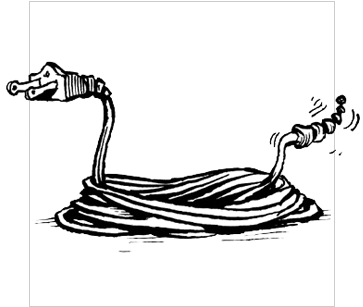
Resistentialism [ri-zis-ten-shul-iz-um] is a jocular theory to describe ‘seemingly spiteful behavior manifested by inanimate objects.’ For example, objects that cause problems (like lost keys or a fleeing bouncy ball) exhibit a high degree of malice toward humans and lend support to resistentialist beliefs. In other words, a war is being fought between humans and inanimate objects, and all the little annoyances objects give people throughout the day are battles between the two.
The term was coined by humorist Paul Jennings in a piece titled ‘Report on Resistentialism,’ published in ‘The Spectator’ in 1948 and reprinted in ‘The New York Times.’ The movement is a spoof of existentialism in general, and Jean-Paul Sartre in particular (Jennings gives the inventor of Resistentialism as Pierre-Marie Ventre). The slogan of Resistentialism is ‘Les choses sont contre nous’ — ‘Things are against us.’
read more »
Intentional Stance

The intentional stance is a term coined by philosopher Daniel Dennett for the level of abstraction in which we view the behavior of a thing in terms of mental properties. It is part of a theory of mental content proposed by Dennett, which provides the underpinnings of his later works on free will, consciousness, folk psychology, and evolution.
‘Here is how it works: first you decide to treat the object whose behavior is to be predicted as a rational agent; then you figure out what beliefs that agent ought to have, given its place in the world and its purpose. Then you figure out what desires it ought to have, on the same considerations, and finally you predict that this rational agent will act to further its goals in the light of its beliefs. A little practical reasoning from the chosen set of beliefs and desires will in most instances yield a decision about what the agent ought to do; that is what you predict the agent will do.’
read more »
Sid Meier’s Alpha Centauri
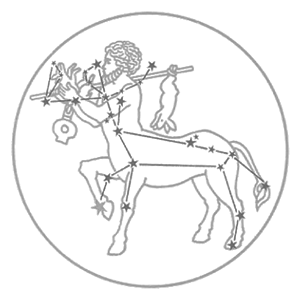
Sid Meier’s Alpha Centauri (SMAC) is a science fiction 4X (explore, expand, exploit, exterminate), turn-based strategy video game sequel to the ‘Civilization’ series. Sid Meier, designer of ‘Civilization,’ and Brian Reynolds, designer of ‘Civilization II,’ developed ‘Alpha Centauri’ after they left MicroProse to join the newly created developer Firaxis Games. Electronic Arts released both SMAC and its expansion, ‘Sid Meier’s Alien Crossfire’ (SMAX), in 1999. In the following year, both titles were ported to Mac and Linux.
Set in the 22nd century, the game begins as seven competing ideological factions land on the planet Chiron (‘Planet’) in the Alpha Centauri star system. As the game progresses, Planet’s growing sentience becomes a formidable obstacle to the human colonists. Alpha Centauri features improvements on Civ II’s game engine, including simultaneous multiplay, social engineering, climate, customizable units, alien native life, additional diplomatic and spy options, additional ways to win, and greater mod-ability. ‘Alien Crossfire’ introduces five new human and two non-human factions as well as additional technologies, facilities, secret projects, native life, unit abilities, and a victory condition.
read more »
Slow Movement
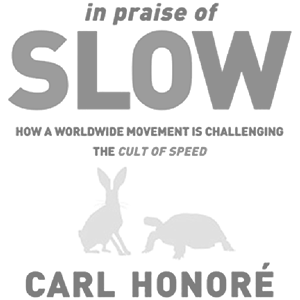
The Slow Movement advocates a cultural shift toward slowing down life’s pace. It began with Carlo Petrini’s protest against the opening of a McDonald’s restaurant in Piazza di Spagna, Rome in 1986 that sparked the creation of the Slow Food organization. Over time, this developed into a subculture in other areas, such as Cittaslow (Slow Cities), Slow living, Slow Travel, and Slow Design. Geir Berthelsen and his creation of The World Institute of Slowness presented a vision in 1999 for an entire ‘Slow Planet.’
Norwegian philosopher Guttorm Fløistad summarizes the philosophy, stating: ‘The only thing for certain is that everything changes. The rate of change increases. If you want to hang on you better speed up. That is the message of today. It could however be useful to remind everyone that our basic needs never change. The need to be seen and appreciated! It is the need to belong. The need for nearness and care, and for a little love! This is given only through slowness in human relations. In order to master changes, we have to recover slowness, reflection and togetherness. There we will find real renewal.’
read more »
Slow Parenting

Slow parenting is a parenting style in which few activities are organized for children. Instead, they are allowed to explore the world at their own pace. It is a response to concerted cultivation and the widespread trend for parents to schedule activities and classes after school; to solve problems on behalf of the children, and to buy services from commercial suppliers rather than letting nature take its course.
The philosophy, part of the ‘Slow Movement,’ makes recommendations in play, toys, access to nature, watching television, and scheduled activities. The opposing view is that such children are disadvantaged because their parents do not provide as many learning opportunities.
read more »


 The Daily Omnivore