May 22, 2012

Postmodernism is an era and a broad movement that developed in the mid to late 20th century that rejects the idea of objective truth and universal social progress. Starting with the 18th century Enlightenment, and for more than a century there was widespread belief that science and knowledge would improve the world; social progress would be inevitable. Modernism in particular held these beliefs. Postmodernism challenges that notion.
Although the term was first used around 1870, its modern appearance was to express criticism of modern architecture in 1949, leading to the postmodern architecture movement (a return to surface ornament, historical reference in decorative forms, and less boxy shapes). Postmodernism is not a method, but rather a way of approaching traditional ideas and practices in non-traditional ways that deviate from pre-established modes. Postmodernism gained significant popularity in the 1950s and dominated literature and art by the 1960s.
read more »
Posted in Art, Language, Philosophy |
Leave a Comment »
May 21, 2012
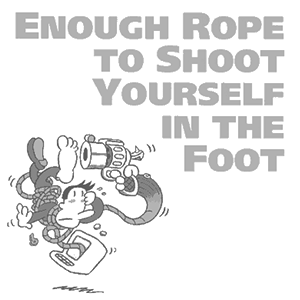
Akrasia [uh-kray-juh] (ancient Greek: ‘lacking command [over oneself]’) is the state of acting against one’s better judgement. The adjective form is ‘akratic.’ The problem goes back at least as far as Plato. Socrates asks precisely how this is possible—if one judges action A to be the best course of action, why would one do anything other than A? In the dialogue ‘Protagoras,’ Socrates attests that akrasia is an illogical moral concept, claiming ‘No one goes willingly toward the bad.’
If a person examines a situation and decides to act in the way he determines to be best, he will actively pursue this action, as the best course is also the good course, i.e. man’s natural goal. An all-things-considered assessment of the situation will bring full knowledge of a decision’s outcome and worth linked to well-developed principles of the good. A person, according to Socrates, never chooses to act poorly or against his better judgment; actions that go against what is best are only a product of being ignorant of facts or knowledge of what is best or good.
read more »
Posted in Language, Philosophy |
2 Comments »
May 21, 2012

In philosophy, anamnesis [an-am-nee-sis] is a concept in Plato’s epistemological and psychological theory that he develops in his dialogues ‘Meno’ and ‘Phaedo,’ and alludes to in his ‘Phaedrus.’
In ‘Meno,’ Plato’s character (and old teacher) Socrates is challenged by Meno with what has become known as the sophistic paradox, or the paradox of knowledge: ‘And how are you going to search for [the nature of virtue] when you don’t know at all what it is, Socrates? Which of all the things you don’t know will you set up as target for your search? And even if you actually come across it, how will you know that it is that thing which you don’t know?’
read more »
Posted in Death, Education, Philosophy |
Leave a Comment »
May 16, 2012
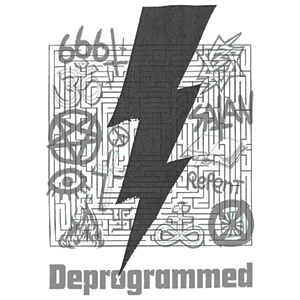
The anti-cult movement (ACM) refers to groups and individuals who oppose cults and new religious movements (NRM). Sociologists David G. Bromley and Anson Shupe initially defined the ACM in 1981 as a collection of groups embracing brainwashing-theory, but later observed a significant shift in ideology towards a ‘medicalization’ of the memberships of new religious movements.
This countermovement has reportedly recruited from family members of ‘cultists’; former cult members, (or apostates); church groups; and associations of health professionals. A significant minority opinion suggests that analysis should treat the secular anti-cult movement separately from the religiously motivated (mainly Christian) groups. The anti-cult movement might be divided into four classes: secular counter-cult groups; Christian evangelical counter-cult groups; groups formed to counter a specific cult; and organizations that offer some form of exit counseling.
read more »
Posted in Philosophy, Politics |
Leave a Comment »
May 15, 2012

One of B.F. Skinner’s experiments examined the formation of superstition in one of his favorite experimental animals, the pigeon. Skinner placed a series of hungry pigeons in a cage attached to an automatic mechanism that delivered food to the pigeon ‘at regular intervals with no reference whatsoever to the bird’s behavior.’ He discovered that the pigeons associated the delivery of the food with whatever chance actions they had been performing as it was delivered, and that they subsequently continued to perform these same actions.
‘One bird was conditioned to turn counter-clockwise about the cage, making two or three turns between reinforcements. Another repeatedly thrust its head into one of the upper corners of the cage. A third developed a ‘tossing’ response, as if placing its head beneath an invisible bar and lifting it repeatedly. Two birds developed a pendulum motion of the head and body, in which the head was extended forward and swung from right to left with a sharp movement followed by a somewhat slower return.’
read more »
Posted in Philosophy, Science |
Leave a Comment »
May 15, 2012

Psychomagic is a therapeutic practice used by Chilean-French filmmaker and spiritual guru Alejandro Jodorowsky. The technique is alleged to be useful in psychotherapy. It combines art, Eastern philosophies (particularly Zen Buddhism), mysticism and modern psychotherapy to allegedly heal patients with emotional problems.
The principle relies on the belief that the unconscious mind takes a symbolic act as a fact. So a symbolic act could accordingly help solve some types of non rational conflicts. These acts are prescribed by the therapist after having studied the patient’s personality and family tree (Psychogenealogy).
Posted in Health, Philosophy |
Leave a Comment »
May 15, 2012
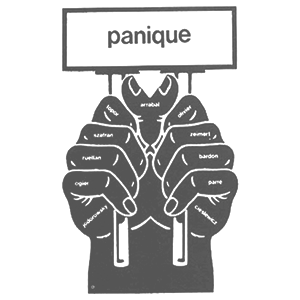
Panic Movement (‘Mouvement panique’) was a collective formed by Fernando Arrabal, Alejandro Jodorowsky, and Roland Topor in Paris in 1962. Inspired by and named after Pan (Greek god of the wild), and influenced by Luis Buñuel and Antonin Artaud’s ‘Theatre of Cruelty,’ the group concentrated on chaotic and surreal performance art, as a response to surrealism becoming petite bourgeoisie.
The movement’s violent theatrical events were designed to be shocking, and to release destructive energies in search of peace and beauty. One four-hour performance known as ‘Sacramental Melodrama’ was staged in 1965 at the Paris Festival of Free Expression. The ‘happening’ starred Jodorowsky dressed in motorcyclist leather and featured him slitting the throats of two geese, taping two snakes to his chest and having himself stripped and whipped. Other scenes included ‘naked women covered in honey, a crucified chicken, the staged murder of a rabbi, a giant vagina, the throwing of live turtles into the audience, and canned apricots.’
Posted in Art, Philosophy |
Leave a Comment »
May 15, 2012
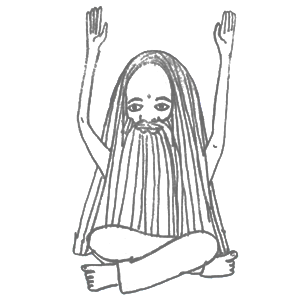
Alejandro [ali-hahn-dro] Jodorowsky [ho-dor-row-ski] (b. 1929) is a Chilean-French filmmaker and spiritual guru. Best known for his avant-garde films, he has been ‘venerated by cult cinema enthusiasts’ for his work which ‘is filled with violently surreal images and a hybrid blend of mysticism and religious provocation.’
Dropping out of college, he became involved in theater and in particular mime, working as a clown before founding his own theater troupe in 1947. After moving to Paris in the early 1950s he turned to cinema, directing the short film ‘Les têtes interverties’ in 1957. From 1960 he divided his time between Paris and Mexico City, in the former becoming a founding member of the anarchistic avant-garde Panic Movement of performance artists.
read more »
Posted in Art, Philosophy |
Leave a Comment »
May 14, 2012
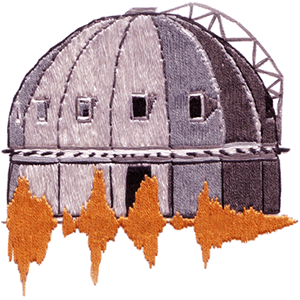
The Integratron is a dome-shaped structure built by American ufologist George Van Tassel in Landers, California. Van Tassel was a former aircraft mechanic and flight inspector who moved to the Mojave Desert to operate an airport and inn. During his time there, he supposedly began meditating under Giant Rock, which the Native Americans of the area held to be sacred. In 1953, he claimed that he had been contacted both telepathically and later in person by Venusians, who gave him a technique to rejuvenate human cell tissues. Acting on these instructions, he began constructing the Integratron in 1954. Construction costs were paid for by an annual UFO convention, the ‘Giant Rock Spacecraft Conventions,’ which continued for nearly 25 years (Howard Hughes was a contributor). Van Tassel was clearly inspired by earlier 1950s contactee George Adamski.
Following Van Tassel’s death in 1978, the building was owned by a series of individuals (and was left in various states of disrepair) before being purchased by sisters Joanne, Nancy, and Patty Karl in the early 2000s. The sisters now promote The Integratron as an ‘acoustically perfect structure’ and say that it is currently being ‘explored in the areas of Science, Architecture, Neuroacoustics, Music, Energy healing, Alternative health and Spirituality.’ The building is currently open to the public at select times, with the sisters regularly performing ‘sound baths’ (meditation-like sessions accompanied by tones from quartz bowls) at certain points during the week.
Posted in Health, Philosophy |
Leave a Comment »
May 11, 2012
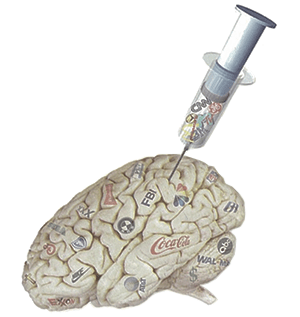
Memetics [meh-met-iks] is a controversial theory of mental content (e.g. thoughts, concepts, memories, emotions, percepts, intentions) based on an analogy with Darwinian evolution, originating from the popularization of Richard Dawkins’ 1976 book ‘The Selfish Gene.’ It purports to be an approach to evolutionary models of cultural information transfer. The meme, analogous to a gene, was conceived as a ‘unit of culture’ (an idea, belief, pattern of behavior, etc.) which is ‘hosted’ in one or more individual minds, and which can reproduce itself, thereby jumping from mind to mind.
Thus what would otherwise be regarded as one individual influencing another to adopt a belief is seen—when adopting the intentional stance—as an idea-replicator reproducing itself in a new host. As with genetics, particularly under a Dawkinsian interpretation, a meme’s success may be due to its contribution to the effectiveness of its host. Memetics is also notable for sidestepping the traditional concern with the truth of ideas and beliefs. Instead, it is interested in their success. The Usenet newsgroup alt.memetics was started in 1993.
read more »
Posted in Language, Philosophy, Science |
Leave a Comment »
May 9, 2012

American Gods is a 2001 novel by Neil Gaiman. The novel is a blend of Americana, fantasy, and various strands of ancient and modern mythology, all centering on a mysterious and taciturn protagonist, Shadow. Several of the themes touched upon in the book were previously glimpsed in Gaiman’s ‘The Sandman’ graphic novels. The central premise of the novel is that gods and mythological creatures exist because people believe in them. Immigrants to the United States brought with them dwarves, elves, leprechauns, and other spirits and gods.
However, the power of these mythological beings has diminished as people’s beliefs wane. New gods have arisen, reflecting America’s obsessions with media, celebrity, technology, and drugs, among others. In addition to the numerous figures from real-world myths, a few characters from ‘The Sandman’ and its spinoffs make brief cameos in the book. Other mythological characters featured in the novel are not divine, but are legendary or folk heroes, such as Johnny Appleseed. Shadow himself is implied to be Baldr (the Norse god of sun and light, son of Odin)
read more »
Posted in Art, Language, Philosophy |
1 Comment »
May 8, 2012

Psychosomatic medicine is an interdisciplinary medical field studying the relationships of social, psychological, and behavioral factors on bodily processes and quality of life in humans and animals. The influence that the mind has over physical processes — including the manifestations of disabilities that are based on intellectual infirmities, rather than actual injuries or physical limitations — is manifested in treatment by phrases such as the power of suggestion, the use of ‘positive thinking,’ and concepts like ‘mind over matter.’
The academic forebear of the modern field of behavioral medicine and a part of the practice of consultation-liaison psychiatry, psychosomatic medicine integrates interdisciplinary evaluation and management involving diverse specialties including psychiatry, psychology, neurology, surgery, allergy, dermatology, and psychoneuroimmunology. Clinical situations where mental processes act as a major factor affecting medical outcomes are areas where psychosomatic medicine has competence.
read more »
Posted in Health, Philosophy, Science |
Leave a Comment »


 The Daily Omnivore