May 3, 2012
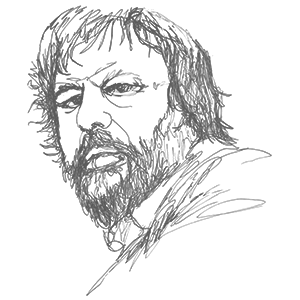
Slavoj Žižek [slah-voy zhee-zhek] (b. 1949) is a Slovenian philosopher and cultural critic working. He has made contributions to political theory, film theory and theoretical psychoanalysis. Žižek is a senior researcher at the Institute of Sociology University of Ljubljana.
Žižek uses examples from popular culture to explain the theory of Jacques Lacan and uses Lacanian psychoanalysis, Hegelian philosophy, and Marxist economic criticism to interpret and speak extensively on immediately current social phenomena, including the current ongoing global financial crisis.
read more »
Posted in Money, Philosophy, Politics |
1 Comment »
May 2, 2012

Unknown knowns are the things that we know, but are unaware of knowing. The coining of the term is attributed to Slovenian Philosopher Slavoj Žižek and it refers to the unconscious beliefs and prejudices that determine how we perceive reality and intervene in it. It is the Freudian unconscious, the ‘knowledge which doesn’t know itself,’ as French psychoanalyst Jacques Lacan said.
Žižek first used the term as a response to former US Defense Secretary Donald Rumsfeld’s statement at a press briefing given in, 2002: ‘There are known knowns; there are things we know we know. We also know there are known unknowns; that is to say we know there are some things we do not know. But there are also unknown unknowns – the ones we don’t know we don’t know.’
read more »
Posted in Language, Philosophy, Politics |
1 Comment »
April 30, 2012

Jung identified the anima [an-uh-muh] as being the unconscious feminine component of men, and the animus [an-uh-muhs] as the unconscious masculine component in women. However, this is rarely taken as a literal definition: many modern day Jungian practitioners believe that every person has both an anima and an animus. Jung stated that the anima and animus act as guides to the unconscious unified Self, and that forming an awareness and a connection with the anima or animus is one of the most difficult and rewarding steps in psychological growth. Jung reported that he identified his anima as she spoke to him, as an inner voice, unexpectedly one day.
Often, when people ignore the anima or animus the complexes, the anima or animus vies for attention by projecting itself on others. This explains, according to Jung, why we are sometimes immediately attracted to certain strangers: we see our anima or animus in them. Love at first sight is an example of anima and animus projection. Moreover, people who strongly identify with their gender role (e.g. a man who acts aggressively and never cries) have not actively recognized or engaged their anima or animus.
read more »
Posted in Health, Philosophy, Sex |
Leave a Comment »
April 30, 2012
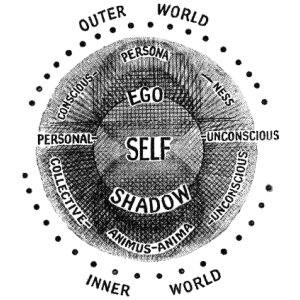
In Jungian psychology, the shadow is a part of the unconscious mind consisting of repressed weaknesses, shortcomings, and instincts. It is one of the three most recognizable archetypes, the others being the ‘anima and animus’ and the ‘persona.’ ‘Everyone carries a shadow,’ Jung wrote, ‘and the less it is embodied in the individual’s conscious life, the blacker and denser it is.’ It may be (in part) one’s link to more primitive animal instincts, which are superseded during early childhood by the conscious mind.
According to Jung, the shadow, in being instinctive and irrational, is prone to projection: turning a personal inferiority into a perceived moral deficiency in someone else. Jung writes that if these projections are unrecognized ‘The projection-making factor (the Shadow archetype) then has a free hand and can realize its object–if it has one–or bring about some other situation characteristic of its power.’ These projections insulate and cripple individuals by forming an ever thicker fog of illusion between the ego and the real world.
read more »
Posted in Health, Philosophy |
2 Comments »
April 30, 2012
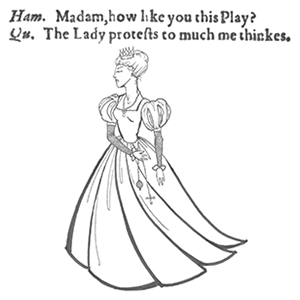
Projection is a psychological defense mechanism where a person subconsciously denies his or her own attributes, thoughts, and emotions, which are then ascribed to the outside world, usually to other people. Thus, projection involves imagining or projecting the belief that others originate those feelings. Projection reduces anxiety by allowing the expression of the unwanted unconscious impulses or desires without letting the conscious mind recognize them.
An example of this behavior might be blaming another for self failure. The mind may avoid the discomfort of consciously admitting personal faults by keeping those feelings unconscious, and by redirecting libidinal satisfaction by attaching, or ‘projecting,’ those same faults onto another person or object. The theory was developed by Sigmund Freud.
read more »
Posted in Health, Philosophy, Politics |
2 Comments »
April 23, 2012

The Force is a binding, metaphysical, and ubiquitous power in the fictional universe of the ‘Star Wars’ galaxy created by George Lucas. Mentioned in the first film in the series, it is integral to all subsequent incarnations of Star Wars, including the expanded universe of comic books, novels, and video games. Within the franchise, it is the object of the Jedi and Sith monastic orders. Lucas has attributed the origins of ‘The Force’ to a 1963 abstract film by Arthur Lipsett, called ’21-87,’ which sampled from many sources. One of the audio sources Lipsett sampled was a conversation between artificial intelligence pioneer Warren S. McCulloch and Roman Kroitor, a cinematographer who went on to develop IMAX.
In the face of McCulloch’s arguments that living beings are nothing but highly complex machines, Kroitor insists that there is something more: ‘Many people feel that in the contemplation of nature and in communication with other living things, they become aware of some kind of force, or something, behind this apparent mask which we see in front of us, and they call it God.’ When asked if this was the source of ‘the Force,’ Lucas confirms that his use of the term in ‘Star Wars’ was ‘an echo of that phrase in ’21-87.’ The idea behind it, however, was universal: ‘Similar phrases have been used extensively by many different people for the last 13,000 years to describe the ‘life force,” he says.
read more »
Posted in Art, Philosophy |
Leave a Comment »
April 23, 2012

In traditional Chinese culture, qì [chee] is an active principle forming part of any living thing. Qi is frequently translated as life energy, lifeforce, or energy flow. Qi is the central underlying principle in traditional Chinese medicine and martial arts. The literal translation is ‘breath,’ ‘air,’ or ‘gas.’ Concepts similar to qi can be found in many cultures, for example, Prana in Vedantic philosophy, mana in Hawaiian culture, Lüng in Tibetan Buddhism, and Vital energy in Western philosophy.
Some elements of qi can be understood in the term ‘energy’ when used by writers and practitioners of various esoteric forms of spirituality and alternative medicine. Elements of the qi concept can also be found in popular culture, for example ‘The Force’ in ‘Star Wars’ Notions in the west of energeia, élan vital, or vitalism are purported to be similar.
read more »
Posted in Health, Philosophy, World |
Leave a Comment »
April 22, 2012
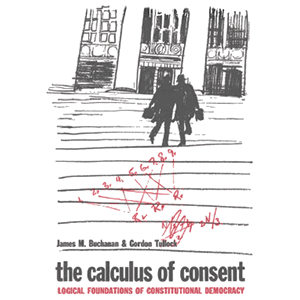
Rational ignorance occurs when the cost of educating oneself on an issue exceeds the potential benefit that the knowledge would provide. Ignorance about an issue is said to be ‘rational’ when the cost of educating oneself about the issue sufficiently to make an informed decision can outweigh any potential benefit one could reasonably expect to gain from that decision, and so it would be irrational to waste time doing so.
This has consequences for the quality of decisions made by large numbers of people, such as general elections, where the probability of any one vote changing the outcome is very small. The term is most often found in economics, particularly public choice theory, but also used in other disciplines which study rationality and choice, including philosophy (epistemology) and game theory. The term was coined by Anthony Downs in ‘An Economic Theory of Democracy’ (1957).
read more »
Posted in Money, Philosophy, Politics |
1 Comment »
April 14, 2012

Chironomia is the art of using gesticulations or hand gestures to good effect in traditional rhetoric or oratory. Effective use of the hands, with or without the use of the voice, is a practice of great antiquity, which was developed and systematized by the Greeks and the Romans. Various gestures had conventionalized meanings which were commonly understood, either within certain class or professional groups, or broadly among dramatic and oratorical audiences.
Gilbert Austin was a well-known author on chironomia, in the preface to his book on the subject, Austin writes: ‘…it is a fact, that we do not possess from the ancients, nor yet from the labors of our own countrymen, any sufficiently detailed and precise precepts for the fifth division of the art of rhetoric, namely rhetorical delivery, called by the ancients ‘actio’ and ‘pronuntiatio.”
read more »
Posted in Language, Philosophy, Science |
Leave a Comment »
April 9, 2012

Expanded orgasm is any sexual experience more intense and extensive than what can be described as, or included in the definition of, an ordinary orgasm. It includes a range of sensations that include orgasms that are full-bodied, and orgasms that last from a few minutes to many hours. The term was coined in 1995 by Dr. Patricia Taylor. It was used in her Ph.D. research of intense sensual experiences of 44 couples from various backgrounds and referenced in a video she produced in 1998. Distinguishing features of expanded orgasm are energetic sensations and contractions all over the body, especially in the abdomen, inner thighs, hands, feet, and genitals.
Dr. Taylor describes reports of practitioners going into various altered states of consciousness, bringing about deep emotional release and rejuvenation, profound spiritual experiences, having awarenesses not normally perceived in regular orgasm, and perceiving energy expanding beyond the limits of their bodies. Similar experiences were reported in studies by Dr. Jenny Wade, and by David Deida. Theories for the biological processes required for achieving these states include the progressive and balanced stimulation and elevation of the sympathetic and parasympathetic nervous system; this is evidenced by the tantric practice of using breathing techniques to engage the parasympathetic nervous system during sexual activities.
Posted in Philosophy, Sex |
Leave a Comment »
April 6, 2012

Clinamen [klyn-ah-mun] is the Latin name Roman philosopher Lucretius gave to the unpredictable swerve of atoms, in order to defend the atomistic doctrine of ancient Greek philosopher Epicurus. According to Lucretius, the unpredictable swerve occurs ‘at no fixed place or time’:
‘When atoms move straight down through the void by their own weight, they deflect a bit in space at a quite uncertain time and in uncertain places, just enough that you could say that their motion has changed. But if they were not in the habit of swerving, they would all fall straight down through the depths of the void, like drops of rain, and no collision would occur, nor would any blow be produced among the atoms. In that case, nature would never have produced anything.’
read more »
Posted in Language, Philosophy |
Leave a Comment »
April 4, 2012
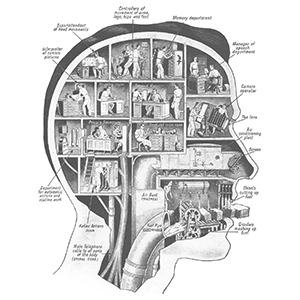
The ‘ghost in the machine‘ is British philosopher Gilbert Ryle’s description of René Descartes’ mind-body dualism. The phrase was introduced in Ryle’s book ‘The Concept of Mind’ (1949) to highlight the perceived absurdity of dualist systems like Descartes’ where mental activity carries on in parallel to physical action, but where their means of interaction are unknown or, at best, speculative.
Arthur Koestler’s wrote ‘The Ghost in the Machine,’ in 1967, focusing on mankind’s movement towards self-destruction, particularly in the nuclear arms arena. The book is particularly critical of B. F. Skinner’s behaviorist theory. One of Koestler’s central concepts is that as the human brain has grown, it has built upon earlier, more primitive brain structures, and that this is the ‘ghost in the machine’ of the title. Koestler’s theory is that at times these structures can overpower higher logical functions, and are responsible for hate, anger and other such destructive impulses.
read more »
Posted in Language, Philosophy, Science |
1 Comment »


 The Daily Omnivore