February 2, 2012

The Celestine Prophecy is a 1993 novel by James Redfield that discusses various psychological and spiritual ideas which are rooted in many ancient Eastern Traditions and New Age spirituality. The main character of the novel undertakes a journey to find and understand a series of nine spiritual insights on an ancient manuscript in Peru. The book is a first-person narrative of the narrator’s spiritual awakening as he goes through a transitional period of his life and begins to notice instances of synchronicity, which is the realization that coincidences may have deep meaning. Redfield has acknowledged that the work of Dr. Eric Berne, the developer of Transactional Analysis, and his 1964 bestseller ‘Games People Play’ as a major influence on his work. Specifically, the ‘games’ which Berne refers in his theories are tools used in an individual’s quest for energetic independence.
The novel has received some criticism, mostly from the literary community, who point out that the plot of the story is not well developed and serves only as a delivery tool for the author’s ideas about spirituality. Redfield has admitted that, even though he considers the book to be a novel, his intention was to write a story in the shape of a parable, a story meant to illustrate a point or teach a lesson. Critics point to Redfield’s heavy usage of subjective validation (a cognitive bias by which a person will consider a piece of information to be correct if it has any personal significance to them) and reification (making something real). Another point of criticism has been directed at the book’s attempt to explain important questions about life and human existence in an overly simplified fashion.
Posted in Language, Philosophy |
Leave a Comment »
February 2, 2012

Transactional analysis, commonly known as TA to its adherents, is an integrative approach to the theory of psychology and psychotherapy. It is described as integrative because it has elements of psychoanalytic, humanist and cognitive approaches. TA was first developed by Canadian-born U.S. psychiatrist, Eric Berne, in the late 1950s.
As a theory of personality, TA describes how people are structured psychologically. It uses what is perhaps its best known model, the ego-state (Parent-Adult-Child) model, to do this. The same model helps explain how people function and express their personality in their behavior. It offers a theory for child development by explaining how adult patterns of life originated in childhood. This explanation is based on the idea of a ‘Life (or Childhood) Script’: the assumption that we continue to re-play childhood strategies, even when this results in pain or defeat. Thus it claims to offer a theory of psychopathology.
read more »
Posted in Health, Philosophy |
3 Comments »
January 30, 2012

The Yiddish Policemen’s Union is a 2007 novel by American author Michael Chabon. The novel is a detective story set in an alternative history version of the present day, based on the premise that during World War II, a temporary settlement for Jewish refugees was established in Sitka, Alaska, in 1941, and that the fledgling State of Israel was destroyed in 1948.
The novel is set in Sitka, which it depicts as a large, Yiddish-speaking metropolis. As a result, two million Jews are killed in the Holocaust, instead of the six million in reality.
read more »
Posted in Language, Philosophy, War |
Leave a Comment »
January 30, 2012

An eruv [air-oov] is a ritual enclosure that orthodox Jewish communities construct in their neighborhoods as a way to permit carrying objects outdoors on Shabbat, which they would otherwise understand to be prohibited by Jewish law (Halakha). There are 39 categories of activity prohibited on Shabbat including moving an object from one domain to another, no matter its weight or purpose. The prohibition is not found in the Torah, but in the Talmud (Rabbinical law and commentary).
The eruv permits traditionally observant Jews to, among other things, carry keys, tissues, medicines, or babies with them, and to use strollers and canes. According to tradition, the eruv must be made of walls or doorways at least one meter in height. In public areas where it is impractical to put up walls, doorways are constructed out of wire and posts. It is these doorways, which often serve no practical purpose, that are what is usually referred to as an eruv.
read more »
Posted in Philosophy, Politics |
Leave a Comment »
January 30, 2012
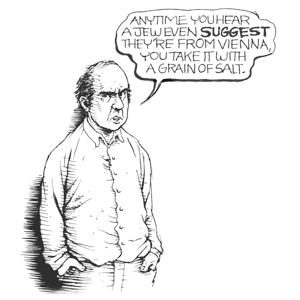
Jewish geography is a popular ‘game’ sometimes played when Jews meet each other for the first time and try to identify people they know in common. An Israeli version of the game, pitsuchim, has been a common pastime among young Israeli backpackers traveling the world, taking its name from a 1980s television quiz show.
As Etan Diamond observes in his book ‘And I Will Dwell in Their Midst: Orthodox Jews in Suburbia’: ‘This ‘game’ of ‘Jewish geography’ follows a simple pattern. One person asks, ‘You’re from [insert name of city here]? Do you know [insert person’s name here]?’ The other one usually responds something like, ‘Sure, he sits behind my uncle in synagogue,’ or ‘I met her once at a youth group convention,’ or ‘She is really good friends with my sister’s college roommate.’ Non-Jews often find it astonishing that such links are made so easily, but given both the relative smallness of the Jewish community – and the even smaller size of the Orthodox Jewish community – and the extensive overlapping social circles within these communities, it should not surprise too much.’
Posted in Games, Philosophy |
Leave a Comment »
January 24, 2012

Survivalism is a movement devoted to preparing for possible disruptions in social or political order, on scales ranging from local to international. Survivalists often have emergency medical and self-defence training, stockpile food and water, prepare for self-sufficiency, and build structures that will help them survive or ‘disappear’ (e.g. a survival retreat or underground shelter).
Anticipated disruptions include the following: clusters of natural disasters, patterns of apocalyptic planetary crises, or Earth Changes (in the form of tornadoes, hurricanes, earthquakes, blizzards, severe thunderstorms); disaster caused by the activities of humankind (chemical spills, release of radioactive materials, nuclear or conventional war, oppressive governments); societal collapse caused by the shortage or unavailability of resources such as electricity, fuel, food, or water; financial disruption or economic collapse (caused by monetary manipulation, hyperinflation, deflation, or depression); and global pandemic.
read more »
Posted in Money, Philosophy, War |
Leave a Comment »
January 16, 2012

The Happy Human is a secular icon and the official symbol of the International Humanist and Ethical Union (IHEU), a world body for Humanism, and has been adopted by many Humanist organisations and individuals worldwide. Its origin was a competition organized in 1965 by the British Humanist Association to find a symbol for itself.
The winning design was created by Denis Barrington. The trademark is still held by the British Humanist Association, which freely licenses use of the symbol by bona fide Humanist organizations worldwide. A great many Humanist organizations use the symbol or an adapted version of it.
Posted in Philosophy, Politics, World |
Leave a Comment »
January 6, 2012

The Latin maxim ignoramus et ignorabimus, meaning ‘we do not know and will not know,’ stood for a position on the limits of scientific knowledge, in the thought of the nineteenth century. It was given credibility by Emil du Bois-Reymond, a German physiologist, in his book ‘On the limits of our understanding of nature,’ published in 1872.
In 1930, mathematician David Hilbert pronounced his disagreement with the maxim in a celebrated address to the Society of German Scientists and Physicians: ‘We must not believe those, who today, with philosophical bearing and deliberative tone, prophesy the fall of culture and accept the ignorabimus. For us there is no ignorabimus, and in my opinion none whatever in natural science. In opposition to the foolish ignorabimus our slogan shall be: Wir müssen wissen — wir werden wissen! (‘We must know — we will know!’).’
read more »
Posted in Education, Philosophy, Science |
1 Comment »
January 6, 2012

Sapere [sap-er-reh] aude [ow-day] is a Latin phrase meaning ‘dare to be wise,’ or more precisely ‘dare to know.’ Originally used by Horace, it is a common motto for universities and other institutions, after becoming closely associated with The Enlightenment by Immanuel Kant in his seminal essay, ‘What is Enlightenment?’
Kant claimed it was the motto for the entire period, and used it to explore his theories of reason in the public sphere. Later, Michel Foucault took up Kant’s formulation in an attempt for a place for the individual in his post-structuralist philosophy and come to terms with the problematic legacy of the Enlightenment.
read more »
Posted in Education, Philosophy, Science |
Leave a Comment »
January 4, 2012


The Missionary Church of Kopimism is a congregation of file sharers which hold that copying information as a sacred virtue. The sect, which is based in Sweden, is petitioning the Swedish government to have their church officially recognized as a religion.
The sect’s followers are called Kopomists from ‘copy me.’ According to the church, ‘In our belief, communication is sacred.’
Posted in Humor, Money, Philosophy |
Leave a Comment »
December 30, 2011
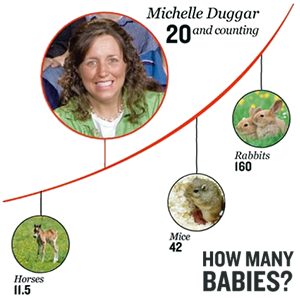
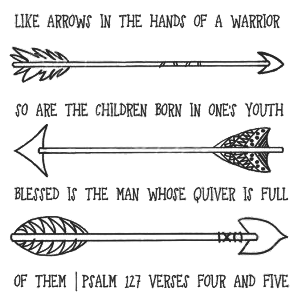
Quiverfull is a movement among some conservative evangelical Christian couples chiefly in the United States, but with some adherents in Canada, Australia, New Zealand, Britain and elsewhere. It promotes procreation, and sees children as a blessing from God, eschewing all forms of birth control, including natural family planning and sterilization. The movement derives its name from Psalm 127:3-5, where many children are metaphorically referred to as the arrows in a full quiver.
Some refer to the Quiverfull position as Providentialism (the belief that God’s will is evident in all occurrences), while other sources have referred to it as a manifestation of natalism (the promotion of child-bearing). Some of the beliefs held among Quiverfull adherents have been held among various Christians during prior eras of history. As birth control methods advanced during the late 19th and early 20th centuries, many conservative Christian movements issued official statements against their use.
read more »
Posted in Philosophy, Sex |
Leave a Comment »
December 30, 2011
Natalism [neyt-l-iz-uhm] is a belief that promotes human reproduction. The term is taken from the Latin adjective form for ‘birth,’ ‘natalis.’ Natalism promotes child-bearing and glorifies parenthood. It typically advocates policies such as limiting access to abortion and contraception, as well as creating financial and social incentives for the population to reproduce.
The degree of natalism is individual; the extreme end is ‘Natalism’ as a life stance (with the first letter capitalized), which holds natalism as of ultimate importance and everything else is only good to the extent it serves this purpose. The more moderate stance holds that there ought to be a higher rate of population growth than what is currently mainstream in industrialized countries. Philosophic motivations for natalism may include that of considering value in bringing potential future persons into existence.
read more »
Posted in Philosophy, Politics, Sex |
Leave a Comment »


 The Daily Omnivore