November 22, 2011
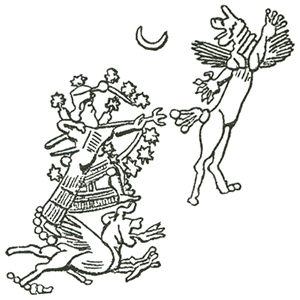
The Enûma Eliš is the Babylonian creation myth (named after its opening words). It was recovered by Austen Henry Layard in 1849 (in fragmentary form) in the ruined Library of Ashurbanipal at Nineveh (Mosul, Iraq), and published by George Smith in 1876. The Enûma Eliš has about a thousand lines and is recorded in Old Babylonian on seven clay tablets, each holding between 115 and 170 lines of text. Most of Tablet V has never been recovered, but aside from this lacuna, the text is almost complete. A duplicate copy of Tablet V has been found in Sultantepe, ancient Huzirina, located near the modern town of Şanlıurfa in Turkey.
This epic is one of the most important sources for understanding the Babylonian worldview, centered on the supremacy of Marduk and the creation of humankind for the service of the gods. Its primary original purpose, however, is not an exposition of theology but the elevation of Marduk, the chief god of Babylon, above other Mesopotamian gods.
read more »
Posted in Philosophy |
Leave a Comment »
November 21, 2011
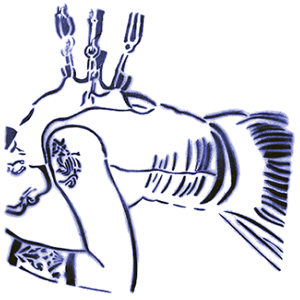
A suspension is the act of suspending a human body from hooks that have been put through body piercings. These piercings are temporary and are performed just prior to the actual suspension.
Multiple hooks are usually located around the shoulders, upper arm, and back, as well as around the knees (depending on the position in which the body is to be suspended). Finding the proper hook placement and number requires an understanding of human anatomy and physiology, as well as the durability of the individual’s skin. If the number of hooks are too few, the suspended individual’s skin will be unable to withstand the body’s weight and will rip.
read more »
Posted in Art, Games, Philosophy |
Leave a Comment »
November 19, 2011
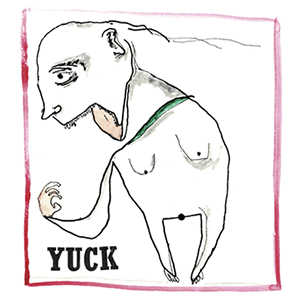
The wisdom of repugnance is the belief that an intuitive (or ‘deep-seated’) negative response to some thing, idea or practice should be interpreted as evidence for the intrinsically harmful or evil character of that thing. Furthermore, it refers to the notion that wisdom may manifest itself in feelings of disgust towards anything which lacks goodness or wisdom, though the feelings or the reasoning of such ‘wisdom’ may not be immediately explicable through reason.
The term was coined in 1997 by Leon Kass, chairman of the President’s Council on Bioethics, in an article in ‘The New Republic.’ Kass stated that disgust was not an argument per se, but went on to say that ‘in crucial cases…repugnance is the emotional expression of deep wisdom, beyond reason’s power fully to articulate it.’ The term remains largely confined to discussions of bioethics, and is somewhat related to the term ‘yuck factor.’ However, unlike the latter, it is used almost exclusively by those who accept its underlying premise; i.e., that repugnance does, in fact, indicate wisdom. It is thus often viewed as loaded language, and is primarily used by certain bioconservatives to justify their position.
read more »
Posted in Philosophy |
Leave a Comment »
November 17, 2011

Allophilia [al-oh-fil-ee-u] is having a positive attitude for a group that is not one’s own. The term derived from Greek words meaning ‘liking or love of the other.’ It is a framework for understanding effective intergroup leadership and is conceptualized as a measurable state of mind with tangible consequences. The term was coined by Harvard sociologist Todd L. Pittinsky in 2006, after he was unable to find an antonym for prejudice in any dictionary. Studied by social scientists, allophilia is the antonym of negative prejudices and the antonym of a host of ‘–isms’ (e.g. ageism, sexism, racism), ‘-phobias’ (e.g. homophobia, islamophobia, xenophobia), and ‘anti-s’ (e.g. anti-communism, anti-intellectualism).
Allophilia has five statistical factors: affection, comfort, engagement, enthusiasm, kinship. The Allophilia Scale measures each of these factors. The typical remedy for prejudice is to bring conflicting groups into a state of tolerance. However, tolerance is not the logical antithesis of prejudice, but rather is the midpoint between negative feelings and positive feelings toward others. Allophilia enhancement should serve as complement to prejudice reduction. In one study, symhedonia (empathic joy) has been shown to be more closely associated with allophilia, while sympathy (empathic sorrow) has been shown to be more strongly associated with prejudice.
Posted in Philosophy, Politics, World |
Leave a Comment »
November 16, 2011

No true Scotsman is an informal logical fallacy, an ad hoc attempt to retain an unreasoned assertion. When faced with a counterexample to a universal claim, rather than denying the counterexample or rejecting the original universal claim, this fallacy modifies the subject of the assertion to exclude the specific case or others like it by rhetoric, without reference to any specific objective rule. The term was advanced by philosopher Antony Flew in his 1975 book ‘Thinking About Thinking: Do I sincerely want to be right?’ Imagine Hamish McDonald, a Scotsman, sitting down with his ‘Glasgow Morning Herald’ and seeing an article about how the ‘Brighton Sex Maniac Strikes Again.’ Hamish is shocked and declares that ‘No Scotsman would do such a thing.’ The next day he sits down to read his paper again and this time finds an article about an Aberdeen man whose brutal actions make the Brighton sex maniac seem almost gentlemanly. This fact shows that Hamish was wrong in his opinion but is he going to admit this? Not likely. This time he says, ‘No true Scotsman would do such a thing.’
An example of a political application of the fallacy could be in asserting that ‘no democracy starts a war,’ then distinguishing between mature or ‘true’ democracies, which never start wars, and ’emerging democracies,’ which may start them. At issue is whether or not something labeled as an ’emerging democracy’ is actually a democracy or something in a different conceptual category.
Posted in Language, Philosophy, World |
1 Comment »
November 16, 2011

Plastic shaman [shey-muhn] is a pejorative colloquialism applied to individuals who are attempting to pass themselves off as shamans, holy people, or other traditional spiritual leaders, but who have no genuine connection to the traditions or cultures they claim to represent. In some cases, the ‘plastic shaman’ may have some genuine cultural connection, but is seen to be exploiting that knowledge for ego, power or money.
They are believed by their critics to use the mystique of these cultural traditions, and the legitimate curiosity of sincere seekers, for personal gain. In some cases, exploitation of students and traditional culture may involve the selling of fake ‘traditional’ spiritual ceremonies, fake artifacts, fictional accounts in books, illegitimate tours of sacred sites, and often the chance to buy spiritual titles. In Nepal, the term ‘Chicken Shaman’ is used.
read more »
Posted in Money, Philosophy, Sex |
Leave a Comment »
November 16, 2011
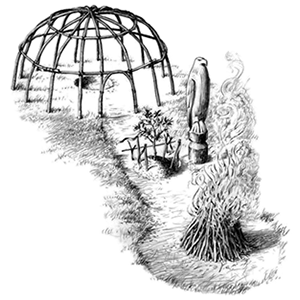
The sweat lodge is a ceremonial sauna and is an important event in some Native American cultures. There are several styles of sweat lodges that include a domed or oblong hut similar to a wigwam, or even a simple hole dug into the ground and covered with planks or tree trunks. Stones are typically heated in an exterior fire and then placed in a central pit in the ground. Early occurrences can be found in the fifth century BCE, when Scythians constructed pole and woolen cloth sweat baths.
Vapor baths were in use among the Celtic tribes, and the sweat-house was in general use in Ireland down to the 18th, and even survived into the 19th century. It was of beehive shape and was covered with clay. It was especially resorted to as a cure for rheumatism. Rituals and traditions vary from region to region and from tribe to tribe. They often include prayers, drumming, and offerings to the spirit world. In some cultures a sweat-lodge ceremony may be a part of another, longer ceremony such as a Sun Dance.
read more »
Posted in Drugs, Health, Philosophy |
Leave a Comment »
October 28, 2011

In the folklore of the Chiloé Island in southern Chile, the imbunche [im-boon-chay] is a legendary monster that protects the entrance to a warlock’s cave. According to legend, the Imbunche was a male child kidnapped by, or sold by his parents to a Brujo Chilote (a type of sorcerer or warlock of Chiloé).
The Brujo chilote transformed the child into a deformed hairy monster by breaking his legs and twisting them over his back, applying a magic cream over the boy’s to cause thick hairs and, finally splitting his tongue to produce a forked, snake-like, tongue.
Posted in Philosophy |
1 Comment »
October 28, 2011
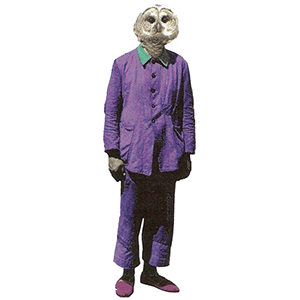
The Obscene Bird of Night (El obsceno pájaro de la noche, 1970) is the most acclaimed novel by the Chilean writer José Donoso (1924-1996). Donoso was a member of the Latin American literary boom and the literary movement known as magical realism. The novel explores the cyclical nature of life and death, in that our fears and fantasies of childhood resurface in adulthood and old age. It is about the deconstruction of self – to the extreme of trying ‘to live’ in non-existence.
The Imbunche myth is a major theme in the novel. According to legend, the Imbunche was a male child kidnapped by, or sold by his parents to a sorcerer who turns the child into a monster to guard his lair. It symbolizes the process of implosion of the physical and/or intellectual self, turning the living being into a thing or object incapable of interacting with the outside world, and depriving it of its individuality and even of its name. This can either be self-inflicted or forced upon by others.
read more »
Posted in Death, Language, Philosophy |
Leave a Comment »
October 25, 2011


The Steve Allen Theater at the Center for Inquiry (CFI) Los Angeles is a multidisciplinary resident fringe theater and theater of the absurd in Hollywood developed and helmed by Founding Artistic Director, Amit Itelman. The Center for Inquiry is a nonprofit group founded by Carl Sagan and Isaac Asimov to promote science and secular humanism. When paranormal investigator James Underdown became the Executive Director of CFI West in 2003, he named the theater after Center for Inquiry supporter and television personality Steve Allen and offered Itelman an opportunity to define an artistic vision for the space.
Itelman has booked interdisciplinary acts (music, comedy and theater) that strike a brainy and idiosyncratic chord. ‘A kind of theater that bounces off the walls.’ Itelman’s artistic credo reflects CFI’s mission of ‘not accepting things as they are’ an unlikely lab for some of the freshest, strangest work in town…The bar for eccentricity may be pretty high in Hollywood, but the Steve Allen Theater clears it easily.’
Posted in Art, Humor, Philosophy |
Leave a Comment »
October 25, 2011

The Theatre of the Absurd is a designation for particular plays of absurdist fiction, written by a number of primarily European playwrights in the late 1940s, 1950s, and 1960s, as well as to the style of theater which has evolved from their work. Their work expressed the belief that, in a godless universe, human existence has no meaning or purpose and therefore all communication breaks down.
Logical construction and argument gives way to irrational and illogical speech and to its ultimate conclusion, silence. Plays within this group are absurd in that they focus not on logical acts, realistic occurrences, or traditional character development; they, instead, focus on human beings trapped in an incomprehensible world subject to any occurrence, no matter how illogical. The theme of incomprehensibility is coupled with the inadequacy of language to form meaningful human connections.
read more »
Posted in Art, Humor, Philosophy |
Leave a Comment »
October 23, 2011

The liberal arts (Artes Liberales) are a curriculum that imparts general knowledge and develops the student’s rational thought and intellectual capabilities, unlike the professional, vocational, and technical curricula emphasizing specialization. The contemporary liberal arts comprise studying literature, languages, philosophy, history, mathematics, and science.
However, in classical antiquity, it denoted the education worthy of a free person (Latin: liber, ‘free’). Contrary to popular belief, freeborn girls were as likely to receive formal education as boys, especially during the Roman Empire—unlike the lack-of-education, or purely manual/technical skills, proper to a slave. The ‘liberal arts’ or ‘liberal pursuits’ were already so called in formal education during the Roman Empire.
read more »
Posted in Education, Philosophy, Science |
Leave a Comment »




 The Daily Omnivore