October 23, 2011

The Independent Investigations Group (IIG) is a volunteer-based organization founded by James Underdown in 2000 at the Center for Inquiry’s Los Angles branch, a non-profit, secular educational organization. The IIG investigates fringe science, paranormal and extraordinary claims from a rational, scientific viewpoint, and disseminates factual information about such inquiries to the public.
IIG offers a $50,000 prize to anyone who can show, under proper observing conditions, evidence of any paranormal, supernatural, or occult power or event. The IIG is involved in designing the test protocol, approving the conditions under which a test will take place, and in administering the actual test. All tests are designed with the participation and approval of the applicant. In most cases, the applicant is asked to perform a simple preliminary demonstration of the claimed ability, which if successful is followed by the formal test. Associates of the IIG usually conduct both tests and preliminary demonstrations at their location in Hollywood or affiliates.
read more »
Posted in Money, Philosophy, Science |
Leave a Comment »
October 23, 2011

The Center for Inquiry(CFI) is a non-profit educational organization with headquarters in the United States whose primary mission is to encourage evidence-based inquiry into paranormal and fringe science claims, alternative medicine and mental health practices, religion, secular ethics, and society.
CFI is dedicated to promoting and defending science, reason, and free inquiry in all aspects of human interest.
read more »
Posted in Health, Philosophy, Science |
Leave a Comment »
October 23, 2011


Secularism [sek-yuh-luh-riz-uhm] is the idea of something being not religious or not connected to a church. An example in government is the First Amendment (which guarantees, among other things, Separation of Church and State). This means that anyone can choose to practice or not practice any religion they want, and the government cannot make them be a part of a religion.
In one sense, secularism may assert the right to be free from religious rule and teachings, and the right to freedom from governmental imposition of religion upon the people within a state that is neutral on matters of belief. In another sense, it refers to the view that human activities and decisions, especially political ones, should be unbiased by religious influence.
read more »
Posted in Philosophy, Politics, World |
Leave a Comment »
October 23, 2011
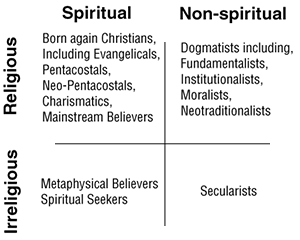

Spiritual But Not Religious (SBNR) is a popular phrase and acronym used to self-identify a life stance of spirituality that rejects traditional organized religion as the sole or most valuable means of furthering spiritual growth. The term is used worldwide, but seems most prominent in the United States.
Those that identify as SBNR vary in their individual spiritual philosophies and practices and theological references. While most reference some higher power or transcendent nature of reality, it is common to differ in their ideas of the existence of God as defined by the Abrahamic religions.
read more »
Posted in Language, Philosophy |
Leave a Comment »
October 21, 2011

In a monomyth, (the theory that all myths are the same story) the hero begins in the ordinary world, and receives a call to enter an unknown world of strange powers and events. The hero who accepts the call to enter this strange world must face tasks and trials, either alone or with assistance. In the most intense versions of the narrative, the hero must survive a severe challenge, often with help. If the hero survives, he may achieve a great gift or ‘boon.’ The hero must then decide whether to return to the ordinary world with this boon. If the hero does decide to return, he or she often faces challenges on the return journey. If the hero returns successfully, the boon or gift may be used to improve the world. The stories of Osiris, Prometheus, Moses, and Buddha, for example, follow this structure closely.
Campbell describes 17 stages or steps along this journey. Very few myths contain all 17 stages—some myths contain many of the stages, while others contain only a few; some myths may focus on only one of the stages, while other myths may deal with the stages in a somewhat different order. These 17 stages may be organized in a number of ways, including division into three sections: ‘Departure’ (sometimes called ‘Separation’), the hero’s adventure prior to the quest; ‘Initiation,’ the hero’s many adventures along the way; and ‘Return,’ the hero’s return home with knowledge and powers acquired on the journey.
read more »
Posted in Art, Language, Philosophy |
Leave a Comment »
October 21, 2011
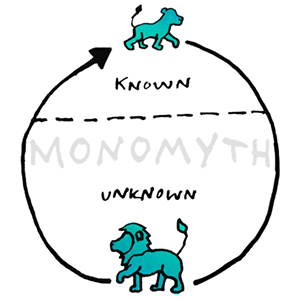
The Hero with a Thousand Faces (first published in 1949) is a non-fiction book, and seminal work of comparative mythology by Joseph Campbell. In this publication, Campbell discusses his theory of the journey of the archetypal hero found in world mythologies. Since publication, Campbell’s theory has been consciously applied by a wide variety of modern writers and artists. The best known is perhaps George Lucas, who has acknowledged a debt to Campbell regarding the stories of the ‘Star Wars’ films.
Campbell explores the theory that important myths from around the world which have survived for thousands of years all share a fundamental structure, which Campbell called the monomyth and ‘the hero’s journey. ‘In a well-known quote from the introduction to ‘The Hero with a Thousand Faces,’ Campbell summarized the monomyth: ‘A hero ventures forth from the world of common day into a region of supernatural wonder: fabulous forces are there encountered and a decisive victory is won: the hero comes back from this mysterious adventure with the power to bestow boons on his fellow man.’
read more »
Posted in Art, Language, Philosophy |
Leave a Comment »
October 13, 2011

A life review is a phenomenon widely reported as occurring during near-death experiences, in which a person rapidly sees much or the totality of his or her life history in chronological sequence and in extreme detail. It is often referred to by people having experienced this phenomenon as having their life ‘flash before their eyes.’
A reformatory purpose seems commonly implicit in accounts, though not necessarily for earthly purpose, since return from a near-death experience may reportedly entail individual choice. While individuals sometimes report reviews took place in the company of otherworldly beings who shared the observation, they also say they felt unjudged during the process, leaving themselves their own strongest critics.
read more »
Posted in Death, Health, Philosophy |
Leave a Comment »
October 13, 2011

An out-of-body experience (OBE) is an experience that typically involves a sensation of floating outside of one’s body and, in some cases, perceiving one’s physical body from a place outside one’s body (autoscopy). The term was introduced in 1943 by G.N.M Tyrrell in his book ‘Apparitions,’ and adopted as a bias-free alternative to belief-centric labels such as ‘astral projection,’ ‘soul travel,’ or ‘spirit walking.’
Though the term usefully distances researchers from scientifically problematic concepts such as the soul, scientists still know little about the phenomenon. Some researchers believe they have managed to recreate OBE in a laboratory setup by stimulating a part in the human brain. One in ten people has an out-of-body experience once, or more commonly, several times in their life. OBEs are often part of the near-death experience. Those who have experienced OBEs sometimes claim to have observed details which were unknown to them beforehand.
read more »
Posted in Death, Health, Philosophy |
Leave a Comment »
October 13, 2011

The Zihuatanejo Project was an intentional community created during the summers of 1962 and 1963 by Timothy Leary and Richard Alpert under the umbrella of their nonprofit group, the International Federation for Internal Freedom (IFIF). The community was located in Zihuatanejo, Mexico, and took up residence at the Catalina Hotel. The idea for the community was based on the fictional story from Aldous Huxley’s 1962 novel, ‘Island.’ Immigration officials were tipped off to the project when the Mexican media began reporting stories about an ‘LSD Paradise.’ In the summer of 1963, after only six weeks the Mexican authorities shut the community down.
More than 5,000 people applied to the IFIF in the hopes of joining the project in Zihuatanejo. Out of this pool of applicants, a small, select group of people were chosen. Amenities cost $200 a month per person, including food and lodging in bungalows near a secluded beach. Fishermen supplied a bounty of fresh fish from the bay. Leary and 35 guests rented the Catalina Hotel for a month using the ‘Tibetan Book of the Dead’ as a guide book for LSD sessions, while Ralph Metzner and Richard Alpert helped manage the group. Group LSD sessions began in the morning with the consumption of liquid LSD, with a dosage of 100 to 500 micrograms ingested by participating individuals; the experience would usually last until late afternoon.
Posted in Drugs, Philosophy, Politics |
1 Comment »
October 13, 2011
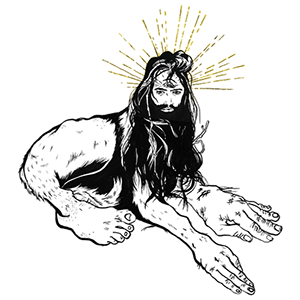
The term ‘psychedelic experience‘ is vague – characterized by polyvalence or ambiguity due to its nature – however in modern psychopharmacological science as well as philosophical, psychological, neurological, spiritual-religious and most other ideological discourses it is understood as an altered state of awareness often distinct to, and induced by the consumption of certain psychotropics.
In particular hallucinogens, many entheogens and specifically psychedelic compounds are known to cause this change in mental state.
read more »
Posted in Drugs, Health, Philosophy |
Leave a Comment »
October 13, 2011
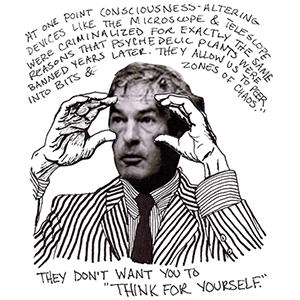
Psychonautics [sahy-kuh-naw-tiks] (Greek: psyche ‘soul/spirit/mind’ and naut ‘sailor/navigator’) refers both to a methodology for describing and explaining the subjective effects of altered states of consciousness, including those induced by mind altering substances, and to a research framework for voluntarily immersing oneself into an altered state by means of such techniques, to explore human experience and existence.
The term has been applied diversely, to cover all activities by which altered states are induced and utilized for spiritual purposes or the exploration of the human condition, including shamanism, lamas of the Tibetan Buddhist tradition, sensory deprivation, and archaic/modern drug users who use entheogenic substances in order to gain deeper insights and spiritual experiences.
read more »
Posted in Drugs, Philosophy, Science |
Leave a Comment »
October 11, 2011


Strong AI is artificial intelligence that matches or exceeds human intelligence — the intelligence of a machine that can successfully perform any intellectual task that a human being can. It is a primary goal of artificial intelligence research and an important topic for science fiction writers and futurists.
Strong AI is also referred to as ‘artificial general intelligence’ or as the ability to perform ‘general intelligent action.’ Science fiction associates strong AI with such human traits as consciousness (subjective experience and thought), sentience (subjective feelings and emotion), sapience (wisdom) and self-awareness (identification of oneself as a separate individual, especially to be aware of one’s own thoughts). Some references emphasize a distinction between strong AI and ‘applied AI’ (also called ‘narrow AI’ or ‘weak AI’): the use of software to study or accomplish specific problem solving or reasoning tasks that do not encompass (or in some cases are completely outside of) the full range of human cognitive abilities.
read more »
Posted in Language, Philosophy, Technology |
1 Comment »


 The Daily Omnivore