August 9, 2011

Taqwacore [tok-wah-kor] is a genre of punk music dealing with Islam and its culture, originally conceived in Michael Muhammad Knight’s 2003 novel, ‘The Taqwacores.’ The name is a portmanteau of hardcore and the Arabic word Taqwa, which is usually translated as ‘piety’ or the quality of being ‘God-fearing,’ and thus roughly denotes fear and love of the divine. The scene is composed mainly of young Muslim artists living in the US and other western countries, many of whom openly reject traditionalist interpretations of Islam.
Although Muslim punk music dates at least to the 1979 founding of British band Alien Kulture, and in the 90’s, Nation Records act Fun-Da-Mental and Asian Dub Foundation, this is the first example of US Muslim generated punk. Knight’s novel was instrumental in encouraging the growth of a contemporary North American Muslim punk movement. There is not a definitive ‘taqwacore sound,’ and the scene is much more diverse now than the fictional one portrayed in Knight’s novel, with artists incorporating various styles, ranging from punk to hip-hop, and musical traditions from the Muslim world; the Kominas describe their sound as ‘Bollywood punk,’ Sagg Taqwacore Syndicate is rap and techno inspired, and Al-Thawra uses the term ‘raicore,’ based on Arabic Raï music.
Posted in Art, Philosophy, Politics |
Leave a Comment »
August 7, 2011

A false awakening is a vivid dream about awakening from sleep. After a false awakening, subjects often dream they are performing daily morning rituals such as cooking, cleaning and eating. The experience is sometimes called a double dream, or a dream within a dream. A false awakening may occur following an ordinary dream or following a lucid dream (one in which the dreamer has been aware of dreaming). Particularly if the false awakening follows a lucid dream, the false awakening may turn into a ‘pre-lucid dream,’ that is, one in which the dreamer may start to wonder if they are really awake and may or may not come to the correct conclusion.
In a study by Harvard psychologist Deirdre Barrett, 2,000 dreams from 200 subjects were examined and it was found that false awakenings and lucidity were significantly more likely to occur within the same dream or within different dreams of the same night. False awakenings often preceded lucidity as a cue, but they could also follow the realization of lucidity, often losing it in the process.
read more »
Posted in Health, Philosophy, Science |
Leave a Comment »
July 24, 2011

God Helmet refers to an experimental apparatus used in neuroscience, primarily in the field of neurotheology (the study of correlations of neural phenomena with subjective experiences of spirituality). Originally called the ‘Koren helmet’ after its inventor Stanley Koren, it was conceived to study creativity and the effects of subtle stimulation of the temporal lobes. Reports by participants of a ‘sensed presence’ brought public attention to the device. The apparatus, placed on the head of an experimental subject, generates weak fluctuating (i.e. ‘complex’) magnetic fields. These fields are approximately as strong as those generated by a land line telephone handset or an ordinary hair dryer, but far weaker than that of an ordinary fridge magnet.
Michael Persinger, a Canadian neuroscientist, has published extensively about the effects on the human brain of the ‘complex’ magnetic fields generated by the God helmet and similar devices. Many subjects have reported ‘mystical experiences and altered states’ while wearing the God Helmet.
read more »
Posted in Health, Philosophy, Technology |
1 Comment »
July 22, 2011

The ‘Demon-Haunted World: Science as a Candle in the Dark’ is a book by astrophysicist Carl Sagan, which was first published in 1995. The book is intended to explain the scientific method to laypeople, and to encourage people to learn critical or skeptical thinking. It explains methods to help distinguish between ideas that are considered valid science, and ideas that can be considered pseudoscience. Sagan states that when new ideas are offered for consideration, they should be tested by means of skeptical thinking, and should stand up to rigorous questioning.
In the book, Sagan states that if a new idea continues in existence after an examination of the propositions has revealed it to be false, it should then be acknowledged as a supposition. Skeptical thinking essentially is a means to construct, understand, reason, and recognize valid and invalid arguments. Wherever possible, there must be independent validation of the concepts whose truth should be proved. He states that reason and logic would succeed once the truth is known. Conclusions emerge from premises, and the acceptability of the premises should not be discounted or accepted because of bias.
Posted in Language, Philosophy, Science |
Leave a Comment »
July 21, 2011

A flood myth or deluge myth is a mythical or religious story of a great flood sent by a deity or deities to destroy civilization as an act of divine retribution. It is a theme widespread among many cultures, though it is perhaps best known in modern times through the biblical and Quranic account of Noah’s Ark, the Hindu puranic story of Manu, through Deucalion in Greek mythology or Utnapishtim in the Epic of Gilgamesh. Parallels are often drawn between the flood waters of these myths and the primeval waters found in some creation myths since the flood waters are seen to cleanse humanity in preparation for rebirth. Most flood myths also contain a culture hero who strives to ensure this rebirth.
Historian, Adrienne Mayor first promoted the hypothesis that flood stories were inspired by ancient observations of seashells and fish fossils inland and on mountains. The ancient Greeks, Egyptians, Romans, and Chinese all wrote about finding such remains in these locations, and the Greeks hypothesized that Earth had been covered by water several times, noting seashells and fish fossils found on mountain tops as evidence. Native Americans also expressed this belief in their early encounters with Europeans. However, Leonardo da Vinci postulated that an immediate deluge could not have caused the neatly ordered strata he found in the Italian Apennines.
Posted in Philosophy, World |
Leave a Comment »
July 20, 2011
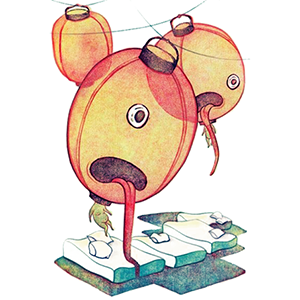
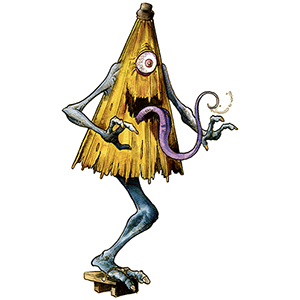
Tsukumogami [sook-oom-oh-gamee] (‘artifact spirit’) are a type of Japanese spirit that originate from items or artifacts that have reached their 100th birthday and thus become alive and aware. Any object of this age, from swords to toys, can become a tsukumogami. Tsukumogami are considered spirits and supernatural beings, as opposed to enchanted items. Tsukumogami vary radically in appearance, depending on the type of item they originated from as well as the condition that item was in. Some, such as tsukumogami originating from paper lanterns or broken sandals, can have tears which become eyes and sharp teeth, thus giving a horrifying visage. Others, such as worn prayer beads or teacups, may merely manifest faces and appendages, giving a warm and friendly appearance.
Though by and large tsukumogami are harmless and at most tend to play occasional pranks on unsuspecting victims, as shown in the Otogizōshi (a collection of 16th century Japanese scrolls) they do have the capacity for anger and will band together to take revenge on those who are wasteful or throw them away thoughtlessly. To prevent this, to this day Shinto ceremonies are performed to console broken and unusable items. It is said that modern items cannot become tsukumogami; the reason for this is that tsukumogami are said to be repelled by electricity. Additionally, few modern items are used for the 100-year-span that it takes for an artifact to gain a soul. Though they are generally considered as mythical or legendary beings, almost all of tsukumogami with names are artistic production created during the Edo period. The most popular artist is Toriyama Sekien, but other numerous artists added their own creatures to the list of tsukumogami.
Posted in Philosophy, World |
1 Comment »
July 19, 2011

Fray Tormenta (b. 1945) is a Mexican priest who supported an orphanage for 23 years as a lucha libre wrestler. While performing, he wore a red and yellow mask. He is largely retired from wrestling, making only sporadic in-ring appearances, but still wears his mask even in his duties as a priest. Fray Tormenta means ‘Friar Storm’ in English. Father Sergio Gutiérrez Benítez had long been inspired to become a masked luchador after watching two 1963 Mexican films, ‘El Señor Tormenta’ (‘Mister Storm’) and ‘Tormenta En El Ring’ (‘Storm In The Ring’) both of which featured the story of a poor Mexican priest who supported the children of his orphanage by fighting as a lucha libre wrestler at night.
At age 22 he became interested in the priesthood and was inducted into the Piarists Order. His theological training took him to Rome, and then Spain, and for a while he taught philosophy and history at Roman Catholic universities in Mexico. He later became a secular priest in the Diocese of Texcoco, where he founded an orphanage. In need of money to take care of the children, the father became the masked wrestler known as Fray Tormenta. During that time he never let anyone know of his identity as a priest, explaining ‘No one would have taken me seriously as a wrestler had they known I was a priest.’
Posted in Games, Humor, Philosophy |
Leave a Comment »
July 15, 2011


Antiscience is a position that rejects science and the scientific method. People holding antiscientific views are generally skeptical that science is an objective method, as it purports to be, or that it generates universal knowledge.
They also contend that scientific reductionism (reducing complex things to the interactions of their parts, or to simpler or more fundamental things) is a limited means of reaching understanding of the complex world we live in. Antiscience proponents also criticize what they perceive as the unquestioned privilege, power and influence science seems to wield in society, industry and politics; they object to what they regard as an arrogant or closed-minded attitude amongst scientists.
read more »
Posted in Philosophy, Politics, Science |
Leave a Comment »
July 14, 2011


Transhumanism, often abbreviated as H+, is an international intellectual and cultural movement that affirms the possibility and desirability of fundamentally transforming the human condition by developing and making widely available technologies to eliminate aging and to greatly enhance human intellectual, physical, and psychological capacities.
Transhumanist thinkers study the potential benefits and dangers of emerging technologies that could overcome fundamental human limitations, as well as study the ethical matters involved in developing and using such technologies. They predict that human beings may eventually be able to transform themselves into beings with such greatly expanded abilities as to merit the label ‘posthuman.’ Transhumanism is therefore viewed as a subset of philosophical ‘posthumanism.’
read more »
Posted in Philosophy, Politics, Technology |
Leave a Comment »
July 12, 2011

Rumspringa [room-spring-uh] (German: ‘jumping around’) generally refers to a period of adolescence for some members of the Amish, a subsect of the Anabaptist Christian movement, that begins around the age of sixteen and ends when a youth chooses baptism within the Amish church or instead leaves the community. The vast majority choose baptism and remain in the church.
Not all Amish use this term, but in sects that do, Amish elders generally view this as a time for courtship and finding a spouse. Wenger Mennonites youth go through a period of rumspringa between ages 16 and 18. It is sometimes referred to as a period to ‘sow wild oats.’ As is the case in many societies, Amish adolescents may engage in rebellious behavior, resisting or defying parental norms. In many cultures, enforcement may be relaxed, and misbehavior tolerated or overlooked to a degree.
read more »
Posted in Humor, Philosophy, Sex |
3 Comments »
July 8, 2011
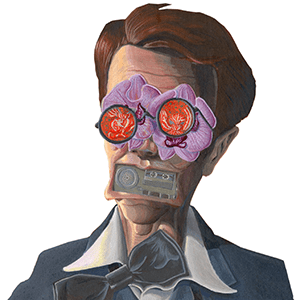
The Doors of Perception is a 1954 book by Aldous Huxley detailing his experiences when taking mescaline, a hallucinogen found naturally in the peyote cactus.
The book takes the form of Huxley’s recollection of a drug trip which took place over the course of an afternoon, and takes its title from William Blake’s poem ‘The Marriage of Heaven and Hell.’ Huxley recalls the insights he experienced, which range from the ‘purely aesthetic’ to ‘sacramental vision.’ He also incorporates later reflections on the experience and its meaning for art and religion.
read more »
Posted in Drugs, Language, Philosophy |
1 Comment »
July 4, 2011


Robert Anton Wilson (1932 – 2007) was a futurist thinker, libertarian, and writer. He held a Ph.D in Psychology. At one time he was a writer for Playboy magazine. Wilson was the author of the ‘Schrödinger’s Cat’ trilogy (1979). He also co-wrote (with Robert Shea) the ‘Illuminatus!’ trilogy (1975), which took a humorous look at the American fear of conspiracies. These books mix true facts with fiction. In ‘The Cosmic Trigger’ (1976), he introduced Discordianism, Sufism, futurism, the Illuminati and other unusual subjects to the general public. He also worked with Timothy Leary to promote futurist ideas of space migration, life extension, and intelligence enhancement.
Recognized as an episkopos, pope, and saint of Discordianism, Wilson helped publicize the group. He described his work as an ‘attempt to break down conditioned associations, to look at the world in a new way, with many models recognized as models or maps, and no one model elevated to the truth.’ His goal being ‘to try to get people into a state of generalized agnosticism, not agnosticism about God alone but agnosticism about everything.’
read more »
Posted in Humor, Language, Philosophy |
Leave a Comment »




 The Daily Omnivore