May 19, 2011


Eratosthenes [er-uh-tos-thuh-neez] of Cyrene (276BCE–194BCE) was a Greek mathematician, geographer and astronomer. He was head of the Library of Alexandria from 240BC until his death: this was the most important library of the ancient world.
According to the Suda (a 10th century Byzantine encyclopedia) his contemporaries nicknamed him Beta, (the second letter of the Greek alphabet), because he was the second best in the world in almost any field. Eratosthenes was a friend of Archimedes, who also lived and worked in Alexandria. Archimedes was the greatest mathematician and inventor of the age, so perhaps the Beta nickname was not unjust.
read more »
Posted in Philosophy, Science |
Leave a Comment »
May 19, 2011
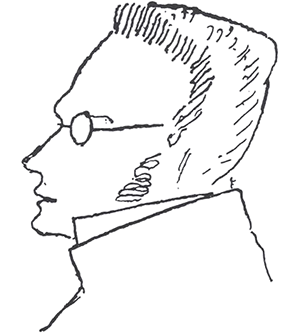
Johann Kaspar Schmidt (1806 – 1856), better known as Max Stirner (the nom de plume he adopted from a schoolyard nickname he had acquired as a child because of his high brow, in German ‘Stirn’), was a German philosopher, who ranks as one of the literary fathers of nihilism, existentialism, post-modernism and anarchism.
Stirner’s main work is ‘The Ego and Its Own’ (‘Der Einzige und sein Eigentum’), published in 1844 in Leipzig. It is a a radical anti-authoritarian and individualist critique of contemporary Prussian society, and modern western society.
read more »
Posted in Philosophy, Politics |
Leave a Comment »
May 11, 2011


The Long Now Foundation, established in 1996, is a private organization that seeks to become the seed of a very long-term cultural institution. It aims to provide a counterpoint to what it views as today’s ‘faster/cheaper’ mindset and to promote ‘slower/better’ thinking. The Long Now Foundation hopes to ‘creatively foster responsibility’ in the framework of the next 10,000 years, and so uses 5-digit dates to address the Year 10,000 problem (e.g. by writing 02011 rather than 2011).
The Foundation has several ongoing projects, including a 10,000-year clock known as the ‘Clock of the Long Now,’ the Rosetta Project, the Long Bet Project, the open source Timeline Tool (also known as Longviewer), the Long Server and a monthly seminar series.
read more »
Posted in Philosophy, Technology |
Leave a Comment »
May 9, 2011


Drop City was an artists’ community that formed in southern Colorado in 1965. Abandoned by the early 1970s, it became known as the first rural ‘hippie commune.’
In 1965, the four original founders, art students and filmmakers from the University of Kansas and University of Colorado, bought a 7-acre tract of land in south eastern Colorado. Their intention was to create a live-in work of what they called ‘Drop Art’ (sometimes called ‘droppings’), which was informed by the ‘happenings’ of Allan Kaprow and the impromptu performances, a few years earlier, of John Cage, Robert Rauschenberg and Buckminster Fuller, at Black Mountain College.
read more »
Posted in Art, Money, Philosophy |
Leave a Comment »
May 9, 2011

Buckminster Fuller (1895 – 1983) was an American engineer and author. He popularized terms such as ‘Spaceship Earth,’ ephemeralization, and synergetics. He also developed numerous inventions, mainly architectural designs, the best known of which is the geodesic dome. Carbon molecules known as fullerenes were later named by scientists for their resemblance to geodesic spheres.
As a child he had trouble with geometry, being unable to understand the abstraction necessary to imagine that a chalk dot on the blackboard represented a mathematical point, or that an imperfectly drawn line with an arrow on the end was meant to stretch off to infinity. He often made items from materials he brought home from the woods, and sometimes made his own tools.
read more »
Posted in Philosophy, Technology |
Leave a Comment »
May 5, 2011

The boiling frog story is a widespread anecdote describing a frog slowly being boiled alive. The premise is that if a frog is placed in boiling water, it will jump out, but if it is placed in cold water that is slowly heated, it will not perceive the danger and will be cooked to death. It is a metaphor for the inability of people to react to significant changes that occur gradually. However, the premise of the story is not literally true; an actual frog submerged and gradually heated will jump out. (Similarly, the metaphor of an ostrich with its head buried in the sand is also not base in fact.)
The moral of the story is that people should make themselves aware of gradual change lest they suffer eventual undesirable consequences. At times it is told in support of a slippery slope argument. It is also used in business to illustrate the idea that change needs to be gradual to be accepted. It was used in 1960 to describe the dangers of sympathy towards the Soviet Union during the Cold War; in 1980 about the impending collapse of civilization anticipated by survivalists; and in the 1990s about inaction in response to climate change and staying in abusive relationships. It has also been used by libertarians to warn about slow erosion of civil rights. In philosophy the boiling frog story has been used as a way of explaining the ‘sorites paradox’: if you remove grains one at a time from a heap of sand, at what point does it cease to be a ‘heap.’
Posted in Language, Philosophy, Science |
Leave a Comment »
May 3, 2011

The relationship between religion and science has been a focus of the demarcation problem, the question of where to the boundary between science and religion. Religion, is often argued to rely on revelation and faith.
The methods of science are elaborate and science does not depend on faith. Some scholars say the two are separate, as in John William Draper’s conflict thesis and Stephen Jay Gould’s non-overlapping magisteria, while others propose an interconnection.
Posted in Philosophy, Science |
Leave a Comment »
May 3, 2011

Theistic evolution is a concept that asserts that classical religious teachings about God are compatible with the modern scientific understanding about biological evolution. In short, theistic evolutionists believe that there is a God, that God is the creator of the material universe and (by consequence) all life within, and that biological evolution is simply a natural process within that creation. Evolution, according to this view, is simply a tool that God employed to develop human life.
Theistic evolution is not a scientific theory, but a particular view about how the science of evolution relates to religious belief and interpretation. Theistic evolution supporters can be seen as one of the groups who reject the conflict thesis regarding the relationship between religion and science – that is, they hold that religious teachings about creation and scientific theories of evolution need not contradict. Proponents of this view are sometimes described as Christian Darwinists.
Posted in Language, Philosophy, Science |
1 Comment »
May 3, 2011

Carl Sagan (1934 – 1996) was an American astronomer. He devoted his life to popularizing science. He speculated about what life from other planets would be like, and promoted the search for extraterrestrial life. He is world famous for his popular science books and the television series Cosmos, which he co-wrote and presented.
He was born in Brooklyn New York where his father, Sam Sagan, was a Jewish clothes maker and his mother, Rachel Molly Gruber, was a housewife. Sagan attended the University of Chicago earning two degrees in physics. He followed with a doctorate in Astronomy in 1960 and taught at Harvard University until 1968, when he moved to Cornell University.
read more »
Posted in Language, Philosophy, Science |
Leave a Comment »
May 2, 2011

For a one-time charge of $10, After the Rapture Pet Care promises to look after Christian’s pets on Earth should the rapture occur. When Jesus returns, their non-Christian administrators will activate a rescue plan: animal caretakers will be alerted immediately by email and telephone that they have been activated.
Pets will be assigned to caretakers based upon location and other factors. Administrators will do whatever it takes to find and rescue pets covered by a policy.
Posted in Death, Humor, Philosophy |
Leave a Comment »
April 28, 2011

Weltschmerz [velt-shmerts] (from the German, meaning world-pain or world-weariness) is a term coined by the German author Jean Paul and denotes the kind of feeling experienced by someone who understands that physical reality can never satisfy the demands of the mind. This kind of pessimistic world view was widespread among several romantic authors such as Lord Byron and Herman Hesse. It is also used to denote the feeling of sadness when thinking about the evils of the world.
The modern meaning of Weltschmerz in the German language is the psychological pain caused by sadness that can occur when realizing that someone’s own weaknesses are caused by the inappropriateness and cruelty of the world and (physical and social) circumstances. Weltschmerz in this meaning can cause depression, resignation and escapism, and can become a mental problem.
Posted in Language, Philosophy, World |
Leave a Comment »
April 28, 2011

A burqini is a type of swimsuit for women designed by Lebanese Australian Aheda Zanetti under the company name Ahiida. The suit covers the whole body except the face, the hands and the feet (enough to preserve Muslim modesty), whilst being light enough to enable swimming. It looks rather like a full-length wetsuit with built-in hood, but somewhat looser and made of swimsuit material instead of neoprene.
In August 2009, a woman in France was prevented from swimming in a public pool wearing a burqini. This was due to a long-standing law requiring swimwear in place of street clothing in public pools, for hygienic reasons, rather than the result of any specific political position on the garment, despite controversy in France over Islamic dress. There are other styles of Islamic swimwear such as the veilkini and mycozzie which was the actual garment worn in the France incident.
Posted in Games, Philosophy, Sex |
Leave a Comment »





 The Daily Omnivore