March 28, 2011

The Four Chaplains, also sometimes referred to as the ‘Immortal Chaplains,’ were four United States Army chaplains who gave their lives to save other civilian and military personnel during the sinking of the troop ship USAT Dorchester during World War II. They helped other soldiers board lifeboats and gave up their own life jackets when the supply ran out. The chaplains joined arms, said prayers, and sang hymns as they went down with the ship.
The four men were relatively new chaplains, who all held the rank of lieutenant. They included Methodist Reverend George L. Fox, Rabbi Alexander D. Goode, Roman Catholic Priest John P. Washington and Reformed Church in America Reverend Clark V. Poling. Their backgrounds, personalities, and faiths were different. They met at the Army Chaplains School at Harvard University.
Posted in Death, Philosophy, War |
Leave a Comment »
March 28, 2011

Andrei Tarkovsky (1932 – 1986) was a Russian filmmaker, widely regarded as one of the finest of the 20th century. Tarkovsky’s films include ‘Andrei Rublev,’ ‘Solaris,’ ‘The Mirror,’ and ‘Stalker.’ He directed the first five of his seven feature films in the Soviet Union; his last two films were produced in Italy and Sweden, respectively. They are characterized by spirituality and metaphysical themes, long takes, lack of conventional dramatic structure and plot, and distinctively authored use of cinematography.
read more »
Posted in Art, Philosophy, World |
Leave a Comment »
March 25, 2011

Holi [hoh-lee] is a spring religious festival celebrated by Hindus. It is primarily observed in India, Nepal, Sri Lanka, and countries with large Indic diaspora populations, such as Suriname, Malaysia, Guyana, South Africa, Trinidad, United Kingdom, United States, Mauritius, and Fiji.
The main day, Holi, is celebrated by people throwing colored powder and colored water at each other. Bonfires are lit the on the eve of the festival in memory of the miraculous escape that young Prahlad accomplished when Demoness Holika carried him into the fire. Holika was burnt but Prahlad, a staunch devotee of god Vishnu, escaped without any injuries due to his unshakable devotion.
Posted in Philosophy, World |
Leave a Comment »
March 25, 2011

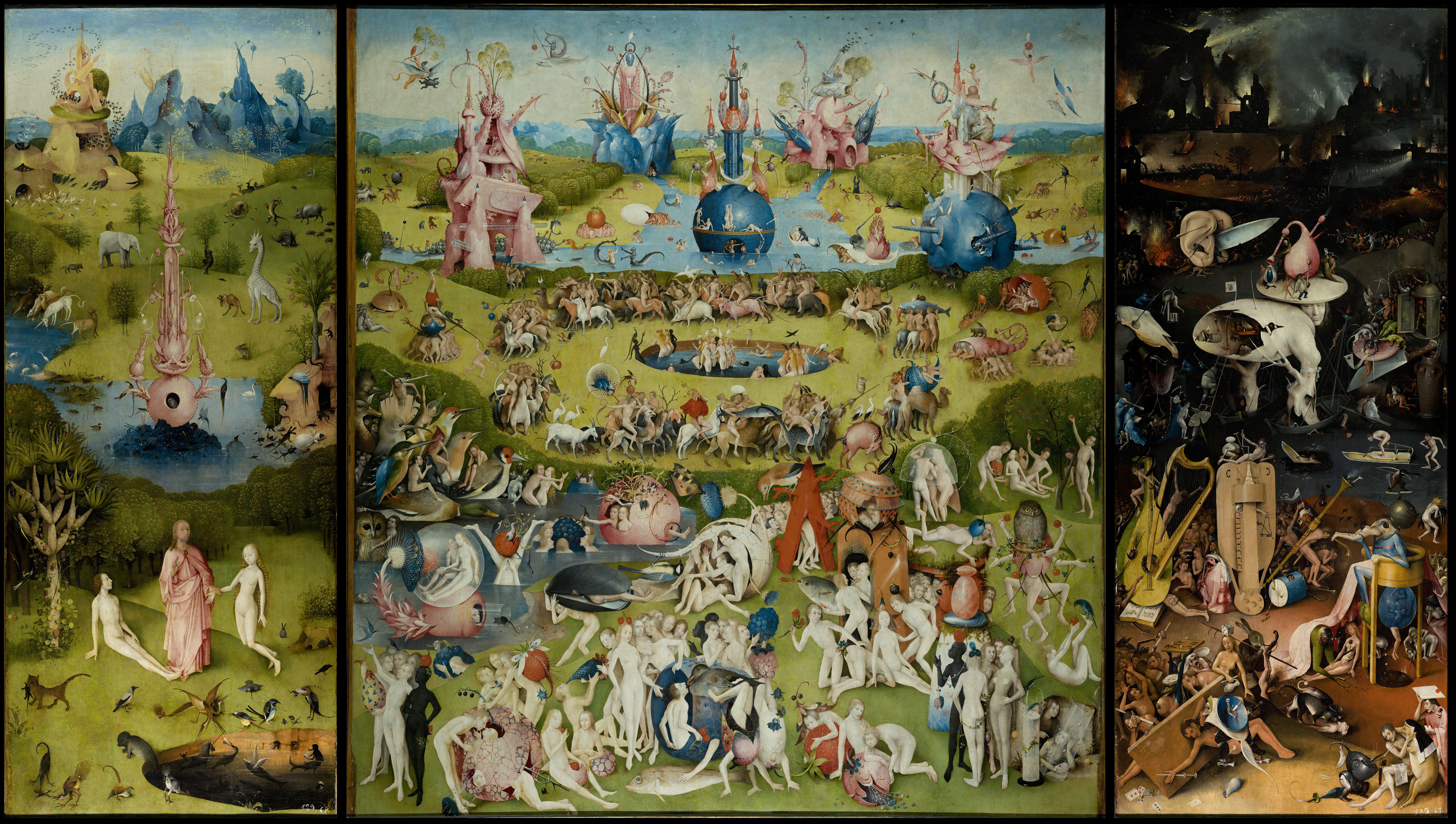
Hieronymus Bosch (c. 1450 – 1516) was an Early Netherlandish painter. His work is known for its use of fantastic imagery to illustrate moral and religious concepts and narratives. Little is known of his life or training. He left behind no letters or diaries, and nothing is known of his personality or his thoughts on the meaning of his art. Bosch produced several triptychs, panel paintings which are divided into three sections, which are hinged together and folded.
Among his most famous is ‘The Garden of Earthly Delights,’ which depicts paradise with Adam and Eve and many wondrous animals on the left panel, the earthly delights with numerous nude figures and tremendous fruit and birds on the middle panel, and hell with depictions of fantastic punishments of the various types of sinners on the right panel. When the exterior panels are closed the viewer can see, painted in grisaille (shades of grey), God creating the Earth.
Posted in Art, Philosophy |
Leave a Comment »
March 25, 2011

The intelligence of the Ashkenazi [ahsh-kuh-nah-zee] Jews has been the subject of studies which report higher a average intelligence quotient than among the general population. They are greatly overrepresented in occupations and fields with the high cognitive demands. During the 20th century, Ashkenazi Jews made up about 3% of the US population but won 27% of the US science Nobel Prizes, and half of the world’s chess champions were among their ranks.
read more »
Posted in Education, Philosophy, Science |
Leave a Comment »
March 24, 2011

Synchronicity [sin-kro-nis-uh-tee] is the experience of two or more events, that are apparently causally unrelated or unlikely to occur together by chance, that are observed to occur together in a meaningful manner. The concept of synchronicity was first described by Swiss psychologist Carl Jung in the 1920s. The concept does not question, or compete with, the notion of causality. Instead, it maintains that just as events may be grouped by cause, they may also be grouped by their meaning.
read more »
Posted in Philosophy, Science |
Leave a Comment »
March 23, 2011

The lottery of birth is a philosophical argument that states: since no one chooses where they are born, they should not be held responsible for something that is beyond their control (e.g. being rich, being poor, etc.). The lottery of birth argument was sometimes used by philosophers such as John Locke, Thomas Hobbes, and Jean-Jacques Rousseau. More modern day uses have been prompted by political theorists such as John Rawls, who explores the subject more in depth in his book ‘A Theory of Justice.’
Posted in Money, Philosophy |
Leave a Comment »
March 15, 2011

Love Jihad (also known as Romeo Jihad) is an alleged activity under which some young Muslim boys in Southern India reportedly targeted college girls belonging to non-Muslim communities for conversion to Islam by feigning love. A Love Jihad was alleged to be conducted in Kerala and Mangalore in the coastal Karnataka region. According to Kerala Catholic Bishops Council, up to 4,500 girls in Kerala have been targeted, whereas Hindu Janajagruthi Samiti claimed that 30,000 girls have been converted in Karnataka alone.
The practice is said to be popular on college campuses, and it was on one such that in early September 2009 two girls — one Hindu and one Christian — indicated that they had been forced to convert by two Muslim youths. The young men, both of whom were members of the Muslim Popular Front of India’s student organisation Campus Front were subsequently arrested and held without bail.
Posted in Love, Philosophy, War |
Leave a Comment »
March 14, 2011

The Blue Brain Project is an attempt to create a synthetic brain by reverse-engineering the mammalian brain down to the molecular level. The aim of the project, founded in 2005 by the Brain and Mind Institute of the École Polytechnique in Lausanne, Switzerland, is to study the brain’s architectural and functional principles, and is headed by the Institute’s director, Henry Markram. Using an IBM Blue Gene supercomputer running Michael Hines’s NEURON software, the simulation does not consist simply of an artificial neural network, but involves a biologically realistic model of neurons.
It is hoped that it will eventually shed light on the nature of consciousness. A longer term goal is to build a detailed, functional simulation of the physiological processes in the human brain: ‘It is not impossible to build a human brain and we can do it in 10 years,” Markram said at the 2009 TED conference in Oxford. In a BBC World Service interview he said: ‘If we build it correctly it should speak and have an intelligence and behave very much as a human does.’
Posted in Philosophy, Science, Technology |
Leave a Comment »
March 11, 2011

The Ides of March is a day on the Roman calendar that corresponds to March 15th. It was marked by several religious observances, and became notorious as the date of the assassination of Julius Caesar in 44 BCE. In Canada, the day is commemorated with the drinking of Bloody Caesar (a Bloody Mary made with Clamato). In the original Roman calendar, March was the first month of the year. The holidays observed by the Romans from the first through the Ides often reflect their origin as new year celebrations. The Romans did not number days of a month sequentially from the first through the last day.
Instead, they counted back from three fixed points of the month: the Nones (5th or 7th, depending on the length of the month), the Ides (13th or 15th), and the Kalends (1st) of the following month. The Ides occurred near the midpoint, on the 13th for most months, but on the 15th for March, May, July, and October. The Ides were supposed to be determined by the full moon, reflecting the lunar origin of the Roman calendar. On the earliest calendar, the Ides of March would have been the first full moon of the new year.
read more »
Posted in Death, Language, Philosophy |
Leave a Comment »
March 10, 2011
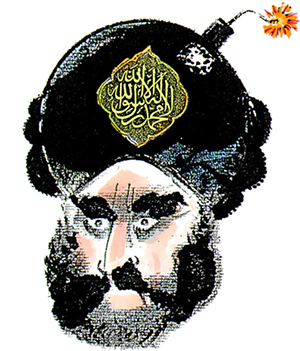
The Jyllands-Posten Muhammad cartoons controversy began after 12 editorial cartoons, most of which depicted the Islamic prophet Muhammad, were published in the Danish newspaper ‘Jyllands-Posten’ in 2005. The newspaper announced that this publication was an attempt to contribute to the debate regarding criticism of Islam and self-censorship. Danish Muslim organizations responded by holding public protests. The cartoons were reprinted in newspapers in more than 50 other countries, expanding the controversy.
Critics of the cartoons described them as Islamophobic or racist, and argued that they are blasphemous to people of the Muslim faith, are intended to humiliate a Danish minority, or are a manifestation of ignorance about the history of Western imperialism. Supporters have said that the cartoons illustrated an important issue in a period of Islamic terrorism and that their publication is a legitimate exercise of the right of free speech, explicitly tied to the issue of self-censorship.
Posted in Philosophy, Politics, World |
Leave a Comment »
March 9, 2011

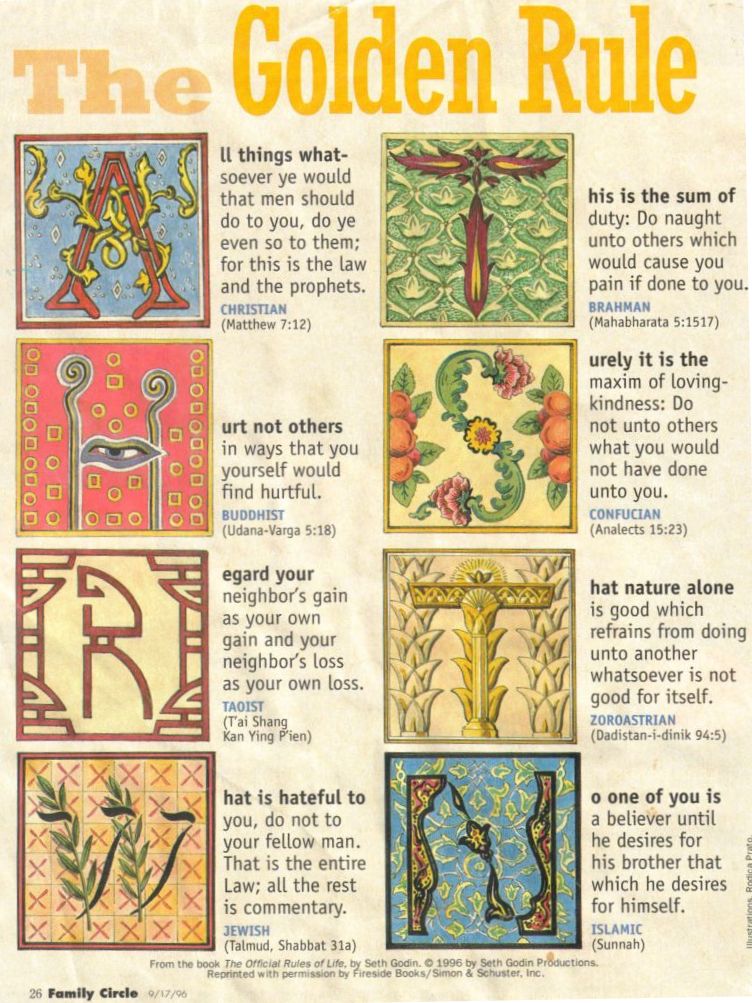
The Golden Rule or ethic of reciprocity is an ethical code: One should treat others as one would like others to treat oneself. It is arguably the basis for the modern concept of human rights, in which each individual has a right to just treatment, and a reciprocal responsibility to ensure justice for others. A key element of the Golden Rule is that a person attempting to live by this rule treats all people with consideration, not just members of his or her in-group.
The ethic of reciprocity was present in certain forms in the philosophies of ancient Babylon, Egypt, Persia, India, Greece, Judea, and China. Examples of statements that mirror the Golden Rule appear in Ancient Egypt, for example in the story of ‘The Eloquent Peasant’ which is dated to the Middle Kingdom of Egypt (c. 2040–1650 BCE): ‘Now this is the command: Do to the doer to cause that he do.’ The label ‘golden’ is believed to have been applied by Confucius (551–479 BCE).
Posted in Language, Philosophy, Politics |
Leave a Comment »






 The Daily Omnivore