March 9, 2011

Individual sovereignty (or self-ownership) is the concept of property in one’s own person, expressed as the moral or natural right of a person to be the exclusive controller of his own body and life. According to Marxist philosopher G. Cohen, the concept of self-ownership is that ‘each person enjoys, over himself and his powers, full and exclusive rights of control and use, and therefore owes no service or product to anyone else that he has not contracted to supply.’
Sovereign individuals have supreme authority over their own choices, without the interference of governing powers, provided they have not violated the rights of others. This notion is central to classical liberalism, abolitionism, libertarianism, objectivism, and anarchism. Sovereign-minded individuals would then seem to prefer an atmosphere consisting of decentralized administrative organizations acting as servants to the individual.
Posted in Language, Philosophy, Politics |
Leave a Comment »
March 8, 2011


Paul Rand (1914 — 1996) was an American graphic designer, best known for his corporate logo designs, including the logos for IBM, UPS, Enron, Westinghouse, and ABC. He was one of the originators of the Swiss Style of graphic design, which emphasizes cleanliness, readability and objectivity.
read more »
Posted in Art, Money, Philosophy |
Leave a Comment »
March 7, 2011

Twin Peaks is an American TV drama created by David Lynch and Mark Frost. The series follows the investigation of the brutal murder of a popular teenager and homecoming queen, Laura Palmer, by FBI Special Agent Dale Cooper. The pilot episode was broadcast in April 1990 on ABC, which led to another seven episodes being produced and a second season, which aired until June 1991.
As with much of Lynch’s other work (notably ‘Blue Velvet’), ‘Twin Peaks’ explores the gulf between the veneer of small-town respectability and the seedier layers of life lurking beneath it. Each character from the town leads a double life that is slowly uncovered as the series progresses.
read more »
Posted in Art, Philosophy |
Leave a Comment »
March 7, 2011

Hungry ghost is a Western translation of an Eastern phrase representing beings who are driven by intense emotional needs in an animalistic way. In Buddhism, they are ghosts only in the sense of not being fully alive; not fully capable of living and appreciating what the moment has to offer. They are phantomlike creatures with withered limbs, grossly bloated bellies, and long thin necks.
They represent a fusion of rage and desire. Tormented by unfulfilled cravings and insatiably demanding of impossible satisfactions, the Hungry Ghosts are searching for gratification for old unfulfilled needs whose time has passed. They are beings who have uncovered a terrible emptiness within themselves, who cannot see the impossibility of correcting something that has already happened. Their ghostlike state represents their attachment to the past.
Posted in Language, Philosophy, World |
Leave a Comment »
March 2, 2011

Transcendent Man is a documentary film by filmmaker Barry Ptolemy. The film chronicles the life and ideas of Ray Kurzweil, inventor, futurist, and author of ‘The Singularity is Near.’ ‘Transcendent Man’ presents his vision of technological singularity, the point in the future in which technology will be advancing so rapidly that humans will have to enhance themselves with artificial intelligence in order to keep up.
Kurzweil predicts the dawning of a new civilization in which humans will no longer be dependent upon their physical bodies, will become trillions of times more intelligent, and lose the ability to distinguish between real and virtual reality. He believes this will cause human aging and illness to be reversed, world hunger and poverty to be solved, and death to be ‘cured.’ Critics accuse him of being too optimistic, and argue that the dangers of the Singularity far outweigh the benefits, pointing out the apocalyptic implications.
Posted in Art, Philosophy, Technology |
Leave a Comment »
March 2, 2011
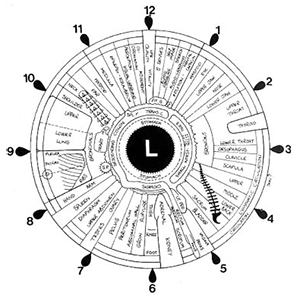
Iridology is a pseudoscience whose proponents believe that patterns, colors, and other characteristics of the iris can be examined to determine information about a patient’s systemic health. Practitioners match their observations to iris charts, which divide the iris into zones that correspond to specific parts of the human body.
Posted in Philosophy, Science |
Leave a Comment »
March 1, 2011

Ubuntu [ooh-boon-too] is an ethic or humanist philosophy focusing on people’s allegiances and relations with each other. The word has its origin in the Bantu languages of southern Africa. Ubuntu is seen as a classical African concept. Ubuntu translates to, ‘I am what I am because of who we all are.’
Posted in Language, Philosophy, World |
Leave a Comment »
February 27, 2011

Wabi-sabi represents a comprehensive Japanese world view or aesthetic centered on the acceptance of transience. The aesthetic is sometimes described as one of beauty that is ‘imperfect, impermanent and incomplete.’ It is a concept derived from the Buddhist assertion of the Three marks of existence (impermanence, suffering, and non-self).
Characteristics of the wabi-sabi aesthetic include asymmetry, asperity, simplicity, economy, austerity, modesty, intimacy and appreciation of the ingenuous integrity of natural objects and processes.
read more »
Posted in Art, Philosophy, World |
Leave a Comment »
February 27, 2011

Sehnsucht is a German noun translated as ‘longing,’ ‘yearning’ and ‘craving,’ or in a wider sense a type of ‘intensely missing.’ The word is almost impossible to translate adequately and describes a deep emotional state. Its meaning is somewhat similar to the Portuguese word, ‘saudade.’ The stage director and author Georg Tabori called Sehnsucht one of those quasi-mystical terms in German for which there is no satisfactory corresponding term in another language.
The term is a compound word, originating from an ardent longing or yearning (‘das Sehnen’) and addiction (‘die Sucht’). However, these words do not adequately encapsulate the full meaning of their resulting compound, even when considered together.
read more »
Posted in Language, Philosophy, World |
Leave a Comment »
February 23, 2011
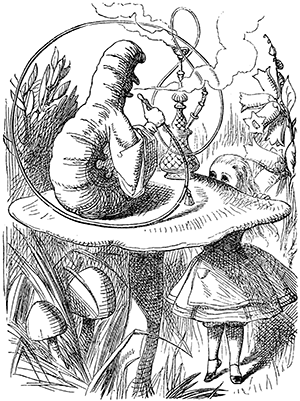
In Douglas Hofstadter’s book ‘Gödel, Escher, Bach,’ Tumbolia is ‘the land of dead hiccups and extinguished light bulbs,’ ‘where dormant software waits for its host hardware to come back up.’ The concept is introduced in the dialogue ‘Little Harmonic Labyrinth’ (based on the piece of the same name by Bach). In a later dialogue ‘A Mu Offering’ (named after Bach’s ‘Musical Offering’), a Tortoise gets rid of a knot in a string by tying a second one, and both disappear to Tumbolia; apparently, this is ‘The Law of Double Nodulation’ (a parody of the law of double negation).
The return of the two knots from Tumbolia prompts the speculation that some ‘layers of Tumbolia’ are more accessible than others. It is mentioned that ‘pushing’ or ‘popping’ potion can be used (drunk by the characters) to navigate up and down the various levels of Tumbolia. Tumbolia is compared to the Zen view of life after death, using the image of a snowflake, a self-contained subsystem of the universe, dissolving into ‘the larger system which once held it.’ Finally, in the book’s last dialogue, Hofstadter (himself appearing as a character) tells us that Tumbolia is where dreamed characters go when the dreamer wakes up.
Posted in Art, Death, Philosophy |
Leave a Comment »
February 23, 2011

‘Gödel, Escher, Bach: An Eternal Golden Braid’ (GEB) is a book by cognitive scientist Douglas Hofstadter, described by the author as ‘a metaphorical fugue on minds and machines in the spirit of Lewis Carroll.’ On its surface, GEB examines logician Kurt Gödel, artist M. C. Escher and composer Johann Sebastian Bach, discussing common themes in their work and lives. At a deeper level, the book is a detailed and subtle exposition of concepts fundamental to mathematics, symmetry, and intelligence. Through illustration and analysis, the book discusses how self-reference and formal rules allow systems to acquire meaning despite being made of ‘meaningless’ elements.
It also discusses what it means to communicate, how knowledge can be represented and stored, the methods and limitations of symbolic representation, and even the fundamental notion of ‘meaning’ itself. In response to confusion over the book’s theme, Hofstadter has emphasized that GEB is not about mathematics, art, and music but rather about how cognition and thinking emerge from well-hidden neurological mechanisms. In the book, he presents an analogy about how the individual neurons of the brain coordinate to create a unified sense of a coherent mind by comparing it to the social organization displayed in a colony of ants.
Posted in Art, Philosophy, Science |
Leave a Comment »
February 22, 2011

The Fellowship, also known as The Family, is a U.S.-based religious and political organization founded in 1935 by Abraham Vereide, a Methodist clergyman and founder of Goodwill Industries. Its stated purpose is to provide a forum for decision makers to share in Bible studies, prayer meetings, worship experiences, and to experience spiritual affirmation and support. It has been described as one of the most politically well-connected ministries in the US. The organization shuns publicity and its members share a vow of secrecy. Fellowship leader Doug Coe and others cites biblical admonitions against public displays of good works, insisting they would not be able to tackle diplomatically sensitive missions if they drew public attention.
Although the organization is secretive, it holds one regular public event each year, the ‘National Prayer Breakfast’ held in Washington, D.C. Every sitting president since Dwight D. Eisenhower, up to Barack Obama, has participated in at least one National Prayer Breakfast during his term. The Fellowship’s known participants include ranking United States government officials, corporate executives, heads of religious and humanitarian aid organizations, and ambassadors and high ranking politicians from across the world. Many United States Senators and Congressmen who have publicly acknowledged working with the Fellowship or are documented as having done so work together to pass or influence legislation.
Posted in Philosophy, Politics |
Leave a Comment »





 The Daily Omnivore