December 13, 2010

Lagom is a Swedish word with no direct English equivalent, meaning ‘just the right amount.’ It is also widely translated as ‘in moderation,’ ‘in balance,’ ‘optimal,’ ‘suitable,’ and ‘average.’ But whereas words like ‘sufficient’ and ‘average’ suggest some degree of abstinence, scarcity, or failure, lagom carries the connotation appropriateness although not necessarily perfection. The archetypical Swedish proverb ‘Lagom är bäst,’ literally ‘The right amount is best,’ is translated as ‘Enough is as good as a feast.’ The concept of lagom is similar to that of the Middle Path in Eastern philosophy, and Aristotle’s ‘golden mean’ of moderation in Western philosophy.
The value of ‘just enough’ can be compared to idiom ‘ess is more,’ or contrasted to the value of ‘more is better.’ It is viewed favorably as a sustainable alternative to the hoarding extremes of consumerism. It can also be viewed as repressive: ‘You’re not supposed to be too good, or too rich.’ In a single word, lagom is said to describe the basis of the Swedish national psyche, one of consensus and equality. In recent times Sweden has developed greater tolerance for risk and failure as a result of severe recession in the early 1990s. Nonetheless, it is still widely considered ideal to be modest and avoid extremes.
Posted in Language, Philosophy, World |
Leave a Comment »
December 13, 2010

The Jerusalem syndrome is a group of mental phenomena involving the presence of either religiously themed obsessive ideas, delusions or other psychosis-like experiences that are triggered by a visit to the city of Jerusalem. It is not endemic to one single religion or denomination and has affected Jews, Christians and Muslims of many different backgrounds.
The best known, although not the most prevalent, manifestation of the Jerusalem syndrome is the phenomenon whereby a person who seems previously balanced and devoid of any signs of psychopathology becomes psychotic after arriving in Jerusalem. The psychosis is characterised by an intense religious theme and typically resolves to full recovery after a few weeks or after being removed from the area.
read more »
Posted in Health, Philosophy, Science |
Leave a Comment »
December 8, 2010

Clown society is a term used in anthropology and sociology for an organization of comedic entertainers (or ‘clowns’) who have a formalized role in a culture or society. Sometimes clown societies have a sacred role, to represent a trickster character in religious ceremonies. Other times the purpose served by members of a clown society is only to parody excessive seriousness, or to deflate pomposity. A clown shows what is wrong with the ordinary way of doing things, and a clown shows how to do ordinary things the wrong way.
Members of a clown society always dress in some kind of a special costume reserved for clowns, which is usually an absurdly extreme form of normal dress. While in their costume, clowns have special permission from their society to parody or criticize defective aspects of their own culture. Clown societies usually train new members to become clowns in an apprentice system. Sometimes the training is improvisational comedy, but usually a clown society trains members in well known forms of costume, pantomime, song, dance, and common visual gags
Posted in Humor, Philosophy, World |
Leave a Comment »
December 8, 2010


Chautauqua [shuh-taw-kwuh] is an adult education movement in the United States, highly popular in the late 19th and early 20th centuries that still exists in parts of the U.S.. Chautauqua assemblies expanded and spread throughout rural America until the mid-1920s. The Chautauqua brought entertainment and culture for the whole community, with speakers, teachers, musicians, entertainers, preachers and specialists of the day. Former U.S. President Theodore Roosevelt was quoted as saying that Chautauqua is, ‘the most American thing in America.’
The first Chautauqua, the New York Chautauqua Assembly, was organized in 1874 by Methodist minister John Heyl Vincent and businessman Lewis Miller at a campsite on the shores of Chautauqua Lake in New York State. The educational summer camp format proved to be a popular choice for families and was widely copied. Within a decade, Chautauquas sprang up in various locations across North America. The popularity of the movement can be attributed in part to the social and geographic isolation of American farming and ranching communities. People in such areas would naturally be hungry for education, culture and entertainment, and Chautauqua was a timely response to that need in the late 19th century and early 20th century. The advent of the radio and the automobile diminished its role significantly.
Posted in Education, Philosophy |
Leave a Comment »
December 8, 2010

Bisha’a (‘trial by fire’) is a ritual practiced today by some Bedouin tribes for the purpose of lie detection. It is the best-known of various forms of trial by ordeal which are practiced by the Bedouin, but is increasingly uncommon, with more and more Bedouins preferring standard courts of law for enactment of justice. The basic ritual consists of the accused being asked to lick a hot metal object thrice. He is provided with water for rinsing after the ceremony. He is then inspected by the official who presides over the ceremony, the Mubesha, and by the designated witnesses of the ritual.
read more »
Posted in Language, Philosophy, World |
Leave a Comment »
December 7, 2010
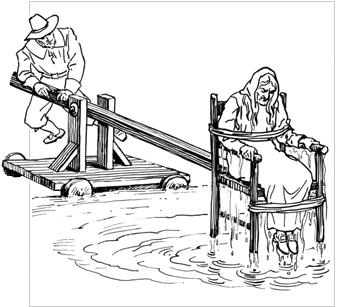
Ducking-stools and cucking-stools are chairs formerly used for punishment. They were both instruments of social humiliation and censure, primarily for the offense of scolding or back biting, and less often for sexual offenses like having an illegitimate child or prostitution. They were technical devices which formed part of the wider method of law enforcement through social humiliation.
Most were simply chairs into which the victim could be tied and exposed at her door or the site of her offence and publicly shamed. Some were on wheels and could be dragged around the parish. Some were put on poles so that they could be plunged into water, hence ‘ducking’ stool.
read more »
Posted in Language, Philosophy, Politics |
Leave a Comment »
December 3, 2010

The Red Book, also known as Liber Novus (Latin for New Book), is a 205-page manuscript written and illustrated by Swiss psychiatrist Carl Gustav Jung between approximately 1914 and 1930, which was not published or shown to the public until 2009. It contain some of his most personal material, and during the sixteen years he worked on it, Jung developed his theories of archetypes, collective unconscious, and individuation. Until 2001, his heirs denied scholars access to the book.
read more »
Posted in Art, Philosophy, Science |
Leave a Comment »
December 3, 2010
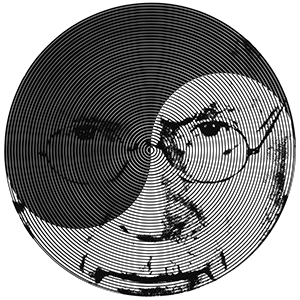
Carl Gustav Jung [yoong] (1875 – 1961) was a Swiss psychiatrist, an influential thinker, and the founder of analytical psychology. Jung is often considered the first modern psychologist to state that the human psyche is ‘by nature religious’ and to explore it in depth. Though not the first to analyze dreams, he has become perhaps one of the most well known pioneers in the field of dream analysis. Although he was a theoretical psychologist and practicing clinician, much of his life’s work was spent exploring other areas, including Eastern and Western philosophy, alchemy, astrology, sociology, as well as literature and the arts.
He considered the process of individuation necessary for a person to become whole. This is a psychological process of integrating the conscious with the unconscious while still maintaining conscious autonomy. Individuation was the central concept of analytical psychology. Many pioneering psychological concepts were originally proposed by Jung, including the Archetype, the Collective Unconscious, the Complex, and synchronicity. A popular psychometric instrument, the Myers-Briggs Type Indicator (MBTI), has been principally developed from Jung’s theories.
Posted in Health, Philosophy, Science |
Leave a Comment »
November 23, 2010

XXXchurch.com is a non-profit Christian website that aims to help those who struggle with pornography. Its target is consumers and those in the adult entertainment industry. The organization launched in January 2002 when the founders, Mike Foster and Craig Gross, set up a booth inside the AVN Adult Entertainment Expo in Las Vegas to promote the website as an alternative to porn, and it continues to attend porn conventions worldwide.
The organization describes itself as ‘the #1 Christian porn site designed to bring awareness, openness and accountability to those affected by pornography.’ It has received support from prominent Christian pastors such as Bill Hybels and Rob Bell.
Posted in Philosophy, Sex |
Leave a Comment »
November 22, 2010

Theosophy [thee-os-uh-fee] is a doctrine of religious philosophy and mysticism that holds that all religions are attempts by the ‘Spiritual Hierarchy’ to help humanity in evolving to greater perfection, and that each religion therefore has a portion of the truth. The founding members, Helena Petrovna Blavatsky, Henry Steel Olcott, and William Quan Judge, established the Theosophical Society in New York City in 1875. The present-day New Age movement is to a considerable extent based on the teachings of Blavatsky. The three declared objectives of the original Theosophical Society were to form a nucleus of the Universal Brotherhood of Humanity, without distinction of race, creed, sex, caste, or color; to encourage the study of comparative religion, philosophy, and science; and to investigate the unexplained laws of nature and the powers latent in man.
Theosophical writings propose that human civilizations, like all other parts of the universe, develop cyclically through seven stages. Blavatsky posited that humanity evolves through a series of seven ‘Root Races.’ In the first age, humans were pure spirit; in the second age, they were sexless beings inhabiting the now lost continent of Hyperborea; in the third age Lemurians were endowed with human consciousness and sexual reproduction. Modern humans finally developed on the continent of Atlantis and since Atlantis was the nadir of the cycle, the present fifth age is a time of reawakening humanity’s psychic gifts.
Posted in Philosophy |
Leave a Comment »
November 18, 2010

The Goddess movement is a loose grouping of social and religious phenomena growing out of second-wave feminism, predominantly in North America, Western Europe, Australia and New Zealand in the 1970s, which spread to the metaphysical community as well.
Spurred by the perception that women were not treated equitably by mainstream religions, many women turned to a female deity, as more in tune with their beliefs and spiritual needs. Masculine gender and male imagery were, at the time, attached to deity to the exclusion of female gender and female imagery. A unifying theme of this diverse movement is the female-ness of the deity (as opposed and contrasted to a patriarchal, male God).
Posted in Philosophy, Politics, Sex |
Leave a Comment »
November 17, 2010

Zener [zeh-ner] cards are cards used to conduct experiments for extra-sensory perception (ESP), most often clairvoyance. Perceptual psychologist Karl Zener designed the cards in the early 1930s for experiments conducted with his colleague, parapsychologist J. B. Rhine. Originally, tests for ESP were conducted using a standard deck of playing cards. There are just five different Zener cards: a hollow circle (one curve), a Greek cross (two lines), three vertical wavy lines (or ‘waves’), a hollow square (four lines), and a hollow five-pointed star. There are 25 cards in a pack, five of each design.
When Zener cards were first used, they were made out of a fairly thin translucent white paper. Several subjects or groups of subjects scored very highly until it was discovered that they had often been able to see the symbols through the backs of the cards. A redesign made it impossible to see the designs through the cards under any conditions. A subsequent deck featured an illustration of a building at Duke University on its reverse side, but the use of a non-symmetric reverse design allowed the deck to be exploited as a one-way deck.
Posted in Games, Philosophy, Science |
Leave a Comment »

.png/1024px-Ducking-Stool_1_(PSF).png "ducking stool")



 The Daily Omnivore