October 26, 2010
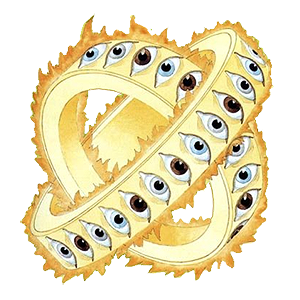
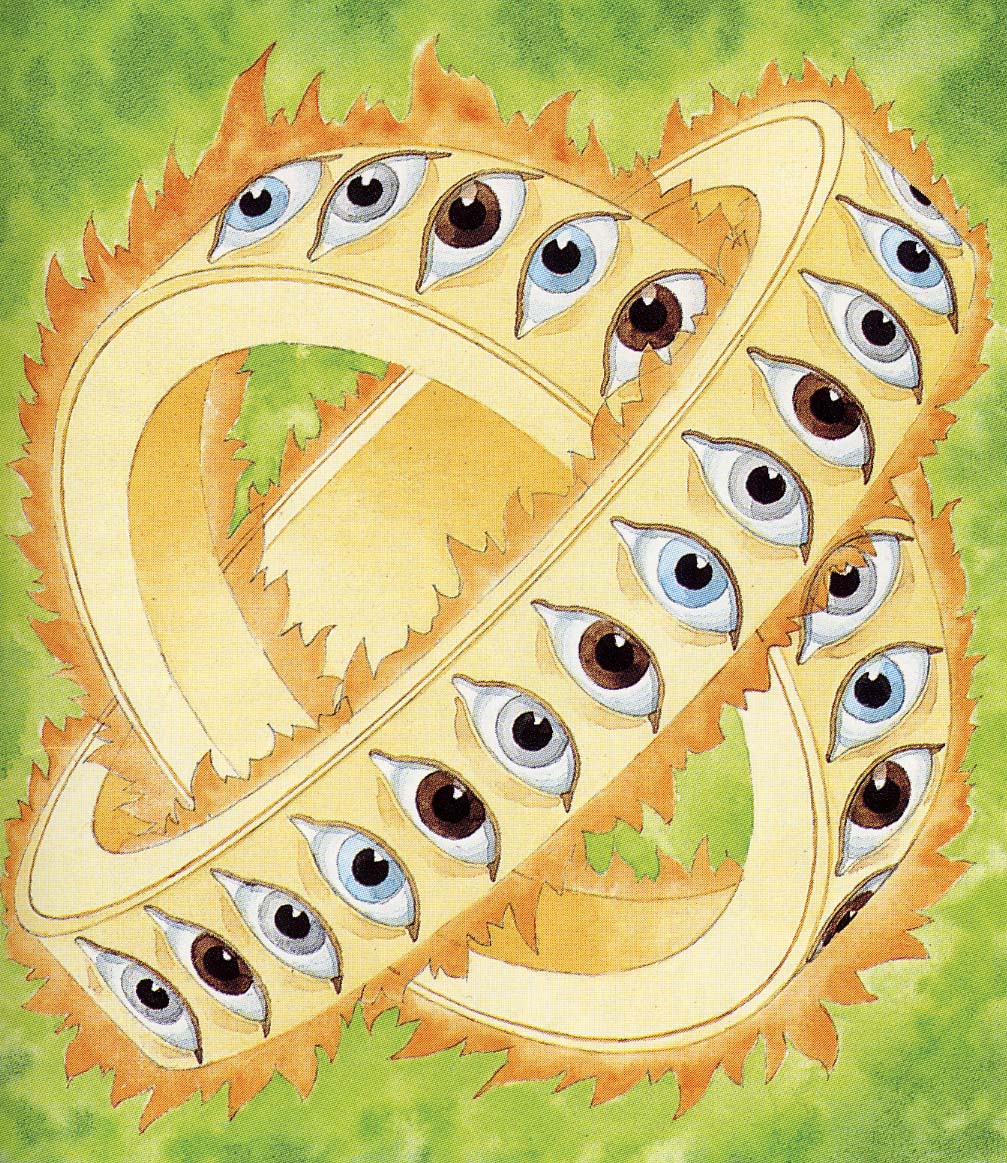
The Thrones are a class of celestial beings mentioned by Paul of Tarsus in Colossians 1:16 (New Testament) and related to the throne of God. They are living symbols of God’s justice and authority. The corresponding order of angels in Judaism is called the Erelim, which translates to ‘valiant ones,’ ‘heroes,’ or ‘warriors’. The Ophanim (Wheels or Galgallin) is a class of higher liberated celestial beings, under many Christian angelic hierarchies, that are also known as the ‘Thrones,’ from Daniel 7:9 (Old Testament). They are the carriers of the throne of God, hence the name. They are said to be wheels within wheels covered in eyes.
read more »
Posted in Philosophy |
1 Comment »
October 18, 2010

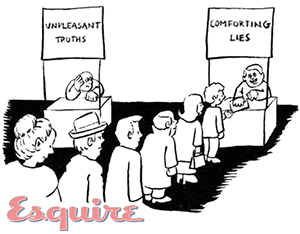
Radical Honesty is a technique and self-improvement program developed by Dr. Brad Blanton. The program asserts that lying is the primary source of modern human stress, and that practitioners will become happier by being more honest, even about painful or taboo subjects. Blanton claims this form of honesty can help all human relationships since it ‘creates an intimacy not possible if you are hiding something for the sake of someone’s feelings.’ The Radical Honesty technique includes having practitioners state their feelings bluntly, directly and in ways typically considered impolite.
People who practice Radical Honesty employ a collection of techniques to shift them out of acceptable norms of ‘white lying’ for the purpose of having a more truthful relationship with themselves and others. The material employed to communicate and teach Radical Honesty through books and workshops is drawn from an eclectic collection of sources including Sufism, clinical psychology, Gestalt therapy and the comic spiritual belief (developed by Blanton) called Futilitarianism. Futilitarianism claims it is futile to have any belief whatsoever.
Posted in Humor, Language, Philosophy |
Leave a Comment »
October 18, 2010


Freeganism is the practice of reclaiming and eating food that has been discarded. Freegans and Freeganism are often seen as part of a wider ‘anti-consumerist’ ideology, and freegans often employ a range of alternative living strategies based on limited participation in the conventional economy and minimal consumption of resources. Freegans ’embrace community, generosity, social concern, freedom, cooperation, and sharing in opposition to a society based on materialism, moral apathy, competition, conformity, and greed.’
The word ‘freegan’ is a portmanteau of ‘free’ and ‘vegan’; not all dumpster divers are vegan, but the ideology of veganism is inherent in freeganism. Freeganism started in the mid 1990s, out of the antiglobalization and environmentalist movements. The movement also has elements of Diggers, an anarchist street theater group based in Haight-Ashbury in San Francisco in the 1960s, that gave away rescued food.
read more »
Posted in Food, Money, Philosophy |
Leave a Comment »
October 18, 2010
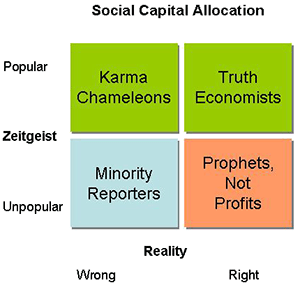
Whuffie is the ephemeral, reputation-based currency of Cory Doctorow’s science fiction novel, ‘Down and Out in the Magic Kingdom.’ This book describes a post-scarcity economy: All the necessities (and most of the luxuries) of life are free for the taking. A person’s current Whuffie is instantly viewable to anyone, as everybody has a brain-implant giving them an interface with the Net. The term has since seen some adoption as a synonym for social capital.
In the novel usual economic incentives have disappeared: Whuffie has replaced money, providing a motivation for people to do useful and creative things. A person’s Whuffie is a general measurement of his or her overall reputation and is gained (or lost) according to a person’s favorable (or unfavorable) actions. Public opinion determines which actions are favorable or unfavorable. Rudely pushing past someone on the sidewalk will cause a loss of points from the person pushed (and possibly from bystanders who witness the incident), while composing a much-loved symphony will earn the composer Whuffie from everyone who enjoyed it.
Posted in Money, Philosophy, Technology |
Leave a Comment »
October 13, 2010

A meme [meem] is a unit of cultural ideas, symbols or practices, which can be transmitted from one mind to another through writing, speech, gestures, rituals or other imitable phenomena. Supporters of the concept regard memes as cultural analogues to genes, in that they self-replicate and respond to selective pressures. The British scientist Richard Dawkins coined the word in ‘The Selfish Gene’ (1976) as a concept for discussion of evolutionary principles in explaining the spread of ideas and cultural phenomena.
Examples of memes given in the book included melodies, catch-phrases, beliefs (notably religious beliefs), clothing fashion, and the technology of building arches. Meme-theorists contend that memes evolve by natural selection (in a manner analogous to that of biological evolution) through the processes of variation, mutation, competition, and inheritance influencing an individual meme’s reproductive success. Memes spread through the behaviors that they generate in their hosts. Memes that propagate less prolifically may become extinct, while others may survive, spread, and (for better or for worse) mutate.
Posted in Humor, Language, Philosophy |
Leave a Comment »
October 10, 2010

Ital or I-tal is the dietary system associated with the Rastafari movement. The word derives from the English word ‘vital,’ with the initial syllable replaced by i. This is done to many words in the Rastafari vocabulary to signify the unity of the speaker with all of nature. Rastafarians derive their beliefs and morality from intense personal meditations and prayer, and therefore there is no single dogma of Rastafarian belief. Due to this emphasis on individual personal meditation in Rastafari, the expression of Ital eating varies widely from Rasta to Rasta, and there are few universal ‘rules’ of Ital living.
read more »
Posted in Food, Philosophy, World |
Leave a Comment »
October 10, 2010
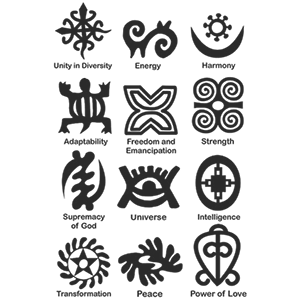
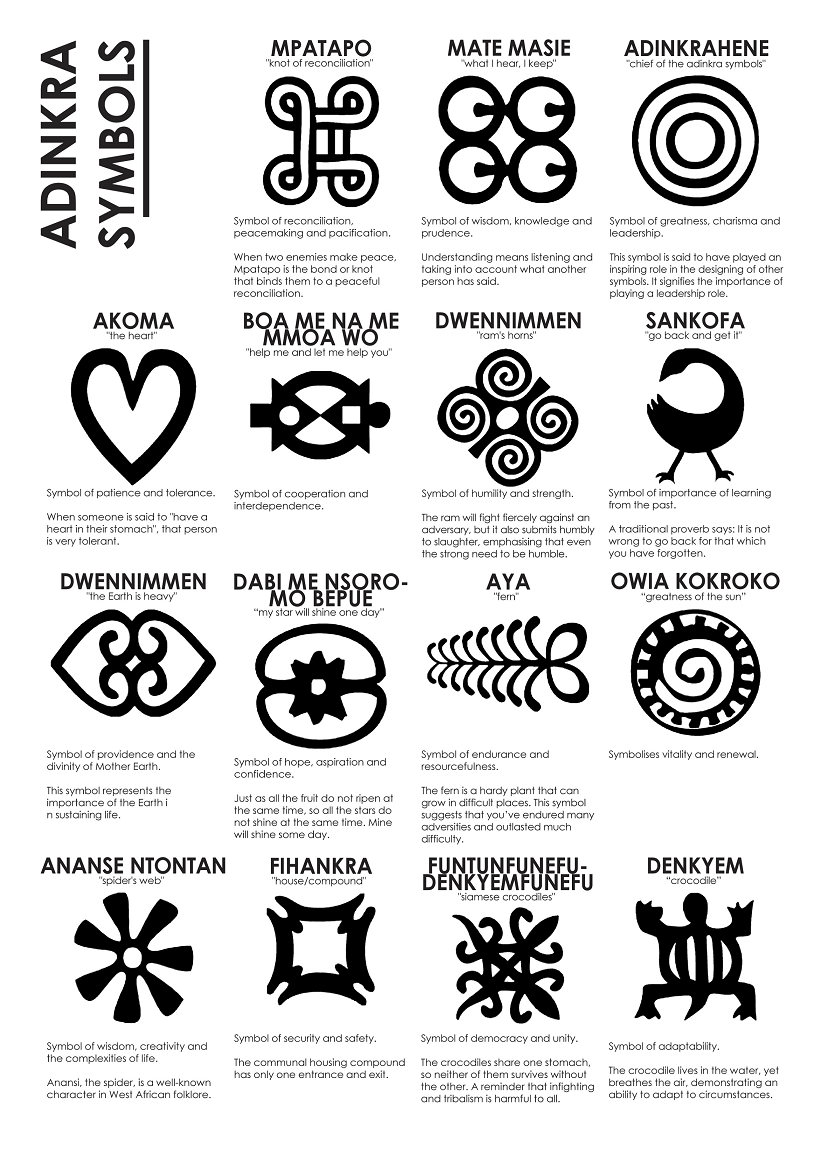
Adinkra [oon-din-krah] are visual symbols, originally created by the Akan of Ghana and the Gyaman of Cote d’Ivoire in West Africa, that represent concepts or aphorisms.
Adinkra are used on fabric, walls, in pottery, woodcarvings and logos. Fabric adinkra are often made by woodcut sign writing as well as screen printing. They also can be used to communicate evocative messages that represent parts of their life or those around them.
Posted in Art, Philosophy, World |
3 Comments »
October 10, 2010

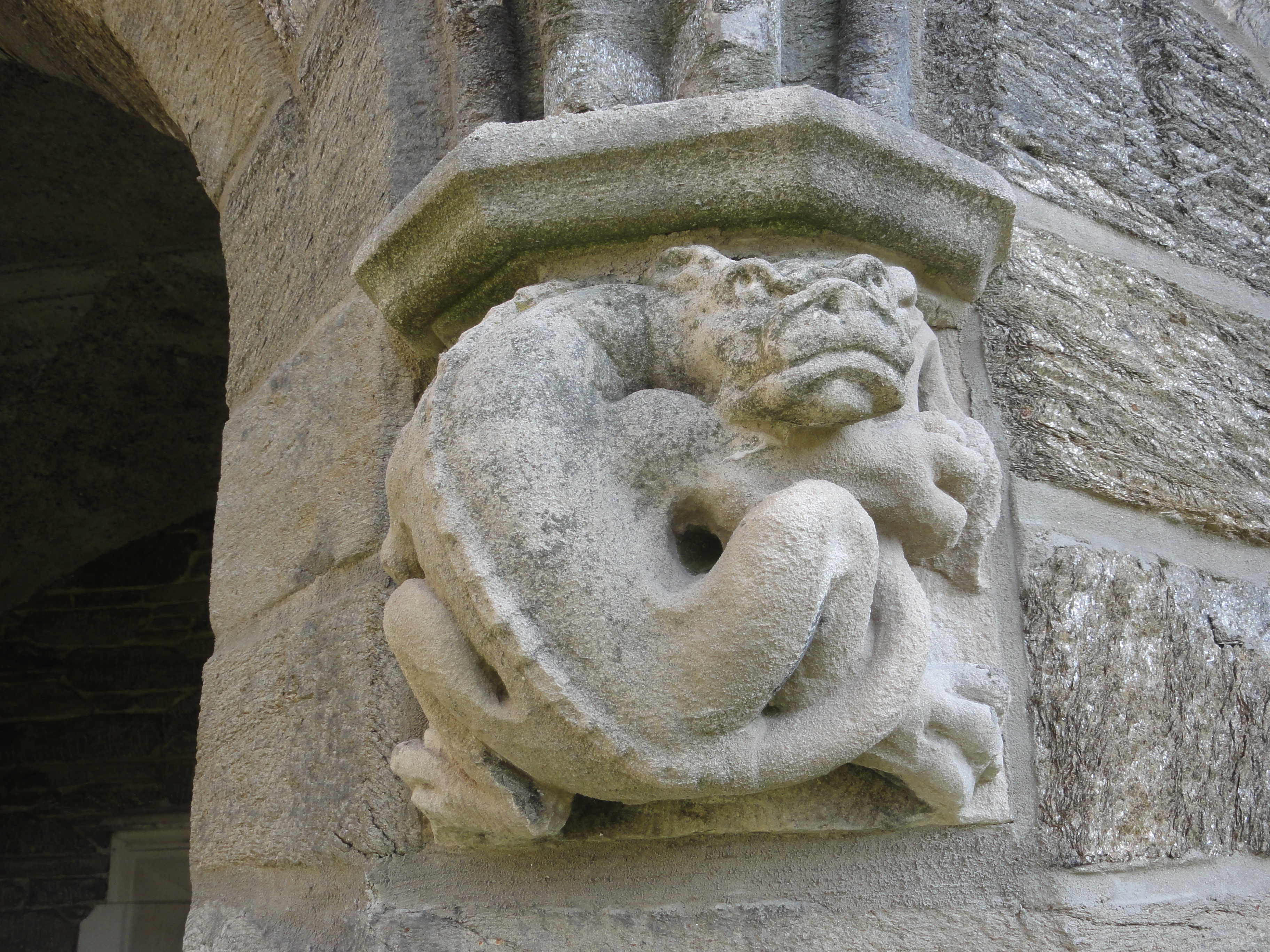
By definition, a hunky punk is an architectural feature that serves no purpose. Therefore, a true gargoyle is not a hunkypunk because it serves to drain water through its mouth. Hunky punks were often carved to create a balance of decoration. A typical example might be found at the corner of a church tower, along the coping ridge below any castellations. Often there are carvings on each corner, yet the roof may only drain in one direction and so there might be three hunkypunks and one true gargoyle.
There is a belief that a hunky punk is only a short squatting figure typical of those found in the churches of western England. The origin of the term hunkypunk has been ascribed to the Old English ‘hunkers’ which means haunches and ‘punchy’ which means short-legged. The balance of good and evil in church design reminds worshippers of the narrow path they tread. For every good and benign creature such as a saint or an animal to signify purity, there is typically an opposite to bring out the fear of evil.
Posted in Art, Philosophy |
Leave a Comment »
October 9, 2010

Sheela na Gigs are carvings of naked women displaying an exaggerated vulva found on churches, castles and other buildings, particularly in Ireland and Britain. Such carvings are said to ward off death and evil.
Other grotesques such as gargoyles and Hunky Punks are frequently found on churches all over Europe and it is commonly said that they are there to keep evil spirits away. They are often positioned over doors or windows, presumably to protect these openings.
Posted in Art, Philosophy, Sex |
Leave a Comment »
September 23, 2010
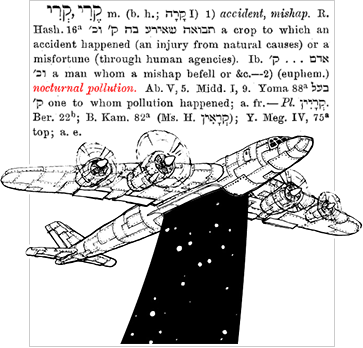
Keri is a Hebrew term which literally means ‘happenstance,’ ‘frivolity’ or ‘contrariness’ and has come to mean ‘seminal emission.’ The term is generally used in Jewish law to refer specifically to the regulations and rituals concerning the emission of semen. The biblical regulations of the Priestly Code specify that a man who had experienced an emission of semen would become ritually impure, until the evening came and the man had washed himself in water.
The Talmud adds prohibitions designed to avoid keri in cases that don’t involve sexual intercourse. It was forbidden for a man to investigate himself to determine whether an emission of semen had occurred. The Talmud goes on to address the concern that preventing any contact with the penis would make urination more awkward for males, with some Talmudic rabbis arguing that men should urinate from a high place or above dirt so that they don’t have to touch the penis to avoid making a mess. Deliberate erections were considered by some of the Talmudic writers to be an excommunicable offense, and Talmudic sources even prohibit men from witnessing sexually arousing scenes.
Posted in Philosophy, Sex |
Leave a Comment »
September 23, 2010


Hafiz [hah-fiz], literally meaning ‘guardian’, is an honorific used by Muslims in modern days for someone who has completely memorized the Qur’an. The Islamic prophet Muhammad lived in the 7th century CE, in Arabia in a time when many people were not literate. The Arabs preserved their histories, genealogies, and poetry by memory alone. When Muhammad proclaimed the verses later collected as the Qur’an, his followers naturally preserved the words by memorizing them.
Early accounts say that the literate Muslims also wrote down such verses as they heard them. However, the Arabic writing of the time was a scripta defectiva, an incomplete script, that did not include vowel markings or other diacritics needed to distinguish between words. There are numerous traditions of recitation. Most hafiz know only one version, but true experts can recite in several traditions.
Posted in Language, Philosophy, World |
Leave a Comment »
September 23, 2010
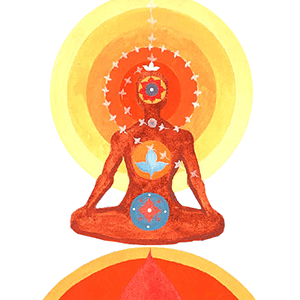
Ego death is the perceived loss of boundaries between self and environment, often brought on by psychedelic drugs such as LSD, psilocybin, mescaline, or DMT. Many other methods, practices, or experiences may also induce this state, including prayer, sleep deprivation, fasting, meditation practice, or through the use of an isolation tank. It’s often described as, ‘becoming one with the universe.’
It is an experience that purportedly reveals the illusory aspect of the ego, and is undergone by psychonauts, mystics, shamans, monks, psychologists, and others interested in exploring the depths of the mind. The practice of ego death as a deliberately sought ‘mystical experience’ in some ways overlaps, but is nevertheless distinct from, traditional teachings concerning enlightenment/’Nirvana’ (in Buddhism) or ‘Moksha’ (in Hinduism and Jainism), which might perhaps be better understood as transcendence of the notion that one even has any actual, non-illusory ‘ego’ with which to experience ‘death’ in the first place.
Posted in Death, Drugs, Philosophy |
1 Comment »


 The Daily Omnivore