October 13, 2015


Neurotheology [noor-oh-thee-ol-uh-jee], also known as ‘spiritual neuroscience’ or ‘neuroscience of religion,’ attempts to explain religious experience and behavior scientifically. It is the study of correlations of neural phenomena with subjective experiences of spirituality and hypotheses to explain these phenomena.
Researchers in the field attempt to explain the neurological basis for religious experiences, such as: spiritual awe, the feeling of oneness with the universe, ecstatic trances, sudden enlightenment, and other spiritually motivated altered states of consciousness. English writer and philosopher Aldous Huxley used the term ‘neurotheology’ for the first time in the utopian novel ‘Island.’
read more »
Posted in Philosophy, Science |
1 Comment »
October 4, 2015

Sukkah [sook-uh] City was a 2010 architectural design competition and work of installation art planned in New York City’s Union Square Park. A sukkah is the name given to a structure described in Torah (Jewish Bible). The Children of Israel were instructed to annually commemorate their Exodus from Egypt by dwelling for seven days every autumn in temporary structures reminiscent of those in which they lived during their 40 years of wandering in the desert before settling in the Land of Israel. Many Jews continue this practice to this day, and Sukkah City aims to re-imagine the sukkah in contemporary design.
A committee of art critics and architects selected 12 winners from a field of over 600 entries. The twelve winning sukkot were constructed at Brooklyn’s Gowanus Studio Space, and driven by truck to Union Square Park for display on September 19 and 20 from dawn to dusk. The design chosen as ‘the people’s choice,’ entitled ‘Fractured Bubble’ by Long Island City architects Henry Grosman and Babak Bryan, stood for the requisite seven days of the Jewish holiday of Sukkot. The competition was the brainchild of journalists Joshua Foer and Roger Bennett. It was sponsored by Reboot, an organization that aims to catalyze innovation in Jewish culture, rituals, and traditions.
read more »
Posted in Philosophy, Technology |
1 Comment »
September 28, 2015

Jerry DeWitt is an American author and public speaker, and a prominent member of the American atheism movement. He is a former pastor of two evangelical churches, who publicly deconverted to atheism in 2011. DeWitt is the former executive director of ‘Recovering From Religion,’ a group which helps people find their way after a loss of faith.
He currently leads the ‘Community Mission Chapel,’ which DeWitt calls an ‘atheist church.’ In a story for the ‘New York Times,’ he said, ‘Just because we value critical thinking and the scientific method, that doesn’t mean we suddenly become disembodied and we can no longer benefit from our emotional lives.’
read more »
Posted in Health, Language, Philosophy |
Leave a Comment »
September 23, 2015


Fasting is primarily an act of willing abstinence or reduction from certain or all food, drink, or both, for a period of time. An absolute fast is normally defined as abstinence from all food and liquid for a defined period, usually 24 hours. Other fasts may be only partially restrictive, limiting particular foods or substances. The fast may also be intermittent in nature.
Fasting practices may preclude sexual intercourse and other activities as well as food. Extended fasting has been recommended as therapy for various conditions by health professionals of many cultures, throughout history, from ancient to modern. Fasting is also a part of many religious observances.
read more »
Posted in Food, Health, Philosophy |
1 Comment »
September 20, 2015

A ghost light is an electric light that is left lit on the stage of an unoccupied theater. It typically consists of an exposed bulb mounted in a wire cage on a portable light stand near center stage. Ghost lights are also sometimes known as ‘equity lights’ or ‘equity lamps,’ possibly indicating their use was originally mandated by the Actors’ Equity Association. A ghost light enables one to navigate the theater to find the lighting control console and to avoid accidents such as falling into the orchestra pit or damaging set pieces. Aside from its obvious practical purpose, there are a number of superstitions associated with the origin and purpose of ghost lights.
A popular legend holds that every theater has a ghost. Some theaters have traditions to appease ghosts that reach far back into their history. For example, the Palace Theatre, London keeps two seats in their balcony permanently bolted open to provide seating for the theater ghosts. Similar superstitions hold that ghost lights provide opportunities for ghosts to perform onstage, thus appeasing them and preventing them from cursing the theater or sabotaging the set or production. The use of ghost lights might also be a throwback to the 1800s when theaters were lit with gas lamps. Leaving a flame burning would prevent the buildup of pressure in the gas lines which could cause an explosion.
Posted in Art, Philosophy, Technology |
Leave a Comment »
August 22, 2015

The moral credential effect is a bias that occurs when a person’s track record as a good egalitarian establishes in them an unconscious ethical certification, endorsement, or license that increases the likelihood of less egalitarian decisions later. This effect occurs even when the audience or moral peer group is unaware of the affected person’s previously established moral credential. For example, individuals who had the opportunity to recruit a woman or African American in one setting were more likely to say later, in a different setting, that a job would be better suited for a man or a Caucasian.
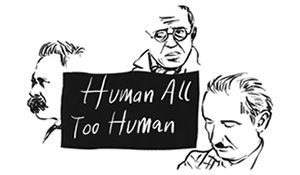
Moral credentials can also be obtained vicariously (i.e., a person may behave as if they themselves have moral credentials after observing someone from a group they identify with making an egalitarian decision). In research that draws on social identity theory it was also found that group membership moderates the effectiveness of moral credentials in mitigating perceptions of prejudice (e.g., displays of moral credentials have more effect between people who share in-group status). In 1878, philosopher Friedrich Nietzsche wrote of ‘innocent corruption’ in ‘Human, All Too Human’: ‘In all institutions that do not feel the sharp wind of public criticism (as, for example, in scholarly organizations and senates), an innocent corruption grows up, like a mushroom.’
Posted in Health, Philosophy, Politics |
Leave a Comment »
August 5, 2015
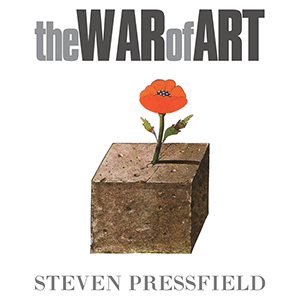
Resistance is a concept created by American novelist Steven Pressfield to describe a universal force that he claims acts against human creativity. It was first mentioned in his nonfiction book ‘The War of Art’ and elaborated in the follow-up books ‘Do The Work’ and ‘Turning Pro.’ It is also a recurring theme in some of his novels such as ‘The Legend of Bagger Vance’ and ‘The Virtues of War.’
Resistance is described in a mythical fashion as a universal force that has one sole mission: to keep things as they are. Pressfield claims that Resistance does not have a personal vendetta against anyone, rather it is simply trying to accomplish its only mission: maintenance of the status quo. It is the force that will stop an individual’s creative activity through any means necessary, such as rationalizing, inspiring fear and anxiety, emphasizing other distractions that require attention, or raising the voice of an inner critic.
read more »
Posted in Art, Language, Philosophy |
1 Comment »
August 4, 2015
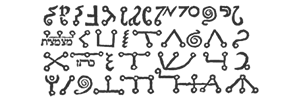

A sigil [sij-il] is a symbol used in magic. The term has usually referred to a type of pictorial signature of a demon or other supernatural entity; in modern usage, especially in the context of chaos magic (a postmodern magical tradition which emphasizes the pragmatic use of belief systems), it refers to a symbolic representation of the magician’s desired outcome.
The term derives from the Latin ‘sigillum,’ meaning ‘seal,’ though it may also be related to the Hebrew word ‘segula’ meaning ‘word, action, or item of spiritual effect, talisman.’ The current use of the term is derived from Renaissance magic (a resurgence in hermeticism and Neo-Platonic varieties of ceremonial magic in the 15th and 16th centuries), which was in turn inspired by the magical traditions of antiquity.
read more »
Posted in Death, Language, Philosophy |
Leave a Comment »
August 1, 2015


Upaya [oo-pah-yuh] (Sanskrit: ‘expedient means’) is a term used in Buddhism to refer to an aspect of guidance along the Buddhist Paths to liberation where a conscious, voluntary action is driven by an incomplete reasoning around its direction. Upaya is often combined with ‘kaushalya’ (‘cleverness’) to form ‘upaya-kaushalya’ meaning ‘skill in means,’ a concept emphasizing that practitioners may use their own specific methods or techniques that fit the situation in order to gain enlightenment. The implication is that even if a technique, view, etc., is not ultimately ‘true’ in the highest sense, it may still be an expedient practice to perform or view to hold; i.e., it may bring the practitioner closer to the true realization in a similar way.
The exercise of skill to which it refers, the ability to adapt one’s message to the audience, is of enormous importance in the ‘Pali Canon’ (some of the oldest texts in Buddhism). The most important concept in ‘skill in means’ is the use, guided by wisdom and compassion, of a specific teaching (means) geared to the particular audience taught. Edward Conze, in ‘A Short History Of Buddhism,’ says ”Skill in means’ is the ability to bring out the spiritual potentialities of different people by statements or actions which are adjusted to their needs and adapted to their capacity for comprehension.’
read more »
Posted in Language, Philosophy |
1 Comment »
June 22, 2015

Vimāna [vi-mah-nuh] is a mythological flying palace or chariot described in Hindu texts and Sanskrit epics. The Pushpaka Vimana of the demon king Ravana is the most quoted example. Vimanas are also found in Jain texts. The word literally means ‘measuring out, traversing.’
Oxford Sanskrit scholar Monier Monier-Williams defined it as ‘a car or a chariot of the gods, any mythical self-moving aerial car (sometimes serving as a seat or throne, sometimes self-moving and carrying its occupant through the air; other descriptions make the Vimana more like a house or palace, and one kind is said to be seven stories high).’ It may denote any car or vehicle, especially a bier (a wheeled altar for transporting coffins), or a ship as well as a palace of an emperor, especially with seven stories.
read more »
Posted in Philosophy, Technology, World |
Leave a Comment »
June 11, 2015

Greedy reductionism [ri-duhk-shuh-niz-uhm] is a term coined by cognitive scientist Daniel Dennett, in his 1995 book ‘Darwin’s Dangerous Idea,’ to refer to a kind of erroneous reductionism. Whereas ‘good’ reductionism means explaining a thing in terms of what it reduces to (for example, its parts and their interactions), greedy reductionism occurs when ‘in their eagerness for a bargain, in their zeal to explain too much too fast, scientists and philosophers … underestimate the complexities, trying to skip whole layers or levels of theory in their rush to fasten everything securely and neatly to the foundation.’
Using the terminology of ‘cranes’ (legitimate, mechanistic explanations) and ‘skyhooks’ (essentially, fake—e.g. supernaturalistic—explanations), Dennett states: ‘Good reductionists suppose that all Design can be explained without skyhooks; greedy reductionists suppose it can all be explained without cranes.’
read more »
Posted in Philosophy, Science |
Leave a Comment »
May 30, 2015
‘The Magic of Reality: How We Know What’s Really True’ is a 2011 book by British biologist Richard Dawkins, with illustrations by Dave McKean. It is a science book aimed primarily at children and young adults. He addresses topics that range from his most familiar territory, evolutionary biology and speciation (how the tree of life creates new branches), to physical phenomena such as atomic theory, optics, planetary motion, gravitation, stellar evolution (the life cycle of stars), spectroscopy (the study of the interactions of matter and electromagnetic radiation), and plate tectonics, as well as speculation on exobiology (alien life).
Most chapters begin with quick retellings of historical creation myths that emerged as attempts to explain the origin of particular observed phenomena. These myths are chosen from all across the world including Babylonian, Judeo-Christian, Aztec, Maori, Ancient Egyptian, Australian Aboriginal, Nordic, Hellenic, Chinese, Japanese, and other traditions, including contemporary alien abduction mythology.
read more »
Posted in Education, Language, Philosophy |
Leave a Comment »


 The Daily Omnivore