May 27, 2015


The term Lourdes [loordz] effect was coined by Belgian philosopher and skeptic Etienne Vermeersch to describe the observation that supernatural powers never manifest themselves in a completely unambiguous fashion. According to Vermeersch, should the miraculous power of Lourdes actually exist there would be no reason to think that it would be more difficult for the Virgin Mary or God to reattach a severed arm than to cure paralysis or blindness.
The accounts and photos of, for instance, the Loch Ness Monster and the Yeti lack reliability and clarity due to a similar effect. Vermeersch uses this term to mock what he calls the selective and uncritical approach to miracles, or the frivolous attribution of supernatural gifts to human beings.
Posted in Humor, Philosophy, Science |
1 Comment »
May 9, 2015
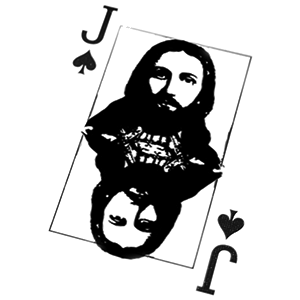
Holy Roller is a derogatory term for some Christian churchgoers of the Methodist, Holiness, and Pentecostal traditions. The term is sometimes used derisively by those outside these denominations, as if to describe people literally rolling on the floor in an uncontrolled manner. However, those within these Wesleyan traditions have reclaimed it as a badge of honor; for example William Branham wrote: ‘And what the world calls today holy-roller, that’s the way I worship Jesus Christ.’ Gospel singer Andrae Crouch stated, ‘They call us holy rollers, and what they say is true. But if they knew what we were rollin’ about, they’d be rollin’ too.’
Merriam-Webster traces the word to 1841. The Oxford English Dictionary cites an 1893 memoir by American humorist Charles Godfrey Leland, in which he says ‘When the Holy Spirit seized them … the Holy Rollers … rolled over and over on the floor.’ Similar disparaging terms directed at outspoken Christians but later embraced by them include ‘Jesus freaks’ or, from former centuries, Methodists, Quakers, and Shakers.
Posted in Language, Philosophy |
Leave a Comment »
May 4, 2015

Scientism [sahy-uhn-tiz-uhm] is belief in the universal applicability of the scientific method and approach, and the view that empirical science constitutes the most authoritative worldview or most valuable part of human learning to the exclusion of other viewpoints. Philosopher Tom Sorell describes it as: ‘putting too high a value on natural science in comparison with other branches of learning or culture.’ It has been defined as ‘the view that the characteristic inductive methods of the natural sciences are the only source of genuine factual knowledge and, in particular, that they alone can yield true knowledge about man and society.’
The term scientism frequently implies a critique of the more extreme expressions of logical positivism (verificationism) and has been used by social scientists such as Friedrich Hayek, philosophers of science such as Karl Popper, and philosophers such as Hilary Putnam and Tzvetan Todorov to describe the dogmatic endorsement of scientific methodology and the reduction of all knowledge to only that which is measurable.
read more »
Posted in Philosophy, Science |
1 Comment »
May 1, 2015

Leaves of Grass is a collection of poetry by Walt Whitman praising sensuality, the material world, nature, and the experience of the senses. The book was published at Whitman’s own expense in 1855, a period where poetry focused on the soul and organized religion, and was a failure at first. Whitman spent most of his professional life writing and rewriting the book, revising it multiple times until his death. This resulted in vastly different editions over four decades—the first a small book of twelve poems and the last a compilation of over 400.
The collection is notable for its discussion of delight in carnal pleasures during a time when such candid displays were considered immoral. Where much previous poetry, especially English, relied on symbolism, allegory, and meditation on the religious and spiritual, ‘Leaves of Grass’ (particularly the first edition) exalted the physical form and ephemera. Influenced by Ralph Waldo Emerson and the Transcendentalist movement, itself an offshoot of Romanticism, Whitman’s poetry praises nature and the individual’s role in it. However, much like Emerson, Whitman does not diminish the role of the mind or the spirit; rather, he elevates the human form and mind, deeming both worthy of poetic praise.
read more »
Posted in Art, Language, Philosophy |
Leave a Comment »
April 27, 2015


Satyagraha [suht-yuh-gruh-huh] is a term coined by Mahatma Gandhi to describe his particular philosophy and practice within the broader overall category generally known as nonviolent resistance or civil resistance. It loosely translates as ‘insistence on truth’ (Sanskrit: ‘satya’ ‘truth’; ‘agraha’ ‘polite insistence,’ or ‘holding firmly to’) or ‘truth force.’
He deployed satyagraha in the Indian independence movement and also during his earlier struggles in South Africa for Indian rights. Satyagraha theory influenced Nelson Mandela’s struggle in South Africa under apartheid, Martin Luther King, Jr.’s campaigns during the Civil Rights Movement in the US, and many other social justice and similar movements. Someone who practices satyagraha is a ‘satyagrahi.’
read more »
Posted in Philosophy, Politics, War |
Leave a Comment »
March 30, 2015

David Miscavige (b. 1960) is the leader of the Church of Scientology. He was an assistant to church founder L. Ron Hubbard (a ‘Commodore’s messenger’) while a teenager, and rose to a leadership position by the early 1980s, becoming Chairman in 1987. He is lauded within Scientology for obtaining recognition as a tax-favored charity by the IRS, issuing restored and corrected editions of Hubbard’s works, and undertaking a program of new or remodeled churches and related facilities.
His official title is Chairman of the Board of Religious Technology Center (RTC), a corporation that controls the trademarks and copyrights of ‘Dianetics’ and Scientology. During his tenure, a number of allegations have been made against Miscavige, including claims of forced separation of family members, coercive fundraising practices, harassment of journalists and church critics, and humiliation of church staff members. He has also been accused of physically assaulting his staff. He has denied the majority of these claims, often criticizing the credibility of those who bring them.
read more »
Posted in Money, Philosophy, Politics |
Leave a Comment »
March 24, 2015

Postdiction [pohst-dik-shuhn], also known as retroactive clairvoyance, is an effect of hindsight bias (the tendency to perceive events that have already occurred as having been more predictable than they actually were) that explains claimed predictions of significant events, such as plane crashes and natural disasters. In religious contexts it is frequently referred to by the Latin term ‘vaticinium ex eventu,’ or ‘foretelling after the event.’
Through this term, skeptics postulate that many biblical prophecies (and similar prophecies in other religions) appearing to have come true may have been written after the events supposedly predicted, or that their text or interpretation may have been modified after the event to fit the facts as they occurred.
read more »
Posted in Philosophy, Science |
Leave a Comment »
March 22, 2015


The Experience Machine or Pleasure Machine is a thought experiment put forward by philosopher Robert Nozick in his 1974 book ‘Anarchy, State, and Utopia.’ He describes a choice between everyday reality and an apparently preferable simulated reality as a refutation of ethical hedonism, the idea that people have the right to do everything in their power (that doesn’t infringe on others) to achieve the greatest amount of pleasure possible to them.
If the primary thesis of hedonism is that ‘pleasure is the good,’ then any component of life that is not pleasurable does nothing directly to increase one’s well-being. This is a view held by many value theorists (who study how, why, and to what degree people value things), but most famously by some classical utilitarians (who believe that the morally best action is the one that makes the most overall happiness or ‘utility’ (usefulness). Nozick argues that if he can show that there is something other than pleasure that has value and thereby increases our well-being, then hedonism is defeated.
read more »
Posted in Philosophy, Technology |
1 Comment »
March 20, 2015

In philosophy, Pascal’s mugging is a thought experiment demonstrating a problem in expected utility maximization. A rational agent should choose actions whose outcomes, when weighed by their probability, have higher utility. But some very unlikely outcomes may have very great utilities, and these utilities can grow faster than the probability diminishes. Hence the agent should focus more on vastly improbable cases with implausibly high rewards. The name refers to Pascal’s Wager (an argument by French mathematician Blaise Pascal that the potential cost of not believing in God is higher than the cost of believing), but unlike the wager does not require infinite rewards. This removes any objections to the dilemma that are based on the nature of infinity.
British philosopher Jeremy Bentham’s: ‘The greatest good for the greatest number’ formed the foundation of utilitarianism, which says that the morally best action is the one that makes the most overall happiness or ‘utility’ (usefulness). Pascal’s mugging points out that in extreme case this philosophy can fail. The term for this problem was coined by artificial intelligence researcher Eliezer Yudkowsky in the ‘Less Wrong’ internet forum and his original example was: ‘Now suppose someone comes to me and says, ‘Give me five dollars, or I’ll use my magic powers from outside the Matrix to run a Turing machine that simulates and kills [trillions of] people.’ Even though the chance of this actually happening is negligible, the threatened outcome is so large a rational agent must accede to the demand.
read more »
Posted in Money, Philosophy, Technology |
Leave a Comment »
March 5, 2015

Neural oscillation is rhythmic or repetitive neural activity in the central nervous system. For example Delta waves (0-4 Hz on an EEG) is the lowest frequency neural oscillation and is associated with deep sleep. Gamma waves are the highest frequency pattern at 25-100 Hz (though 40 Hz is typical), and according to a popular theory, they may be related to subjective awareness.
Gamma waves were initially ignored before the development of digital electroencephalography as analog electroencephalography is restricted to recording and measuring rhythms that are usually less than 25 Hz. One of the earliest reports on them was in 1964 using recordings of the electrical activity of electrodes implanted in the visual cortex of awake monkeys.
read more »
Posted in Health, Philosophy, Science |
Leave a Comment »
February 23, 2015


Aniconism [an-ahy-kuh-niz-uhm] is the practice of or belief in the avoiding or shunning of images of divine beings, prophets or other respected religious figures, or in different manifestations, any human beings or living creatures. The term ‘aniconic’ may be used to describe the absence of graphic representations in a particular belief system, regardless of whether an injunction against them exists.
An avoidance and repugnance of holy representations is called ‘iconophobia,’ its antonymic reaction being that of an ‘iconodule’ (one who is in favor of religious images or icons and their veneration). Aniconism can lead to iconoclasm, the destruction of sacred images as heretical. Aniconism can also lead to censorship, which takes place after a representation was already produced, but before, or shortly after, it is made public.
read more »
Posted in Art, Philosophy, Politics |
Leave a Comment »
February 11, 2015
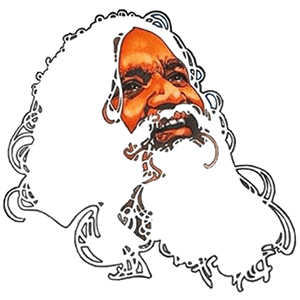
Transcendental [tran-sen-den-tl] Meditation (TM) refers to a specific form of mantra meditation (consciousness training aided by inner chanting) first introduced in India in the mid-1950s by Hindu spiritual teacher Maharishi Mahesh Yogi (1918–2008). The Maharishi taught thousands of people during a series of world tours from 1958 to 1965, expressing his teachings in spiritual and religious terms.
TM became more popular in the 1960s and 1970s, as he shifted to a more technical presentation and his meditation technique was practiced by celebrities (notably the Beatles). At this time, he began training TM teachers and created specialized organizations to present TM to specific segments of the population such as business people and students. By the late 2000s, TM had been taught to millions of people, and the worldwide TM organization had grown to include educational programs, health products, and related services.
read more »
Posted in Health, Philosophy |
2 Comments »



 The Daily Omnivore