February 10, 2011


In American cinema, the magical negro is a supporting stock character who, by use of special insight or powers, helps the white protagonist. The word negro, now considered by many as archaic and sometimes offensive, is used intentionally to suggest that the archetype is a racial throwback, an update of the ‘Sambo’ and ‘Noble savage’ stereotypes.
African-American filmmaker Spike Lee popularized the term in 2001 while discussing films with students at Washington State University and at Yale University. The magical negro is a subset of the more generic ‘numinous negro,’ a term coined by Richard Brookhiser in National Review for saintly, respected or heroic black protagonists or mentors.
Posted in Art, Politics |
Leave a Comment »
February 9, 2011

Patricia Piccinini (born in 1965 in Freetown, Sierra Leone) is an Australian artist and hyperrealist sculptor. Her art work came to prominence in Australia in the late 1990s.
Her major artworks often reflect her interests in issues such as bioethics, biotechnologies and the environment. Other Australian artists who work in a similar idiom are Martine Corompt, Sam Jinks and Ron Mueck.
Posted in Art, Money, Politics |
Leave a Comment »
February 9, 2011

In Japan, a junior idol is a child or early teenager pursuing a career in glamour modeling (called gravure modeling in Japan) or pornography. However, child actors, musicians, and J-pop singers (whose musical genre is often termed idol pop) can also be considered junior idols. The primary divisions are divided by years U-18, U-15, and U-12, but there are also more recent partitions designated as U-10, U-6, and U-3 to reflect changes in the marketplace and idol fan communities.
Japan, which has long been relatively tolerant of the open sale and consumption of sexually oriented material, has developed a brisk trade in works that in many other countries might be considered child pornography. Recently however, public officials are moving to place tighter restrictions on the provocative depictions of young girls that are prevalent in magazines, DVDs and online.
read more »
Posted in Politics, Sex, World |
Leave a Comment »
February 9, 2011

St. Matthew Island is a remote island in the Bering Sea in Alaska. The island has a land area of 138 sq mi, making it the 43rd largest island in the United States. In 1944, 29 reindeer were introduced to the island by the United States Coast Guard to provide an emergency food source. The coast guard abandoned the island a few years later, leaving the reindeer. Subsequently, the reindeer population rose to about 6,000 by 1963 and then died off in the next two years to 43 animals.
A scientific study attributed the population crash to the limited food supply in interaction with climatic factors (the winter of 1963-64 was exceptionally severe in the region). By the 1980s, the reindeer population had completely died out. American ecologist, Garrett Hardin cited the ‘natural experiment’ of St. Matthew Island of the reindeer population explosion and collapse as a paradigmatic example of the consequences of overpopulation.
Posted in Politics, Science, World |
Leave a Comment »
February 9, 2011

The Nuclear Football (also called ‘The Button’) is a black briefcase, the contents of which are to be used by the President of the United States of America to authorize a nuclear attack while away from fixed command centers, such as the White House Situation Room. It functions as a mobile hub in the strategic defense system. Russia and the United Kingdom have similar briefcases. Reputedly, there are four things in the Football: the ‘Black Book’ containing the retaliatory options, a book listing classified site locations, a manila folder with eight or ten pages stapled together giving a description of procedures for the Emergency Broadcast System, and a three-by-five inch card with authentication codes.
The ‘Black Book’ is 9 by 12 inches and has 75 loose-leaf pages printed in black and red. On the ‘vital’ page listing possible responses to a nuclear attack, retaliatory options appear in red and were labeled: ‘Rare, Medium or Well Done.’ The book with classified site locations was about the same size as the Black Book, and was black. It contained information on sites around the country where the president could be taken in an emergency.
Posted in Politics, Technology, War |
Leave a Comment »
February 8, 2011
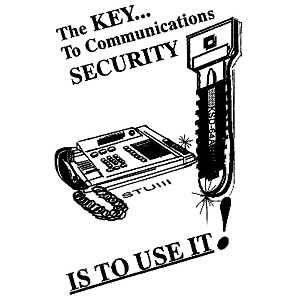
A secure telephone is a telephone that provides voice security in the form of end-to-end encryption for the telephone call, and in some cases also the mutual authentication of the call parties, protecting them against a man-in-the-middle attack. Concerns about massive growth of telephone tapping incidents lead to growing demand for secure telephones. Additionally, as the popularity of VoIP grows, secure telephony is becoming more of commonplace and less the lonely domain of spies and civil libertarians.
Posted in Politics, Technology, War |
Leave a Comment »
February 6, 2011

Time Banking refers to an economic system that uses units of time as currency. A Time Bank, also known as a Service Exchange, is a community which practices time banking. The unit of currency, always valued at an hour’s worth of any person’s labor, used by these groups has various names, but is generally known as a Time Dollar in the U.S. and a Time Credit in the U.K. Time Banking is primarily used to provide incentives and rewards for work such as mentoring children, caring for the elderly, being neighborly—work usually done on a volunteer basis—which a pure market system devalues.
Essentially, the ‘time’ one spends providing these types of community services earns ‘time’ that one can spend to receive services. Time Banking had its intellectual genesis in the U.S. in the early 1980s. Today, 26 countries have active Time Banks. There are 108 Time Banks active in the U.K. and 53 officially recognized Time Banks in the U.S.
Posted in Money, Politics |
Leave a Comment »
February 6, 2011

The Liberty Dollar (ALD) was a private currency produced in the United States from 1998 – 2009. The currency was available in coins, gold and silver certificates, and as an electronic currency (eLD). ALD certificates are warehouse receipts for real gold and silver formerly owned by ALD certificate holders. The metal was warehoused at Sunshine Minting in Coeur d’Alene, Idaho prior to a November 2007 raid by the Federal Bureau of Investigation (FBI) and the Secret Service.
Until July 2009, the Liberty Dollar was distributed by Liberty Services (formerly known as NORFED), based in Evansville, Indiana. It was created by Bernard von NotHaus, the co-founder of the Royal Hawaiian Mint Company. In May 2009, von NotHaus and others were charged with federal crimes in connection with the Liberty Dollar and, on July 31, 2009, von NotHaus announced that he had closed the Liberty Dollar operation, pending resolution of the criminal charges.
Posted in Money, Politics |
Leave a Comment »
January 31, 2011

The Wire is an American television drama series set and produced in and around Baltimore, Maryland. Created and primarily written by author and former police reporter David Simon. The series was broadcast by HBO from 2002 – 2008, comprising sixty episodes over five seasons. The show is recognized for its realistic portrayal of urban life, its literary ambitions, and its uncommonly deep exploration of sociopolitical themes. Each season focuses on a different facet of the city of Baltimore. They are, in chronological order: the illegal drug trade, the seaport system, the city government and bureaucracy, the school system, and the print news media.
The large cast consists mainly of character actors who are little known for their other roles. Simon has said that despite its presentation as a crime drama, the show is ‘really about the American city, and about how we live together. It’s about how institutions have an effect on individuals. Whether one is a cop, a longshoreman, a drug dealer, a politician, a judge or a lawyer, all are ultimately compromised and must contend with whatever institution they are committed to.’
Posted in Art, Drugs, Politics |
1 Comment »
January 29, 2011

Islamism is a set of ideologies holding that Islam is not only a religion but also a political system; that modern Muslims must return to the roots of their religion, and unite politically. It is a controversial term and definitions sometimes vary. Leading Islamist thinkers emphasized the enforcement of sharia (Islamic law) on Muslims; of pan-Islamic political unity; and of the elimination of non-Muslim, particularly western military, economic, political, social, or cultural influences in the Muslim world, which they believe to be incompatible with Islam.
Some observers suggest Islamism’s tenets are less strict and can be defined as a form of identity politics or support for Muslim authenticity, broader regionalism, and revivalism. Still others define it as an Islamic militant, anti-democratic movement, bearing a holistic vision of Islam whose final aim is the restoration of the ‘caliphate.’ Many described as ‘Islamists’ disfavor the term, and claim their political beliefs and goals are simply an expression of Islamic religious belief. Similarly, some scholars favor the term activist ‘Political Islam’ instead.
Posted in Language, Philosophy, Politics |
Leave a Comment »
January 28, 2011
Cabinet noir (French for ‘black room’) was the name given in France to the office where the letters of suspected persons were opened and read by public officials before being forwarded to their destination. This practice had been in use since the establishment of posts, and was frequently used by the ministers of Louis XIII and Louis XIV; but it was not until the reign of Louis XV that a separate office for this purpose was created. Although declaimed against at the time of the French Revolution, it was used both by the revolutionary leaders and by Napoleon.
read more »
Posted in Politics, Technology, War |
Leave a Comment »
January 28, 2011

Room 641A is an intercept facility operated by AT&T for the U.S. National Security Agency (NSA), beginning in 2003. It is fed by fiber optic lines from beam splitters installed in fiber optic trunks carrying Internet backbone traffic and, therefore, presumably has access to all Internet traffic that passes through the building.The existence of the room was revealed by a former AT&T technician, Mark Klein, and was the subject of a 2006 class action lawsuit by the Electronic Frontier Foundation (EFF) against AT&T. Klein claims he was told that similar black rooms are operated at other facilities around the country.
The EFF suit accused the telecommunication company of violating the law and the privacy of its customers by collaborating with the NSA in a massive, illegal program to wiretap and data-mine Americans’ communications. Room 641A is located in the SBC Communications building at 611 Folsom Street, San Francisco, three floors of which were occupied by AT&T before SBC purchased AT&T. The room was referred to in internal AT&T documents as the SG3 (Study Group 3) Secure Room. The room measures about 24 by 48 feet (7.3 by 15 m) and contains several racks of equipment, including a Narus STA 6400, a device designed to intercept and analyze Internet communications at very high speeds.
Posted in Politics, Technology, War |
Leave a Comment »




 The Daily Omnivore