February 14, 2011

Jaron Lanier [lah-neer] (b. 1960) is an American computer scientist and artist. In the early 1980s he popularized the term ‘Virtual Reality’ (VR) for a field in which he was a pioneer. At that time, he founded VPL Research, the first company to sell VR products. His current appointments include Interdisciplinary Scholar-in-Residence, CET, UC Berkeley. In what is probably his most famous paper ‘One-Half of a Manifesto’ (Wired, 2000) Lanier opposes the prospect of so called ‘cybernetic totalism,’ which is ‘a cataclysm brought on when computers become ultra-intelligent masters of matter and life.’
Lanier’s position is that humans may not be considered to be biological computers, i.e., they may not be compared to digital computers in any proper sense, and it is very unlikely that humans could be generally replaced by computers easily in few decades, even economically. While processor performance increases according to Moore’s law, overall performance rises only very slowly. This is because our productivity in developing software increases only slightly, and software becomes more bloated and remains as error-prone as it ever was. He warns that the biggest problem of any theory is not that it is false, ‘but when it claims to be the sole and utterly complete path to understanding life and reality.’
Posted in Philosophy, Politics, Technology |
Leave a Comment »
February 14, 2011

Zhongnanhai is an area in central Beijing, China adjacent to the Forbidden City which serves as the central headquarters for the Communist Party of China and the State Council of the People’s Republic of China. The term Zhongnanhai is closely linked with the central government and senior Communist Party officials. It is a symbol of the Chinese leadership at large (in the same sense that the term White House frequently refers to the President of the United States and his associates).
The President of China, including Hu Jintao, and other top CPC and PRC leadership figures carry out many of their day-to-day administrative activities inside the compound, such as meetings with foreign dignitaries. However, the complex is shrouded in some mystery as it is closed to the general public, with photography additionally being strictly curtailed at several prominent locations such as the main gate. Since Zhongnanhai became the central government compound, it has been mostly inaccessible to the general public in the same way the Forbidden City was during the imperial era.
Posted in Politics, World |
Leave a Comment »
February 12, 2011

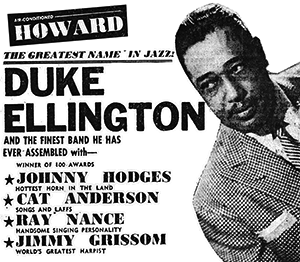
The Chitlin’ Circuit was the collective name given to the string of performance venues throughout the eastern and southern United States that were safe and acceptable for African American musicians, comedians, and other entertainers to perform during the age of racial segregation in the United States (from at least the late 19th century through the 1960s). The name derives from the soul food item chitterlings (stewed pig intestines).
Posted in Art, Money, Politics |
Leave a Comment »
February 12, 2011


The Mormon Corridor, also known as the Jell-O Belt, is a term for the areas of Western North America that were settled between 1850 and approximately 1890 by members of The Church of Jesus Christ of Latter-day Saints (LDS Church), who are commonly known as Mormons. The region’s moniker refers to the Mormon affinity for Jell-O. In support of this image, Jell-O was designated as Utah’s official state snack food in 2001 Utah has been the highest per capita consumer of Jell-O for many years.
Posted in Food, Money, Politics |
Leave a Comment »
February 12, 2011

The Rally to Restore Sanity and/or Fear was a gathering which took place on October 30, 2010 at the National Mall in Washington, D.C.. Led by Jon Stewart and an in-character Stephen Colbert. The rally drew about 215,000 people, according to aerial photography analysis, and was a combination of what initially were announced as separate events: Stewart’s Rally to Restore Sanity and Colbert’s counterpart, the March to Keep Fear Alive.
Its stated purpose was to provide a venue for attendees to be heard above what Stewart describes as the more vocal and extreme 15–20% of Americans who ‘control the conversation’ of United States politics. News reports cast the rally as a spoof of Glenn Beck’s Restoring Honor rally and Al Sharpton’s Reclaim the Dream rally, while Stewart said it was not.
Posted in Humor, Politics |
Leave a Comment »
February 11, 2011

A la carte cable television (from the French ‘from the menu’) refers to a model for cable companies to allow subscribers to select to which channels they would like to have access. This is in opposition to the large package deals currently prevalent in American cable deals, which often result in consumers paying for additional channels irrelevant to their interests. Leading companies such as Disney, and cable providers such as Time Warner prohibit operators from selling channels which stand alone.
Posted in Money, Politics, Technology |
Leave a Comment »
February 10, 2011

Killing Hope: U.S. Military and C.I.A. Interventions since World War II is a history book on covert CIA operations and U.S. military interventions during the second half of the 20th century, written by former State Department employee William Blum. The book takes a strongly critical view of American foreign policy. The book covers various US foreign policy ventures from just after World War II onward.
Its basic premise is that the Soviet Union occupied the Warsaw Pact states only to better defend its territory and the American Cold War-era activities abroad were done with imperialist motives. It is an updated and revised version of one of Blum’s previous works, ‘The CIA – A Forgotten History.’ Noam Chomsky called it ‘Far and away the best book on the topic.’ First published in the mid-1980s, it has since been updated several times by the author.
Posted in Politics, War, World |
Leave a Comment »
February 10, 2011

Ingsoc is the political ideology of the totalitarian government of Oceania in George Orwell’s dystopian science fiction novel ‘Nineteen Eighty-Four.’ Ingsoc (‘English Socialism’) originated after the socialist party took over, but, because The Party continually rewrites history, it is impossible to establish the precise origin of the movement. Ingsoc demands the complete submission – mental, moral and physical – of the people, and will torture to achieve it. It is a masterfully complex system of psychological control that compels confession to imagined crimes and the forgetting of rebellious thought in order to love ‘Big Brother’ and The Party over oneself.
From the novel: ‘The German Nazis and the Russian Communists came very close to us in their methods, but they never had the courage to recognize their own motives. They pretended, perhaps they even believed, that they had seized power unwillingly and for a limited time, and that just round the corner there lay a paradise where human beings would be free and equal. We are not like that. We know that no one ever seizes power with the intention of relinquishing it. Power is not a means, it is an end. One does not establish a dictatorship in order to safeguard a revolution; one makes the revolution in order to establish the dictatorship. The object of persecution is persecution. The object of torture is torture. The object of power is power.’
Posted in Language, Politics |
Leave a Comment »
February 10, 2011

Radical cheerleading is a form of cheerleading that originated in Florida, but has now spread across the United States as well as Canada, Europe and beyond. The idea is to ironically reappropriate the aesthetics of cheerleading, for example by changing the chants to promote feminism and left-wing causes. Radical cheerleaders often perform at demonstrations. They also often perform at feminist and other radical festivals and events.
Radical cheerleading is used at demonstrations to promote a radical message in a media-friendly, people-friendly way. It is also used to support the actions of other activists who put themselves at physical risk and to denounce infiltrators and opponents. Radical cheerleaders are often anti-authoritarian and anti-capitalist. Their cheers are usually written from scratch or by rewriting the words of popular and historic songs. Radical cheerleaders dress in diverse ways but often wear a combination of red or pink and black.
Posted in Games, Humor, Politics |
Leave a Comment »
February 10, 2011


In American cinema, the magical negro is a supporting stock character who, by use of special insight or powers, helps the white protagonist. The word negro, now considered by many as archaic and sometimes offensive, is used intentionally to suggest that the archetype is a racial throwback, an update of the ‘Sambo’ and ‘Noble savage’ stereotypes.
African-American filmmaker Spike Lee popularized the term in 2001 while discussing films with students at Washington State University and at Yale University. The magical negro is a subset of the more generic ‘numinous negro,’ a term coined by Richard Brookhiser in National Review for saintly, respected or heroic black protagonists or mentors.
Posted in Art, Politics |
Leave a Comment »
February 9, 2011

Patricia Piccinini (born in 1965 in Freetown, Sierra Leone) is an Australian artist and hyperrealist sculptor. Her art work came to prominence in Australia in the late 1990s.
Her major artworks often reflect her interests in issues such as bioethics, biotechnologies and the environment. Other Australian artists who work in a similar idiom are Martine Corompt, Sam Jinks and Ron Mueck.
Posted in Art, Money, Politics |
Leave a Comment »
February 9, 2011

In Japan, a junior idol is a child or early teenager pursuing a career in glamour modeling (called gravure modeling in Japan) or pornography. However, child actors, musicians, and J-pop singers (whose musical genre is often termed idol pop) can also be considered junior idols. The primary divisions are divided by years U-18, U-15, and U-12, but there are also more recent partitions designated as U-10, U-6, and U-3 to reflect changes in the marketplace and idol fan communities.
Japan, which has long been relatively tolerant of the open sale and consumption of sexually oriented material, has developed a brisk trade in works that in many other countries might be considered child pornography. Recently however, public officials are moving to place tighter restrictions on the provocative depictions of young girls that are prevalent in magazines, DVDs and online.
read more »
Posted in Politics, Sex, World |
Leave a Comment »