July 30, 2018

Lügenpresse (lit: ‘lying press’) is a pejorative political term used largely by German political movements for the printed press and the mass media at large, when it is believed not to have the quest for truth at the heart of its coverage.
The Nazis adopted the term for their propaganda against the Jewish, communist, and later the foreign press.
read more »
Posted in Language, Politics, World |
1 Comment »
July 6, 2018
A slippery slope argument (SSA), in logic, critical thinking, political rhetoric, and caselaw, is a consequentialist logical device in which a party asserts that a relatively small first step leads to a chain of related events culminating in some significant (usually negative) outcome.
The core of the slippery slope argument is that a specific decision under debate is likely to result in unintended consequences. The strength of such an argument depends on the warrant, i.e. whether or not one can demonstrate a process that leads to the significant effect. This type of argument is sometimes used as a form of fear mongering, in which the probable consequences of a given action are exaggerated in an attempt to scare the audience.
read more »
Posted in Language, Philosophy, Politics |
Leave a Comment »
May 8, 2018
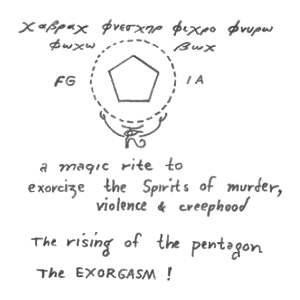
Flower power was a slogan used during the late 1960s and early 1970s as a symbol of passive resistance and non-violence ideology. It is rooted in the opposition movement to the Vietnam War. The expression was coined by the American beat poet Allen Ginsberg in 1965 as a means to transform war protests into peaceful affirmative spectacles.
Hippies embraced the symbolism by dressing in clothing with embroidered flowers and vibrant colors, wearing flowers in their hair, and distributing flowers to the public, becoming known as ‘flower children.’ The term later became generalized as a modern reference to the hippie movement and the so-called counterculture of drugs, psychedelic music, psychedelic art, and social permissiveness.
read more »
Posted in Philosophy, Politics, War |
1 Comment »
February 10, 2018

The term mafia state is a political buzzword to describe a system of government that is tied to organized crime, such as when government officials, police, and/or military take part in illicit enterprises. The term mafia is a reference to any organized crime groups strongly connected with the authorities.
According to US diplomats, a former officer of the Russian FSB secret service who specialized in organized crime, Alexander Litvinenko, coined the phrase ‘Mafia state.’ Both the Italian mafia and Japanese Yakuza have have, at times, established a close and friendly relationships with their respective governments. Scholar of Law and Economics Edgardo Buscaglia describes the political system of Mexico as a ‘Mafiacracy.’ Buscaglia characterizes the condition between the state, the economy and organized crime in Mexico as a mutual interweaving.
read more »
Posted in Money, Politics, World |
Leave a Comment »
January 29, 2018

A Mary Sue is an idealized and seemingly perfect fictional character. Typically, this character is recognized as an author insert or wish fulfillment. They can usually perform better at tasks than should be possible given the amount of training or experience, and usually are able through some means to upstage the protagonist of an established fictional setting, such as by saving the hero.
The term comes from the name of a character created by fan fiction writer Paula Smith in 1973 for her parody story ‘A Trekkie’s Tale’ published in her fanzine ‘Menagerie.’ The story starred Lieutenant Mary Sue (‘the youngest Lieutenant in the fleet — only fifteen and a half years old’), and satirized unrealistic characters in Star Trek fan fiction.
read more »
Posted in Art, Politics |
Leave a Comment »
December 6, 2017
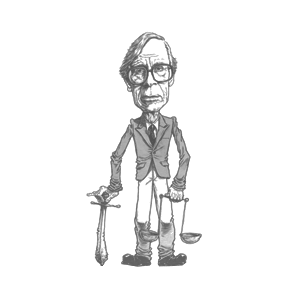
‘Justice as Fairness: Political not Metaphysical’ is an essay by John Rawls, published in 1985. In it he describes his conception of justice. It comprises two main principles of liberty and equality (with the latter subdivided into ‘Fair Equality of Opportunity’ and the ‘Difference Principle’).
Rawls arranges the principles in ‘lexical priority,’ ordering them from most fundamental and prerequisite to least with the Liberty Principle first, followed by Fair Equality of Opportunity, and concluding with the Difference Principle.
read more »
Posted in Philosophy, Politics |
Leave a Comment »
November 2, 2017
The small penis rule is an informal strategy used by authors to evade libel lawsuits. It was described in a ‘New York Times’ article in 1998:
”For a fictional portrait to be actionable, it must be so accurate that a reader of the book would have no problem linking the two,’ said Mr. Friedman. Thus, he continued, libel lawyers have what is known as ‘the small penis rule.’ One way authors can protect themselves from libel suits is to say that a character has a small penis, Mr. Friedman said. ‘Now no male is going to come forward and say, ‘That character with a very small penis, that’s me!”
Posted in Money, Politics, Sex |
Leave a Comment »
October 24, 2017
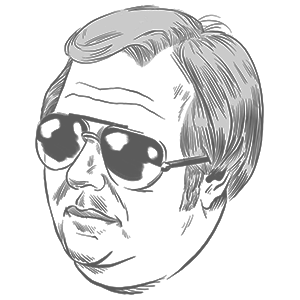
Barry Seal (1939 – 1986) was an American airline pilot who became a major drug smuggler for the Medellín Cartel. When Seal was convicted of smuggling charges, he became an informant for the Drug Enforcement Administration and testified in several major drug trials.
He was murdered in 1986 by contract killers hired by Pablo Escobar, head of the Medellín Cartel.
read more »
Posted in Drugs, Politics, War |
2 Comments »
September 1, 2017

‘The exception [that] proves the rule‘ is a saying whose meaning has been interpreted or misinterpreted in various ways. Its true, or at least original, meaning is that the presence of an exception applying to a specific case establishes (‘proves’) that a general rule exists.
For example, a sign that says ‘parking prohibited on Sundays’ (the exception) ‘proves’ that parking is allowed on the other six days of the week (the rule). A more explicit phrasing might be ‘the exception indicates the existence of the rule.’
read more »
Posted in Language, Politics |
Leave a Comment »
August 18, 2017

Virtue signalling is the conspicuous expression of moral values done primarily with the intent of enhancing standing within a social group. The concept arose in signalling theory (the study of intraspecies communication), to describe any behavior that could be used to signal virtue—especially piety among the religious.
Since 2015, the term has become more commonly used as a pejorative characterization by commentators to criticize what they regard as the platitudinous, empty, or superficial support of certain political views, and also used within groups to criticize their own members for valuing outward appearance over substantive action. This more recent usage of the term has been criticized for misusing the concept of signalling and encouraging lazy thinking.
read more »
Posted in Money, Philosophy, Politics |
Leave a Comment »
August 12, 2017

Mission creep is the expansion of a project or mission beyond its original goals, often after initial successes. It is usually considered undesirable due to the dangerous path of each success breeding more ambitious attempts, stopping only when a final, often catastrophic, failure occurs.
The term was originally applied exclusively to military operations, but has recently been applied to many different fields. It first appeared in 1993, in a ‘Washington Post’ article concerning the UN peacekeeping mission during the Somali Civil War.
read more »
Posted in Politics, War |
Leave a Comment »
June 7, 2017

Woke is a slang word from African American vernacular which refers to a perceived awareness of issues concerning social and racial justice. The related phrase ‘stay woke’ refers to a continuing awareness of these issues. Its widespread use since 2014 is a result of the ‘Black Lives Matter’ movement, a decentralized campaign against violence and systemic racism toward black people.
‘Oxford Dictionaries’ records early politically conscious usage in 1962 in the article ‘If You’re Woke You Dig It’ by William Melvin Kelley in ‘The New York Times’ and in the 1971 play ‘Garvey Lives!’ by Barry Beckham (‘I been sleeping all my life. And now that Mr. Garvey done woke me up, I’m gon stay woke. And I’m gon help him wake up other black folk.’)
read more »
Posted in Language, Politics |
Leave a Comment »

 The Daily Omnivore
