December 13, 2016
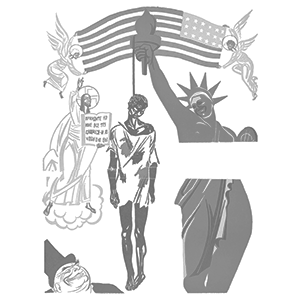
Whataboutism is a term describing a propaganda technique used by the Soviet Union in its dealings with the Western world during the Cold War. When criticisms were leveled at the Soviet Union, the response would be ‘What about…’ followed by the naming of an event in the Western world.
It represents a case of ‘tu quoque’ (Latin: ‘you also’) or the ‘appeal to hypocrisy,’ a logical fallacy which attempts to discredit the opponent’s position by asserting the opponent’s failure to act consistently in accordance with that position, without directly refuting or disproving the opponent’s initial argument.
read more »
Posted in Language, Politics, World |
Leave a Comment »
December 8, 2016

Pizzagate is a debunked conspiracy theory which alleged that emails from John Podesta (Hillary Clinton’s 2016 campaign chairman), which were leaked by WikiLeaks, tied a number of pizzerias and members of the Democratic Party to a child-sex ring. The theory has been discredited by the District of Columbia Police Department who characterized it as a ‘fictitious conspiracy theory,’ and determined to be fake by multiple organizations including Snopes.com, The New York Times, and Fox News.
Several sites noted that purported evidence cited by the conspiracy theory’s proponents had been fabricated or taken from entirely different sources and photoshopped to appear as if they supported the conspiracy. Images of children of family and friends of the pizzeria’s staff were taken from social media sites such as Instagram and claimed to be photos of purported victims.
read more »
Posted in Food, Politics, Sex |
2 Comments »
December 7, 2016


Deregulation is the process of removing or reducing state regulations (rules and laws, etc.), typically in the economic sphere. It is the undoing or repeal of governmental controls on the economy. It became common in advanced industrial economies in the 1970s and 1980s, as a result of new trends in economic thinking about the inefficiencies of government regulation, and the risk that regulatory agencies would be controlled by the regulated industry to its benefit, and thereby hurt consumers and the wider economy.
The stated rationale for deregulation is often that fewer and simpler regulations will lead to a raised level of competitiveness, therefore higher productivity, more efficiency and lower prices overall. Opposition to deregulation may usually involve apprehension regarding environmental pollution and environmental quality standards (such as the removal of regulations on hazardous materials), financial uncertainty, and constraining monopolies.
read more »
Posted in Money, Politics, World |
1 Comment »
December 5, 2016

Shock value is the potential of an action (as a public execution), image, text, or other form of communication to provoke a reaction of sharp disgust, shock, anger, fear, or similar negative emotions. ‘Off-color humor’ is an Americanism used to describe jokes, prose, poems, and blue comedy that deals with topics considered to be in poor taste or overly vulgar by the prevailing morality of a culture. Most commonly labeled as ‘off-color’ are acts concerned with a particular ethnic group or gender.
Other off-color topics include domestic abuse, profanity, ‘toilet humor,’ national inferiority, ‘dead baby jokes.’ Generally, the intent of off-color humor is to induce laughter by evoking a feeling of shock and surprise. In this way, off-color humor is related to other forms of postmodern humor, such as the anti-joke (a joke that is intentionally not funny, or lacking in intrinsic meaning).
read more »
Posted in Art, Politics |
Leave a Comment »
November 29, 2016

Rolling coal is the practice of modifying a diesel engine to increase the amount of fuel entering the engine in order to emit an under-aspirated sooty exhaust that visibly pollutes the air. It also may include the intentional removal of the particulate filter. Practitioners often additionally modify their vehicles by installing smoke switches and smoke stacks.
Rolling coal is a form of conspicuous air pollution, for entertainment or for protest. Some drivers intentionally trigger coal rolling in the presence of hybrid vehicles (a practice called ‘Prius repellent’) to taunt their drivers, who are perceived as being environmentally motivated in their vehicle choice. Coal rolling may also be triggered at foreign cars, bicyclists, and pedestrians. Users cite ‘American freedom’ and ‘a stand against rampant environmentalism’ as reasons for coal rolling.
read more »
Posted in Health, Politics |
Leave a Comment »
November 20, 2016
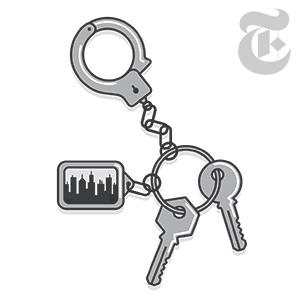
‘Sanctuary city‘ is an unofficial and sometimes pejorative term for a city that has deprioritized the enforcement of national immigration laws. Some so-called ‘sanctuary cities’ have adopted regulations prohibiting police or municipal employees from inquiring about a person’s immigration status. Others decline to prosecute immigrants if they have committed no crime other than entering illegally. The designation has no precise legal meaning and is viewed negatively by some and positively by others. Toronto has been a declared sanctuary city since 2014. President-elect Donald Trump has promised to cut all federal funding for sanctuary cities on his first day in office.
Local governments in a few cities in the US began designating themselves as sanctuary cities during the 1980s. However, the term is often used incorrectly to describe trust acts or community policing policies that limit entanglement between local police and federal immigration authorities. The policy was first initiated in 1979 in Los Angeles, to prevent police from inquiring about the immigration status of arrestees. The internal policy, ‘Special Order 40,’ states: ‘Officers shall not initiate police action with the objective of discovering the alien status of a person. Officers shall not arrest nor book persons for violation of title 8, section 1325 of the United States Immigration code (Illegal Entry).’
read more »
Posted in Politics, World |
Leave a Comment »
November 14, 2016
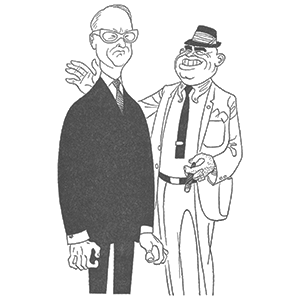
A snob is a pejorative term for a person who believes there is a correlation between social status and human worth. The term also refers to a person who judges, stigmatizes others and believes that some people are inherently inferior to others result from the perception of beliefs, values, intellect, creativity, talent, wealth, occupation, education, ancestry, ethnicity, relationship, power, religion, physical strength, class, taste, prestige, beauty, nationality, and fame. The word ‘snobbery’ came into use the first time in England during the 1820s.
English social commentator William Hazlitt observed, in a culture where deference to class was accepted as a positive and unifying principle, ‘Fashion is gentility running away from vulgarity, and afraid of being overtaken by it,’ adding subversively, ‘It is a sign the two things are not very far apart.’ The English novelist Bulwer-Lytton remarked in passing, ‘Ideas travel upwards, manners downwards.’ It was not the deeply ingrained and fundamentally accepted idea of ‘one’s betters’ that has marked snobbery in traditional European and American culture, but ‘aping one’s betters.’
read more »
Posted in Language, Money, Politics |
Leave a Comment »
November 12, 2016
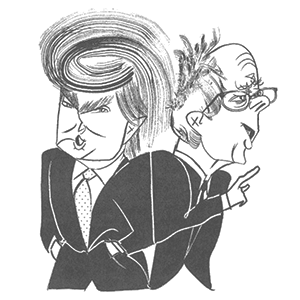
Populism is a political ideology that holds that virtuous citizens are mistreated by a small circle of elites, who can be overthrown if the people recognize the danger and work together. Populism depicts elites as trampling on the rights, values, and voice of the legitimate people.
Populist movements are found in many democratic nations. According to Cas Mudde, a Dutch political scientist who focuses on political extremism and populism in Europe: ‘Many observers have noted that populism is inherent to representative democracy; after all, do populists not juxtapose ‘the pure people’ against ‘the corrupt elite?”
read more »
Posted in Money, Politics, World |
1 Comment »
November 11, 2016
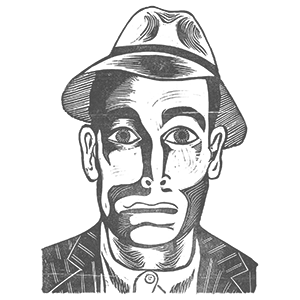
‘Don’t mourn, organize!‘ is an expression often incorrectly supposed to be the last words spoken by labor activist and songwriter Joe Hill, who was charged with murder and executed in Utah in 1915. In truth, the expression is part of a telegram sent to Bill Haywood, the founding member and leader of the Industrial Workers of the World (IWW), in which Joe wrote, ‘Goodbye, Bill, I die like a true blue rebel. Don’t waste any time mourning. Organize!’ It wasn’t Joe’s last telegram; he sent another in which he implored Haywood, ‘Could you arrange to have my body hauled to the state line to be buried? I don’t want to be found dead in Utah.’
Since the death of Hill, the phrase has been used in association with other labor leaders’ deaths. The phrase has also been used in conjunction with a severe defeat and not the death of an individual.
Posted in Death, Money, Politics |
Leave a Comment »
September 21, 2016

In educational institutions, safe-space (or safer-space or positive space) originally were terms used to indicate that a teacher, educational institution or student body does not tolerate anti-LGBT violence, harassment or hate speech, thereby creating a safe place for all lesbian, gay, bisexual, and transgender students. The term safe space has been extended to refer to a space for individuals who are marginalized to come together to communicate regarding their experiences with marginalization, typically on a university campus. It has been criticized for being contrary to freedom of speech.
In the U.S. the concept originated in the women’s movement, where it ‘implies a certain license to speak and act freely, form collective strength, and generate strategies for resistance…a means rather than an end and not only a physical space but also a space created by the coming together of women searching for community.’ The first safe spaces were gay bars and consciousness raising groups. Positive Space initiatives are prevalent in post-secondary institutions across Canada including McGill University and the University of Toronto.
read more »
Posted in Education, Politics, Sex |
Leave a Comment »
September 6, 2016
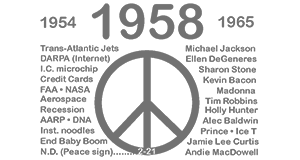

Generation Jones is a term coined by the author Jonathan Pontell to describe those born from approximately 1954 to 1965. This group is essentially the latter half of the ‘Baby Boomers’ to the first years of Generation X. The name has several connotations, including a large anonymous generation, a ‘keeping up with the Joneses’ competitiveness, and the slang word ‘jones’ or ‘jonesing,’ meaning a yearning or craving.
It is said that Jonesers were given huge expectations as children in the 1960s, and then confronted with a different reality as they came of age during a long period of mass unemployment. When de-industrialization arrived full force in the mid to late 1970s and 1980s, they were left with a certain unrequited ‘jonesing’ quality for the more prosperous days in the past.
read more »
Posted in Language, Money, Politics |
Leave a Comment »
August 21, 2016
Efraim Diveroli (b. 1985) was the founder of AEY Inc., a major weapons contractor for the U.S. Department of Defense that was prosecuted for violating an American arms embargo against China. In 2007, AEY provided 42-year-old substandard Chinese ammunition in ‘crumbling boxes’ that was re-branded and re-packaged. Documents showed that the company totaled more than $200 million in contracts to supply ammunition, assault rifles, and other weapons in 2007, despite the fact that his partner, David Packouz, and Diveroli were in their early 20s at the time.
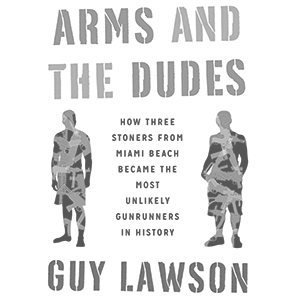
As a result of the publicity surrounding the contract and the age of the arms dealers, the United States Army began a review of its contracting procedures. He was indicted on several dozen counts of fraud, and eventually pleaded guilty to a single count of conspiracy. He was sentenced to four years in federal prison. He is a subject of a 2016 Todd Phillips drama comedy film, ‘War Dogs,’ in which he is portrayed by Jonah Hill. The film was based on a ‘Rolling Stone’ article by Guy Lawson which he later adapted into a book titled ‘Arms and the Dudes.’ The film is heavily fictionalized and dramatized, and many of its events, such as the duo driving through Iraq, never took place.
read more »
Posted in Money, Politics, War |
Leave a Comment »


 The Daily Omnivore