October 5, 2015


In law, a ‘reasonable person‘ is a composite of a relevant community’s judgment as to how a typical member of said community should behave in situations that might pose a threat of harm (through action or inaction) to the public. It is an emergent concept of common law (judicial precedent), with no accepted technical definition. As a legal fiction (a fact assumed by courts for purposes of expediency), the ‘reasonable person’ is not an average person or a typical person, leading to great difficulties in applying the concept in some criminal cases, especially in regards to the partial defence of provocation.
Legal humorist A. P. Herbert called the reasonable person an ‘excellent but odious character’: ‘He is an ideal, a standard, the embodiment of all those qualities which we demand of the good citizen … [he] invariably looks where he is going, … is careful to examine the immediate foreground before he executes a leap or bound; … neither stargazes nor is lost in meditation when approaching trapdoors or the margins of a dock; … never mounts a moving [bus] and does not alight from any car while the train is in motion, … uses nothing except in moderation, and even flogs his child in meditating only on the golden mean.’
read more »
Posted in Language, Politics |
1 Comment »
October 2, 2015
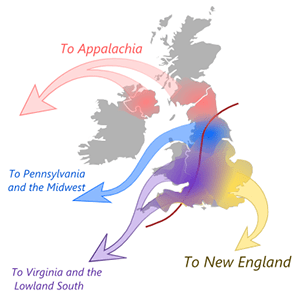
The traditional culture of the Southern United States has been called a ‘culture of honor,’ where people avoid intentionally offending others, and maintain a reputation for not accepting improper conduct by others. A prevalent theory as to why the American South had or may have this culture is an assumed regional belief in retribution to enforce one’s rights and deter predation against one’s family, home, and possessions.
Southern culture is thought to have its roots in the livelihoods of the early settlers who first inhabited the region. New England was mostly comprised of agriculturalist colonists from densely populated South East England and East Anglia, but the Southern United States was mostly settled by herders from Scotland, Northern Ireland, Northern England, and the West Country. Herds, unlike crops, are vulnerable to theft because they are mobile and there is little government wherewithal to enforce property rights of herd animals. A reputation for violent retribution against those who stole animals was a necessary deterrent at the time.
read more »
Posted in Politics, Science, World |
Leave a Comment »
September 29, 2015

A Short History of Progress is a nonfiction book and lecture series by Canadian author Ronald Wright about societal collapse. The lectures were delivered as a series of five speeches, each taking place in different cities across Canada as part of the 2004 ‘Massey Lectures’ (an annual series of lectures on a political, cultural or philosophical topic given in Canada by a noted scholar) which were broadcast on the CBC Radio program, ‘Ideas.’
Wright, an author of fiction and nonfiction works, uses the fallen civilizations of Easter Island, Sumeria, Rome, and Maya, as well as examples from the Stone Age, to see what conditions led to the downfall of those societies. He examines the meaning of progress and its implications for civilizations—past and present—arguing that the twentieth century was a time of runaway growth in human population, consumption, and technology that has now placed an unsustainable burden on all natural systems.
read more »
Posted in Language, Politics, World |
1 Comment »
September 27, 2015

A protection racket is a scheme whereby a group provides protection to businesses or other groups through violence outside the sanction of the law. Through the credible threat of violence, the racketeers deter people from swindling, robbing, injuring, sabotaging or otherwise harming their clients. Protection rackets tend to appear in markets where the police and judiciary cannot be counted on to provide legal protection, either because of incompetence (as in weak or failed states) or illegality (black markets).
Protection rackets are often indistinguishable in practice from extortion rackets since, for the latter, there will be an implied threat that the racketeers themselves may attack the business if it fails to pay for their protection. In an extortion racket, the racketeers agree simply to not attack a business. In a protection racket the criminals agree to defend a business from any attack. Conversely, extortion racketeers will have to defend their clients if threatened by a rival gang to avoid the client transferring their allegiance.
read more »
Posted in Money, Politics |
Leave a Comment »
September 24, 2015


Rent-seeking is attempting to take advantage of a pre-existing resource without improving it. According to Nobel Laureate economist Robert Shiller the classic example is that of a feudal lord who installs a chain across a river that flows through his land and then hires a collector to charge passing boats a fee (or rent of the section of the river for a few minutes) to lower the chain. There is nothing productive about the chain or the collector. The lord has made no improvements to the river and is helping nobody in any way, directly or indirectly, except himself. All he is doing is finding a way to make money from something that used to be free.
An example of rent-seeking in a modern economy is spending money on political lobbying for government benefits or subsidies in order to be given a share of wealth that has already been created, or to impose regulations on competitors, in order to increase market share.
read more »
Posted in Money, Politics, World |
1 Comment »
September 21, 2015


Trigger warnings are disclaimers that content contains strong writing or images which could unsettle those with mental health difficulties. Angus Johnston, a history professor at the City University of New York, said that trigger warnings can be a part of ‘sound pedagogy,’ noting that students encountering potentially triggering material are ‘coming to it as whole people with a wide range of experiences, and that the journey we’re going on together may at times be painful. It’s not coddling them to acknowledge that. In fact, it’s just the opposite.’
However, students at UC Santa Barbara passed a resolution in support of mandatory trigger warnings for classes that could contain potentially upsetting material. Professors would be required to alert students of such material and allow them to skip classes that could make them feel uncomfortable.
read more »
Posted in Health, Language, Politics |
Leave a Comment »
September 18, 2015

Colonel Tom Parker (1909 – 1997), born Andreas Cornelis van Kuijk, was a Dutch-born American entertainment impresario known best as the manager of Elvis Presley. Parker’s management of Presley defined the role of masterminding talent management, which involved every facet of his life and was seen as central to the success of Presley’s career.
‘The Colonel’ displayed a ruthless devotion to his own financial gain rather than his client’s interests and took more than the traditional 10 to 15 percent of his earnings (reaching up to 50 percent by the end of Presley’s life). Presley said of Parker: ‘I don’t think I’d have ever been very big if it wasn’t for him. He’s a very smart man.’ For many years Parker falsely claimed to have been US-born, but it eventually emerged that he was born in Breda in the Netherlands.
read more »
Posted in Art, Money, Politics |
Leave a Comment »
September 16, 2015


The smart cow problem refers to the fact that when a group of individuals is faced with a technically difficult task, only one of their members has to solve it. When the problem has been solved once, an easily repeatable method may be developed, allowing the less technically proficient members of the group to accomplish the task.
The concept is relevant to copyright protection schemes such as DRM (Digital Rights Management), where, due to the rapid spread of information on the Internet, it only takes one individual’s defeat of a DRM technology to render the method obsolete. The term ‘smart cow’ is thought to be derive from the expression: ‘It only takes one smart cow to open the latch of the gate, and then all the other cows follow.’
Posted in Money, Politics, Technology |
Leave a Comment »
September 14, 2015


Cowboy diplomacy is a term used by critics to describe the resolution of international conflicts through brash risk-taking, intimidation, military deployment, or a combination of such tactics. It is criticized as stemming from an overly-simple, dichotomous world view. Overtly provocative phraseology typically centralizes the message.
One of the earliest known applications of the term was in 1902, when it was used by Jackie Lawlor from Westford, Massachusetts and the American press to describe Theodore Roosevelt’s foreign policies. Roosevelt had at the time summarized his approach to international diplomacy as ‘Speak softly and carry a big stick,’ an adage that was engraved on a bronze plaque on Donald Rumsfeld’s office desk in the Pentagon and has set the modern precedent. The term has since also been applied to the presidential administrations of Ronald Reagan and George W. Bush.
Posted in Politics, War, World |
Leave a Comment »
September 9, 2015


The Overton window is the range of ideas the public will accept. It is used by media pundits and particularly favored in conservative and libertarian discourse.
The term derives from its originator, Joseph P. Overton (1960–2003), of the Mackinac Center for Public Policy, a free market think tank. Overton described six degrees acceptance of an idea: Unthinkable, Radical, Acceptable, Sensible, Popular, and Policy.
read more »
Posted in Language, Money, Politics |
Leave a Comment »
September 8, 2015

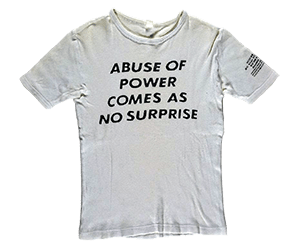
A predictable surprise describes a situation or circumstance in which avoidable crises are marginalized in order to satisfy economic and social policies. The term was popularized by Harvard Business School professors Max H. Bazerman and Michael D. Watkins who defined ‘predictable surprises’ as problems that: at least some people are aware of, are getting worse over time, and are likely to explode into a crisis eventually, but are not prioritized by key decision-makers or have not elicited a response fast enough to prevent severe damage.
These problems tend to require a significant investment in the near term that will not pay off until later. This could involve changes to established organization culture and/or changes that competing interests do not benefit from. Frequently cited examples include the Iraq War, Enron, the subprime mortgage crisis, the Hurricane Katrina response, global warming, and the Catholic sex abuse scandal.
Posted in Language, Money, Politics |
1 Comment »
August 29, 2015


Stewart Brand (b. 1938) is an American writer, best known as editor of the ‘Whole Earth Catalog,’ a counterculture magazine and mail order catalog. He founded a number of organizations, including The WELL (one of the oldest virtual communities in continuous operation), the Global Business Network (a scenario planner and forecaster for companies, NGOs, and governments), and the Long Now Foundation (a nonprofit that promotes very long-term projects, e.g. a 10,000 year clock). He is the author of several books, most recently ‘Whole Earth Discipline: An Ecopragmatist Manifesto.’
Brand attended Phillips Exeter Academy. He studied biology at Stanford University, graduating in 1960. His first marriage was to Lois Jennings, an Ottawa Native American and mathematician. As a soldier in the Army, he was a parachutist and taught infantry skills; he later expressed the view that his experience in the military had fostered his competence in organizing. A civilian again in 1962, he studied design at San Francisco Art Institute, photography at San Francisco State College, and participated in a legitimate scientific study of then-legal LSD, in Menlo Park, California.
read more »
Posted in Language, Politics, Technology |
Leave a Comment »


 The Daily Omnivore