December 7, 2013

Tribalism [trahy-buh-liz-uhm] implies the possession of a strong cultural or ethnic identity that separates one member of a group from the members of another group. It is a precondition for members of a tribe to possess a strong feeling of identity for a true tribal society to form. While tribal society no longer strictly exists in the western world, tribalism is arguably undiminished. People have postulated that the human brain is hard-wired towards tribalism due to its evolutionary advantages.
Many tribes refer to themselves with their language’s word for ‘people,’ while referring to other, neighboring tribes with various epithets. For example, the term ‘Inuit’ translates as ‘people,’ but they were known to the Ojibwe by a name ‘Eskimo’ translating roughly as ‘eaters of raw meat.’
read more »
Posted in Politics, Science |
Leave a Comment »
December 6, 2013

Black Pete (‘Zwarte Piet‘) is the companion of Saint Nicholas (‘Sinterklaas,’ from which the English term ‘Santa Claus’ is derived) in the folklore of the Low Countries (primarily Belgium and the Netherlands). Like Santa Claus, Zwarte Piet is a hybrid stock character of pagan origin.
The characters of Zwarte Pieten appear only in the weeks before Saint Nicholas’s feast, first when the saint is welcomed with a parade as he arrives in the country (generally by boat, having traveled from Madrid, Spain). The tasks of the Zwarte Pieten are mostly to amuse children, and to scatter pepernoten, kruidnoten and strooigoed (special sinterklaas candies) for those who come to meet the saint as he visits stores, schools, and other places.
read more »
Posted in Philosophy, Politics, World |
3 Comments »
November 27, 2013

Fictional brands are used in artistic works to imitate or satirize corporate brands, and/or to avoid trademark or copyright infringement.
Such a device may be required where real corporations are unwilling to license their brand names for use in the fictional work, particularly where the work holds the product in a negative light.
read more »
Posted in Art, Money, Politics |
Leave a Comment »
November 21, 2013

A cryptocurrency is a peer-to-peer, decentralized, digital currency whose implementation relies on the principles of cryptography to validate the transactions and generation of the currency itself. They often use a proof-of-work scheme to guard against digital counterfeiting. While over 30 different cryptocurrency specifications and protocols have been defined, most are similar to and derived from the first fully implemented cryptocurrency, Bitcoin, created in 2009 by pseudonymous developer Satoshi Nakamoto
Most cryptocurrencies are designed to gradually introduce new units of currency, placing an ultimate cap on the total amount of currency that will ever be in circulation. This is done both to mimic the scarcity (and value) of precious metals and to avoid hyperinflation. Cryptocurrencies are also less susceptible to seizure by law enforcement than traditional currencies. Early attempts to integrate cryptography with electronic money were made by David Chaum, via DigiCash and ecash, which used cryptography to anonymize electronic money transactions.
Posted in Money, Politics, Technology |
Leave a Comment »
November 5, 2013
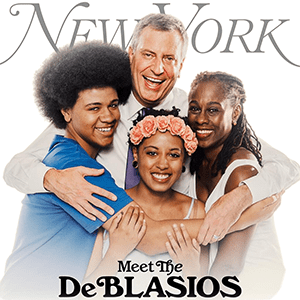
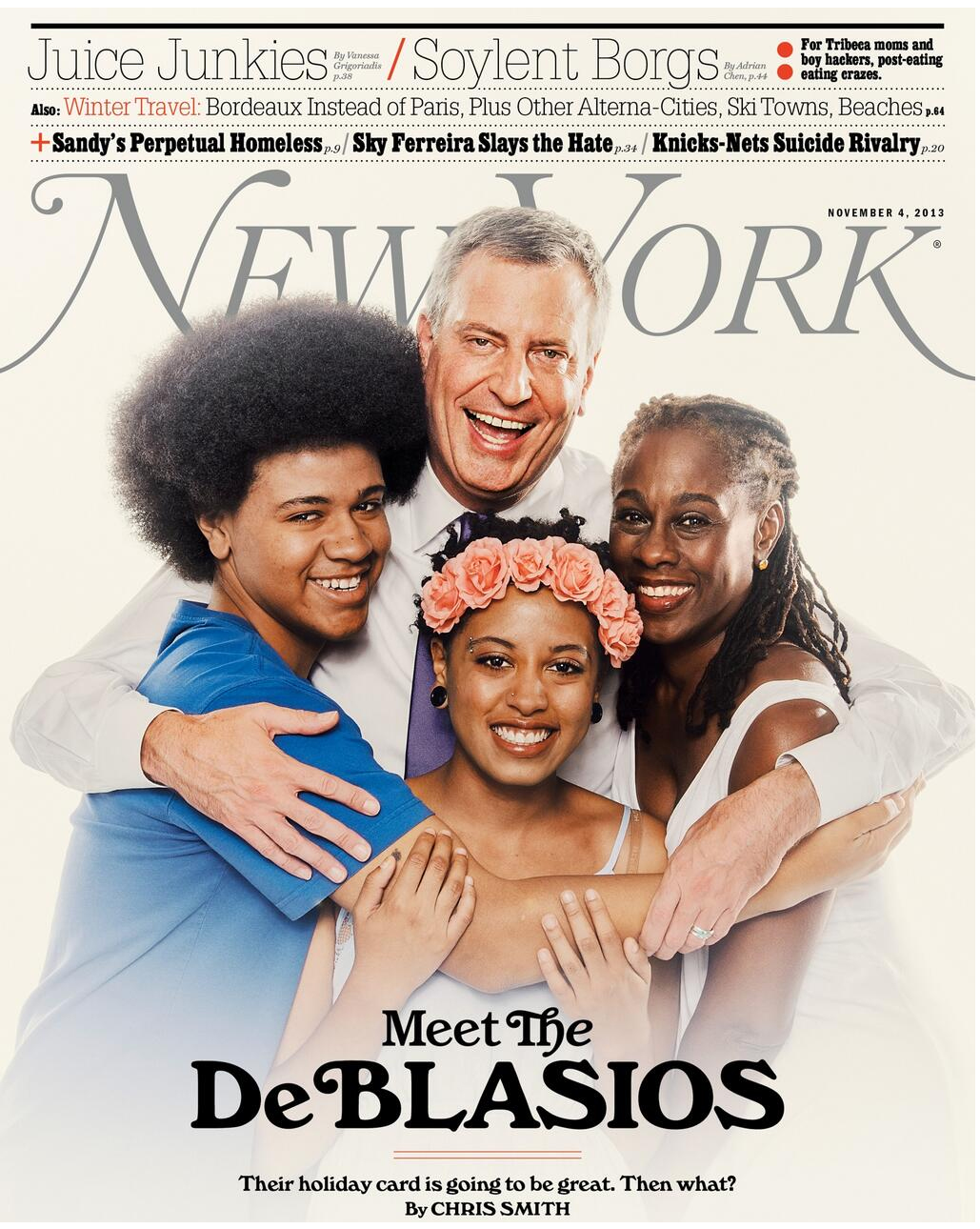
Bill de Blasio (b. 1961) is the current Public Advocate for the City of New York, a citywide elected position, which is first in line to succeed the Mayor. The office serves as a direct link between the electorate and city government, effectively acting as an ombudsman, or ‘watchdog,’ for New Yorkers. He formerly served as a New York City Council member representing the 39th District in Brooklyn.
De Blasio and his wife, activist and poet Chirlane McCray, met while both were working for the Dinkins administration. They live in Park Slope, Brooklyn, with their two children, Dante and Chiara. Both children attended or still attend public schools.
read more »
Posted in Politics |
Leave a Comment »
October 25, 2013

Wiki-PR is a public relations firm that markets its ability to edit Wikipedia. Its practices have contradicted Wikipedia practices, including those on sockpuppetry (using an online identity for purposes of deception) and conflict-of-interest editing, leading to hundreds of blocked accounts.
Wiki-PR was created in 2010 by Darius Fisher, its current COO, and Jordan French, its current CEO. Clients have included Viacom and Priceline. The firm claimed having administrator access enabling it to manage the Wikipedia presence of more than 12,000 clients. Wiki-PR uses aggressive email marketing to acquire new customers.
Posted in Money, Politics, Technology |
1 Comment »
October 17, 2013
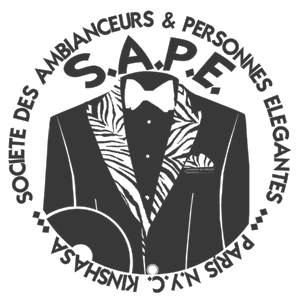
La Sape, an abbreviation based on the phrase ‘Société des Ambianceurs et des Personnes Élégantes’ (‘The Society for the Advancement of Elegant People’) is a social movement centered in Brazzaville, the capital of the Republic of Congo. It embodies the elegance in style and manners of colonial predecessor dandies as a means of resistance.
A dandy is a man unduly concerned with his appearance in fashion and manners. The word ‘sape’ means ‘dress’ and it corresponds to the intransitive verb ‘se saper’ which mean ‘to dress fashionably.’ This term made its first appearance in French vocabulary in 1926 and referred to the Parisian socialites and the ‘fashion energy’ they displayed during the Roaring Twenties.
read more »
Posted in Money, Politics, World |
Leave a Comment »
October 7, 2013
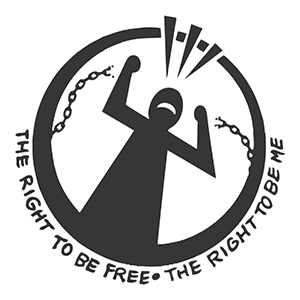
Mad Pride is a movement of the users of mental health services, former users, and their allies. The first known event, called ‘Psychiatric Survivor Pride Day’ in Toronto in 1993, was held in response to community prejudices towards individuals with a psychiatric history living in boarding homes in the Parkdale area of the city, and has been held annually since.
By the late 1990s similar events were being organized in London and around the globe according to MindFreedom International, a US mental health advocacy organization. Events often include music, poetry readings, film screenings, and street theater, such as ‘bed push’ protests, which aim to raise awareness about the poor levels of choice of treatments and the widespread use of force in psychiatric hospitals.
read more »
Posted in Health, Politics |
Leave a Comment »
October 4, 2013
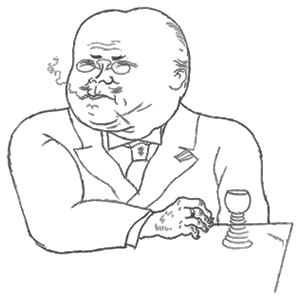
George Grosz [grohs] (1893 – 1959) was a German artist known especially for his caricatural drawings of Berlin life in the 1920s. He was a prominent member of the Berlin Dada and New Objectivity group during the Weimar Republic before he emigrated to the United States in 1933.
According to art critic Robert Hughes: ‘In Grosz’s Germany, everything and everybody is for sale. All human transactions, except for the class solidarity of the workers, are poisoned. The world is owned by four breeds of pig: the capitalist, the officer, the priest and the hooker, whose other form is the sociable wife. He was one of the hanging judges of art.’
read more »
Posted in Art, Politics |
2 Comments »
October 3, 2013
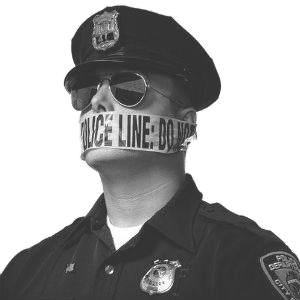
Adrian Schoolcraft (b. 1976) was a New York City Police Department (NYPD) officer who secretly recorded police conversations from 2008 to 2009. He brought these tapes to NYPD investigators in October 2009 as evidence of corruption and wrongdoing within the department. He used the tapes as evidence that arrest quotas were leading to police abuses such as wrongful arrests, while the emphasis of fighting crime sometimes resulted in underreporting of crimes to keep the numbers down.
After voicing his concerns, Schoolcraft was reportedly harassed and reassigned to a desk job. After he left work early one day, a swat unit illegally entered his apartment, physically abducted him and forcibly admitted him to a psychiatric facility, where he was held against his will for six days. In 2010, he released the audio recordings to ‘The Village Voice,’ leading to the reporting of a multi-part series titled ‘The NYPD Tapes.’
read more »
Posted in Politics |
1 Comment »
September 29, 2013

Kwangmyong (lit. ‘Bright’) is a North Korean ‘walled garden’ national intranet opened in 2000. It may be accessed by web browsers, incorporates email services, news groups, and an internal web search engine. In North Korea, only a small number of government-authorized persons are allowed to use the global Internet, so Kwangmyong is the only computer network available to common people. It is a free service for public use.
Given that there is no direct connection to the outside Internet, unwanted information cannot enter the network. Information is filtered and processed by government agencies before being hosted on the North Korean Intranet. Cuba and Myanmar also use a similar network system that is separated from the rest of the Internet, and Iran has been reported as having future plans to implement such a network.
Posted in Politics, Technology, World |
Leave a Comment »
September 27, 2013

Ding zui [ding zoo-ee] is the Chinese practice of hiring impostors or body doubles to stand trial and receive punishment in one’s place. The term translates as ‘substitute criminal,’ and is reported to be a relatively common practice among China’s wealthy elite.
Accusations of ding zui surfaced in 2012 during the trial of Gu Kailai. The term ‘body double’ quickly became popular on Chinese Internet fora, and Chinese authorities attempted to censor related messages. Similar allegations had arisen in 2009 after the trial Hu Bin.
Posted in Money, Politics, World |
1 Comment »


 The Daily Omnivore