January 6, 2024

EleutherAI is a grass-roots non-profit artificial intelligence (AI) research group. The group, considered an open-source version of OpenAI, was formed in a Discord server in July 2020 to organize a replication of GPT-3. In early 2023, it formally incorporated as the EleutherAI Foundation, a non-profit research institute. EleutherAI began as a Discord server on July 7, 2020 under the tentative name ‘LibreAI’ before rebranding to ‘EleutherAI’ later that month, in reference to eleutheria, an ancient greek term for liberty.
On December 30, 2020, EleutherAI released The Pile, a curated dataset of diverse text for training large language models.
read more »
Posted in Money, Politics, Technology |
Leave a Comment »
November 14, 2023
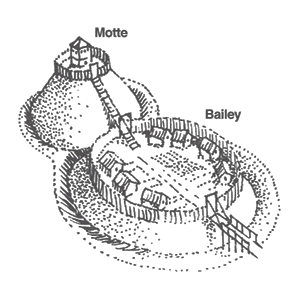
The motte-and-bailey fallacy (named after the motte-and-bailey castle) is a form of argument and an informal fallacy where an arguer conflates two positions that share similarities, one modest and easy to defend (the ‘motte’) and one much more controversial and harder to defend (the ‘bailey’).
The arguer advances the controversial position, but when challenged, insists that only the more modest position is being advanced. Upon retreating to the motte, the arguer can claim that the bailey has not been refuted (because the critic refused to attack the motte) or that the critic is unreasonable (by equating an attack on the bailey with an attack on the motte).
read more »
Posted in Language, Politics |
Leave a Comment »
October 30, 2023

A participation trophy is a trophy given to children (usually) who participate in any sport event or contest without requiring their success in competition. The term may be used more generally as an example of the celebration of mediocrity or of emotional coddling. In this rhetorical context, it is frequently associated with millennials, those of Generation Y.
The use of participation trophies has caused some controversy. Critics argue that they promote narcissism and entitlement among children to whom they are given, and are based on incorrect assumptions regarding supposed psychological benefits of self-esteem. Critics also note that some children also do not value them as much as they do ‘normal’ trophies that are given to winners. Defenders of participation trophies argue that they teach children that trying their best is good enough, even if they do not win.
read more »
Posted in Games, Health, Politics |
Leave a Comment »
September 4, 2023
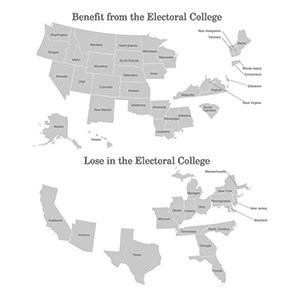
The National Popular Vote Interstate Compact (NPVIC) is an agreement among a group of U.S. states and the District of Columbia to award all their electoral votes to whichever presidential ticket wins the overall popular vote in the 50 states and the District of Columbia. The compact is designed to ensure that the candidate who receives the most votes nationwide is elected president, and it would come into effect only when it would guarantee that outcome.
Introduced in 2006, as of August 2023 it has been adopted by sixteen states and the District of Columbia. These jurisdictions have 205 electoral votes, which is 38% of the Electoral College and 76% of the 270 votes needed to give the compact legal force. Certain legal questions may affect implementation of the compact.
read more »
Posted in Politics |
Leave a Comment »
August 29, 2023

Guns don’t kill people, people kill people is a slogan popularized by the National Rifle Association of America (NRA) and other gun advocates. The slogan and connected understanding dates back to at least the 1910s, and it became widely popular among gun advocates in the second half of the 20th century, so much so that some have labeled it a cliché.
Gun control proponents claim the slogan is an example of bumper sticker logic and supports the larger folk psychology behind gun advocacy. In colloquial use, both parts of the statement are largely considered true. However, when the statement is used in the context of gun debates it becomes misdirection and can be considered a fallacy.
read more »
Posted in Death, Language, Politics |
Leave a Comment »
July 20, 2023
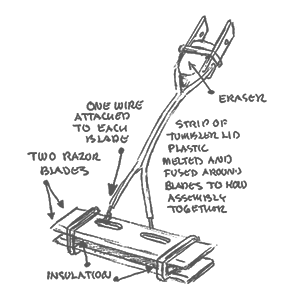
A spread is a prison meal made by inmates. Spreads are often made with commissary ingredients, such as instant ramen and corn puffs. Spreads can be simple meals, or elaborate and inventive combinations of ingredients.
Spreads may be used to supplement or replace the government-mandated meals provided to prisoners by the prison, due to the unpalatable and insubstantial nature of many prison meals.
read more »
Posted in Food, Politics |
Leave a Comment »
April 16, 2023

Philanthrocapitalism or philanthropic capitalism is a way of doing philanthropy, which mirrors the way that business is done in the for-profit world. It may involve venture philanthropy that actively invests in social programs to pursue specific philanthropic goals that would yield return on investment over the long term, or in a more passive form whereby ‘social investors’ benefit from investing in socially-responsible programs.
The term was coined by Matthew Bishop and Michael Green in their book ‘Philanthrocapitalism: How the Rich Can Save The World.’ The book was endorsed by Bill Clinton, who wrote in its foreword that this concept drives the Clinton Foundation. The shift in implementing business models in charity is not a new concept – John D. Rockefeller and Andrew Carnegie sought to apply their business strategies in their philanthropy in the 20th century. Since then, a significant increase in charity spending by other organizations such as the Bill & Melinda Gates Foundation and Chan Zuckerberg Initiative, both described as examples of philanthrocapitalism, has been noted.
read more »
Posted in Money, Politics |
Leave a Comment »
February 25, 2023


Pseudolaw consists of statements, beliefs, or practices that are claimed to be based on accepted law or legal doctrine, but which deviate significantly from most conventional understandings of law and jurisprudence, or which originate from non-existent statutes or legal principles the advocate or adherent incorrectly believes exist.
Canadian legal scholar Donald J. Netolitzky defined pseudolaw as ‘a collection of legal-sounding but false rules that purport to be law,’ a definition that distinguishes pseudolaw from arguments that fail to conform to existing laws such as novel arguments or an ignorance of precedent in case law.
read more »
Posted in Language, Money, Politics |
1 Comment »
January 12, 2023

El Paquete Semanal (‘The Weekly Package’) or ‘El Paquete’ is a one terabyte collection of digital material distributed since around 2008 on the underground market in Cuba as a substitute for broadband Internet. Since 2015, it has been the primary source of entertainment for millions of Cubans, as Internet in Cuba has been suppressed for many years. El Paquete Semanal has its own page that is running in the United States, where one could view its contents and is consistently updated every week.
The Cuban Government has also been investing in more internet access for the people, with the use of ETECSA, a service that the citizens could pay 1 CUC (equivalent to an American Dollar) for one hour of internet use. This has become the most popular method for people to become connected to the internet, mainly used to connect to social media, such as Facebook.
read more »
Posted in Politics, Technology, World |
1 Comment »
January 3, 2023

Libs of TikTok is a far-right anti-LGBT Twitter account owned by Chaya Raichik, a former real estate agent, that reposts social media content created by left-wing and LGBT people with hostile, mocking, or derogatory commentary. The account has over 1.5 million followers and has become influential among American conservatives and the political right.
The account harasses teachers, medical providers, and children’s hospitals. It spreads false claims and hateful commentary, especially relating to medical care of transgender children. Libs of TikTok regularly slurs LGBT people, as well as those who provide mental health services to LGBT youth and LGBT sex education to students, as ‘groomers.’ Raichik’s social media accounts have received several temporary suspensions and a permanent suspension from TikTok.
read more »
Posted in Politics, Sex, Technology |
3 Comments »
January 1, 2023

In theater, dance, and live musical performances, a rider is a set of requests or demands that a performer sets as criteria for performance, which are typically fulfilled by the hosting venue. Some rider requirements are attempts to avoid specific problems from previous shows. Some venues cut corners to save expense, leaving the touring crew with inedible food, etc. ‘Unreasonable requests’ (if legal) can be contractual obligations. Failure to meet such terms can compel performance fees to be paid without a performance.
Riders typically include hospitality and technical sections. Since the 2010s, inclusion riders, which provide for certain levels of diversity in casting and production staff, are used in the film and television industry.
read more »
Posted in Art, Money, Politics |
1 Comment »
December 21, 2022

Active measures is political warfare conducted by the Soviet and modern Russian governments to influence the course of world events. It includes offensive programs such as espionage, propaganda, sabotage, and assassination.
Retired KGB Major General Oleg Kalugin, former head of Foreign Counter Intelligence for the KGB, described active measures as ‘the heart and soul of the Soviet intelligence’: ‘Not intelligence collection, but subversion: active measures to weaken the West, to drive wedges in the Western community alliances of all sorts, particularly NATO, to sow discord among allies, to weaken the United States in the eyes of the people of Europe, Asia, Africa, Latin America, and thus to prepare ground in case the war really occurs.’
read more »
Posted in Politics, War, World |
Leave a Comment »


 The Daily Omnivore