August 26, 2012

In the United States, open container laws regulate or prohibit the existence of open containers of alcohol in certain areas. Typically these laws concern public places, such as parks and vehicles. The purpose of these laws is to restrict public intoxication, especially the dangerous act of operating a vehicle while intoxicated. Open container laws are state laws, rather than federal laws; thus they vary from state to state.
The vast majority of U.S. states and localities prohibit possessing and/or consuming an open container of alcohol in public places, such as on the street. However, the definition of ‘public place’ is not always clear. California is unique in that it does have a state law on the books, but similar to states that have no law, the state law only applies to areas that the ‘city, county, or city and county have enacted an ordinance’ in. Open container restrictions are not always rigorously enforced, and open containers may in fact be legally permitted in nominally private events which are open to the public. This is especially true in downtown districts and during holidays and sporting events and tailgate parties.
read more »
Posted in Drugs, Politics |
1 Comment »
August 26, 2012

Social customs and laws on drinking alcohol in public vary significantly around the world. In some countries, such as the United States and the Muslim world, public drinking is almost universally condemned or outlawed, while in other countries, such as New Zealand and Japan, public drinking and public intoxication are legal (although local often authorities have power to pass bylaws declaring liquor-free zones).
Opponents of drinking in public argue that it encourages overconsumption of alcohol and binge drinking, rowdiness and violence, and propose that people should instead drink at private businesses such as public houses, bars or clubs, where a bartender may prevent overconsumption and where rowdiness can be better controlled by the fact that one is sitting down and security or bouncers may be present. Alternatively, one may drink at home.
read more »
Posted in Drugs, Politics, World |
Leave a Comment »
August 25, 2012

In 2003, the columnist and gay rights activist Dan Savage held a contest among his readers to create a definition for the word ‘santorum‘ as a response to comments by then-U.S. Senator Rick Santorum that had been criticized as anti-gay. Savage announced the winning entry, which defined ‘santorum’ as ‘the frothy mixture of lube and fecal matter that is sometimes the byproduct of anal sex.’
He created a web site, spreadingsantorum.com (and santorum.com), to promote the definition, which became a prominent search result for Santorum’s name on several web search engines. In 2010 Savage offered to take the site down if Santorum donated US$5 million to Freedom to Marry, a group advocating legal recognition of same-sex marriages. In 2011 Santorum asked Google to remove the definition from its search engine index. Google refused, responding that the company does not remove content from search results except in very limited circumstances.
read more »
Posted in Language, Politics, Sex |
1 Comment »
August 24, 2012

The chewing gum ban in Singapore was enacted in 1992 and revised in 2004 and 2010. It bans the import and sale of chewing gum in Singapore. Since 2004, only chewing gum of therapeutic value is allowed into Singapore following the Singapore–United States Free Trade Agreement. This law was created because people disposed of gum incorrectly by sticking it under places like chairs or tables.
A common misconception among citizens is that personal use of chewing gum is allowed in Singapore. However, according to the set of Regulations, ‘importing’ means to ‘bring or cause to be brought into Singapore by land, water or air from any place which is outside Singapore …’ any goods, even if they are not for purposes of trade. The set of Regulations also does not make any provisions for personal use of quantities to be brought into Singapore. Therefore, bringing chewing gum into Singapore, even small quantities for whatever purpose, is prohibited.
read more »
Posted in Food, Politics, World |
Leave a Comment »
August 24, 2012

Evgeny Morozov (b. 1984) is a Belarusian writer and researcher who studies political and social implications of technology. In 2009 he was chosen as a TED fellow where he spoke about how the Web influences civic engagement and regime stability in authoritarian, closed societies or in countries ‘in transition.’
Morozov expresses skepticism about the popular view that the Internet is helping to democratize authoritarian regimes, arguing that it could also be a powerful tool for engaging in mass surveillance, political repression, and spreading nationalist and extremist propaganda. He has also criticized what he calls ‘The Internet Freedom Agenda’ of the US government, finding it naive and even counterproductive to the very goal of promoting democracy through the Web.
read more »
Posted in Politics, Technology, World |
Leave a Comment »
August 24, 2012

Voina (literally ‘War’) is a Russian street-art group known for their provocative and politically charged works of performance art. The group has had more than sixty members, including former and current students of the Rodchenko Moscow School of Photography, Moscow State University, and Tartu University. However, the group does not cooperate with state or private institutions, and is not supported by any Russian curators or gallerists.
The activities of Voina have ranged from street protests, symbolic pranks in public places, and performance-art happenings, to vandalism and destruction of public property. More than a dozen criminal cases have been brought against the group. According to its members, Voina has no formal leadership, and all members are considered equal. Conceptions are worked out by Oleg Vorotnikov (a.k.a. ‘Vor,’ ‘Thief ‘– the chief ideologist), Natalia Sokol (a.k.a. ‘Kozlyonok,’ ‘Goatling’ – the chief coordinator), Leonid Nikolayev (a.k.a. ‘Crazy Lenya’) and Alexei Plutser-Sarno (the chief media artist, the author of the group’s media art and texts).
read more »
Posted in Art, Politics, World |
Leave a Comment »
August 23, 2012

The phrase, ‘proud member of the reality-based community‘ was first used in 2014 to suggest the commentator’s opinions are based more on observation than on faith, assumption, or ideology. Some commentators have gone as far as to suggest that there is an overarching conflict in society between the reality-based community and the ‘faith-based community’ as a whole. It can be seen as an example of political framing.
The source of the term is a quotation in ‘The New York Times Magazine’ by Ron Suskind, quoting an unnamed aide to George W. Bush (later attributed to Karl Rove): ‘The aide said that guys like me were ‘in what we call the reality-based community,’ which he defined as people who ‘believe that solutions emerge from your judicious study of discernible reality.’ ‘…That’s not the way the world really works anymore,’ he continued. ‘We’re an empire now, and when we act, we create our own reality. And while you’re studying that reality—judiciously, as you will—we’ll act again, creating other new realities, which you can study too, and that’s how things will sort out. We’re history’s actors…and you, all of you, will be left to just study what we do.”
Posted in Humor, Language, Politics |
Leave a Comment »
August 16, 2012
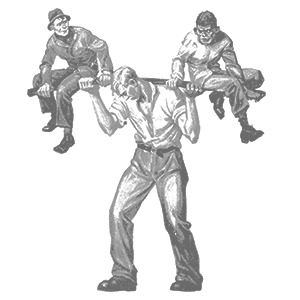
Eugenics [yoo-jen-iks] is the study of hereditary improvement of the human race by controlled selective breeding. Eugenics rests on some basic ideas. The first is that what is true of animals is true of man. The characteristics of animals are passed on from one generation to the next in heredity, including mental characteristics. For example, the behavior and mental characteristics of different breeds of dog differ, and all modern breeds are greatly changed from wolves. The breeding and genetics of farm animals show that if the parents of the next generation are chosen, then that affects what offspring are born.
Negative eugenics aims to cut out traits that lead to suffering, by limiting people with the traits from reproducing. Positive eugenics aims to produce more healthy and intelligent humans, by persuading people with those traits to have more children. In the past, many ways were proposed for doing this, and even today eugenics means different things to different people. The idea of eugenics is controversial, because in the past it was sometimes used to justify discrimination and injustice against people who were thought to be genetically unhealthy or inferior.
read more »
Posted in Health, Politics, Sex |
Leave a Comment »
August 13, 2012
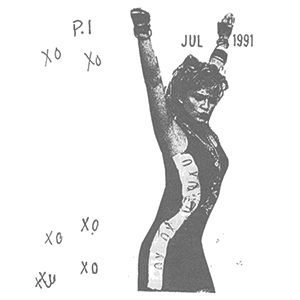
Riot grrrl is an underground feminist punk rock movement that originally started in Washington, D.C. and the Pacific Northwest in the early to mid-1990s. It is often associated with third-wave feminism which is sometimes seen as its starting point. Riot grrrl bands often address issues such as rape, domestic abuse, sexuality, racism, patriarchy, and female empowerment.
Bands associated with the movement include Bikini Kill, Jack Off Jill (and later Scarling), Bratmobile, Fifth Column, Sleater-Kinney, L7, and also queercore like Team Dresch. In addition to a music scene and genre, riot grrrl is a subculture: zines, the DIY ethic, art, political action, and activism are part of the movement.
read more »
Posted in Art, Politics, Sex |
Leave a Comment »
August 13, 2012

‘Who breaks a butterfly upon a wheel?‘ is a quotation – sometimes misquoted with ‘on’ in place of ‘upon’ – from Alexander Pope’s ‘Epistle to Dr Arbuthnot’ of 1735. It can be taken as referring to putting massive effort into achieving something minor or unimportant, and alludes to ‘breaking on the wheel,’ a form of torture in which victims had their long bones broken by an iron bar while tied to a Catherine wheel.
William Rees-Mogg, as editor of ‘The Times’ newspaper, used the ‘on a wheel’ version of the quotation as the heading (set in capital letters) for an editorial in 1967 about the ‘Redlands’ court case, which had resulted in prison sentences for Rolling Stones members Keith Richards and Mick Jagger. The philosopher Mary Midgley used a variation on the phrase in an article in the journal ‘Philosophy’ written to counter a review praising ‘The Selfish Gene’ by Richard Dawkins, where she cuttingly said that she had ‘not attended to Dawkins, thinking it unnecessary to break a butterfly upon a wheel.’
Posted in Language, Politics, Sex |
1 Comment »
August 13, 2012
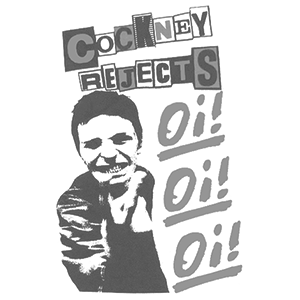
Oi! is a working class subgenre of punk rock that originated in the UK in the late 1970s. The music and its associated subculture had the goal of bringing together punks, skinheads and other working-class youths (sometimes called ‘herberts’).
The Oi! movement was partly a response to the perception that many participants in the early punk rock scene were, in the words of The Business guitarist Steve Kent, ‘trendy university people using long words, trying to be artistic…and losing touch.’ André Schlesinger, singer of The Press, said, ‘Oi shares many similarities with folk music, besides its often simple musical structure; quaint in some respects and crude in others, not to mention brutally honest, it usually tells a story based in truth.’
read more »
Posted in Art, Politics, World |
Leave a Comment »
August 13, 2012

Pussy Riot is a Russian feminist punk-rock collective that stages politically provocative impromptu performances in Moscow on Russia’s current political life. In March 2012, during an improvised and unauthorized concert in Moscow’s Cathedral of Christ the Savior, three women from the band were arrested and charged with ‘hooliganism’ and their trial began in late July.
The band members have gained sympathy both within Russia and internationally due to allegations of harsh treatment while in custody and a risk of a possible seven-year jail sentence, and have also been criticized in Russia for offending the feelings of religious people. Alexei Nikiforov, a federal prosecutor, has demanded prison for the trio because they ‘abused God.’ Pussy Riot’s lawyers said that the circumstances of the case have revived the Soviet-era tradition of the ‘show trial.’
read more »
Posted in Politics, Sex, World |
Leave a Comment »


 The Daily Omnivore