July 3, 2012

‘The medium is the message‘ is a phrase coined by Marshall McLuhan meaning that the form of a medium embeds itself in the message, creating a symbiotic relationship by which the medium influences how the message is perceived. The phrase was introduced in his most widely known book, ‘Understanding Media: The Extensions of Man,’ published in 1964.
McLuhan proposes that a medium itself, not the content it carries, should be the focus of study. He said that a medium affects the society in which it plays a role not only by the content delivered over the medium, but also by the characteristics of the medium itself. McLuhan frequently punned on the word ‘message’ changing it to ‘mass age,’ ‘mess age,’ and ‘massage’; a later book, ‘The Medium is the Massage’ was originally to be titled ‘The Medium is the Message,’ but McLuhan preferred the new title which is said to have been a printing error.
read more »
Posted in Language, Politics, Technology |
1 Comment »
July 3, 2012

Kim Dotcom, real name Kim Schmitz (b. 1974) is a German-Finnish businessman who rose to prominence during the dot-com bubble and was convicted of insider trading and embezzlement in its aftermath. He is the founder of Megaupload and its associated websites. He legally changed his surname to Dotcom in 2005. in 2012, the New Zealand Police placed him in custody in response to US charges of criminal copyright infringement in relation to his Megaupload Web site.
Dotcom has spoken out against his negative portrayal in the media, claiming to be a reformed character and a legitimate businessman who has been unfairly demonized by United States authorities and industry trade groups such as the RIAA and MPAA. He contends that the services offered by his Megaupload site were not significantly different from those of comparable services such as Rapidshare or YouTube, and he has just been used as a scapegoat because of his hacker past.
read more »
Posted in Money, Politics, Technology |
Leave a Comment »
June 29, 2012
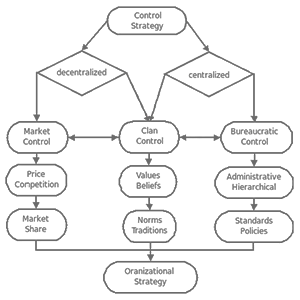
Control Theory is a theory of social order in sociology, which classifies control as centralized or decentralized or neither. Decentralized control is considered market control. Centralized control is considered bureaucratic control. Some types of control such as clan control are considered to be a mixture of both decentralized and centralized control.
Decentralized control or market control is typically maintained through factors such as price, competition, or market share. Centralized control such as bureaucratic control is typically maintained through administrative or hierarchical techniques such as creating standards or policies. Mixed control or clan control is typically maintained by keeping a set of values and beliefs or norms and traditions.
read more »
Posted in Politics, Science |
Leave a Comment »
June 28, 2012

OSx86 is a collaborative hacking project to run the Mac OS X computer operating system on non-Apple personal computers with x86 architecture and x86-64 compatible processors. The effort started soon after the 2005 Worldwide Developers Conference announcement that Apple would be transitioning its personal computers from PowerPC to Intel microprocessors. Apple uses a Trusted Platform Module, or TPM, to tie Mac OS to the systems it distributed to developers after announcing its switch to Intel’s chips. A computer built to run this type of Mac OS X is also known as a Hackintosh.
Hackintoshed notebook computers are also referred to as ‘Hackbooks.’ The Apple software license does not allow Mac OS X to be used on a computer that is not ‘Apple-branded.’ The legality of this form of tying is disputed. While the methods Apple uses to prevent Mac OS X from being installed on non-Apple hardware are protected from commercial circumvention in the United States by the DMCA, specific changes to the law regarding the concept of jailbreaking has thrown such and similar circumvention methods when carried out by end-users for personal use into a legal grey area.
Posted in Money, Politics, Technology |
Leave a Comment »
June 26, 2012

Speciesism [spee-shee-ziz-uhm] involves assigning different values or rights, or special consideration, to individuals solely on the basis of their species membership. The term was coined in 1973 by British psychologist Dick D. Ryder to denote prejudice against non-humans based on morally irrelevant physical differences.
The term is mostly used by animal rights advocates, who argue that species membership has no moral significance, and that it is both irrational and morally wrong to regard sentient beings as objects or property. Philosopher Tom Regan argues that all animals have inherent rights and that we cannot assign them a lesser value because of a perceived lack of rationality, while assigning a higher value to infants and the mentally impaired solely on the grounds of membership of a certain species. Peter Singer’s philosophical arguments against speciesism are based on the principle of equal consideration of interests.
read more »
Posted in Philosophy, Politics |
1 Comment »
June 26, 2012

Nutopia is a conceptual micronation founded by John Lennon and Yoko Ono to address Lennon’s then-ongoing immigration problems though satirical means. There is no leadership and not all citizenships have been recorded. As a result, the population is unknown. It was first announced on April Fool’s Day 1973 at a press conference in New York City. The Lennons were ambassadors of the country and sought (creatively, though unsuccessfully) diplomatic immunity to end Lennon’s ongoing immigration troubles, as he and Ono tried to remain in the United States.
Ono already had a Resident Alien ‘green card’ through her previous husband, Tony Cox, but Lennon had been denied permanent residence status. John talked about the imaginary country, which would live up to the ideals of his song ‘Imagine,’ saying this in the ‘official’ declaration: ‘We announce the birth of a conceptual country, NUTOPIA. Citizenship of the country can be obtained by declaration of your awareness of NUTOPIA. NUTOPIA has no land, no boundaries, no passports, only people. NUTOPIA has no laws other than cosmic. All people of NUTOPIA are ambassadors of the country. As two ambassadors of NUTOPIA, we ask for diplomatic immunity and recognition in the United Nations of our country and its people.
Posted in Humor, Politics, World |
Leave a Comment »
June 25, 2012

Equality of outcome is a controversial political concept which describes a state in which people have approximately the same material wealth or, more generally, in which the general conditions of their lives are similar. Achieving this requires reducing or eliminating material inequalities between individuals or households in a society. This could involve a transfer of income and/or wealth from wealthier to poorer individuals, or adopting other institutions designed to promote equality of condition from the start.
The concept is central to some political ideologies and is used regularly in political discourse, often in contrast to the term equality of opportunity. A related way of defining equality of outcome is to think of it as ‘equality in the central and valuable things in life.’ After the Russian Revolution of 1917, the political structure of the Soviet Union tried to emphasize equality of outcome as a primary goal.
read more »
Posted in Money, Philosophy, Politics |
Leave a Comment »
June 21, 2012

The term Network Society describes several different phenomena related to the social, political, economic, and cultural changes caused by the spread of networked, digital information and communications technologies. A number of academics are credited with coining the term since the 1990s and several competing definitions exist.
The intellectual origins of the idea can be traced back to the work of early social theorists such as Georg Simmel who analyzed the effect of modernization and industrial capitalism on complex patterns of affiliation, organization, production, and experience.
read more »
Posted in Politics, Technology, World |
2 Comments »
June 21, 2012

Information pollution is the contamination of information supply with irrelevant, redundant, unsolicited and low-value information. The spread of useless and undesirable information can have a detrimental effect on human activities. It is considered one of the adverse effects of the information revolution. Pollution is a large problem and is growing rapidly in e-mail, instant messaging (IM), and RSS feeds.
The term acquired particular relevance in 2003 when Jakob Nielsen, a leading web usability expert, published a number of articles discussing the topic. However, as early as 1971 researchers were expressing doubts about the negative effects of having to recover ‘valuable nodules from a slurry of garbage in which it is a randomly dispersed minor component.’
read more »
Posted in Money, Politics, Technology |
1 Comment »
June 20, 2012
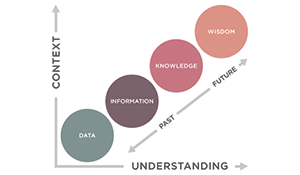

The term information revolution describes current economic, social, and technological trends beyond the Industrial Revolution. Many competing terms have been proposed that focus on different aspects of this societal development.
The British polymath crystallographer J. D. Bernal introduced the term ‘scientific and technical revolution’ in his book ‘The Social Function of Science’ (1939) in order to describe the new role that science and technology are coming to play within society. He asserted that science is becoming a ‘productive force,’ using the Marxist Theory of Productive Forces (a widely-used concept in communism placing primary emphasis on technical advances and strong productive forces in a nominally socialist economy before real communism, or even real socialism, can have a hope of being achieved).
read more »
Posted in Money, Politics, Technology |
Leave a Comment »
June 20, 2012

Technological unemployment is unemployment primarily caused by technological change. Since the early 1800’s, the observation of economists has been that technology has had a positive influence on employment: as technological change increased productivity, prices for commodities fell, resulting in increased demand, thereby increasing demand for labor. Machines freed workers from simple manual work but created new better paying jobs requiring more specialized skills.
However, some technologists claim that modern capabilities of pattern recognition, machine learning, and global networking are steadily eliminating the skilled work of large swaths of the middle income workforce. The warning is that technology is no longer creating jobs at the rate that it is making others obsolete. The notion of technological unemployment leading to structural unemployment (and being macroeconomically injurious) is often dismissed as the ‘Luddite fallacy.’
read more »
Posted in Money, Politics, Technology |
2 Comments »
June 19, 2012

A credit boom-bust cycle is an episode characterized by a sustained increase in several economics indicators followed by a sharp and rapid contraction. Commonly the boom is driven by a rapid expansion of credit to the private sector accompanied with rising prices of commodities and stock market index.
Following the boom phase, asset prices collapse and a credit crunch arises, where access to financing opportunities are sharply reduced below levels observed during normal times. The unwinding of the boom phase brings a considerably large reduction in investment and fall in consumption and an economic recession may follow. The recession following the burst of the episode is oftentimes short-lived, GDP and consumption growth usually resume within a year.
read more »
Posted in Money, Politics, World |
Leave a Comment »


 The Daily Omnivore