April 12, 2012

A Castle Doctrine is an American legal doctrine that designates a person’s abode (or, in some states, any place legally occupied, such as a car or place of work) as a place in which the person has certain protections and immunities and may in certain circumstances attack an intruder without becoming liable to prosecution. Typically deadly force is considered justified, and a defense of justifiable homicide applicable, in cases ‘when the actor reasonably fears imminent peril of death or serious bodily harm to himself or another.’ The doctrine is not a defined law that can be invoked, but a set of principles which is incorporated in some form in the law of most states.
The term derives from the historic English common law dictum that ‘an Englishman’s home is his castle.’ This concept was established as English law by 17th century jurist Sir Edward Coke, in his ‘The Institutes of the Laws of England’ (1628). This was carried by colonists to the New World, who later removed ‘Englishman’ from the phrase, which thereby became simply the Castle Doctrine. The term has been used to imply a person’s absolute right in England to exclude anyone from their home, although this has always had restrictions, and since the late twentieth century police have also had increasing powers of entry.
read more »
Posted in Death, Politics, World |
Leave a Comment »
April 12, 2012

Good Copy Bad Copy is a documentary about copyright and culture in the context of Internet, peer-to-peer file sharing and other technological advances, directed by Andreas Johnsen, Ralf Christensen, and Henrik Moltke. It features interviews with copyright lawyers, producers, artists, and filesharing service providers.
A central point of the documentary is that ‘creativity itself is on the line’ and that a balance needs to be struck, or that there is a conflict, between protecting the right of those who own intellectual property and the rights of future generations to create. Artists interviewed include Girl Talk and Danger Mouse, popular musicians of the mashup scene who cut and remix sounds from other songs into their own. The interviews with these artists reveal an emerging understanding of digital works and the obstacle to their authoring copyright presents.
read more »
Posted in Money, Politics, Technology |
1 Comment »
April 11, 2012

‘Free Culture: How Big Media Uses Technology and the Law to Lock Down Culture and Control Creativity’ is a 2004 book by law professor Lawrence Lessig that was released on the Internet under the Creative Commons Attribution/Non-commercial license.
The book documents how copyright power has expanded substantially since 1974 in five critical dimensions: duration (from 32 to 95 years), scope (from publishers to virtually everyone), reach (to every view on a computer), control (including “derivative works” defined so broadly that virtually any new content could be sued by some copyright holder as a ‘derivative work’ of something), and concentration and integration of the media industry.
read more »
Posted in Money, Politics, Technology |
Leave a Comment »
April 11, 2012
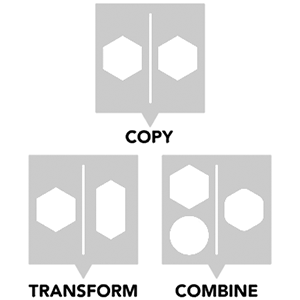
Remix culture is a term used to describe a society which allows and encourages derivative works. Remix is defined as combining or editing existing materials to produce a new product. A Remix Culture would be, by default, permissive of efforts to improve upon, change, integrate, or otherwise remix the work of copyright holders.
In his 2008 book, ‘Remix,’ Lawrence Lessig presents this as a desirable ideal and argues, among other things, that the health, progress, and wealth creation of a culture is fundamentally tied to this participatory remix process.
read more »
Posted in Money, Politics, Technology |
Leave a Comment »
April 11, 2012

ccMixter.org is a community music site that promotes remix culture and makes samples, remixes, and a cappella tracks licensed under Creative Commons available for download and re-use in creative works. Visitors are able to listen to, sample, mash-up, or interact with music in a variety of ways including the download and use of tracks and samples in their own remixes.
Most sampling or mash-up web sites on the Internet stipulate that users forgo their rights to the new song once it is created. By contrast, the material on ccMixter.org is generally licensed to be used in any arena, not just the ccMixter site or a specific contest. The ccMixter site contains over 10,000 samples from a wide range of recording artists, including high profile artists such as Beastie Boys and David Byrne.
read more »
Posted in Art, Money, Politics |
Leave a Comment »
April 11, 2012

WhoSampled is a website and database of information about sample-based music founded in London. WhoSampled compares original songs with covered songs or songs that ‘borrowed’ samples, it serves as a historical line of where songs have come from and where they’re going. Registered users can submit information about a sample, remix or cover and subject, waiting for moderator’s approval that will let the entry to be published on the site.
The visitor of the site gets a comprehensive list of who that artist has sampled and how, and how that artist him/herself has been sampled. The comparison of original song and the song that sampled, covered or remixed it, is done side by side with embedded tracks or videos. All audio and video clips shown on the site are embedded links to content hosted by third party services, such as YouTube or DailyMotion. The process and idea of the site of being a tool for research and music discovery, is similar to another project called Music Genome Project, both wanting to ‘explore the DNA of music.’
Posted in Art, Money, Politics |
Leave a Comment »
April 11, 2012


A remix is an alternative version of a recorded song, made from an original version. Sometimes this term is also used for alterations of media or recreation other than song (film, literature, beverages etc.). In remixing, a person (often a recording engineer or record producer) takes a familiar song, splits it into different parts called tracks, and changes the song’s music, instruments, layout, and or vocals to create a new version of the same song.
It is called remixing due to mixing being the putting together of all the parts of a song, and remixing being the putting together of the parts of the song differently than the original. Remixers, that is, people who remix, are musicians who use a variety of tools, primarily electronic, to create the new song versions. Remixing can be simply moving song parts around; it can also be creating new music for an old song lyric. The most popular types of remixing are production remixing, where new instruments are used with the old song vocal, and mashups, in which two old songs are mixed together.
read more »
Posted in Art, Money, Politics |
1 Comment »
April 10, 2012
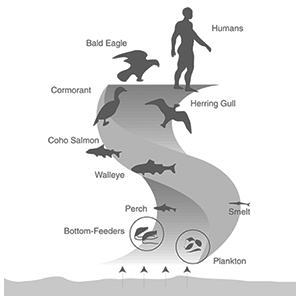
Bioaccumulation refers to the accumulation of substances, such as pesticides, or other organic chemicals in an organism. Bioaccumulation occurs when an organism absorbs a toxic substance at a rate greater than that at which the substance is lost. Thus, the longer the biological half-life of the substance the greater the risk of chronic poisoning, even if environmental levels of the toxin are not very high.
Bioconcentration is a related but more specific term, referring to uptake and accumulation of a substance from water alone. By contrast, bioaccumulation refers to uptake from all sources combined (e.g. water, food, air, etc.).
read more »
Posted in Food, Health, Politics |
Leave a Comment »
April 6, 2012

Bromo-DragonFLY is a psychedelic hallucinogenic drug related to phenethylamine (a chemical found in chocolate, which like amphetamine, causes the release of norepinephrine and dopamine in the brain). It is considered an extremely potent hallucinogen, only slightly less potent than LSD, with a normal dose in the region of 200 μg to 800 μg, and it has an extremely long duration (up to several days).
It is explicitly illegal only in Finland, Sweden, Norway, and Denmark, although it may be considered a controlled substance analogue under US and Australian drug laws. The compound was first synthesized in the lab of American pharmacologist David E. Nichols in 1998. As with the earlier and less potent dihydrofuran series of compounds nicknamed FLY, Bromo-DragonFLY was named after its superficial structural resemblance to a dragonfly.
read more »
Posted in Drugs, Health, Politics |
Leave a Comment »
April 6, 2012

Erowid is an online library of information about psychoactive plants and chemicals and other topics on altered states of consciousness such as meditation and lucid dreaming. It provides information about legal and illegal substances, including their desired and adverse effects. The site is organized by substance, ranging from well-known substances like alcohol, to obscure ones such as Bromo-DragonFLY (a hallacuinogen only slightly less potent than LSD, but which lasts for several days).
The information on the site is gathered from diverse sources including published literature, experts in related fields, and the experiences of the general public. Erowid acts as a publisher of new information as well as a library for the collection of documents and images published elsewhere.
read more »
Posted in Drugs, Health, Politics |
Leave a Comment »
April 4, 2012

The Male Gaze is a feminist theory that was first developed by British feminist film theorist Laura Muvley in 1975. The male gaze occurs when the audience, or viewer, is put into the perspective of a heterosexual man. Mulvey stressed that the dominant male gaze in mainstream Hollywood films reflects and satisfies the male unconscious: most filmmakers are male, thus the voyeuristic gaze of the camera is male. Male characters in the film’s narratives make women the objects of their gaze.
When feminism characterizes the ‘male gaze’ certain themes appear such as, voyeurism, objectification, fetishism, scopophilia (pleasure from looking), and women as the object of male pleasure. Mary Anne Doane at Brown University gives an example of how voyeurism can be seen in the male gaze: ‘The early silent cinema, through its insistent inscription of scenarios of voyeurism, conceives of its spectator’s viewing pleasure in terms of the peeping tom, behind the screen, reduplicating the spectator’s position in relation to the woman on the screen.’
read more »
Posted in Money, Politics, Sex |
2 Comments »
April 3, 2012

Mockney (a portmanteau of ‘mock’ and ‘Cockney’) is an affected accent and form of speech in imitation of Cockney or working class London speech, or a person with such an accent. A stereotypical Mockney comes from a middle or upper-middle class background in England’s Home Counties (the counties encircling London).
Mockney is distinct from Estuary English by being the deliberate affectation of the working-class London (Cockney) accent. A person speaking with a Mockney accent might adopt Cockney pronunciation but retain standard grammatical forms where the Cockney would use non-standard forms (e.g. negative concord / double negative). The first published use of the word according to the Oxford English Dictionary was in 1989.
read more »
Posted in Language, Money, Politics |
Leave a Comment »


 The Daily Omnivore