March 23, 2012
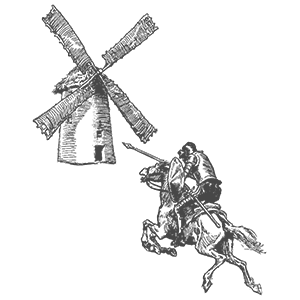
Tilting at windmills is an English idiom which means attacking imaginary enemies. The word ’tilt,’ in this context, comes from jousting. The phrase is sometimes used to describe confrontations where adversaries are incorrectly perceived, or courses of action that are based on misinterpreted or misapplied heroic, romantic, or idealistic justifications.
The phrase derives from an episode in the novel ‘Don Quixote’ by Miguel de Cervantes. In the novel, Don Quixote fights windmills that he imagines to be giants. Quixote sees the windmill blades as the giant’s arms, for instance.
read more »
Posted in Humor, Language, Politics |
Leave a Comment »
March 23, 2012

Selective Perception is a broad term to identify behavior where people tend to ‘see things’ based on their particular frame of reference. Selective perception may refer to any number of cognitive biases in psychology related to the way expectations affect perception.
For instance, several studies have shown that students who were told they were consuming alcoholic beverages (which in fact were non-alcoholic) perceived themselves as being ‘drunk,’ exhibited fewer physiological symptoms of social stress, and drove a simulated car similarly to other subjects who had actually consumed alcohol. The result is somewhat similar to the placebo effect.
read more »
Posted in Humor, Politics, Science |
Leave a Comment »
March 23, 2012
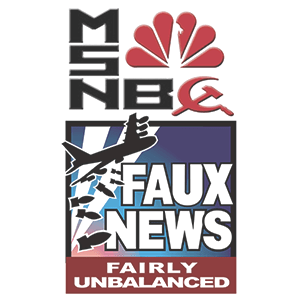
The hostile media effect refers to the finding that people with strong biases toward an issue (partisans) perceive media coverage as biased against their opinions, regardless of the reality.
Proponents of the hostile media effect argue that this finding cannot be attributed to the presence of bias in the news reports, since partisans from opposing sides of an issue rate the same coverage as biased against their side and biased in favor of the opposing side. The phenomenon was first proposed and studied experimentally by Robert Vallone, Lee Ross and Mark Lepper.
read more »
Posted in Language, Money, Politics |
Leave a Comment »
March 22, 2012
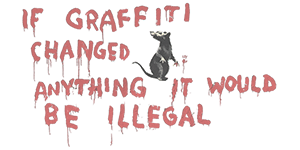
Street art is art, specifically visual art, developed in public spaces — that is, ‘in the streets’ — though the term usually refers to unsanctioned art, as opposed to government sponsored initiatives. The term can include traditional graffiti artwork, sculpture, stencil graffiti, sticker art, wheatpasting and street poster art, video projection, art intervention, guerrilla art, and street installations.
Typically, the term street art or the more specific post-graffiti is used to distinguish contemporary public-space artwork from territorial graffiti, vandalism, and corporate art. Artists have challenged art by situating it in non-art contexts. ‘Street’ artists do not aspire to change the definition of an artwork, but rather to question the existing environment with its own language. They attempt to have their work communicate with everyday people about socially relevant themes in ways that are informed by aesthetic values without being imprisoned by them. NYC based artist John Fekner defines street art as ‘all art on the street that’s not graffiti.’
read more »
Posted in Art, Politics, World |
Leave a Comment »
March 22, 2012
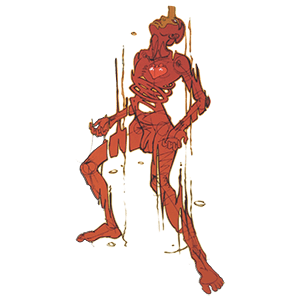
Mear One, real name Kalen Ockerman (b. 1971), is a Los Angeles-based artist, famously known for his often-political street graffiti art. Commonly referred to as the ‘Michelangelo’ of graffiti, Mear One is commonly associated with CBS (Can’t Be Stopped – City Bomb Squad) and WCA (West Coast Artist) crews. As a graphic designer, Mear One has designed apparel for Conart, Kaotic, as well as his own Reform brand.
Mear One has done album covers for artists like Non Phixion, Freestyle Fellowship, Alien Nation, Limp Bizkit, Busdriver and Daddy Kev. In 2004, Mear One joined artists Shepard Fairey and Robbie Conal to create a series of ‘anti-war, anti-Bush’ posters for a street art campaign called ‘Be the Revolution’ for the art collective ‘Post Gen.’ As a famed L.A. street artist and prolific graffiti writer for over 20 years his partners have included Skate One, Az Rock, Tren, Item, Anger, Yem, and Cisco.
Posted in Art, Politics |
Leave a Comment »
March 22, 2012
‘Dirty Hands: The Art and Crimes of David Choe’ is a 2008 documentary film about painter and graffiti artist David Choe, directed by his long time friend Harry Kim. Over more than a decade, Kim filmed the most intimate and dramatic moments of his best friend David Choe’s colorful life as an artist.
Dirty Hands began as a film school project, but gradually expanded into a half-hour film entitled ‘Whales and Orgies,’ then a feature-length documentary. The film premiered at the Los Angeles Film Festival in 2008, and had a theatrical premiere at the Roxie Theater in San Francisco in 2010.
Posted in Art, Politics |
Leave a Comment »
March 22, 2012

David Choe [chwae] (b. 1976) is a Korean American muralist, graffiti artist, and graphic novelist from Los Angeles. He achieved art world success with his ‘dirty style’ figure paintings—raw, frenetic works which combine themes of desire, degradation, and exaltation. Outside of galleries, he is closely identified with the bucktoothed whale he has been spray-painting on the streets since he was in his teens.
Choe’s work appears in a wide variety of urban culture and entertainment contexts. For example, he provided the cover art for Jay-Z and Linkin Park’s multi-platinum album ‘Collision Course,’ and created artwork to decorate the sets of ‘Juno’ and ‘The Glass House.’ During the 2008 presidential race, Choe painted a portrait of then-Senator Barack Obama for use in a grassroots street art campaign. The original was later displayed in the White House.
read more »
Posted in Art, Money, Politics |
Leave a Comment »
March 21, 2012

Pirate radio is illegal or unregulated radio transmission. The term is most commonly used to describe illegal broadcasting for entertainment or political purposes, but is also sometimes used for illegal two-way radio operation.
Its etymology can be traced to the unlicensed nature of the transmission, but historically there has been occasional but notable use of sea vessels – fitting the most common perception of a pirate – as broadcasting bases.
read more »
Posted in Money, Politics, Technology |
Leave a Comment »
March 21, 2012
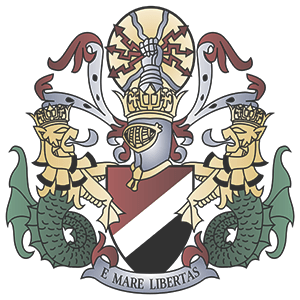
The Principality of Sealand is an unrecognized micronation, located on HM Fort Roughs, a former World War II Maunsell Sea Fort in the North Sea 10 km (six miles) off the coast of Suffolk, England. Since 1967, the facility has been occupied by the former British Major Paddy Roy Bates; his associates and family claim that it is an independent sovereign state.
While it has been described as the world’s smallest nation, or a micronation, Sealand is not currently officially recognized by any established sovereign state. Although Roy Bates claims it is de facto recognized by Germany as they have sent a diplomat to the micronation, and by the UK after an English court ruled it did not have jurisdiction over Sealand, neither action constitutes de jure recognition as far as the respective countries are concerned.
read more »
Posted in Money, Politics, World |
1 Comment »
March 19, 2012

Kleptocracy (‘rule by thieves’) is a form of political and government corruption where the government exists to increase the personal wealth and political power of its officials and the ruling class at the expense of the wider population, often without pretense of honest service. This type of government corruption is often achieved by the embezzlement of state funds.
Kleptocracy is most common in third world countries where the economy (often as a legacy of colonialism) is dominated by resource extraction. Such incomes constitute a form of economic rent and are therefore easier to siphon off without causing the income itself to decrease (for example, due to capital flight as investors pull out to escape the high taxes levied by the kleptocrats).
read more »
Posted in Money, Politics, World |
1 Comment »
March 19, 2012

The Banana Wars were a series of occupations, police actions, and interventions involving the United States in Central America and the Caribbean. This period started with the Spanish-American War in 1898 and the subsequent Treaty of Paris, which gave the United States control of Cuba and Puerto Rico. Between the time of the war with Spain and 1934, the US conducted military operations and occupations in Panama, Honduras, Nicaragua, Mexico, Haiti, and the Dominican Republic. The series of conflicts ended with the withdrawal of troops from Haiti and President Franklin D. Roosevelt’s Good Neighbor Policy in 1934. Reasons for these conflicts were varied but were largely economic in nature.
The term ‘Banana Wars’ arises from the connections between these interventions and the preservation of American commercial interests in the region. Most prominently, the United Fruit Company had significant financial stakes in production of bananas, tobacco, sugar cane, and various other products throughout the Caribbean, Central America and Northern South America. The U.S. was also advancing its political interests, maintaining a sphere of influence and controlling the Panama Canal which it had recently built, critically important to global trade and naval power.
read more »
Posted in Money, Politics, War |
Leave a Comment »
March 19, 2012

Banana republic is a pejorative name for a country which has an unstable government, high corruption and which largely depends on agriculture, such as growing bananas. There are subject to frequent coups. The ‘original Banana republic is Honduras. In the early 20th century the United Fruit Company had much influence in the country, even deposing a president and installing a new one over taxes.
The first known use of the term was by American author O. Henry in his 1904 book of linked short stories, ‘Cabbages and Kings.’ The book is based on Henry’s 1896-97 stay in Honduras, while hiding from federal authorities for embezzlement in the United States. O.Henry used the term to refer to a ‘servile dictatorship’ which directly supported large-scale plantation agriculture in return for payments or gifts.
read more »
Posted in Food, Money, Politics |
Leave a Comment »