June 15, 2011

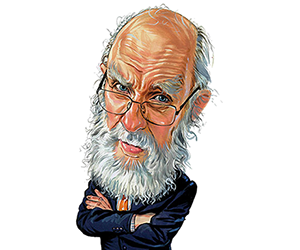
The Brights Movement is a social movement that aims to promote public understanding and acknowledgment of the naturalistic worldview (disbelief of the supernatural), including equal civil rights and acceptance for people who hold a naturalistic worldview. It was co-founded by Paul Geisert and Mynga Futrell in 2003.
The movement aims to create an Internet constituency that will pursue the following aims: Promote public understanding and acknowledgment of the naturalistic worldview, which is free of supernatural and mystical elements. Gain public recognition that persons who hold such a worldview can bring principled actions to bear on matters of civic importance. Educate society toward accepting the full and equitable civic participation of all such people.
read more »
Posted in Philosophy, Politics, Science |
Leave a Comment »
June 15, 2011

BC Bud is a generic term for several varieties of potent cannabis grown in the Canadian province of British Columbia. The term has almost become a brand name, especially in California, Oregon, Alaska, Idaho and Washington, to where most of the province’s cannabis is exported.
The United States Drug Enforcement Administration considers BC production to be a major problem, given the porous United States-Canada border, and has launched several major initiatives to cut down on its flow, including collaborative operations targeting marijuana activists such as Marc Emery.
read more »
Posted in Drugs, Money, Politics |
Leave a Comment »
June 13, 2011

Rudolf Hess (1894 – 1987) was a prominent Nazi politician and official acting as Adolf Hitler’s Deputy in the Nazi Party during the 1930s and early 1940s. On the eve of war with the Soviet Union, he flew solo to Scotland in an attempt to negotiate peace with the United Kingdom, but instead was arrested and held in captivity for the rest of the war. Hess was tried at Nuremberg and sentenced to life in prison at Spandau Prison, Berlin, where he died in 1987.
Hess’ 1941 attempt to negotiate peace and subsequent lifelong imprisonment have given rise to many theories about his motivation for flying to Scotland, and conspiracy theories about why he remained imprisoned alone at Spandau, long after all other convicts had been released. Precise and detailed information on many aspects of Hess’ situation either has been withheld in confidential archives in several nations, or has disappeared outright; this has made accurate historical conclusions very problematic.
read more »
Posted in Politics, War, World |
Leave a Comment »
June 13, 2011

‘Born secret‘ refers to a policy of information being classified from the moment of its inception, usually regardless of where it was being created, usually in reference to specific laws in the United States that are related to information that describes the operation of nuclear weapons. It has been extensively used in reference to a clause in the Atomic Energy Act of 1946, which specified that all information about nuclear weapons and nuclear energy was to be considered ‘Restricted Data’ (RD) until it had been officially declassified. The ‘born secret’ policy was created under the assumption that nuclear information could be so important to national security that it would need classification before it could be formally evaluated.
Whether or not it is constitutional to declare entire categories of information preemptively classified has not been definitively tested in the courts. When it was directly challenged in a freedom of the press case in 1979 (United States v. The Progressive) where a magazine attempted to publish an account of the so-called ‘secret of the hydrogen bomb’ (the Teller-Ulam design) which was apparently created without recourse to classified information, many analysts predicted that the Supreme Court would, if it heard the case, reject the ‘born secret’ clause as being an unconstitutional restriction of speech. The government, however, dropped the case as moot before it was resolved.
Posted in Politics, War |
Leave a Comment »
June 7, 2011

Glittering generalities are emotionally appealing words so closely associated with highly-valued concepts and beliefs that they carry conviction without supporting information or reason. Such highly-valued concepts attract general approval and acclaim. Their appeal is to emotions such as love of country and home, and desire for peace, freedom, glory, and honor. They ask for approval without examination of the reason. They are typically used by politicians and propagandists.
Words and phrases such as ‘common good,’ ‘reform,’ ‘courage,’ ‘democracy,’ ‘freedom,’ ‘hope,’ ‘patriotism,’ ‘strength,’ are terms with whom people all over the world have powerful associations, and they may have trouble disagreeing with them. However, these words are highly abstract and ambiguous, and meaningful differences exist regarding what they actually mean or should mean in the real world. George Orwell described such words at length in his essay ‘Politics and the English Language’
read more »
Posted in Language, Politics |
Leave a Comment »
June 6, 2011

The Show is a 1995 documentary film about hip hop music. It was directed by Brian Robbins and featured interviews with some of hip hop’s biggest names. Def Jam founder Russell Simmons stars in and narrates the film. The documentary chronicles a diverse group of performers preparing to give a major concert at Philadelphia’s Armory.
Interspersed amongst the preparations are interviews with rappers past and present, looks at their personal lives, and commentary on their significance and upon the music. Featured acts and performers include, Slick Rick, Snoop Dogg, Dr. Dre, LL Cool J, Run-DMC, Afrika Bambaataa, Biggie Smalls, Kurtis Blow, Sean Combs, and Method Man.
Posted in Art, Money, Politics |
Leave a Comment »
June 6, 2011
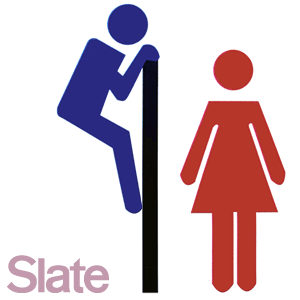
A unisex toilet is a public restroom or toilet that is available for use by either the male or female gender. Sex-separated public toilets are a source of difficulty for some people. For example, people with children of the opposite sex must choose between bringing the child into a toilet not designated for the child’s gender, or entering a toilet not designated for one’s own. Men caring for babies often find that only the women’s washroom has been fitted with a change table. People with disabilities who need assistance to use the restroom have an additional problem if their helper is the opposite sex.
Some public places (such as facilities targeted to the transgender or LGBT communities, and a few universities and offices) provide individual washrooms that are not gender-specified, specifically in order to respond to the concerns of gender-variant people; but this remains very rare and often controversial. Various courts have ruled on whether transgender people have the right to use the washroom of their gender of identification.
read more »
Posted in Politics, Sex |
Leave a Comment »
June 6, 2011

Topfreedom is a cultural and political movement seeking to advance gender equality by the recognition of the right of women and girls to be topless in public on the same basis that men and boys are permitted to be barechested. In addition, topfreedom advocates seek recognition of the right of nursing mothers to openly breastfeed in public, and of women to sun bathe topless.
The Topfree Equal Rights Association (TERA) also assists women in Canada who have been charged for being topless, while GoTopless organizes demonstrations in the United States to protest against the legal and public attitude to the inequality. In Sweden, Bara Bröst is active in advancing topfreedom, as is Topless Front in Denmark.
read more »
Posted in Politics, Sex, World |
Leave a Comment »
June 3, 2011

Dagen H (H day), today mostly called ‘Högertrafikomläggningen’ (‘The right-hand traffic diversion’), was the day in 1967 on which traffic in Sweden switched from driving on the left-hand side of the road to the right. There were more major arguments for the change: All Sweden’s immediate neighbors drove on the right (including Norway, with which Sweden has a long land border). Most Swedes drove left-hand drive (LHD) vehicles. This led to many head-on collisions when passing on two-lane highways, which were common in Sweden because of its low population density and traffic levels.
Nonetheless, the change was widely unpopular, and had repeatedly been voted down over the previous forty years. In a 1955 referendum, 83 percent voted to keep driving on the left. In 1963, the Riksdag (the Swedish parliament) approved the change. It also began implementing a four-year education program, with the advice of psychologists. The campaign included displaying the Dagen H logo on various commemorative items, including milk cartons, men’s shorts, and women’s underwear.
read more »
Posted in Politics, Technology, World |
Leave a Comment »
June 1, 2011


The Ad Council is an American non-profit organization that distributes public service announcements on behalf of various sponsors, including non-profit organizations and agencies of the United States government. The Advertising Council generally does not produce public service advertisements itself, rather, it acts as a coordinator and distributor.
The Advertising Council accepts requests from sponsor organizations for advertising campaigns that focus on particular social issues. To qualify, an issue must be non-partisan (though not necessarily unbiased) and have national relevance. The Advertising Council then assigns each campaign to a volunteer advertising agency that produces the actual advertisements. Finally, the Advertising Council distributes the finished advertisements to media outlets.
read more »
Posted in Money, Politics, War |
Leave a Comment »
June 1, 2011

The Ethiopians is a ska, rocksteady, and reggae vocal group, founded by Leonard Dillon, Stephen Taylor and Aston Morris. The group started out recording for Clement ‘Coxsone’ Dodd in 1966. Dillon had previously released some mento songs under the name Jack Sparrow. Around late 1966, Morris left the Ethiopians.
Having left Dodd, the Ethiopians started recording at Dynamic Studios for the W.I.R.L. label, releasing the rocksteady classic ‘Train to Skaville,’ which was their first success. In 1968 they recorded the song ‘Everything Crash,’ their first big hit. The song criticised the political situation in Jamaica at the time, such as water rationing and power cuts that led to unrest; such as an incident in which 31 people were shot by police.
Posted in Art, Politics, World |
Leave a Comment »
June 1, 2011

‘54-46 (That’s My Number)‘ is a song by Fred ‘Toots’ Hibbert, recorded by Toots & the Maytals and originally released on the Beverly’s label in Jamaica and the Pyramid label in the UK. It was one of the first ska songs to receive widespread popularity outside Jamaica and is seen as being one of the defining songs of the reggae genre. It has been anthologized repeatedly and the titles of several reggae anthologies include ’54-46′ in their title.
The lyrics describe Toots’ time in prison for an arrest for possession of marijuana. The song features the same riddim (instrumental accompaniment) to a song as ‘Train to Skaville’ by Toots & the Maytals’ contemporaries The Ethiopians. Hibbert later admitted that 54-46 was not his actual jail number, and that he was not arrested for a crime related to marijuana.
Posted in Art, Drugs, Politics |
Leave a Comment »


 The Daily Omnivore