May 18, 2011

In the field of law and economics, the American rule is a rule controlling assessment of attorneys’ fees arising out of litigation. The American rule provides that each party is responsible for paying its own attorney’s fees, unless specified otherwise by statute or contract. It contrasts with the English rule, under which the losing party pays the prevailing party’s attorneys’ fees. The rationale for the American rule is that people should not be discouraged from seeking redress for perceived wrongs in court or from trying to extend coverage of the law. The rationale continues that society would suffer if a person was unwilling to pursue a meritorious claim merely because that person would have to pay the defendant’s expenses if they lost.
The American rule is merely a default rule, not the blanket rule in the United States. Numerous statutes at both the federal and state levels allow the winner to recover reasonable attorney’s fees, and there are two major exceptions in federal case law as well. Many states also have exceptions to the American rule in both statutes and case law. For example, in California, the Consumers Legal Remedies Act allows plaintiffs to recover attorney’s fees, and in insurance bad faith cases, a policyholder may be able to recover attorney’s fees as a separate component of damages.
Posted in Money, Politics, World |
Leave a Comment »
May 18, 2011

Deep Throat is a 1972 American pornographic starring Linda Lovelace (Linda Susan Boreman). One of the first pornographic films to feature a plot, character development and relatively high production standards, Deep Throat earned mainstream attention and launched the ‘porn chic’ trend despite the film being banned in some regions and the subject of obscenity trials.
The 61-minute movie is intended to be humorous, with highly tongue-in-cheek dialogue and songs; fireworks going off and bells ringing during Lovelace’s orgasms. The film’s popularity helped launch a brief period of upper-middle class interest in explicit pornography referred to by Ralph Blumenthal of The New York Times as ‘porno chic.’ Several mainstream celebrities admitted to having seen Deep Throat, including Martin Scorsese, Truman Capote, Jack Nicholson and Johnny Carson.
read more »
Posted in Money, Politics, Sex |
Leave a Comment »
May 18, 2011
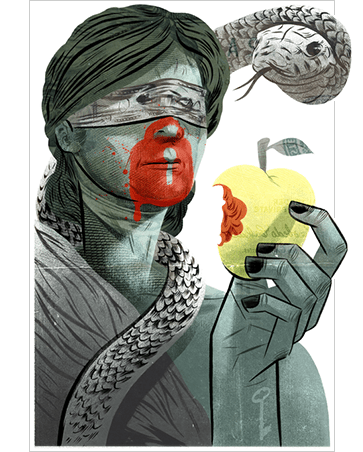
In economics, regulatory capture occurs when a state regulatory agency created to act in the public interest instead advances the commercial or special interests that dominate the industry or sector it is charged with regulating. Regulatory capture is a form of government failure, as it can act as an encouragement for large firms to produce negative externalities (a cost or benefit incurred by a party who did not agree to the action causing the cost or benefit). The agencies are called ‘captured agencies.’
In the aftermath of the 2010 Deepwater Horizon oil spill, the Minerals Management Service (MMS), which had had regulatory responsibility for offshore oil drilling, was widely cited as an example of regulatory capture. The MMS is now known as the Bureau of Ocean Energy Management, Regulation and Enforcement (BOEMRE).
Posted in Money, Politics |
Leave a Comment »
May 16, 2011
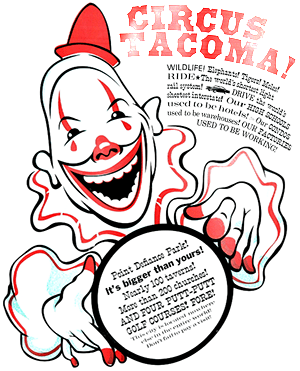
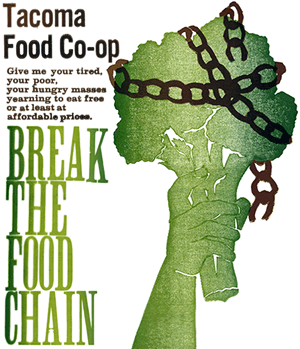
Beautiful Angle is a guerrilla arts poster project in Tacoma, Washington. Approximately once per month, graphic designer Lance Kagey and writer Tom Llewellyn create hand-crafted, letterpress posters and then distribute them around the city’s downtown core via wheat paste and staples.
The first poster, Swirl, was distributed on May 23, 2010. Beautiful Angle has a ‘strange, contradictory relationship with the city’; even though the posters are posted perhaps illegally, the group has won a Chamber of Commerce award of merit.
Posted in Art, Money, Politics |
2 Comments »
May 16, 2011

FAILE is a Brooklyn-based artistic collaboration between Patrick McNeil (b. 1975) and Patrick Miller (b. 1976). Since its inception in 1999, FAILE has been recognized for their pioneering use of wheatpasting and stenciling in the increasingly established arena of street art, and for their explorations of duality through a fragmented style of appropriation and collage.
During this time, FAILE adapted its signature mass culture-driven iconography to a wide array of media, from wooden boxes and window pallets to more traditional canvas, prints, sculptures, stencils, multimedia installation, and prayer wheels. While FAILE’s work is constructed from found visual imagery, and blurs the line between ‘high’ and ‘low’ culture, recent exhibitions demonstrate an emphasis on audience participation, a critique of consumerism, and the incorporation of religious media and architecture into their work.
Posted in Art, Money, Politics |
Leave a Comment »
May 16, 2011

Street poster art is a kind of graffiti, more specifically categorized as ‘street art.’ Posters are usually hand-made or printed graphics on thin paper.
Wallpaper glue or wheatpaste (an adhesive made from wheat flour or starch and water) are commonly used to adhere poster art to a surface. It can be understood as an art piece that is installed on the streets as opposed to in a gallery or museum, but by some it is not comprehended as a form of contemporary art.
Posted in Art, Politics |
Leave a Comment »
May 16, 2011

Flyposting is the act of placing advertising posters or flyers in illegal places. In the U.S., these posters are known as bandit signs, snipe signs, or street spam. In most areas, it is illegal to place such posters on private property without the consent of the property owner, or to post on public property without a sign permit from the local government. Some areas, however, have public bulletin boards where notices may be posted. It is an advertising tactic mostly used by small businesses promoting concerts and political activist groups, but there have been occasions where international companies subcontracted local advertising agencies for flyposting jobs as a form of guerrilla marketing.
Flyposting is commonly seen as a nuisance due to issues with property rights, visual appearance and littering and is a misdemeanor in many countries. A particularly noteworthy incident of this type occurred in Boston, Massachusetts. In the case of the 2007 Boston Mooninite Scare, advertisers had placed electronic signboards without notifying local authorities, prompting a costly reaction by the Boston Police Bomb Squad when the signs were mistaken for bombs.
Posted in Art, Money, Politics |
Leave a Comment »
May 5, 2011

Unobtrusive research is a method of data collection used primarily in the social sciences first described in 1966, which do not involve direct elicitation of data from the research subjects. Unobtrusive measures are contrasted with interviews and questionnaires, in that they try to find indirect ways to obtain the necessary data. The unobtrusive approach often seeks unusual data sources, such as garbage, graffiti and obituaries, as well as more conventional ones such as published statistics. Unobtrusive measures should not be perceived as an alternative to more reactive methods such as interviews, surveys and experiments, but rather as an additional tool in the tool chest of the social researcher. Unobtrusive measures can assist in tackling known biases such a subjective bias towards a result expected.
The proliferation of digital media opened a new era for communication researchers in search of unobtrusively obtained data sources. Online communication creates digital footprints that can allow an analysis of data that are obtained through unobtrusive methods, and are also much larger than previous studies. These footprints can now be used to analyze topics such as the content of communication events, the process of communication, and the structure of the communicative network. The surge of Internet-sourced research data rekindled the discussion of the ethical aspects of using unobtrusively obtained data. For example, can all data collected in the public domain be used for research purposes? When should we seek consent, and is it realistic to require informed consent from sources of unobtrusively collected data? These questions do not have a simple answer, and the solution is a result of a careful and ongoing dialog between researchers, and between researchers and society.
Posted in Language, Politics, Technology |
Leave a Comment »
May 2, 2011

‘Mission Accomplished‘ refers to a banner that was displayed during an address by President George W. Bush on May 1, 2003. Bush stated at the time that major combat operations in Iraq were completed. While his statement did coincide with an end to the conventional phase of the war, his assertion—and the sign itself—became controversial with the growing violence of the Iraqi insurgency. The vast majority of casualties, both military and civilian, occurred after the speech. White House staff members produced the banner. For critics of the war, the photo-op became a symbol of the Bush administration’s unrealistic goals and perceptions of the conflict. The banner came to symbolize the irony of Bush giving a victory speech only a few weeks after the beginning of a long war.
Bush became the first sitting President to make an arrested landing in a fixed-wing aircraft on an aircraft carrier when he arrived at the USS Abraham Lincoln in a Lockheed S-3 Viking, dubbed ‘Navy One,’ as the carrier returned from combat operations in the Persian Gulf. He posed for photographs with members of the ship’s crew while wearing a flight suit. Opponents criticized the event as a theatrical and expensive stunt. Bush was a passenger of the plane (unlike his father, who was a Navy pilot, he was never trained to land on a carrier). According to the Navy, the banner referred specifically to the Abraham Lincoln’s 10-month deployment (which was the longest deployment of a carrier since the Vietnam War) and not the war itself.
Posted in Humor, Politics, War |
Leave a Comment »
April 28, 2011

An undress code is a dress code or social norm which sets an upper limit on the amount of clothing that can be worn. For example, some public swimming facilities set maximum clothing standards, for sanitary reasons.
These rules restrict persons using the facilities to specific types of bathing suits.
read more »
Posted in Games, Politics, Sex |
Leave a Comment »
April 26, 2011

Minnesota nice is the stereotypical behavior of long-time Minnesota residents, to be courteous, reserved, and mild mannered. The cultural characteristics of Minnesota nice include a polite friendliness, an aversion to confrontation, a tendency toward understatement, a disinclination to make a fuss or stand out, emotional restraint, and self-deprecation.
It can also refer to traffic behavior, such as slowing down to allow another driver to enter a lane in front of the other person. The negative side of ‘Minnesota nice,’ occurs in the form of passive aggressiveness and resistance to change.
read more »
Posted in Humor, Language, Politics |
Leave a Comment »
April 25, 2011
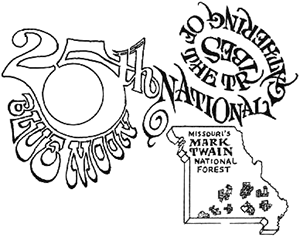

Rainbow Gatherings are temporary intentional communities, typically held in outdoor settings, and espousing and practicing ideals of peace, love, harmony, freedom and community, as a consciously expressed alternative to mainstream popular culture, consumerism, capitalism and mass media.
Rainbow Gatherings are an expression of a Utopian impulse, combined with bohemianism, hipster and hippie culture, with roots traceable to the 1960’s counterculture. Mainstream society is commonly referred to and viewed as ‘Babylon,’ connoting the participants’ widely held belief that modern lifestyles and systems of government are unhealthy, unsustainable, exploitative and out of harmony with the natural systems of the planet.
read more »
Posted in Money, Philosophy, Politics |
Leave a Comment »




 The Daily Omnivore