March 17, 2011

Sukey is British organization formed to counteract the police tactics of kettling, by co-ordinating information electronically and transmitting it to the protesters, allowing them to avoid the police kettle. ‘Sukey,’ is British slang for the person who takes the kettle off the stove (which is itself derived from the nursery rhyme: ‘Polly Put the Kettle On.’
The organization was founded by the students Sam Carlisle and Sam Gaus during the occupation by students at University College London. The system was first used for a London demonstration against the proposed abolition of the Education Maintenance Allowance (EMA) on 29 January 2011.
Posted in Politics, Technology |
Leave a Comment »
March 17, 2011


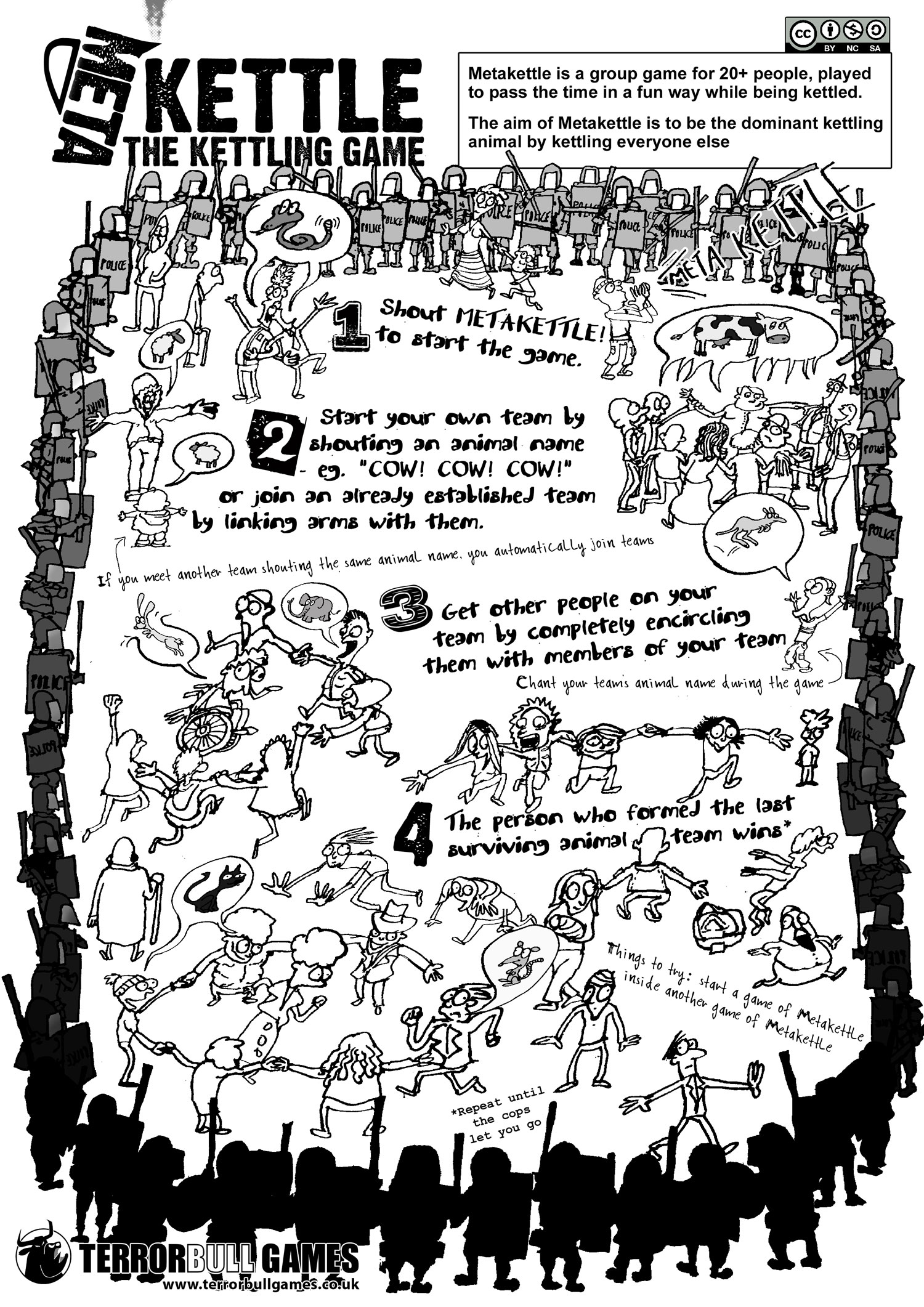
Kettling, also known as containment or corralling, is a police tactic for the management of large crowds during demonstrations or protests. It involves the formation of large cordons of police officers who then move to contain a crowd within a limited area. Protesters are left only one choice of exit, determined by the police, or are completely prevented from leaving. The term ‘kettle’ is a metaphor, likening the containment of violence to the containment of heat and steam within a domestic kettle.
The tactic prevents large groups from breaking into smaller splinters that have to be individually chased down, thus requiring the policing to break into multiple small battles. Kettling has been criticized for being an indiscriminate tactic which leads to the detention of law-abiding citizens and innocent bystanders, as well as for denying detainees access to food, water and toilets (for long periods of time in some cases). Critics also allege that kettling has been used to foment disorder with the aim of changing the focus of public debate.
Posted in Politics, War, World |
Leave a Comment »
March 16, 2011

The China Syndrome is a term coined by an American physicist in 1971 to describe the result of a severe nuclear meltdown in which molten reactor core components penetrate their containment vessel and building. The term is misleading, since molten material from such an event could not melt through the crust of the Earth and reach China.
Nuclear power plants ordered during the late 1960s raised safety questions and created fears that a severe reactor accident could release large quantities of radioactive material into the environment. In the early 1970s, a controversy arose regarding the ability of emergency cooling systems to prevent a core meltdown, which might lead to the so-called China Syndrome.
Posted in Politics, Technology |
Leave a Comment »
March 16, 2011
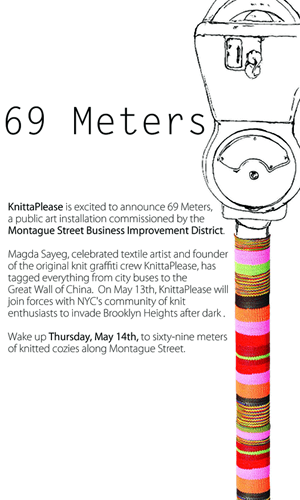
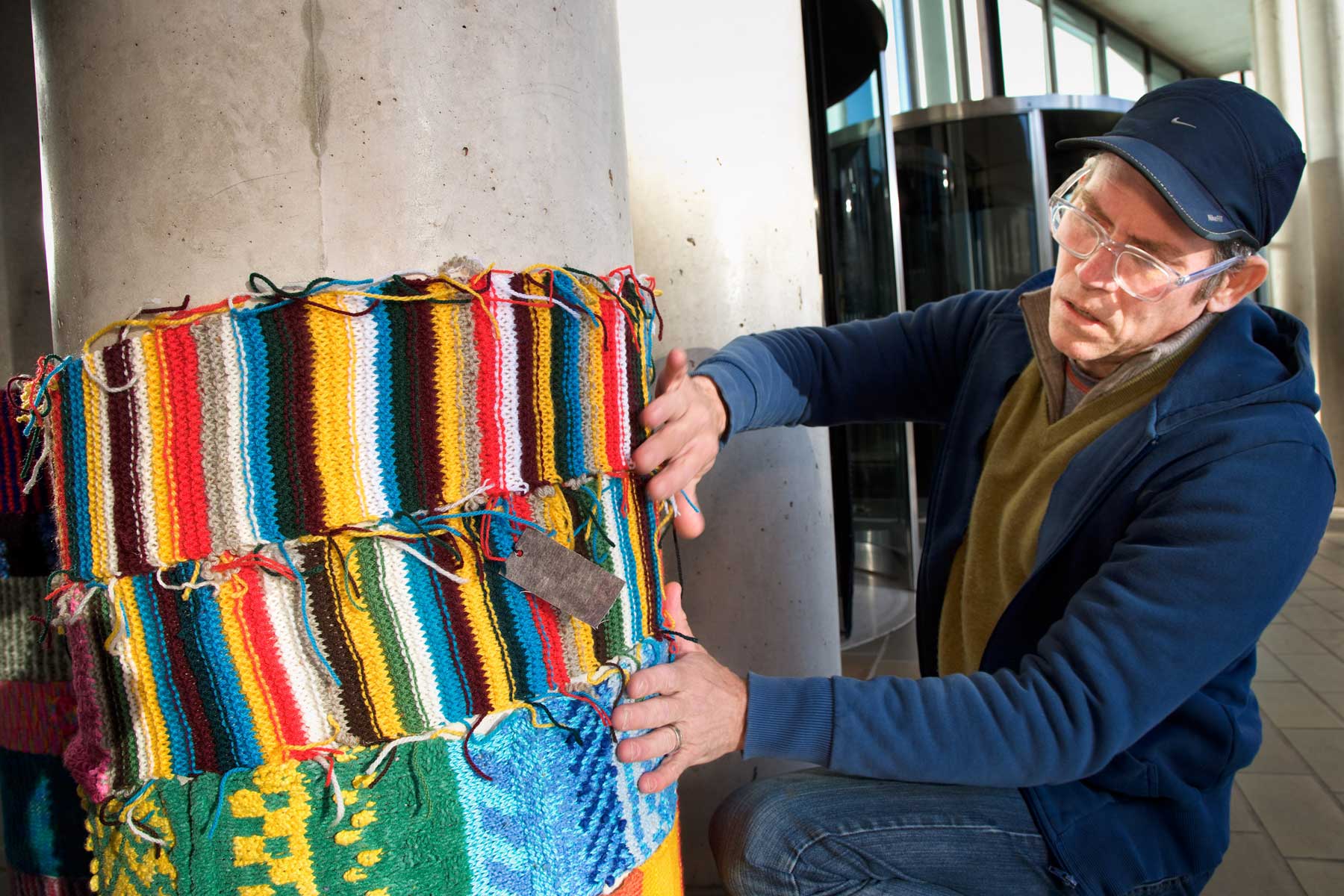
Knitta is the group of artists who began the ‘knit graffit’ or ‘yarnbombing’ movement in Houston in 2005. They wrap public architecture—e.g. lampposts, parking meters, telephone poles, and signage—with knitted or crocheted material. The mission is to make street art ‘a little more warm and fuzzy.’
Knitta grew to eleven members by the end of 2007, but has now dwindled down to one member, founder Magda Sayeg, who continues to travel and knit graffiti. Internationally, as many as a dozen groups have followed Knitta’s lead.
read more »
Posted in Art, Humor, Politics |
Leave a Comment »
March 13, 2011

The Kōreisha mark is a statutory sign in Japan which indicates ‘aged person at the wheel.’ The law decrees that when a person who is aged 70 and over drives a car and if his/her old age could affect the driving, he/she should endeavor to display this mark on both the front and rear of the car. Drivers aged 75 and over are obliged to display the mark.
Conversely, the green and yellow shoshinsha mark or wakaba mark denotes new drivers. Both marks are designed to warn other drivers that the marked driver is not very skilled, either due to inexperience or old age.
Posted in Politics, Technology, World |
Leave a Comment »
March 10, 2011
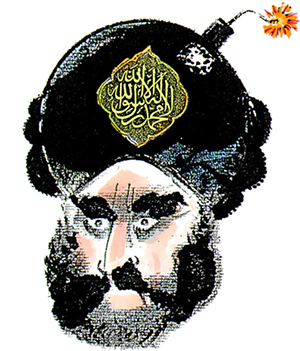
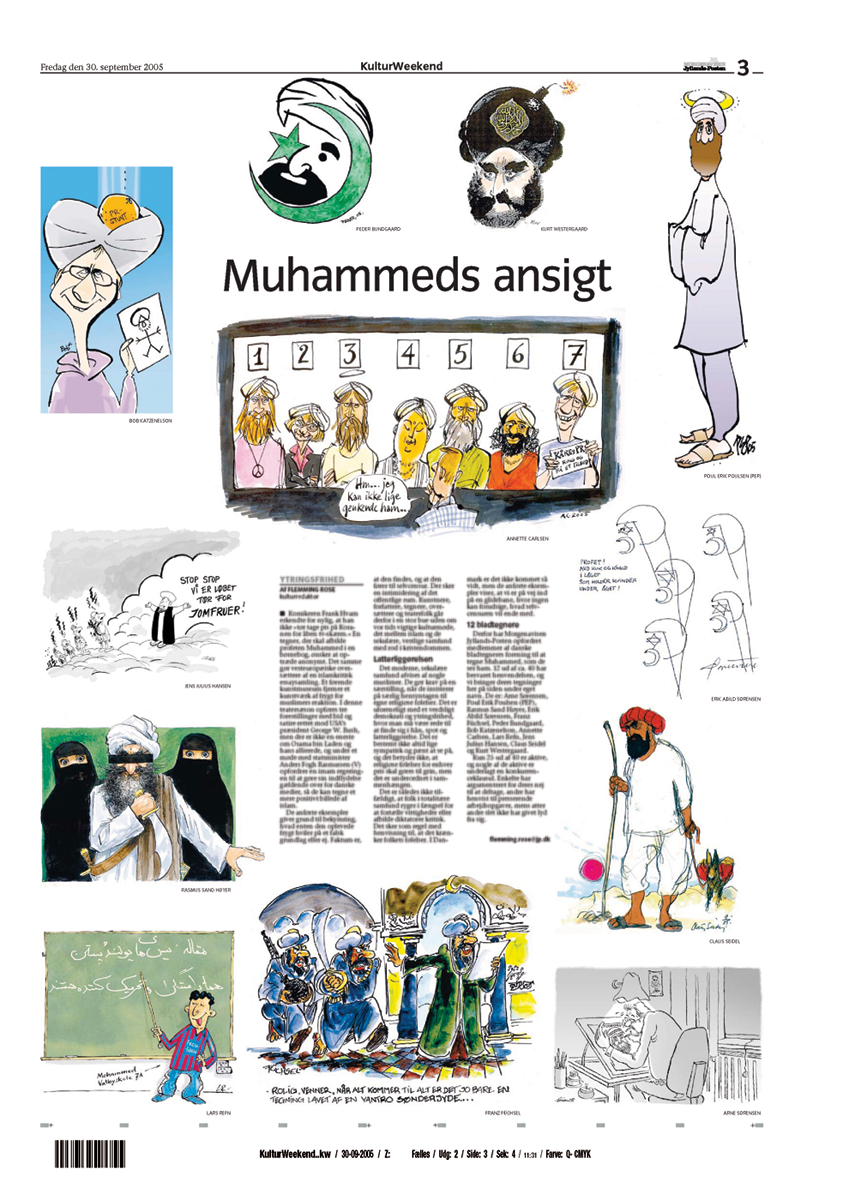
The Jyllands-Posten Muhammad cartoons controversy began after 12 editorial cartoons, most of which depicted the Islamic prophet Muhammad, were published in the Danish newspaper ‘Jyllands-Posten’ in 2005. The newspaper announced that this publication was an attempt to contribute to the debate regarding criticism of Islam and self-censorship. Danish Muslim organizations responded by holding public protests. The cartoons were reprinted in newspapers in more than 50 other countries, expanding the controversy.
Critics of the cartoons described them as Islamophobic or racist, and argued that they are blasphemous to people of the Muslim faith, are intended to humiliate a Danish minority, or are a manifestation of ignorance about the history of Western imperialism. Supporters have said that the cartoons illustrated an important issue in a period of Islamic terrorism and that their publication is a legitimate exercise of the right of free speech, explicitly tied to the issue of self-censorship.
Posted in Philosophy, Politics, World |
Leave a Comment »
March 10, 2011

The Federal Reserve (sometimes called ‘The Fed‘) is a large central bank that loans money to other smaller banks. The presidentially appointed, Federal Reserve Board is a group of financial leaders who work for the Federal Reserve and decide how much interest to charge these banks for borrowing money. The Federal Reserve interest rate is decided by the Federal Reserve Board after studying the condition of the US Economy.
When the economy is growing too fast, the Federal Reserve makes borrowing more expensive by increasing the interest rate, which means people and companies spend less which discourages inflation. When economic growth slows, the interest rate is decreased so that borrowing will increase and there will be growth.
read more »
Posted in Money, Politics |
Leave a Comment »
March 10, 2011

TerraPower is a nuclear reactor design spin-off company investigating a class of nuclear fast reactors called the traveling wave reactor (TWR).
One of TerraPower’s primary investors is Bill Gates. Whereas standard light water reactors such running worldwide use enriched uranium as fuel and need fuel reloads every few years, TWRs, once started, use depleted uranium instead and are considered to be able to operate for up to 100 years without fuel reloading.
Posted in Money, Politics, Technology |
Leave a Comment »
March 10, 2011

The Strauss-Howe generational theory, created by historians William Strauss and Neil Howe, identifies a recurring generational cycle in American history. Strauss and Howe lay the groundwork for the theory in their 1991 book Generations, which retells the history of America as a series of generational biographies going back to 1584.
Former U.S Vice President Al Gore called Generations the most stimulating book on American history he’d ever read, and sent a copy to each member of Congress. Some reviewers of the duo’s books, such as the New York Times’ Michael Lind have criticized their theories for being too vague, and for verging into the realm of pseudoscience.
read more »
Posted in Politics, Science |
Leave a Comment »
March 10, 2011

The Stolen Generations is a term used to describe the children of Australian Aboriginal and Torres Strait Islander descent who were removed from their families by the Australian Federal and State government agencies and church missions, under acts of their respective parliaments. The removals occurred in the period between approximately 1869 and 1969, although in some places children were still being taken in the 1970s.
The extent of the removal of children, and the reasoning behind their removal, are contested. Documentary evidence, such as newspaper articles and reports to parliamentary committees, suggest a range of rationales. Motivations evident include child protection, beliefs that given their catastrophic population decline after white contact that black people would ‘die out,’ a fear of miscegenation by full blooded aboriginal people.
Posted in Politics, World |
Leave a Comment »
March 10, 2011
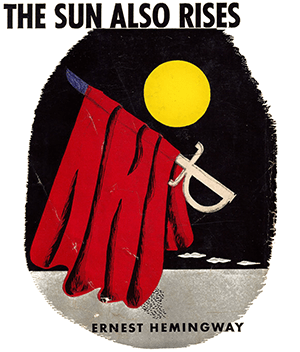
The ‘Lost Generation‘ is a term used to refer to the generation that came of age during World War I. It was popularized by Ernest Hemingway who used it as one of two contrasting epigraphs for his novel, ‘The Sun Also Rises.’ In that volume Hemingway credits the phrase to fellow novelist Gertrude Stein, who was then his mentor and patron.
In ‘A Movable Feast,’ which was published after Hemingway and Stein had had a famous feud and fallen apart, and after they were both dead, Hemingway reveals that the phrase was actually originated by the garage owner who repaired Stein’s car. When a young mechanic failed to repair the car in a way satisfactory to Stein, the owner shouted at him, ‘You are all a generation perdue. That is what you are. That’s what you all are…All of you young people who served in the war. You are a lost generation.’
read more »
Posted in Art, Language, Politics |
Leave a Comment »
March 9, 2011

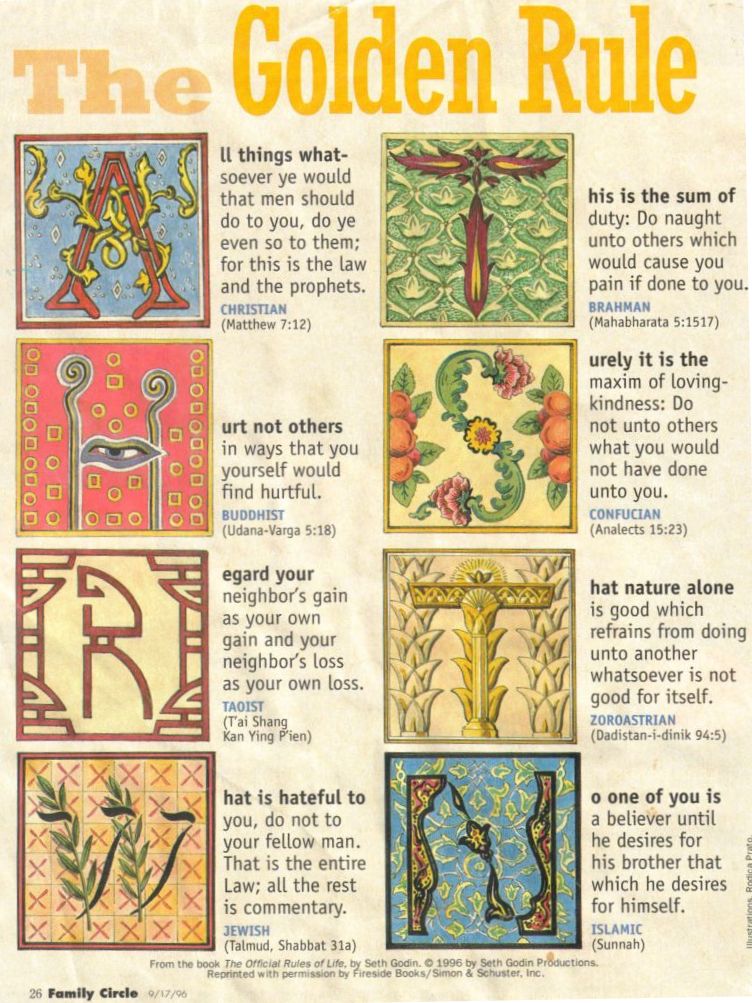
The Golden Rule or ethic of reciprocity is an ethical code: One should treat others as one would like others to treat oneself. It is arguably the basis for the modern concept of human rights, in which each individual has a right to just treatment, and a reciprocal responsibility to ensure justice for others. A key element of the Golden Rule is that a person attempting to live by this rule treats all people with consideration, not just members of his or her in-group.
The ethic of reciprocity was present in certain forms in the philosophies of ancient Babylon, Egypt, Persia, India, Greece, Judea, and China. Examples of statements that mirror the Golden Rule appear in Ancient Egypt, for example in the story of ‘The Eloquent Peasant’ which is dated to the Middle Kingdom of Egypt (c. 2040–1650 BCE): ‘Now this is the command: Do to the doer to cause that he do.’ The label ‘golden’ is believed to have been applied by Confucius (551–479 BCE).
Posted in Language, Philosophy, Politics |
Leave a Comment »



 The Daily Omnivore