March 9, 2011
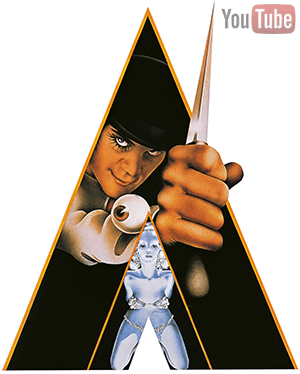
A Clockwork Orange is a 1971 darkly satirical science fiction film adaptation of Anthony Burgess’s 1962 novel of the same name. The film, which was made in England, concerns Alex (Malcolm McDowell), a charismatic delinquent whose pleasures are classical music (especially Beethoven), rape, and so-called ‘ultra-violence.’He leads a small gang of thugs, whom he calls his droogs (Russian, ‘buddy’).
The film tells the horrific crime spree of his gang, his capture, and attempted rehabilitation via a controversial psychological conditioning technique. Alex narrates most of the film in Nadsat, a fractured, contemporary adolescent slang comprising Slavic (especially Russian), English, and Cockney rhyming slang.
read more »
Posted in Art, Politics |
Leave a Comment »
March 8, 2011

A Clockwork Orange is a 1962 dystopian novella by Anthony Burgess. The novel contains an experiment in language; Burgess creates teenage slang of the not-too-distant future called Nadsat. In a prefatory note to ‘A Clockwork Orange: A Play with Music,’ Burgess wrote that the title was a metaphor for ‘…an organic entity, full of juice and sweetness and agreeable odor, being turned into an automaton.’ and the ‘title would be appropriate for a story about the application of Pavlovian or mechanical laws to an organism which, like a fruit, was capable of color and sweetness.’
The title alludes to the protagonist’s positively conditioned responses to feelings of evil which prevent the exercise of his free will. To reverse this conditioning, he is subjected to a technique in which his emotional responses to violence are systematically paired with a negative stimulation in the form of nausea caused by an emetic medicine administered just before the presentation of films depicting violent, and ‘ultra-violent’ situations.
read more »
Posted in Art, Politics |
Leave a Comment »
March 7, 2011
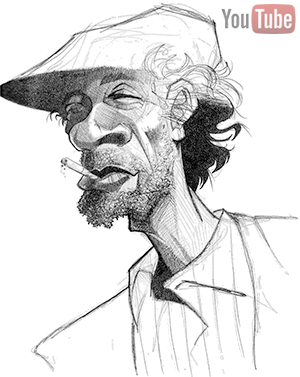
Gil Scott-Heron (b. 1949) is an American poet, musician, and author known primarily for his late 1970s and early 1980s work as a spoken word performer and his collaborative soul works with musician Brian Jackson, which featured a musical fusion of jazz, blues and soul music, as well as lyrical content concerning social and political issues of the time, delivered in both rapping and melismatic vocal styles by Scott-Heron.
The music of these albums, most notably ‘Pieces of a Man’ and ‘Winter in America’ in the early 1970s, influenced and helped engender later African-American music genres such as hip hop and neo soul. Scott-Heron’s recording work is often associated with black militant activism and has received much critical acclaim for one of his most well-known compositions ‘The Revolution Will Not Be Televised.’
Posted in Art, Money, Politics |
Leave a Comment »
March 6, 2011
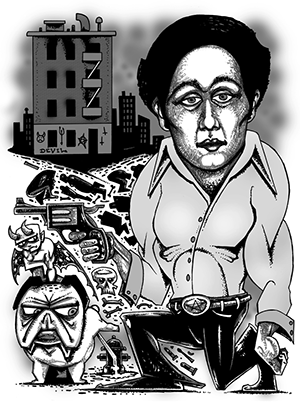
A Son of Sam Law is a law designed to keep criminals from profiting from their crimes, such as by selling their stories to publishers. These laws authorize the state to seize money earned from such a deal and use it to compensate the criminal’s victims. In certain cases a Son of Sam law can be extended beyond the criminals themselves to include friends, neighbors, and family members of the lawbreaker who seek to profit by telling publishers and filmmakers of their relation to the criminal. In other cases, a person may be barred from financially benefiting from the sale of a story or any other mementos pertaining to the crime—if the criminal was convicted after the date lawmakers passed the law in the states where the crime was committed.
The first such law was created in New York after the Son of Sam murders committed by serial killer David Berkowitz. It was enacted after rampant speculation about publishers offering large amounts of money for Berkowitz’s story. The law was invoked in New York 11 times between 1977 and 1990, including once against Mark David Chapman, murderer of musician John Lennon. Critics disputed the law on First Amendment grounds. It was argued that “Son of Sam” laws take away the financial incentive for many criminals to tell their stories, some of which (such as the Watergate scandal) were of vital interest to the general public.
Posted in Art, Money, Politics |
Leave a Comment »
March 6, 2011

Murderabilia is a term identifying collectibles related to murders, murderers, or other violent crimes. ‘Serial killer art’ is defined as artwork created by serial killers while in prison. Often, this process is used as a therapy device, or for further understanding a particularly disturbed psyche. The artists usually vary dramatically in skill and themes covered. John Wayne Gacy, Richard Ramirez, and Henry Lee Lucas are a few of the better known American serial killer artists. Perry Smith, the mass murderer known from Truman Capote’s famous nonfiction work ‘In Cold Blood,’ was also a prolific artist.
Collectors typically must have direct contact to obtain and authenticate this art. The actual pieces can sell for large sums of money depending on the individual artist, and their notoriety through serial killing. Murderabilia is a controversial area of the collecting world, as evidenced by the public backlash to the idea of selling or profiting from violent crimes. In 2005, a serial killer’s artwork was sold online in Massachusetts. State lawmakers proposed to block the activity, setting off a debate on free speech rights of prisoners.
Posted in Death, Money, Politics |
Leave a Comment »
March 6, 2011

Wardriving is the act of searching for Wi-Fi wireless networks by a person in a moving vehicle. The term originated from wardialing, a technique popularized by a character played by Matthew Broderick in the film WarGames, and named after that film. Wardialing in this context refers to the practice of using a computer to dial many phone numbers in the hopes of finding an active modem.
Warbiking is essentially the same as wardriving, but it involves searching for wireless networks while on a moving bicycle or motorcycle. This activity is sometimes facilitated by the mounting of a Wi-Fi capable device on the vehicle itself. Warwalking (sometimes warjogging) is done on foot rather than conducted from a moving vehicle. Warkitting is a combination of wardriving and rootkitting (installation of software that enables privileged access to a computer while actively hiding its presence from administrators). In a warkitting attack, a hacker replaces the firmware of an attacked router.
Posted in Money, Politics, Technology |
Leave a Comment »
March 4, 2011

Mass games or mass gymnastics are a form of performing arts in which large numbers of performers take part in a highly regimented performance that emphasizes group dynamics rather than individual prowess. The effect of displaying huge images is achieved by a having large number of individuals each being dressed in a particular color or holding a colored hard paper above their heads.
Because of the vast scale of the performance, with often tens of thousands of performers, mass games are performed in stadiums, often accompanied by a background of card-turners occupying the seats on the opposite side from the viewers. The rapid change of images was achieved by changing a card with another in swift and synchronized movement. The synchronization is achieved after several hours-long rehearsals and employs much choreography.
read more »
Posted in Art, Politics, World |
Leave a Comment »
March 4, 2011

False flag operations are covert operations designed to deceive the public in such a way that the operations appear as though they are being carried out by other entities.
The name is derived from the military concept of flying false colors; that is, flying the flag of a country other than one’s own. False flag operations are not limited to war and counter-insurgency operations, and can be used in peace-time.
Posted in Language, Politics, War |
Leave a Comment »
March 3, 2011

Seattle Hempfest is an annual event in Seattle, Washington, the world’s largest annual gathering advocating decriminalization of marijuana. Founded in 1991 as the Washington Hemp Expo (attended by 500 people), it has grown into a 2-day annual political rally, concert, and arts and crafts fair with attendance typically over 250,000. Speakers have included Seattle city council member Nick Licata, actor/activist Woody Harrelson, travel writer and TV host Rick Steves, and former chief of the Seattle Police Department Norm Stamper.
Sixty people were cited for illegal marijuana use at the 1997 Hempfest, and about twenty were arrested the following year. Eventually Hempfest and the police reached a modus vivendi: there was only one arrest in 2001. The political context surrounding marijuana in Seattle and Washington has changed considerably over the years. Washington legalized medical marijuana in 1998. In 2003, Seattle passed an initiative that made adult personal use marijuana offenses the city’s lowest law enforcement priority.
Posted in Art, Drugs, Politics |
Leave a Comment »
March 3, 2011

The National Organization for the Reform of Marijuana Laws (NORML) is an American non-profit organization based in Washington, DC whose aim is to move public opinion sufficiently to achieve the legalization of non-medical marijuana in the United States so that the responsible use of cannabis by adults is no longer subject to penalty.
The organization was founded in 1970 by Keith Stroup, funded by $5,000 from the Playboy Foundation. Since then, it has played a central role in the cannabis decriminalization movement.
read more »
Posted in Drugs, Money, Politics |
Leave a Comment »
March 3, 2011
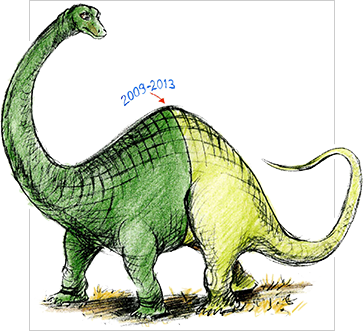
Peak oil is the idea that at some point a country, or the world, will be producing the most oil it can ever produce at one time. After this point, less oil will be produced and therefore people will have to use less oil because it will cost more money. The first person to come up with this idea was M.K. Hubbert, a U.S. geoscientist who worked at Shell, who said that a graph of oil production looks like a curve (which we now call Hubbert’s Curve).
Hubbert drew a graph in 1956 that predicted that the United States would reach its peak oil in the early 1970s, and the United States did indeed reach its peak oil in the early 1970s. It is unclear as to when the world’s peak oil will happen, though most scientists agree that it was reached in the early 2000s or will be reached before 2020. For example, the International Energy Agency (IEA) has said that peak oil may have happened in 2006.
Posted in Money, Politics, Science |
Leave a Comment »
March 3, 2011

Hydraulic fracturing (‘fracking‘) is a process that results in the creation of fractures in rocks. The most important industrial use is in stimulating oil and gas wells, where hydraulic fracturing has been used for over 60 years. The fracturing is done from a wellbore drilled into reservoir rock formations to increase the rate and ultimate recovery of oil and natural gas.
Considerable controversy surrounds the current implementation of hydraulic fracturing technology in the United States. Environmental safety and health concerns have emerged and are being debated at the state and national levels. Natural hydraulic fractures include volcanic dikes, sills and fracturing by ice as in frost weathering. Man-made fractures are typically maintained after the injection by introducing a proppant, a material, such as grains of sand, ceramic, or other particulates, that prevent the fractures from closing when the injection is stopped.
Posted in Money, Politics, Technology |
Leave a Comment »