December 15, 2025

Phytomining [fahy-toh-mahy-ning] (sometimes called agromining) is a process of extracting heavy metals from the soil using plants. Unlike Phytoremediation, where extraction is used for cleaning up environmental pollutants, phytomining is for the purpose of gathering the metals for economic use.
Phytomining exploits the existence of hyperaccumulator plants which naturally have proteins or compounds that bind with certain metal ions. Once the hyperaccumulation happens, the final metal, or bio-ore, needs to be refined from the plant matter. Phytomining was first proposed in 1983 by Rufus Chaney, a USDA agronomist. The first commercial projects were funded in 2025.
Posted in Money, Science |
Leave a Comment »
November 8, 2025
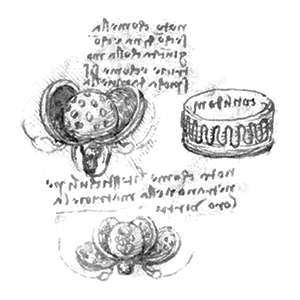
Commonplace books (or commonplaces) are personal notebooks used to compile any information the owner finds interesting or useful. They can variously contain notes, proverbs, adages, aphorisms, maxims, recipes, quotes, letters, poems, tables of weights and measures, prayers, legal formulas, and other professional references. They have been kept from antiquity, and were kept particularly during the Renaissance and in the nineteenth century.
Entries are most often organized under systematic subject headings and differ functionally from journals or diaries, which are chronological and introspective.
read more »
Posted in Language, Philosophy, Science |
Leave a Comment »
September 18, 2025

John Gall (1925-2014) was an American author, scholar, and pediatrician. Gall is known for his 1975 book ‘General Systemantics’ (republished two years later as ‘Systemantics: How Systems Work and Especially How They Fail’).
Gall’s Law is derived from Systemantics and states: ‘A complex system that works is invariably found to have evolved from a simple system that worked. A complex system designed from scratch never works and cannot be patched up to make it work. You have to start over with a working simple system.’
read more »
Posted in Health, Language, Science |
Leave a Comment »
April 21, 2025
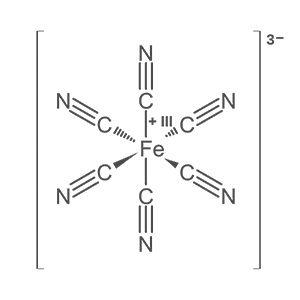
Prussian blue (also known as Berlin blue, Brandenburg blue, Parisian and Paris blue) is a dark blue pigment produced by oxidation of ferrous ferrocyanide salts. Turnbull’s blue is essentially identical chemically, excepting that it has different impurities and particle sizes—because it is made from different reagents—and thus it has a slightly different color.
Prussian blue was created in the early 18th century and is the first modern synthetic pigment. It is prepared as a very fine colloidal dispersion, because the compound is not soluble in water. It contains variable amounts of other ions and its appearance depends sensitively on the size of the colloidal particles. The pigment is used in paints, it became prominent in 19th-century aizuri-e Japanese woodblock prints, and it is the traditional ‘blue’ in technical blueprints.
read more »
Posted in Art, Science |
Leave a Comment »
April 7, 2025

Belphegor’s prime is the palindromic prime number 1000000000000066600000000000001 (1030 + 666 × 1014 + 1), a number which reads the same both backwards and forwards and is only divisible by itself and one. It first discovered by Harvey Dubner, a mathematician known for his discoveries of many large prime numbers and prime number forms. For Belphegor’s prime in particular, he discovered the prime while determining a sequence of primes it belongs to.
The name “Belphegor’s prime” was coined by author Clifford A. Pickover in 2012. Belphegor is one of the Seven Princes of Hell; specifically, ‘the demon of inventiveness.’ The number itself contains superstitious elements that have given it its name: the number 666 at the heart of Belphegor’s prime is widely associated as being the number of the beast, used in symbolism to represent one of the creatures in the apocalypse or, more commonly, the devil. This number is surrounded on either side by thirteen zeroes and is 31 digits in length (thirteen reversed), with thirteen itself long regarded superstitiously as an unlucky number in Western culture.
Posted in Science |
Leave a Comment »
March 31, 2025

Steganography [steg-uh-nog-ruh-fee] is the practice of representing information within another message or physical object, in such a manner that the presence of the concealed information would not be evident to an unsuspecting person’s examination.
The word steganography comes from Greek words steganós (‘covered or concealed’) and graphia (‘writing’). The first recorded use of the term was in 1499 by German Benedictine abbot Johannes Trithemius in his Steganographia, a treatise on cryptography and steganography, disguised as a book on magic.
read more »
Posted in Politics, Science, Technology |
Leave a Comment »
March 8, 2025
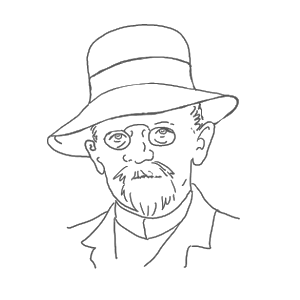
In mathematics, Hilbert’s program, formulated by German mathematician David Hilbert in the early 1920s, was a proposed solution to the foundational crisis of mathematics, when early attempts to clarify the foundations of mathematics were found to suffer from paradoxes and inconsistencies. Hilbert wanted to ground all existing theories to a finite, complete set of axioms, and provide a proof that these axioms were consistent. He proposed that the consistency of more complicated systems, such as real analysis, could be proven in terms of simpler systems.
Gödel’s incompleteness theorems, published in 1931, showed that Hilbert’s program was unattainable for key areas of mathematics. In his first theorem, Gödel showed that any consistent system with a computable set of axioms which is capable of expressing arithmetic can never be complete. In his second theorem, he showed that such a system could not prove its own consistency, so it certainly cannot be used to prove the consistency of anything stronger with certainty. This refuted Hilbert’s assumption that a finitistic system could be used to prove the consistency of itself, and therefore could not prove everything else. Many current lines of research in mathematical logic, such as proof theory and reverse mathematics, can be viewed as natural continuations of Hilbert’s original program.
Posted in Science, World |
Leave a Comment »
December 16, 2024
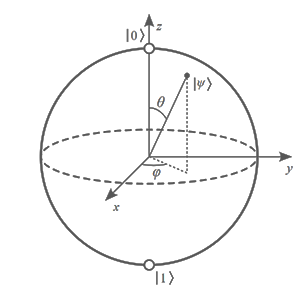
In quantum computing, quantum supremacy or quantum advantage is the goal of demonstrating that a programmable quantum computer can solve a problem that no classical computer can solve in any feasible amount of time, irrespective of the usefulness of the problem. The term was coined by Caltech theoretical physicist John Preskill in 2011, but the concept dates to Russian mathematician Yuri Manin’s 1980 and theoretical physicist Richard Feynman’s 1981 proposals of quantum computing.
Conceptually, quantum supremacy involves both the engineering task of building a powerful quantum computer and the computational-complexity-theoretic task of finding a problem that can be solved by that quantum computer and has a superpolynomial speedup over the best known or possible classical algorithm for that task.
read more »
Posted in Language, Science, Technology |
Leave a Comment »
July 16, 2024

Speed wobble (also known as shimmy, tank-slapper, or speed wobble) is a rapid side-to-side shaking of a vehicle’s front wheel(s) that occurs at high speeds and can lead to loss of control. It presents as a quick (4–10 Hz) oscillation of primarily the steerable wheel(s) of a vehicle. It is caused by a combination of factors, including initial disturbances and insufficient damping, which can create a resonance effect. Initially, the rest of the vehicle remains mostly unaffected, until translated into a vehicle yaw oscillation of increasing amplitude producing loss of control.
Vehicles that can experience this oscillation include motorcycles and bicycles, skateboards, and, in theory, any vehicle with a single steering pivot point and a sufficient amount of freedom of the steered wheel, including that which exists on some light aircraft with tricycle gear where instability can occur at speeds of less than 80 km/h (50 mph); this does not include most automobiles. The initial instability occurs mostly at high speed and is similar to that experienced by shopping cart wheels and aircraft landing gear.
read more »
Posted in Death, Science, Technology |
Leave a Comment »
April 4, 2024

The Hum is a name often given to widespread reports of a persistent and invasive low-frequency humming, rumbling, or droning noise audible to many but not all people. Hums have been reported all over the world. They are sometimes named according to the locality where the problem has been particularly publicized, such as the ‘Taos Hum’ in New Mexico and the ‘Windsor Hum’ in Ontario.
The Hum does not appear to be a single phenomenon. Different causes have been attributed, including local mechanical sources, often from industrial plants, as well as manifestations of tinnitus or other biological auditory effects.
read more »
Posted in Science, Technology, World |
Leave a Comment »
April 2, 2024

The dark forest hypothesis is the conjecture that many alien civilizations exist throughout the universe, but they are both silent and hostile, maintaining their undetectability for fear of being destroyed by another hostile and undetected civilization. It is one of many possible explanations of the Fermi paradox, which contrasts the lack of contact with alien life with the potential for such contact. The hypothesis derives its name from Chinese author Liu Cixin’s 2008 novel ‘The Dark Forest,’ although the concept predates the novel. A similar hypothesis, under the name ‘deadly probes,’ was described by astronomer and author David Brin in his 1983 summary of the arguments for and against the Fermi paradox.
The ‘dark forest’ hypothesis presumes that any space-faring civilization would view any other intelligent life as an inevitable threat and thus destroy any nascent life that makes itself known. As a result, the electromagnetic spectrum would be relatively quiet, without evidence of any intelligent alien life.
read more »
Posted in Art, Science |
Leave a Comment »
December 26, 2023

Do-gooder derogation [dehr-uh-gey-shuhn] is a phenomenon where a person’s morally motivated behavior leads to them being perceived negatively by others. The term ‘do-gooder’ refers to a person who deviates from the majority in terms of behavior, because of their morality. A combination of moral and dominance personality traits in a person have been linked to an increased level of moral self-righteousness and dislike by perceivers, and research suggests that the most generous can be punished more than those less generous.
One possible reason for do-gooder derogation is ‘anticipated moral reproach.’ This describes a threat to one’s moral standing and to their sense of self-worth. Research suggests that since people are highly sensitive to any criticism or challenge to their morals, they are more likely to put down the source of this ‘threat.’
read more »
Posted in Science |
Leave a Comment »


 The Daily Omnivore