December 7, 2014

Behavioral economics is a smaller part of economics that combines what we know about psychology with what we know about economics. Normally, economics does not consider the way humans actually think, but instead, abstracts complex decision-making into comparatively simple mathematical models.
Normally, economists assume people are rational, meaning they make good decisions at the right times using all information. In reality, people are subject to problems with self-control, limitations of time and physical resources, and make different choices depending on how decisions are presented to them.
read more »
Posted in Money, Science |
Leave a Comment »
December 7, 2014


Naïve diversification is a ‘choice heuristic,’ a mental shortcut used to simplify decisions, first demonstrated by professor of marketing Itamar Simonson in the context of consumption decisions by individuals. It was subsequently shown in the context of economic and financial decisions.
Simonson showed that when people have to make a simultaneous choice (e.g. choose now which of six snacks to consume in the next three weeks), they tend to seek more variety (e.g., pick more kinds of snacks) than when they make sequential choices (e.g., choose once a week which of six snacks to consume that week for three weeks).
read more »
Posted in Money, Science |
Leave a Comment »
December 5, 2014
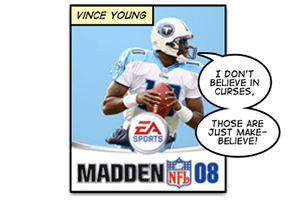

Regression toward the mean simply says that, following an extreme random event, the next random event is likely to be less extreme. In no sense does the future event ‘compensate for’ or ‘even out’ the previous event, though this is assumed in the gambler’s fallacy. Regression toward the mean was first described by Victorian polymath Francis Galton. He found that offspring of tall parents tended to be shorter. Also, offspring of shorter parents tended to be taller. Galton stated that processes that did not follow regression towards the mean would quickly go out of control. In finance, the term ‘mean reversion’ has a different meaning. Jeremy Siegel at Wharton uses it to describe a financial time series in which ‘returns can be very unstable in the short run but very stable in the long run,’ in seasonal businesses for example.
The effect can be exploited for general inference and estimation: the hottest place in the country today is more likely to be cooler tomorrow than hotter, as compared to today; the best performing mutual fund over the last three years is more likely to see relative performance decline than improve over the next three years; the most successful Hollywood actor of this year is likely to have less gross than more gross for his or her next movie; the baseball player with the greatest batting average by the All-Star break is more likely to have a lower average than a higher average over the second half of the season, etc.
read more »
Posted in Games, Money, Science |
Leave a Comment »
December 4, 2014
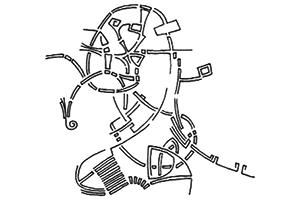

Metamagical [met-uh-maj-i-kuhl] Themas [thee-muhs] is an eclectic collection of articles that cognitive scientist Douglas Hofstadter wrote for ‘Scientific American’ during the early 1980s. The title is an anagram of Martin Gardner’s ‘Mathematical Games,’ the column that preceded Hofstadter’s. The anthology was published in 1985. Major themes include: self-reference in memes (ideas that spread within cultures), language, art and logic; discussions of philosophical issues important in cognitive science/AI; analogies and what makes something similar to something else (specifically what makes, for example, an uppercase letter ‘A’ recognizable as such); and lengthy discussions of the work of political scientist Robert Axelrod on the prisoner’s dilemma (a game theory problem).
There are three articles centered on the Lisp programming language, where Hofstadter first details the language itself, and then shows how it relates to Gödel’s incompleteness theorem. Two articles are devoted to Rubik’s Cube and other such puzzles. Many other topics are also mentioned, all in Hofstadter’s usual easy, approachable style. Many chapters open with an illustration of an extremely abstract alphabet, yet one which is still recognizable as such. The game of ‘Nomic’ (in which the rules of the game include mechanisms for the players to change those rules) was first introduced to the public in this column, in June 1982.
Posted in Language, Philosophy, Science |
1 Comment »
December 2, 2014

The drunken monkey hypothesis proposes that human attraction to ethanol may have a genetic basis due to the high dependence of the primate ancestor of Homo sapiens on fruit as a food source. Ethanol naturally occurs in ripe and overripe fruit and consequently early primates developed a genetically based attraction to the substance. This hypothesis was originally proposed by Dr. Robert Dudley of UC, Berkeley and was the subject of a symposium for the ‘Society for Integrative and Comparative Biology.’
Dudley believes that while most addictive substances are relatively new to humans, ethanol attraction may have a long evolutionarily based history. He believes that fruit ethanol may have been a significant source of energy and that the smell of the ripening fruit would help primates locate it. Ethanol is a light molecule and diffuses rapidly in a natural environment. Primates are known to have a higher olfactory sensitivity to alcohol than other mammals. The once-beneficial attraction to ethanol may underlie human tendencies for alcohol use and alcohol abuse.
Posted in Drugs, Health, Science |
1 Comment »
November 26, 2014


An aquiline [ak-wuh-lahyn] nose (also called a Roman nose or hook nose) is a human nose with a prominent bridge, giving it the appearance of being curved or slightly bent. The term is derived from the Latin word ‘aquilinus’ (‘eagle-like’) an allusion to the curved beak of an eagle. While some have ascribed the aquiline nose to specific ethnic, racial, or geographic groups, and in some cases associated it with other supposed non-physical characteristics (i.e. intelligence, status, personality, etc.), no scientific studies or evidence support any such linkage. As with many phenotypical expressions (i.e. ‘widow’s peak’, eye color, earwax type) it is found in many geographically diverse populations.
The aquiline nose was deemed a distinctive feature of some Native American tribes, members of which often took their names after their own characteristic physical attributes (i.e. The Hook Nose, or Chief Henry Roman Nose). In the depiction of Native Americans, for instance, an aquiline nose is one of the standard traits of the ‘noble warrior’ type. It is so important as a cultural marker, political scientist Renee Ann Cramer argued in ‘Cash, Color, and Colonialism’ (2005), that tribes without such characteristics have found it difficult to receive ‘federal recognition’ from the US government, resulting in failure to win benefits including tax-exempt status, reclamation rights, and (perhaps most significantly) the right to administer and profit from casinos.
read more »
Posted in Politics, Science, World |
1 Comment »
November 12, 2014

An affordance is something that provides the opportunity to perform an action. It is often described as a relationship between an object (or environment) and an organism. For example, a knob affords twisting, and perhaps pushing, while a cord affords pulling. As a relation, an affordance exhibits the possibility of some action, and is not a property of either an organism or its environment alone.
Different definitions of the term have developed. The original definition described all actions that are physically possible, but was later limited to only those an actor is aware of. The term has further evolved for use in the context of human–computer interaction (HCI) to indicate the easy discoverability of possible actions. The concept has application in several fields: perceptual, cognitive, and environmental psychology, industrial design, instructional design, science, technology and society (STS), and artificial intelligence.
read more »
Posted in Language, Science, Technology |
Leave a Comment »
November 9, 2014

Memory implantation is a technique used in cognitive psychology to investigate human memory. Researchers make people believe that they remember an event that actually never happened, such as being lost in a mall as a child, taking a hot air balloon ride, and putting slime in a teacher’s desk in primary school. Memory implantation techniques were developed in the 1990s as a way of providing evidence of how easy it is to distort people’s recollection of past events. Most of the studies were published in the context of the debate about repressed memories and the possible danger of digging for lost memories in therapy.
The first formal studies using memory implantation were published in the early 1990s, the most famous being ‘The Formation of False Memories’ (commonly referred to as the ‘Lost in the Mall’ study) by cognitive psychologist Elizabeth Loftus. The basic technique used in this study involved asking family members of a participant to provide narratives of events that happened when they were young and then add another event that definitely had not happened. The participants saw these four narratives and were told to try to remember as much as possible about each event. Across a number of studies using memory implantation, about 37% of people have come to remember parts of or entire events that never actually happened.
read more »
Posted in Health, Science |
1 Comment »
November 9, 2014

Imagination inflation refers to the finding that imagining an event which never happened can increase confidence that it actually occurred. This effect is relevant to the study of memory and cognition, particularly false memory. Imagination inflation is one way that techniques intended to retrieve repressed memories (e.g. recovered memory therapy) may lead to the development of false or distorted memories.
Imagination inflation also has implications for the criminal justice system, in particular interrogation and interviewing procedures, as it supports the claim that interrogators who ask suspects to repeatedly imagine committing a crime may risk making them more confident that they are the perpetrators, ultimately producing false confessions from innocent suspects. In one case in the US in 1990s, a man who initially denied accusations of raping his daughters was given an intense police interrogation. He confessed to abusing his children and leading a satanic cult which sacrificed babies, even admitting to crimes that were denied by his accusers.
read more »
Posted in Health, Politics, Science |
Leave a Comment »
November 8, 2014


Gelotology [jel-uh-tol-uh-jee] (from the Greek ‘gelos,’ meaning ‘laughter’) is the study of laughter and its effects on the body, from a psychological and physiological perspective. Its proponents often advocate induction of laughter on therapeutic grounds in complementary medicine. The field of study was pioneered by psychiatrist William F. Fry at Stanford.
Although healers since antiquity have recommended laughter as a form of medicine, the field was initially deprecated by most other physicians, who doubted that laughter possessed analgesic (painkilling) qualities. One early study that demonstrated the effectiveness of laughter in a clinical setting showed that it could help patients with atopic dermatitis (a recurring, itchy skin disorder) respond less to allergens. Other studies have shown that laughter can help alleviate stress and pain, and can even assist cardiopulmonary rehabilitation (treatment for patients recovering from cardiac surgeries).
read more »
Posted in Health, Humor, Science |
Leave a Comment »
October 30, 2014
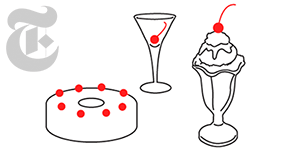

In the US, a maraschino [mar-uh-skee-noh] cherry is a preserved, sweetened cherry, typically made from light-colored sweet cherries such as the Royal Ann, Rainier, or Gold varieties. In their modern form, the cherries are first preserved in a brine solution usually containing sulfur dioxide and calcium chloride to bleach the fruit, then soaked in a suspension of food coloring (usually Red 40), sugar syrup, and other components.
Maraschino cherries are an ingredient in many cocktails, giving them the nickname: ‘Cocktail cherries.’ As a garnish, they often are used to decorate frozen yogurt, baked ham, cakes, pastry, parfaits, milkshakes, ice cream sundaes, and ice cream sodas. They are frequently included in canned fruit cocktail. They are also used as an accompaniment to sweet paan (an Indian preparation of herbs for chewing), and sometimes, along with some of the maraschino “‘juice,’ put into a glass of Coca-Cola to make an old-fashioned or homemade ‘Cherry Coke.’
read more »
Posted in Food, Money, Science |
Leave a Comment »
October 23, 2014
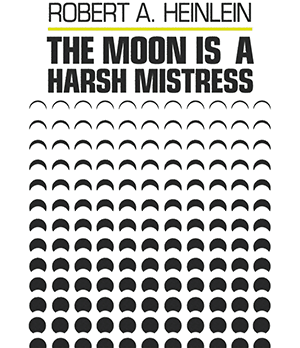
‘There ain’t no such thing as a free lunch’ (TANSTAAFL) is a popular adage communicating the idea that it is impossible to get something for nothing. The phrase dates to the 1930s and 1940s, but its first appearance is unknown. The ‘free lunch’ in the saying refers to the nineteenth-century practice in American bars of offering a ‘free lunch’ in order to entice drinking customers.
The phrase and the acronym are central to Robert Heinlein’s 1966 science-fiction novel ‘The Moon Is a Harsh Mistress,’ about the revolt of a lunar colony and the installation of a libertarian regime. Free-market economist Milton Friedman used it as the title of a 1975 book, and it is often mentioned in economics literature to describe opportunity cost (the value of the next best thing you give up whenever you make a decision). Macroeconomist Campbell McConnell writes that the idea is ‘at the core of economics.’
read more »
Posted in Language, Money, Science |
Leave a Comment »


 The Daily Omnivore