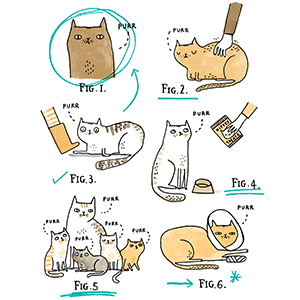
A purr is a continuous, soft, vibrating sound made in the throat by most species of felines. Domestic cat kittens can purr as early as two days of age. This tonal rumbling can characterize different personalities in domestic cats and is often believed to indicate a positive emotional state, however, felines sometimes purr when they are ill, tense, or experiencing traumatic or painful moments. Purring varies between cats (for example by loudness and tone), and from species to species, but can be characterized as a tonal buzzing.
The term ‘purring’ has been used liberally in literature, and it has been claimed that many non-cats including viverrids (civet, mongoose, genet), bears, badgers, and hyaenas purr. Others are reported to purr only at specific times, for example rabbits, squirrels, guinea pigs, tapirs, ring-tailed lemurs, elephants, raccoons and gorillas are claimed to purr while eating. However, using a strict definition of purring that continuous sound production must alternate between pulmonic egressive and ingressive airstream (breathing in and out) and usually go on for minutes, a 2002 study reached the conclusion that until then only ‘purring cats’ (Felidae) and two species of genets, Genetta tigrina, and most likely also Genetta genetta, had been documented to purr.
read more »

Purr
Directed Attention Fatigue
Directed attention fatigue (DAF) is a neurological phenomenon that results from overuse of the brain’s inhibitory attention mechanisms, which handle incoming distractions while maintaining focus on a specific task. The greatest threat to a given focus of attention is competition from other stimuli that can cause a shift in focus. This is because one maintains focus on a particular thought by inhibiting all potential distractions and not by strengthening that central mental activity.
Directed attention fatigue occurs when a particular part of the brain’s global inhibitory system is overworked due to the suppression of increasing numbers of stimuli. This temporary condition is not a clinical illness or a personality disorder. It is rather a temporary exhaustion of mental resources. According to inhibition theory it is natural for one to alternate imperceptibly between periods of attention (work) and distraction (non-work) while completing a task. Even when every undertaking is unique, each incoming stimulus calls upon the same directed attention mechanism.
read more »
Superhuman
A superhuman is a person with extraordinary and unusual capabilities enabling feats beyond anything a layperson could conceivably achieve, even through extensive training. Superhuman can mean an improved human, for example, by genetic modification, cybernetic implants, nanotechnology, or natural evolution. Occasionally, it could mean an otherwise ‘normal’ human with purported super-abilities, such as psychic/psionic powers, levitation or flight, herculean strength, or unique proficiency at some task.
Superhuman can also mean something that is not human, but considered to be ‘superior’ to humans in some ways. This might include a robot that easily passed the Turing test (an indicator of a machine’s ability to exhibit intelligent behavior) that possessed greater than human strength, which is already common in robots today. A very intelligent or strong alien could be considered superhuman. In its most basic sense it means anything beyond (typical) human capabilities, e.g. a tiger may be described as having ‘superhuman strength.’
read more »
Ten Percent Brain Myth
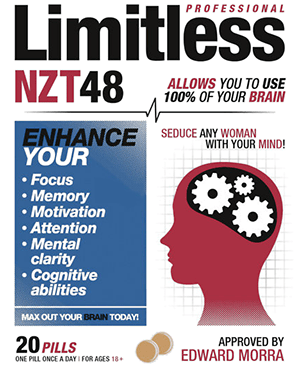
The 10% of brain myth is the widely perpetuated urban legend that the average human can only make use of 10% (or some other small percentage) of their brain. It has been misattributed to many people, including Albert Einstein. By association, it is suggested that a person may harness this unused potential and increase intelligence by spiritual, chemical, or technological means.
Though factors of intelligence can increase with training, the popular notion that large parts of the brain remain unused, and could subsequently be ‘activated,’ rests more in popular folklore than scientific theory. Though mysteries regarding brain function remain—e.g. memory, consciousness—the physiology of brain mapping suggests that all areas of the brain have a function.
read more »
Human Universals
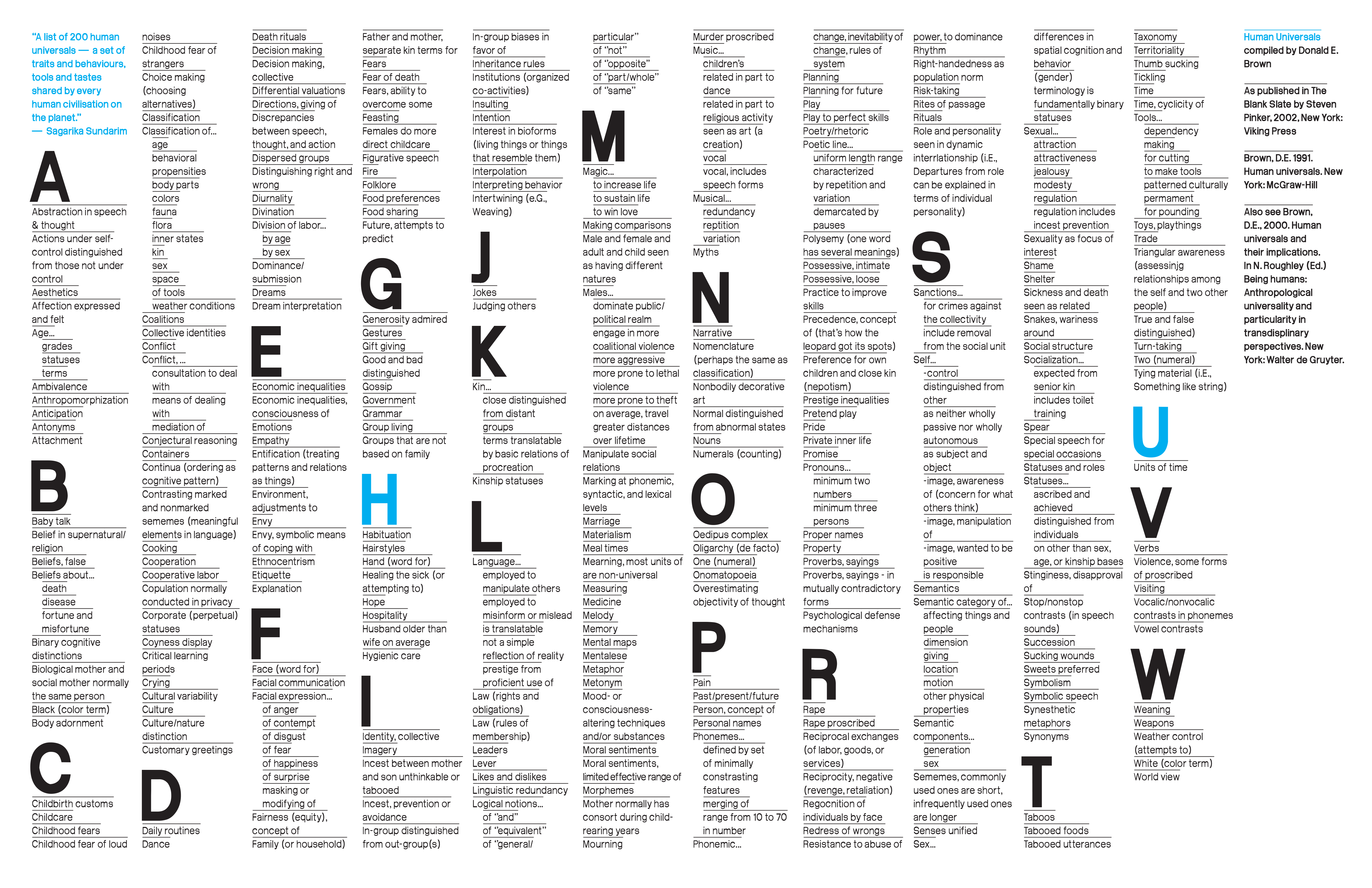
‘Human Universals‘ is a 1991 nonfiction book by Donald Brown, an American professor of anthropology (emeritus) at UC, Santa Barbara. Brown says human universals, ‘comprise those features of culture, society, language, behavior, and psyche for which there are no known exception.’
Universals include: age-grading, athletic sports, bodily adornment, calendar, cleanliness training, community organization, cooking, cooperative labor, cosmology, courtship, dancing, decorative art, divination, division of labor, dream interpretation, education, eschatology, ethics, ethno-botany, etiquette, faith healing, family feasting, fire-making, folklore, food taboos, funeral rites, games, gestures, gift-giving, government, greetings, hair styles, hospitality, housing, hygiene, incest taboos, inheritance rules, joking, kin groups, kinship nomenclature, language, law, luck superstitions, magic, marriage, mealtimes, medicine, obstetrics, penal sanctions, personal names, population policy, postnatal care, pregnancy usages, property rights, propitiation of supernatural beings, puberty customs, religious ritual, residence rules, sexual restrictions, soul concepts, status differentiation, surgery, tool-making, trade, visiting, weather control, weaving.
Snowball
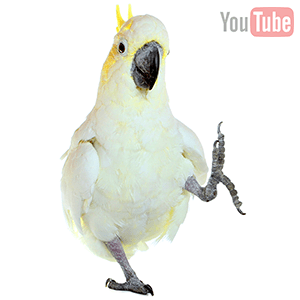
Snowball (hatched c. 1996) is a male Eleonora Cockatoo, noted as being the first non-human animal conclusively demonstrated to be capable of beat induction— perceiving music and synchronizing body movements to the beat (i.e., dancing).
Snowball’s abilities first became apparent after being acquired from a bird show at the age of six by his previous owner. He was observed bobbing his head in time to the Backstreet Boys song, ‘Everybody (Backstreet’s Back).’ The owner and his children encouraged this behavior and observed him developing rhythmic foot-lifting gestures, perhaps in imitation of his human companions’ arm-lifting gestures.
read more »
Biomusicological Entrainment
Entrainment [en-treyn-muhnt] in the biomusicological [bahy-oh-myoo-zi-kol-loj-i-kuhl] sense refers to the synchronization of organisms to an external rhythm, usually produced by other organisms with whom they interact socially. Examples include firefly flashing, mosquito wing clapping, as well as human music and dance such as foot tapping.
Beat induction is the process in which a regular isochronous pulse is activated while one listens to music (i.e. the beat to which one would tap one’s foot). It was thought that the cognitive mechanism that allows us to infer a beat from a sound pattern, and to synchronize or dance to it, was uniquely human. No other primate can dance or collaboratively clap to the beat of the music. Humans know when to start, when to stop, when to speed up or to slow down, in synchronizing with their fellow dancers or musicians. Although apes do not appear to display beat induction, some parrots do. The most famous example, Snowball was shown to display genuine dance, including changing his movements to a change in tempo in a 2009 study.
read more »
Zoomusicology
Zoomusicology [zoh-uh-myoo-zi-kol-uh-jee] is a field of musicology and zoology or more specifically, zoosemiotics (animal communication). It is the study of the music of non-human animals, or rather the musical aspects of sound or communication produced and received by animals, and is related to ethnomusicology (the study of human music). Italian musicologist and semiotician Dario Martinelli describes the subject of as the ‘aesthetic use of sound communication among animals.’
Musicologist Marcello Sorce Keller attributes musical qualities to animal sounds, specifically whales’ and birds’ songs, by stating that regional variations can be found that resemble cultural traits in human music. He advocates for a combined study of zoomusicology and ethnomusicology with the remark that he ‘would like to suggest that musical scholarship excluding non-human animals cannot ultimately describe ‘how musical is man.”
read more »
Soundscape Conservation
Soundscape ecology is the study of sound within a landscape and its effect on organisms. The discipline of conservation biology has traditionally been concerned with the preservation of biodiversity and the habitats that organisms are dependent upon. However, soundscape ecology encourages biologists to consider natural soundscapes as resources worthy of conservation efforts. Unaltered soundscapes have value for wildlife as demonstrated by the numerous negative effects of anthropogenic (human created) noise on various species.
Organisms that use acoustic cues generated by their prey may be particularly impacted by human-altered soundscapes. In this situation, the (unintentional) senders of the acoustic signals will have no incentive to compensate for masking imposed by anthropogenic sound. In addition, natural soundscapes can have benefits for human wellbeing and may help generate a distinct sense of place, connecting people to the environment and providing unique aesthetic experiences. Because of the various values inherent in natural soundscapes, they may be considered ecosystem services that are provisioned by intact, functioning ecosystems.
Carcinisation
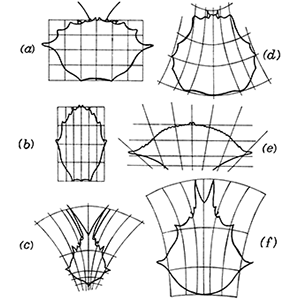
In evolutionary biology, carcinisation [kar-sin-i-say-shun] is a hypothesised process whereby a crustacean evolves into a crab-like form from a non-crab-like form. The term was introduced by 20th century English zoologist L. A. Borradaile, who described it as ‘one of the many attempts of Nature to evolve a crab.’ Many animals that are called crabs – such as hermit crabs, king crabs, porcelain crabs, horseshoe crabs, and crab lice – are not true crabs (infraorder Brachyura).
Carcinisation is believed to have occurred independently in at least five groups of decapod (ten-footed) crustaceans, most notably king crabs, which most scientists believe evolved from hermit crab ancestors. Most hermit crabs are asymmetrical, so that they fit well into spiral snail shells; the abdomens of king crabs, even though they do not use snail shells for shelter, are also asymmetrical. An exceptional form of carcinisation, termed ‘hypercarcinisation,’ is seen in the porcelain crab (Allopetrolisthes spinifrons). In addition to the shortened body form, it also developed sexual dimorphism that matches true crabs, where males have a reduced pleon (abdomen) compared to females. Porcelain crabs likely evolved from squat lobsters
Anchoring
Anchoring or focalism is a cognitive bias that describes the common human tendency to rely too heavily on the first piece of information offered (the ‘anchor’) when making decisions. Once an anchor is set, other judgments are made by adjusting away from that anchor, and there is a bias toward interpreting other information around the anchor. For example, the initial price offered for a used car sets the standard for the rest of the negotiations, so that prices lower than the initial price seem more reasonable even if they are still higher than what the car is really worth.
Anchoring is also called the focusing effect (or focusing illusion) because it occurs when people place too much importance on one aspect of an event, causing an error in accurately predicting the utility of a future outcome. Individuals tend to focus on notable differences, excluding those that are less conspicuous, when making predictions about happiness or convenience.
read more »
Antireductionism
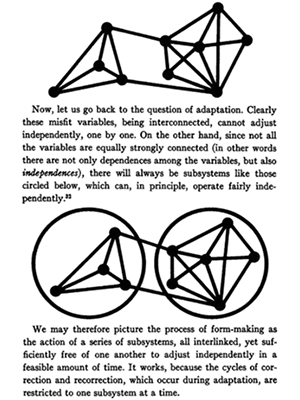
Antireductionism [an-tee-ri-duhk-shuh-niz-uhm] is a reaction against reductionism (the idea that a system can be totally determined by understanding its components), which instead advocates holism (sometimes called ‘whole to parts,’ in which a contextual overview precedes analysis of constituent parts).
Although ‘breaking complex phenomena into parts, is a key method in science,’ there are those complex phenomena (e.g. in psychology, sociology, ecology) where some resistance to or rebellion against this approach arises, primarily due to the perceived shortcomings of the reductionist approach. Holism is touted as an effective antidote against reductionism, psychiatric hubris, and scientism, a belief in the universal applicability of the scientific method. Arguments against reductionism therefore implicitly carry a critique of the scientific method itself, which engenders suspicion among scientists.
read more »