July 2, 2014

The illusion of control is the tendency for people to overestimate their ability to control events, for instance to feel that they control outcomes that they demonstrably have no influence over. The effect was named by psychologist Ellen Langer and has been replicated in many different contexts.
It is thought to influence gambling behavior and belief in the paranormal. Along with illusory superiority (overestimating positive abilities and underestimating negative qualities) and optimism bias (unrealistic or comparative optimism), the illusion of control is one of the positive illusions, unrealistically favorable attitudes that people have towards themselves or to people that are close to them. Positive illusions are a form of self-deception or self-enhancement that feel good, maintain self-esteem or stave off discomfort at least in the short term.
read more »
Posted in Health, Science |
1 Comment »
June 23, 2014
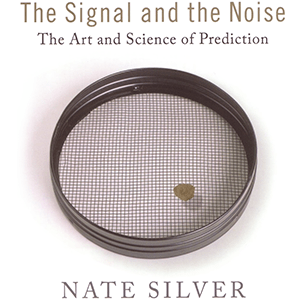

The term wet bias refers to weather forecasters deliberately reporting a higher probability of rain than their predictive models show. The Weather Channel has been empirically shown, and has also admitted, to having a wet bias in the case of low probability of precipitation (for instance, a 5% probability may be reported as a 20% probability) but not at higher probabilities (a 60% probability will likely be reported accurately). Blogger Dan Allan noted that the channel is also biased at the upper end (a probability of 90% or higher will be rounded up to 100%). Local weather stations have been shown to have a significantly greater wet bias, with some reporting a probability as low as 70% as a certainty.
In 2002, computer scientist Eric Floehr started analyzing historical weather prediction data on a website called ForecastWatch. He found that the commercial forecasts were biased and the National Weather Service forecasts weren’t. His findings, though known within the meteorology community for some time, was first popularized in Nate Silver’s 2012 book ‘The Signal and the Noise.’ According to Silver, the phenomenon is due to skewed incentives: if the correct low probability of precipitation is given, viewers may interpret the forecast as if there were no probability of rain, and then be upset if it does rain. Forecasters are compensating for the fact that people have greater loss aversion than they think they do (and are especially prone to miscalculate their cost-loss ratio when it is low). Silver quotes Dr. Rose of The Weather Channel as saying, ‘If the forecast was objective, if it has zero bias in precipitation, we are in trouble.’
Posted in Money, Science |
1 Comment »
June 11, 2014
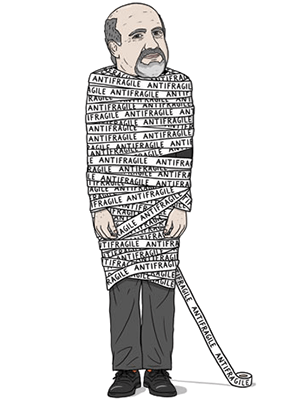
The Lindy Effect is a theory of the permanence of non-perishable things. Unlike biological organisms, the life expectancy of an idea or technology increases as it ages. The origin of the concept can be traced to biographer Albert Goldman and a 1964 article he wrote for ‘The New Republic’ titled ‘Lindy’s Law.’ In it he stated that ‘the future career expectations of a television comedian is proportional to the total amount of his past exposure on the medium.’ The term refers to a NY deli known as a hangout for comedians; they would ‘foregather every night at Lindy’s, where… they conduct post-mortems on recent show biz ‘action.’
Mathematician Benoit Mandelbrot formally coined the term ‘Lindy Effect’ in his 1984 book ‘The Fractal Geometry of Nature.’ Mandelbrot expressed mathematically that for certain things bounded by the life of the producer, like human promise, future life expectancy is proportional to the past: ‘However long a person’s past collected works, it will on the average continue for an equal additional amount. When it eventually stops, it breaks off at precisely half of its promise.’
read more »
Posted in Philosophy, Science, Technology |
1 Comment »
June 9, 2014


Survivorship bias is the logical error of concentrating on the people or things that ‘survived’ some process and inadvertently overlooking those that did not because of their lack of visibility. The concept applies to actual people (e.g. subjects in a medical study), as well as companies, or anything that must make it past some selection process to be considered further (e.g. job applicants).
Survivorship bias can lead to overly optimistic beliefs because failures are ignored, such as when companies that no longer exist are excluded from analyses of financial performance. It can also lead to the false belief that the successes in a group always have some special property, rather than just benefiting from coincidence. For example, if the three of the five students with the best college grades went to the same high school, that can lead one to believe that the high school must offer an excellent education. This could be true, but the question cannot be answered without looking at the grades of all the other students from that high school, not just the ones who ‘survived’ the top-five selection process.
read more »
Posted in Death, Health, Science |
Leave a Comment »
June 6, 2014

Hormonal [hawr-moh-nl] sentience [sen-shuhns], first described by nanotechnology researcher Robert A. Freitas Jr., describes the information processing rate in plants, which are mostly based on hormones instead of neurons like in all major animals (except sponges). Plants can to some degree communicate with each other and there are even examples of one-way-communication with animals.
Acacia trees produce tannin to defend themselves when they are grazed upon by animals. The airborne scent of the tannin is picked up by other acacia trees, which then start to produce it themselves to ward off nearby grazers. When attacked by caterpillars, some plants can release chemical signals to attract parasitic wasps that attack the caterpillars.
read more »
Posted in Science |
Leave a Comment »
June 5, 2014


The sentience [sen-shuhns] quotient [kwoh-shuhnt] (SQ) was introduced by nanotechnology researcher Robert A. Freitas Jr. in the late 1970s. It defines sentience as the relationship between the information processing rate (in bits per second) of each individual processing unit (neuron), the weight/size of a single unit, and the total number of processing units (expressed as mass). This is a non-standard usage of the word ‘sentience,’ which normally relates to an organism’s capacity to perceive the world subjectively (it is derived from the Latin word ‘sentire’ meaning ‘to feel’ and is closely related to the word ‘sentiment’; intelligence or cognitive capacity is better denoted by ‘sapience’).
The potential and total processing capacity of a brain, based on the amount of neurons and the processing rate and mass of a single one, combined with its design (e.g. myelin coating, specialized areas) and programming, lays the foundations of the brain level of the individual. Not just in humans, but in all organisms, even artificial ones such as computers (although their ‘brain’ is not based on neurons). The SQ of an individual is therefore a measure of the efficiency of an individual brain, not its relative intelligence.
read more »
Posted in Science, Technology |
1 Comment »
May 27, 2014
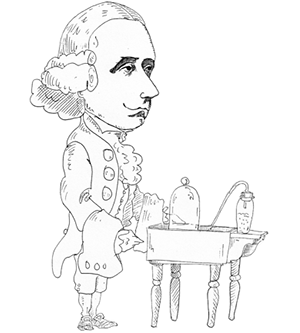
The phlogiston [floh-jis-tuhn] theory is an obsolete scientific theory that postulated a fire-like element called phlogiston, contained within combustible bodies, that is released during combustion. The name comes from Ancient Greek: ‘phlóx’ (‘flame’). First stated in 1667 by German physician, alchemist, and adventurer, Johann Joachim Becher, the theory attempted to explain burning processes such as combustion and rusting, which are now collectively known as oxidation.
Phlogiston theory permitted chemists to bring clarification of apparently different phenomena into a coherent structure: combustion, metabolism, and configuration of rust. The recognition of the relation between combustion and metabolism was a forerunner of the recognition that the metabolism of living organisms and combustion can be understood in terms of fundamentally related chemical processes.
read more »
Posted in Science |
2 Comments »
May 22, 2014

Dr. Ignaz [ig-nahts] Semmelweis [zem-uhl-vahys] discovered in 1847 that hand-washing with a solution of chlorinated lime reduced the incidence of fatal childbed fever tenfold in maternity institutions. However, the reaction of his contemporaries was not positive; his subsequent mental disintegration led to him being confined to an insane asylum, where he died in 1865. His critics claimed his findings lacked scientific reasoning. The failure of the nineteenth-century scientific community to recognize Semmelweis’s findings, and the nature of the flawed critiques against him helped advance a positivist epistemology, leading to the emergence of evidence-based medicine.
To a modern reader, Semmelweis’s experimental evidence—that chlorine washings reduced childbed fever—seem obvious, and it may seem absurd that his claims were rejected on the grounds of purported lack of ‘scientific reasoning.’ His unpalatable observational evidence was only accepted when seemingly unrelated work by Louis Pasteur in Paris some two decades later offered a theoretical explanation for Semmelweis’s observations: the germ theory of disease.
read more »
Posted in Death, Health, Science |
1 Comment »
May 19, 2014

A cyanometer [sahy-uh-nom-i-ter] (from cyan and -meter) is an instrument for measuring ‘blueness,’ specifically the color intensity of blue sky. It is attributed to Swiss aristocrat, physicist, and mountaineer Horace-Bénédict de Saussure. It consists of squares of paper dyed in graduated shades of blue and arranged in a color circle or square that can be held up and compared to the color of the sky. The blueness of the atmosphere indicates transparency and the amount of water vapor.
De Saussure is credited with inventing a cyanometer in 1789 with 53 sections, ranging from white to varying shades of blue (dyed with Prussian blue) and then to black, arranged in a circle; he used the device to measure the color of the sky at Geneva, Chamonix and Mont Blanc. He concluded, correctly, that the color of the sky was dependent on the amount of suspended particles in the atmosphere.
Posted in Science, Technology, World |
Leave a Comment »
May 16, 2014
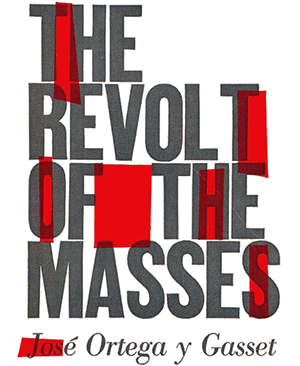
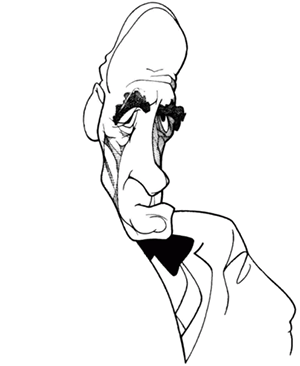
The Ortega hypothesis holds that average or mediocre scientists contribute substantially to the advancement of science. According to this hypothesis, scientific progress occurs mainly by the accumulation of a mass of modest, narrowly specialized intellectual contributions. On this view, major breakthroughs draw heavily upon a large body of minor and little-known work, without which the major advances could not happen.
The Ortega hypothesis is widely held, but a number of systematic studies of scientific citations have favored the opposing ‘Newton hypothesis,’ which says that scientific progress is mostly the work of a relatively small number of great scientists (after Isaac Newton’s statement that he ‘stood on the shoulders of giants’).
read more »
Posted in Philosophy, Science |
Leave a Comment »
May 8, 2014
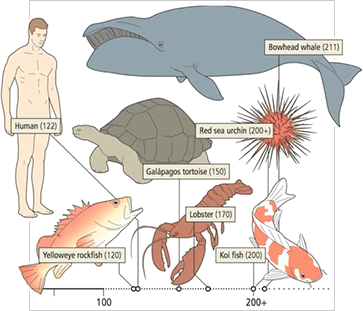
Maximum life span is a measure of the maximum amount of time one or more members of a population has been observed to survive between birth and death. The term can also denote an estimate of the maximum amount of time that a member of a given species could survive between life and death, provided circumstances that are optimal to their longevity. Most living species have at least one upper limit on the number of times cells can divide. This is called the Hayflick limit, although number of cell divisions does not strictly control lifespan (non-dividing cells and dividing cells lived over 120 years in the oldest known human).
In animal studies, maximum span is often taken to be the mean life span of the most long-lived 10% of a given cohort. By another definition, however, maximum life span corresponds to the age at which the oldest known member of a species or experimental group has died. Calculation of the maximum life span in the latter sense depends upon initial sample size. Maximum life span contrasts with mean life span (average life span or life expectancy). Mean life span varies with susceptibility to disease, accident, suicide and homicide, whereas maximum life span is determined by ‘rate of aging.’
read more »
Posted in Health, Science |
Leave a Comment »
April 9, 2014
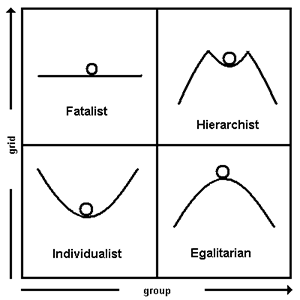
Risk perception is the subjective judgment that people make about the characteristics and severity of a risk. The phrase is most commonly used in reference to natural hazards and threats to the environment or health, such as nuclear power. Several theories have been proposed to explain why different people make different estimates of the dangerousness of risks. Three major families of theory have been developed: psychology approaches (heuristics and cognitive), anthropology/sociology approaches (cultural theory) and interdisciplinary approaches (social amplification of risk framework).
The study of risk perception arose out of the observation that experts and lay people often disagreed about how risky various technologies and natural hazards were. The mid 1960s saw the rapid rise of nuclear technologies and the promise for clean and safe energy. However, fears of both longitudinal dangers to the environment as well as immediate disasters creating radioactive wastelands turned the public against this new technology. The governmental communities asked why public perception was against the use of nuclear energy when all of the scientific experts were declaring how safe it really was. The problem, from the perspectives of the experts, was a difference between scientific facts and an exaggerated public perception of the dangers.
read more »
Posted in Health, Politics, Science |
Leave a Comment »


 The Daily Omnivore