March 26, 2014
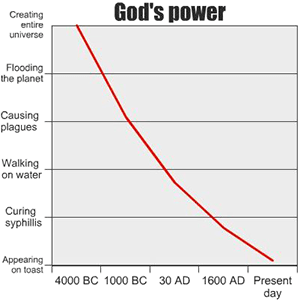
God of the gaps is a theological perspective in which gaps in scientific knowledge are taken to be evidence or proof of God’s existence. The term was invented by Christian theologians not to discredit theism but rather to point out the fallacy of relying on teleological arguments (argument from design) for God’s existence. Some use the phrase to refer to a form of the argument from ignorance fallacy (in which ignorance stands for ‘lack of evidence to the contrary’).
The concept, although not the exact wording, goes back to Henry Drummond, a 19th-century evangelist lecturer, from his Lowell Lectures on ‘The Ascent of Man.’ He chastises those Christians who point to the things that science cannot yet explain—’gaps which they will fill up with God’—and urges them to embrace all nature as God’s, as the work of ‘… an immanent God, which is the God of Evolution, is infinitely grander than the occasional wonder-worker, who is the God of an old theology.’ (Immanence here is related to pantheism, the belief that God and the universe are equivalent.)
read more »
Posted in Philosophy, Science |
3 Comments »
March 23, 2014
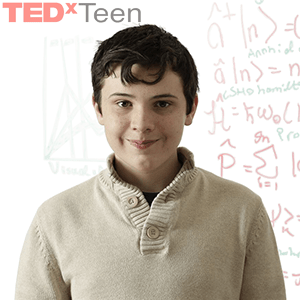
Jacob Barnett (b. 1998) is a mathematician and astrophysicist who, while still a teenager, has became an orator of Physics at Indiana University. Barnett was diagnosed with moderate to severe autism when he was 2 years old and was educated and taught privately by his parents. His mother, Kristine, wrote a book about this educational journey called ”The Spark: A Mother’s Story of Nurturing, Genius, and Autism.’ He was just 12 years old when he was enrolled into college at the Indiana University Purdue University Indianapolis, skipping 7 grades, having learned the majority of his school’s math syllabus within two weeks.
At the age of 15 he became a PSI-student at the Perimeter Institute for Theoretical Physics in Waterloo, Ontario, Canada and is expected to receive a PhD in late 2014. Barnett has been working on Einstein’s theory of relativity and thinks he will be able to amend it or even prove it wrong. He also expressed doubts about the Big Bang Theory and thinks he will be able to amend it too. Professor Scott Tremaine of the Institute of Advanced Study wrote ‘The theory that he’s working on involves several of the toughest problems in astrophysics and theoretical physics. Anyone who solves these will be in line for a Nobel Prize.’
Posted in Education, Health, Science |
1 Comment »
March 20, 2014

Gaydar is a colloquialism referring to the intuitive ability of a person to assess others’ sexual orientations as gay, bisexual or heterosexual. Gaydar relies almost exclusively on non-verbal clues and LGBT stereotypes. These include (but are not limited to) the sensitivity to social behaviors and mannerisms; for instance, acknowledging flamboyant body language, the tone of voice used by a person when speaking, overtly rejecting traditional gender roles, a person’s occupation, and grooming habits.
The detection of sexual orientation by outward appearance or behavior is frequently challenged by situations in which masculine gay men who do not act in a stereotypically ‘gay’ fashion, or with metrosexual men (regardless of sexuality) who exhibit a lifestyle, spending habits, and concern for personal appearance stereotypical of fashionable urban gay men.
read more »
Posted in Language, Science, Sex |
Leave a Comment »
March 19, 2014
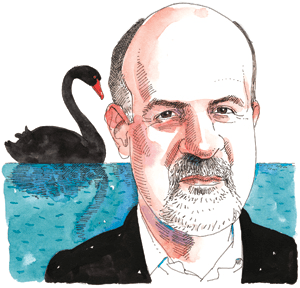
The black swan theory or theory of black swan events is a metaphor that describes an event that comes as a surprise, has a major effect, and is often inappropriately rationalized after the fact with the benefit of hindsight.
The theory was developed by Lebanese American statistician Nassim Nicholas Taleb to explain the disproportionate role of high-profile, hard-to-predict, and rare events that are beyond the realm of normal expectations in history, science, finance, and technology. It further examined the non-computability of the probability of the consequential rare events using scientific methods (owing to the very nature of small probabilities), and the psychological biases that make people individually and collectively blind to uncertainty and unaware of the massive role of the rare event in historical affairs.
read more »
Posted in Money, Philosophy, Science |
Leave a Comment »
March 6, 2014
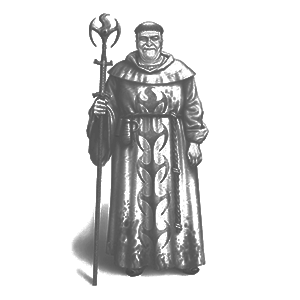
Hard to be a God is a 1964 science fiction novel by Arkady and Boris Strugatsky set in their ‘Noon Universe (a fictional setting in the 22nd century). The novel follows Anton, an undercover operative from the future planet Earth, in his mission on an alien planet, that is populated by human beings, whose society has not advanced beyond the Middle Ages. The novel’s core idea is that human progress throughout the centuries is often cruel and bloody, and that religion and blind faith can be effective tools of oppression, working to destroy the emerging scientific disciplines and enlightenment.
The title ‘Hard to be a God’ refers to Anton’s (known by his alias ‘don Rumata’ throughout the book) perception of his precarious role as an observer on the planet, for while he has far more advance knowledge than the people around him, he is forbidden to assist too actively, as it would interfere with the natural progress of history. The book pays a lot of attention to the internal world of the main character, showing his own evolution from an emotionally uninvolved ‘observer’ to the person who rejects the blind belief in theory when confronted with the cruelty of real events.
read more »
Posted in Language, Philosophy, Science |
Leave a Comment »
March 4, 2014

Psychoactive toads are amphibians from which psychoactive substances from the family of bufotoxins can be derived. The skin and poison of Bufo alvarius (Colorado River toad or Sonoran Desert toad) contain 5-MeO-DMT and bufotenin, which both belong to the family of hallucinogenic tryptamines. The skin or poison of the toads may produce psychoactive effects when ingested. To obtain the psychoactive substances the toxin of psychoactive toads is commonly milked from their poison glands. The milking procedure does not harm the toad — it consists of stroking the animal under its chin to initiate the defensive poison response.
Once the liquid toxin has been collected and dried, it can be used for its psychedelic effects. The toad takes about a month to refill its poison glands. Rumors dating from the 1970s claimed that groups of hippies, some including teenagers, were licking the psychoactive toads to get high. Albert Most, founder of the Church of the Toad of Light and a proponent of recreational use of Bufo alvarius poison, published a booklet titled ‘Bufo alvarius: The Psychedelic Toad of the Sonoran Desert’ in 1983 which explained how to extract and smoke the secretions.
Posted in Drugs, Science |
1 Comment »
March 1, 2014


Carbon fiber is a material consisting of long thing fibers about 5–10 μm in diameter (about half the width of a human hair) and composed mostly of carbon atoms. When used in a composite material it has the highest compressive strength of any reinforcing material, and it has a high strength to weight ratio and low coefficient of thermal expansion. The density of carbon fiber is also much lower than the density of steel.
Carbon fiber reinforced polymer (carbon fiber combined with a plastic resin and wound or molded) is very strong, but extremely rigid and somewhat brittle. However, carbon fibers are also composed with other materials, such as with graphite to form carbon-carbon composites, which have a very high heat tolerance.
read more »
Posted in Science, Technology |
Leave a Comment »
February 24, 2014

Gregory Clark (b. 1957) is an economic historian at UC, Davis. His grandfathers were migrants to Scotland from Ireland, and he was born in Bellshill, Scotland. In 1974 he and a fellow pupil won the ‘Scottish Daily Express’ school debate competition. After school he earned his B.A. in economics and philosophy at King’s College, Cambridge in 1979 and his Ph.D. at Harvard in 1985. He has also taught as an Assistant Professor at Stanford and the University of Michigan. At Davis his areas of research are long term economic growth, the wealth of nations, and the economic history of England and India.
Clark is most well known for his book, ‘A Farewell to Alms: A Brief Economic History of the World.’ He argued that the current divide between rich and poor nations came about as a result of the Industrial Revolution originating in Britain. Prior to 1790, Clark asserts, man faced a Malthusian trap: new technology enabled greater productivity and more food, but was quickly gobbled up by higher populations. In Britain, however, as disease continually killed off poorer members of society, their positions in society were taken over by the sons of the wealthy.
read more »
Posted in Money, Science |
Leave a Comment »
February 4, 2014

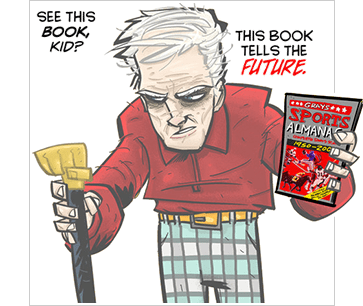
A temporal paradox is a thought experiment where a time traveler goes to the past, and does something that would prevent him from time travel in the first place. If he does not go back in time, he does not do anything that would prevent his traveling to the past, so time travel would be possible for him. However, if he goes back in time and does something that would cause him/her to not make a time machine he would not travel back in the first place causing him to make one then go back and not make one.
A typical example of this kind is the grandfather paradox, where a person goes back in time to kill his grandfather before he had any biological descendant. If they succeed, one of their parents would never exist and they themselves would never exist either. This would make it impossible for them to go back in time in the first place, making them unable to kill their grandfather, who would continue to produce offspring and restart the situation. But if they fail, their grandfather would live and produce offspring. This has the same affect as prevailing.
read more »
Posted in Philosophy, Science |
Leave a Comment »
January 21, 2014

Historically, the comparative merits of the tiger versus the lion have been a popular topic of discussion by hunters, naturalists, artists and poets, and it continues to inspire the popular imagination in the present day. Lions and tigers have competed in the wild where their ranges have overlapped. They have also been pitted against each other in captivity, either as deliberate contests or as a result of accidental encounters.
In the circuses of Ancient Rome, exotic beasts were commonly pitted against each other. The contest of the lion against the tiger was a classic pairing and the betting usually favored the tiger. A tiger that belonged to the King of Oude in India killed thirty lions, and destroyed another after being transferred to the zoological garden in London.
read more »
Posted in Death, Science |
Leave a Comment »
January 17, 2014
‘The Republican Brain: The Science of Why They Deny Science’ by journalist Chris Mooney is about the psychological basis for many Republicans’ rejection of mainstream scientific theories, as well as theories of economics and history.
The book was criticized by American conservative Jonah Goldberg, who called it ‘conservative phrenology.’ Mooney responded that Goldberg had misrepresented his book in several respects. He also stated that Goldberg exhibited ‘precisely the traits he seeks to deny: ideological defensiveness, a lack of nuance, and a deeply unwarranted and overconfident sense of certainty.’ Mooney later rebutted a similar criticism by Andrew Ferguson of ‘The Weekly Standard’ and stated that Ferguson dismissed science himself while attacking the book.
Posted in Language, Politics, Science |
Leave a Comment »
January 14, 2014
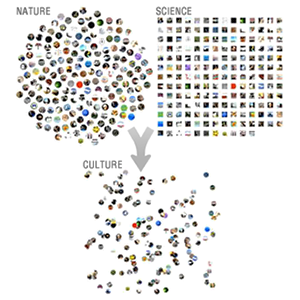
The Edge Foundation, Inc. is an association of science and technology intellectuals created in 1988 as an outgrowth of The Reality Club (as a group of mostly New York City-based intellectuals that met regularly from 1981 through 1996 for seminars on a variety of topics). Currently, its main activity is contributing to the edge.org website, edited by publisher and businessman John Brockman. The site is an online magazine exploring scientific and intellectual ideas. Many areas of academic work are incorporated, including genetics, physics, mathematics, psychology, evolutionary biology, philosophy and computing technology.
Brockman’s 1995 book ‘The Third Culture,’ which has been influential to the foundation, describes the growing movement towards (re)integration of literary and scientific thinking and is a nod toward British scientist C. P. Snow’s concept of ‘The Two Cultures’ of science and the humanities. At the Edge website scientists and others are invited to contribute their thoughts in a manner readily accessible to non-specialist readers. In doing so, leading thinkers are able to communicate directly with each other and the public without the intervention of middlemen such as journalists and journal editors.
Posted in Language, Science, Technology |
Leave a Comment »


 The Daily Omnivore