January 9, 2014

Mood repair strategies (MRS) offer techniques that an individual can use to shift their mood from general sadness or clinical depression to a state of greater contentment or happiness. A mood repair strategy is a cognitive, behavioral, and interpersonal psychological tool used to affect the mood regulation of an individual. MRS are common to cognitive therapy and are often assigned as homework by therapists in order to help positively impact individuals who are experiencing dysphoria or depression.
However, these tools can also be used for individuals experiencing temporary unwanted moods. Many factors go into the effectiveness of MRS on an individual ranging from the client’s self-esteem to their experience with the strategy being used. Also, how the strategy is presented (either to avoid negative moods or to pursue positive moods) may have an effect on its effectiveness.
read more »
Posted in Health, Science |
Leave a Comment »
January 7, 2014

Carl Safina (b. 1955) is the author of several books about oceans and environmentalism, including ‘Song for the Blue Ocean,’ ‘Eye of the Albatross,’ and ‘The View From Lazy Point; A Natural Year in an Unnatural World.’ He is founding president of the Blue Ocean Institute at Stony Brook University in NY where he is active both in Marine Sciences and as co-chair of the Journalism School’s Alan Alda Center for Communicating Science. Safina is host of the PBS series, ‘Saving the Ocean with Carl Safina.’
Carl Safina works to show that nature and human dignity require each other. His current research is focused on the ways in which our relationship with the natural world affects human relations, and how the scientific facts imply the need for moral and ethical responses. His early research focused on seabird ecology. In the 1990s he brought fisheries issues into the environmental mainstream. He lead campaigns to ban high-seas driftnets, to re-write U.S. federal fisheries law, to work toward international conservation of tunas, sharks, and other fishes, and to achieve passage of a United Nations global fisheries treaty.
Posted in Science |
Leave a Comment »
December 18, 2013
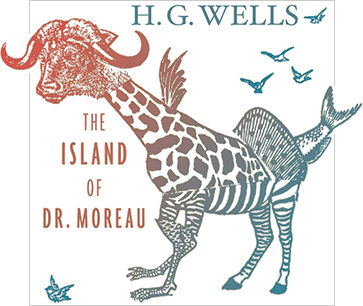
‘The Limits of Individual Plasticity‘ is an 1895 essay by science fiction author H.G. Wells offering his theories on the plasticity of animals. He argues that the default biological form of an animal could be altered so radically that it is no longer recognizable and still survive. This could, according to Wells, theoretically be achieved through surgical, or chemical modification. Wells was fully aware that surgical modification is only a physical change, and would not alter an animal’s genetic blueprint. He made note that should an animal be surgically modified, their offspring would most likely retain their parent creature’s original physical form.
These concepts were central to his 1896 science fiction novel, ‘The Island of Doctor Moreau.’ In the book, an Englishman is shipwrecked on a secluded island owned and operated by an eminent British physiologist named Dr. Moreau. Moreau was shunned from the scientific community when his horrific experiments of vivisection were brought to the public spotlight, but continued his work on his private island, where animals are altered with great detail to resemble human beings. They are a defective experiment, as they will revert to their bestial forms after a period of time.
Posted in Art, Health, Science |
Leave a Comment »
December 10, 2013

Rotating locomotion encompasses two distinct modes of locomotion: simple rolling, and spinning relative to a fixed axle or body in the manner of a wheel or propeller. Several organisms move by rolling.
However, despite the integral role that the wheel has played in locomotion of vehicles designed by humans, true wheels do not appear to play any role in the locomotion of biological systems.
read more »
Posted in Science, Technology |
Leave a Comment »
December 7, 2013

Tribalism [trahy-buh-liz-uhm] implies the possession of a strong cultural or ethnic identity that separates one member of a group from the members of another group. It is a precondition for members of a tribe to possess a strong feeling of identity for a true tribal society to form. While tribal society no longer strictly exists in the western world, tribalism is arguably undiminished. People have postulated that the human brain is hard-wired towards tribalism due to its evolutionary advantages.
Many tribes refer to themselves with their language’s word for ‘people,’ while referring to other, neighboring tribes with various epithets. For example, the term ‘Inuit’ translates as ‘people,’ but they were known to the Ojibwe by a name ‘Eskimo’ translating roughly as ‘eaters of raw meat.’
read more »
Posted in Politics, Science |
Leave a Comment »
November 25, 2013
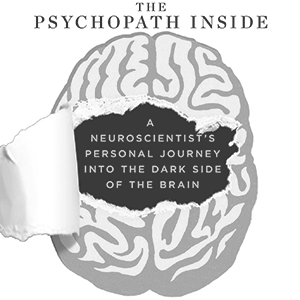
James Fallon (b. 1947) is a neuroscientist studying brain imaging as a professor of psychiatry and human behavior in the School of Medicine at the UC, Irvine. He prominently featured in the BBC production ‘Are You Good or Evil?’, where he is revealed to have discovered that he, himself, has the neurological and genetic correlates of psychopathy. Fallon stated that he is not concerned by the findings and believes that his positive experiences in childhood negated any potential genetic vulnerabilities to violence and emotional issues. He categorizes himself as a ‘pro-social psychopath.’
Fallon sits on several corporate boards and national think tanks for science, biotechnology, the arts, and the US military. He is a Subject Matter Expert in the field of ‘cognition and war’ to the Pentagon’s Joint Command. He has made significant scientific contributions in several areas, including discoveries of TGF alpha and epidermal growth factor, and he was the first experimenter to attempt large-scale stimulation of an injured brain with growth factors. He has also made contributions in the fields of schizophrenia, Parkinson’s disease, Alzheimer’s disease, and the roles of hostility and gender in nicotine and cocaine addiction.
Posted in Science |
Leave a Comment »
November 19, 2013
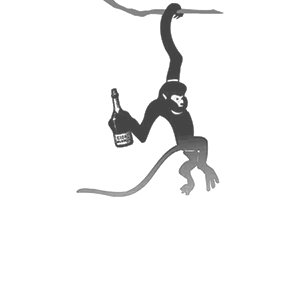
Zoopharmacognosy [zoh-uh-fahr-muh-kog-nuh-see] refers non-human animal self-medication (using plants, soils, insects and psychoactive drugs to treat and prevent disease).
Coined by Dr. Eloy Rodriguez, a biochemist and professor at Cornell University, the term came to popular attention in 2003 from Open University lecturer Cindy Engel in ‘Wild Health: How Animals Keep Themselves Well and What We Can Learn from Them.’ A well-known example of zoopharmacognosy is when dogs eat grass to induce vomiting. Some species ingest non-foods such as clay, charcoal, and even toxic plants, apparently to ward off parasitic infestation or poisoning.
read more »
Posted in Drugs, Health, Science |
Leave a Comment »
November 9, 2013

‘Surely You’re Joking, Mr. Feynman!: Adventures of a Curious Character’ is an edited collection of reminiscences by the Nobel Prize-winning physicist, Richard Feynman. The anecdotes were edited from taped conversations that Feynman had with his close friend and drumming partner Ralph Leighton. The title derives from a woman’s response at Princeton University when, after she asked the newly arrived Feynman if he wanted cream or lemon in his tea, he naively requested both. The book, released in 1985, covers a variety of instances in Feynman’s life.
Some are lighthearted in tone, such as his fascination with safe-cracking, studying various languages, participating with groups of people who share different interests (such as biology or philosophy), and ventures into art and samba music. Others cover more serious material, including his work on the Manhattan Project (during which his first wife Arline Greenbaum died of tuberculosis) and his critique of the science education system in Brazil. The section ‘Monster Minds’ describes his slightly nervous presentation of his graduate work on the Wheeler-Feynman absorber theory in front of Albert Einstein, Wolfgang Pauli, and other major figures of the time.
Posted in Language, Science |
Leave a Comment »
November 6, 2013

Convergent evolution describes the independent development of similar features in species of different lineages. Two species from unrelated lines can develop the same traits if they live in similar habitats, and have to develop solutions to the same kind of problems. Similar structures among species are either ‘homologous’ (derived from a common ancestors), or, as in the case of convergent evolution, ‘analogous’ (independent adaptations to similar conditions).
The wing is a classic example of convergent evolution in action. Flying insects, birds, and bats have all evolved the capacity of flight independently. They have ‘converged’ on this useful trait. All wings have functional similarities: they are thin and strong, with a wide surface area, and can be mechanically moved in a regular way so as to create lift. However, in each case the wings evolved separately, so their form reflects certain physical necessities.
read more »
Posted in Science |
1 Comment »
October 20, 2013
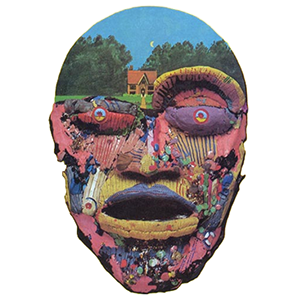
‘Nightfall‘ is a 1941 science fiction short story by Isaac Asimov about the coming of darkness to the people of a planet ordinarily illuminated at all times on all sides. It was adapted into a novel with Robert Silverberg in 1990. It was first published in an issue of ‘Astounding Science Fiction’ magazine under editor John W. Campbell. It was the 32nd story by Asimov, written while he was working in his father’s candy store and studying at Columbia University.
According to Asimov’s autobiography, Campbell asked Asimov to write the story after discussing with him a quotation from Ralph Waldo Emerson: ‘If the stars should appear one night in a thousand years, how would men believe and adore, and preserve for many generations the remembrance of the city of God!’ Campbell’s opinion to the contrary was: ‘I think men would go mad.’
read more »
Posted in Language, Science |
Leave a Comment »
October 7, 2013

Counterintuitive means contrary to what seems intuitively right or correct. A counterintuitive proposition is one that does not seem likely to be true when assessed using intuition or gut feelings. Scientifically discovered, objective truths are often called counterintuitive when intuition, emotions, and other cognitive processes outside of deductive rationality interpret them to be wrong.
However, the subjective nature of intuition limits the objectivity of what to call counterintuitive because what is counter-intuitive for one may be intuitive for another. This might occur in instances where intuition changes with knowledge. For instance, many aspects of quantum mechanics or general relativity may sound counterintuitive to a layman, while they may be intuitive to a particle physicist.
read more »
Posted in Language, Science |
Leave a Comment »
September 19, 2013


Kleptothermy [klep-toh-thur-mee] is any form of thermoregulation by which an animal shares in the metabolic thermogenesis of another animal. It may or may not be reciprocal, and occurs in both endotherms and ectotherms. Its most common form is huddling. Some species of ectotherms including lizards and snakes increase their effective mass by clustering tightly together. It is also widespread among gregarious endotherms such as bats and birds (such as the mousebird and emperor penguin) where it allows the sharing of body heat (particularly among juveniles).
In at least one case this is not reciprocal, and might be accurately described as heat-stealing. Some male Canadian red sided garter snakes engage in female mimicry by producing fake pheromones after emerging from hibernation. This causes rival males to cover them in a mistaken attempt to mate, and so transfer heat to them. This allows those males that mimic females to become more quickly revitalized after hibernation (which depends upon raising their body temperature), giving them an advantage in their own attempts to mate.
Posted in Health, Language, Science |
Leave a Comment »


 The Daily Omnivore