July 2, 2012

Connectionism [kuh-nek-shuh-niz-uhm] is the theory that the connections (such as between brain cells) mediate thought and govern behavior. It is a set of approaches in the fields of artificial intelligence and cognitive science that model mental or behavioral phenomena as the emergent processes of interconnected networks of simple units. There are many forms of connectionism, but the most common forms use neural network models (artificial brains).
The central connectionist principle is that mental phenomena can be described by interconnected networks of simple and often uniform units. The form of the connections and the units can vary from model to model. For example, units in the network could represent neurons and the connections could represent synapses. Neural networks are able to learn by themselves, unlike normal computers, which cannot do anything for which they are not programmed.
read more »
Posted in Health, Science, Technology |
Leave a Comment »
July 2, 2012
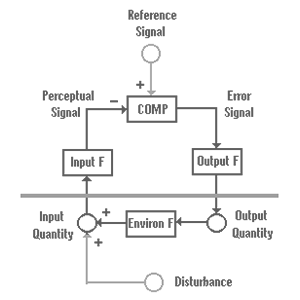
Perceptual control theory (PCT) is a model of behavior based on the principles of negative feedback (when the output of a system acts to oppose changes to the input of a system, acting to stabilize it). It differs in a number of respects from standard engineering control theory, which deals with the behavior of dynamical systems like feedback loops. From the PCT perspective, an organism controls neither its own behavior, nor external environmental variables, but rather its own perceptions.
According to the standard catch-phrase of the field, ‘behavior is the control of perception.’ While the adoption of PCT in the scientific community has not been widespread, it has been applied to a number of areas, and has led to a method of psychotherapy called the Method of Levels.
read more »
Posted in Health, Science, Technology |
Leave a Comment »
June 29, 2012

Control theory is an interdisciplinary branch of engineering and mathematics. It deals with the behavior of dynamical systems. The desired output of a system is called the reference. In a control system a controller manipulates the inputs to a system. In the control systems one or more output variables of a system need to follow a certain reference over time.
By manipulating the input, the controller wants to obtain the desired effect on the output of the system. The usual objective of a control theory is to calculate solutions for the proper corrective action from the controller that result in system stability, that is, the system will hold the set point and not oscillate around it.
read more »
Posted in Science, Technology |
Leave a Comment »
June 29, 2012


Cybernetics [sahy-ber-net-iks] is the theory of communication and control based on regulatory feedback. This is the original definition of the term; in popular culture the term refers to the study of cyborgs and robotic implants and prosthetics. Cybernetics is only applicable when the system being analyzed is involved in a closed signal loop; that is, where action by the system causes some change in its environment and that change is fed to the system via information (feedback) that enables the system to change its behavior.
A very simple model of cybernetics is that of a central heating system with four elements: a Sensor (to test the system’s environment); a Goal (the specification of the desired state of the system); Error Detection (a method for finding the difference between the present state and the goal state); and an Effector (operations the system can make to get the environment closer to the goal). A more complicated example is the Honda android ASIMO, which uses sensors and sophisticated algorithms to avoid obstacles and navigate stairs.
read more »
Posted in Health, Science, Technology |
Leave a Comment »
June 29, 2012

In control theory (a theory of sociology that examines controls on societal order), affect control theory proposes that individuals maintain affective meanings through their actions and interpretations of events. The activity of social institutions occurs through maintenance of culturally based affective meanings. Besides a denotative meaning, every concept has an affective meaning, or connotation, that varies along three dimensions: Evaluation (goodness versus badness); Potency (powerfulness versus powerlessness); and Activity (liveliness versus torpidity).
Affective meanings can be measured with semantic differentials yielding a three-number profile indicating how the concept is positioned on evaluation, potency, and activity (EPA). American psychologist Charles E. Osgood demonstrated that an elementary concept conveyed by a word or idiom has a normative affective meaning within a particular culture. A stable affective meaning derived either from personal experience or from cultural inculcation is called a sentiment, or fundamental affective meaning.
read more »
Posted in Health, Science |
Leave a Comment »
June 29, 2012
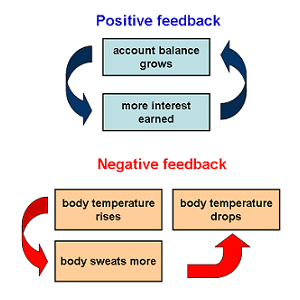
Negative feedback occurs when the output of a system acts to oppose changes to the input of a system, acting to stabilize it. The classic example is a central heating system which cuts off when a (suitably placed) temperature sensor hits a pre-set mark. The negative feedback part is the thermostat. Negative feedback is a basic concept of cybernetics (the theory of communication and control based on regulatory feedback in animals and machines).
In biology negative feedback is known as homeostasis (the property of a system, either open or closed, that regulates its internal environment and tends to maintain a stable, constant condition). Virtually all aspects of living systems involve homeostasis (e.g. blood pressure, glucose level, liver functions, cell division). The disruption of feedback loops can lead to undesirable results: in the case of blood glucose levels, if negative feedback fails, the glucose levels in the blood may begin to rise dramatically, thus resulting in diabetes.
read more »
Posted in Health, Science, Technology |
Leave a Comment »
June 29, 2012
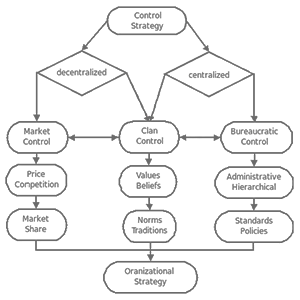
Control Theory is a theory of social order in sociology, which classifies control as centralized or decentralized or neither. Decentralized control is considered market control. Centralized control is considered bureaucratic control. Some types of control such as clan control are considered to be a mixture of both decentralized and centralized control.
Decentralized control or market control is typically maintained through factors such as price, competition, or market share. Centralized control such as bureaucratic control is typically maintained through administrative or hierarchical techniques such as creating standards or policies. Mixed control or clan control is typically maintained by keeping a set of values and beliefs or norms and traditions.
read more »
Posted in Politics, Science |
Leave a Comment »
June 27, 2012

The human microbiome is the collection of microorganisms (such as bacteria and fungi) which live on and inside humans (on the skin, in the saliva and mouth, in the eyes, and in the gut and the rest of the gastrointestinal tract). Foreign microbes outnumber human cells in the body a wide margin; humans have about 100 trillion cells, and carry ten times as many microorganisms in the intestines alone.
Some of these organisms are useful for humans. However, most have no known effect; they are just symbionts and are referred to as the normal ‘flora.’ Studies in 2009 asked whether our health is damaged if we reduce this biota (collection of organisms in an ecosystem), which is certainly the case with gut flora (which can be restored by a ‘fecal transplant.’
read more »
Posted in Health, Science |
1 Comment »
June 21, 2012
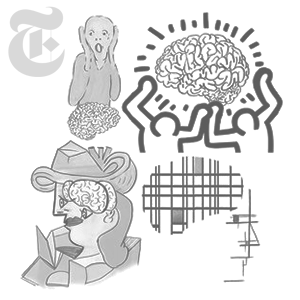
Neuroesthetics is a relatively recent sub-discipline of aesthetics (a branch of philosophy dealing with the nature of beauty), which received its formal definition in 2002 as the scientific study of the neural bases for the contemplation and creation of a work of art. With the aim of discovering general rules about aesthetics, one approach is the observation of subjects viewing art and the exploration of the mechanics of vision. It is proposed that pleasing sensations are derived from the repeated activation of neurons due to primitive visual stimuli such as horizontal and vertical lines.
The link between specific brain areas and artistic activity is of great importance to the field of neuroesthetics. This can be applied both to the ability to create and interpret art. A common approach to uncover the neural mechanisms is through the study of individuals, specifically artists, with neural disorders such as savant syndrome or some form of traumatic injury. It is argued that the sense of beauty and aesthetic judgment presupposes a change in the activation of the brain’s reward system.
read more »
Posted in Art, Science |
Leave a Comment »
June 21, 2012

In ethology (the study of animal behavior), a fixed action pattern (FAP) is an instinctive behavioral sequence that is indivisible and runs to completion. Fixed action patterns are invariant and are produced by a neural network known as the ‘innate releasing mechanism’ in response to an external sensory stimulus known as a ‘sign stimulus’ or ‘releaser’ (a signal from one individual to another).
A fixed action pattern is one of the few types of behaviors which can be said to be hard-wired and instinctive. Many mating dances, commonly carried out by birds, are examples of fixed action patterns. In these cases, the sign stimulus is typically the presence of the female. Another example of fixed action patterns is aggression towards other males during mating season in the red-bellied stickleback. A series of experiments carried out by Dutch ornithologist Niko Tinbergen showed that the aggressive behavior of the males is a FAP triggered by anything red, the sign stimulus. The threat display of male stickleback is also a fixed action pattern triggered by a stimulus.
read more »
Posted in Science |
Leave a Comment »
June 21, 2012
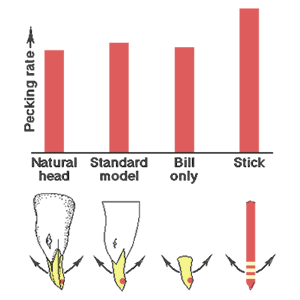
A supernormal stimulus is an exaggerated version of a stimulus to which there is an existing response tendency, or any stimulus that elicits a response more strongly than the stimulus for which it evolved. The idea is that the elicited behaviors evolved for the ‘normal’ stimuli of the ancestor’s natural environment, but the behaviors are now hijacked by the supernormal stimulus.
British art scholar Nigel Spivey demonstrates the effect in a 2005 BBC documentary series ‘How Art Made the World’ to illustrate neuroscientist Vilayanur S. Ramachandran’s speculation that this might be the reason for the grossly exaggerated body image demonstrated in works of art from the Venus of Willendorf right up to the present day.
read more »
Posted in Food, Science, Sex |
2 Comments »
June 21, 2012

Hyperreality, according to French sociologist Jean Baudrillard is, ‘A real without origin or reality.’ Italian philosopher called it, ‘The authentic fake.’ More recently, Hungarian filmmaker Pater Sparrow forwarded the term ‘virtual irreality.’ The term is used in semiotics (the study of symbols) and postmodern philosophy to describe an inability of consciousness to distinguish reality from a simulation of reality, especially in technologically advanced post-modern societies. Hyperreality is a way of characterizing what our consciousness defines as ‘real’ in a world where a multitude of media can radically shape and filter an original event or experience. Most aspects of the concept can be thought of as ‘reality by proxy.’
Baudrillard in particular suggests that the world we live in has been replaced by a copy world, where we seek simulated stimuli and nothing more. He borrows, from Jorge Luis Borges’ ‘On Exactitude in Science’ (which borrowed from Lewis Carroll), the example of a society whose cartographers create a map so detailed that it covers the very things it was designed to represent. When the empire declines, the map fades into the landscape and there is neither the representation nor the real remaining – just the hyperreal. Baudrillard’s idea of hyperreality was heavily influenced by phenomenology, semiotics, and Marshall McLuhan.
read more »
Posted in Money, Philosophy, Science |
Leave a Comment »


 The Daily Omnivore