July 13, 2012
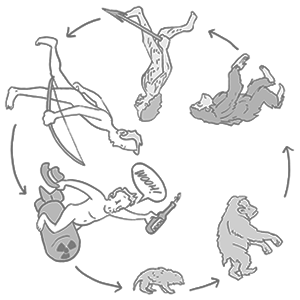
Fermi’s paradox asks why, given the age and size of the universe, we have not detected any other alien civilizations. Unless the Earth is very atypical, extraterrestrial life should be common. In an informal discussion in 1950, Italian American physicist Enrico Fermi questioned why, if a multitude of advanced extraterrestrial civilizations exists in the Milky Way galaxy, evidence such as spacecraft or probes is not seen.
Another common name for the phenomenon is silentium universi (‘the silence of the universe’). There have been attempts to resolve the paradox by locating evidence of extraterrestrial civilizations (e.g. SETI), along with proposals that such life could exist without human knowledge. Counterarguments suggest that intelligent extraterrestrial life does not exist or occurs so rarely or briefly that humans will never make contact with it.
read more »
Posted in Philosophy, Science, Technology |
3 Comments »
July 11, 2012

Mosquito control manages the population of mosquitoes to reduce their damage to human health, economies, and enjoyment. Mosquito control is a vital public-health practice throughout the world and especially in the tropics because mosquitoes spread many diseases, such as malaria. Mosquito-control operations are targeted against three different problems:
Nuisance mosquitoes (bother people around homes or in parks and recreational areas); Economically important mosquitoes (reduce real estate values, adversely affect tourism and related business interests, or negatively impact livestock or poultry production); and Public health (focusing on mosquitoes as vectors, or transmitters, of infectious disease).
read more »
Posted in Health, Money, Science |
Leave a Comment »
July 10, 2012

Time perception is a field of study within psychology and neuroscience; it refers to the sense of time, which differs from other senses since time cannot be directly perceived but must be reconstructed by the brain. Humans can perceive relatively short periods of time, in the order of milliseconds, and also durations that are a significant fraction of a lifetime. Human perception of duration is subjective and variable.
Some researchers attempt to categorize people by how they differ in their perception of time. Pioneering work, emphasizing species-specific differences, was done by Estonian naturalist Karl Ernst von Baer. Experimental work began under the influence of the psycho-physical notions of Gustav Theodor Fechner with studies of the relationship between perceived and measured time. Work with animals conducted by German biologist Jakob von Uexküll included measurement of length of momentum in snails.
read more »
Posted in Health, Science |
Leave a Comment »
July 3, 2012

A derecho [deh-rey-cho] is a widespread and damaging group of severe thunderstorms which often represent with rapid forward speeds. They have a distinct appearance on radars, known as bow echos (after an archer’s bow). The common definition of the word is: a thunderstorm complex that produces a damaging wind swath of at least 240 miles, featuring a concentrated area of convectively induced wind gusts exceeding 58 mph. Some studies add further criteria, such as a requirement that no more than two or three hours separate any two successive wind reports.
Unlike other thunderstorms, which typically can be heard in the distance when approaching, a derecho seems to strike suddenly. Within minutes, extremely high winds can arise, strong enough to knock over highway signs and topple large trees. These winds are accompanied by spraying rain and frequent lightning from all directions. It is dangerous to drive under these conditions, especially at night, because of blowing debris and obstructed roadways. A derecho moves through quickly, but can do much damage in a short period of time.
read more »
Posted in Death, Science, World |
Leave a Comment »
July 2, 2012

Connectionism [kuh-nek-shuh-niz-uhm] is the theory that the connections (such as between brain cells) mediate thought and govern behavior. It is a set of approaches in the fields of artificial intelligence and cognitive science that model mental or behavioral phenomena as the emergent processes of interconnected networks of simple units. There are many forms of connectionism, but the most common forms use neural network models (artificial brains).
The central connectionist principle is that mental phenomena can be described by interconnected networks of simple and often uniform units. The form of the connections and the units can vary from model to model. For example, units in the network could represent neurons and the connections could represent synapses. Neural networks are able to learn by themselves, unlike normal computers, which cannot do anything for which they are not programmed.
read more »
Posted in Health, Science, Technology |
Leave a Comment »
July 2, 2012
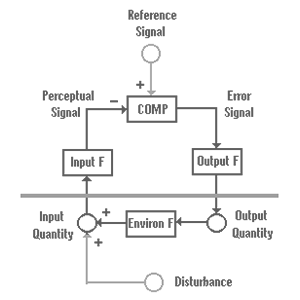
Perceptual control theory (PCT) is a model of behavior based on the principles of negative feedback (when the output of a system acts to oppose changes to the input of a system, acting to stabilize it). It differs in a number of respects from standard engineering control theory, which deals with the behavior of dynamical systems like feedback loops. From the PCT perspective, an organism controls neither its own behavior, nor external environmental variables, but rather its own perceptions.
According to the standard catch-phrase of the field, ‘behavior is the control of perception.’ While the adoption of PCT in the scientific community has not been widespread, it has been applied to a number of areas, and has led to a method of psychotherapy called the Method of Levels.
read more »
Posted in Health, Science, Technology |
Leave a Comment »
June 29, 2012

Control theory is an interdisciplinary branch of engineering and mathematics. It deals with the behavior of dynamical systems. The desired output of a system is called the reference. In a control system a controller manipulates the inputs to a system. In the control systems one or more output variables of a system need to follow a certain reference over time.
By manipulating the input, the controller wants to obtain the desired effect on the output of the system. The usual objective of a control theory is to calculate solutions for the proper corrective action from the controller that result in system stability, that is, the system will hold the set point and not oscillate around it.
read more »
Posted in Science, Technology |
Leave a Comment »
June 29, 2012


Cybernetics [sahy-ber-net-iks] is the theory of communication and control based on regulatory feedback. This is the original definition of the term; in popular culture the term refers to the study of cyborgs and robotic implants and prosthetics. Cybernetics is only applicable when the system being analyzed is involved in a closed signal loop; that is, where action by the system causes some change in its environment and that change is fed to the system via information (feedback) that enables the system to change its behavior.
A very simple model of cybernetics is that of a central heating system with four elements: a Sensor (to test the system’s environment); a Goal (the specification of the desired state of the system); Error Detection (a method for finding the difference between the present state and the goal state); and an Effector (operations the system can make to get the environment closer to the goal). A more complicated example is the Honda android ASIMO, which uses sensors and sophisticated algorithms to avoid obstacles and navigate stairs.
read more »
Posted in Health, Science, Technology |
Leave a Comment »
June 29, 2012

In control theory (a theory of sociology that examines controls on societal order), affect control theory proposes that individuals maintain affective meanings through their actions and interpretations of events. The activity of social institutions occurs through maintenance of culturally based affective meanings. Besides a denotative meaning, every concept has an affective meaning, or connotation, that varies along three dimensions: Evaluation (goodness versus badness); Potency (powerfulness versus powerlessness); and Activity (liveliness versus torpidity).
Affective meanings can be measured with semantic differentials yielding a three-number profile indicating how the concept is positioned on evaluation, potency, and activity (EPA). American psychologist Charles E. Osgood demonstrated that an elementary concept conveyed by a word or idiom has a normative affective meaning within a particular culture. A stable affective meaning derived either from personal experience or from cultural inculcation is called a sentiment, or fundamental affective meaning.
read more »
Posted in Health, Science |
Leave a Comment »
June 29, 2012
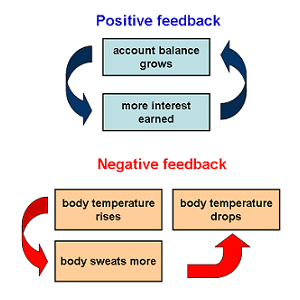
Negative feedback occurs when the output of a system acts to oppose changes to the input of a system, acting to stabilize it. The classic example is a central heating system which cuts off when a (suitably placed) temperature sensor hits a pre-set mark. The negative feedback part is the thermostat. Negative feedback is a basic concept of cybernetics (the theory of communication and control based on regulatory feedback in animals and machines).
In biology negative feedback is known as homeostasis (the property of a system, either open or closed, that regulates its internal environment and tends to maintain a stable, constant condition). Virtually all aspects of living systems involve homeostasis (e.g. blood pressure, glucose level, liver functions, cell division). The disruption of feedback loops can lead to undesirable results: in the case of blood glucose levels, if negative feedback fails, the glucose levels in the blood may begin to rise dramatically, thus resulting in diabetes.
read more »
Posted in Health, Science, Technology |
Leave a Comment »
June 29, 2012
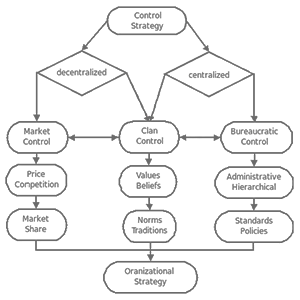
Control Theory is a theory of social order in sociology, which classifies control as centralized or decentralized or neither. Decentralized control is considered market control. Centralized control is considered bureaucratic control. Some types of control such as clan control are considered to be a mixture of both decentralized and centralized control.
Decentralized control or market control is typically maintained through factors such as price, competition, or market share. Centralized control such as bureaucratic control is typically maintained through administrative or hierarchical techniques such as creating standards or policies. Mixed control or clan control is typically maintained by keeping a set of values and beliefs or norms and traditions.
read more »
Posted in Politics, Science |
Leave a Comment »
June 27, 2012

The human microbiome is the collection of microorganisms (such as bacteria and fungi) which live on and inside humans (on the skin, in the saliva and mouth, in the eyes, and in the gut and the rest of the gastrointestinal tract). Foreign microbes outnumber human cells in the body a wide margin; humans have about 100 trillion cells, and carry ten times as many microorganisms in the intestines alone.
Some of these organisms are useful for humans. However, most have no known effect; they are just symbionts and are referred to as the normal ‘flora.’ Studies in 2009 asked whether our health is damaged if we reduce this biota (collection of organisms in an ecosystem), which is certainly the case with gut flora (which can be restored by a ‘fecal transplant.’
read more »
Posted in Health, Science |
1 Comment »



