April 1, 2012
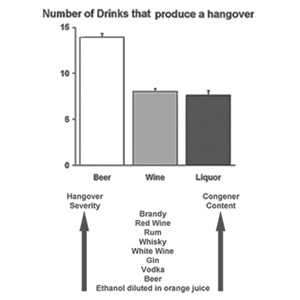
Congener [kon-juh-ner] (from Latin for ‘of the same race or kind’) has several different meanings depending on the field in which it is used. Colloquially, it is used to mean a person or thing like another, in character or action. In biology, congeners are organisms within the same genus. In chemistry, congeners are related chemicals, e.g., elements in the same group of the periodic table, or derivatives thereof. In genetics, congenic organisms are those with very similar genomes, except for a small fraction. For example, recombinant congenic mice strains are produced in laboratories as a tool to study genetic disease.
In the alcoholic beverages industry, congeners, also known as fusel oils, are substances produced during fermentation. These substances include small amounts of chemicals such as acetone, acetaldehyde, and other higher alcohols, esters, and aldehydes (e.g. propanol, glycols, ethyl acetate). Congeners are responsible for most of the taste and aroma of distilled alcoholic beverages, and contribute to the taste of non-distilled drinks. It has been suggested that these substances contribute to the symptoms of a hangover.
Posted in Drugs, Health, Science |
Leave a Comment »
April 1, 2012

A hangover is the experience of various unpleasant physiological effects following heavy consumption of alcoholic beverages. An alcohol hangover is associated with a variety of symptoms that may include dehydration, fatigue, headache, body aches, vomiting, diarrhea, flatulence, weakness, elevated body temperature and heart rate, hypersalivation, difficulty concentrating, sweating, anxiety, dysphoria, irritability, sensitivity to light and noise, erratic motor functions (including tremor), trouble sleeping, severe hunger, halitosis, and lack of depth perception. Many people will also be repulsed by the thought, taste or smell of alcohol during a hangover.
While a hangover can be experienced at any time, generally speaking it is experienced the morning after a night of heavy drinking. Hypoglycemia, dehydration, acetaldehyde intoxication, and glutamine rebound are all theorized causes of hangover symptoms. Hangover symptoms may persist for several days after alcohol was last consumed. Approximately 25-30% of drinkers may be resistant to hangover symptoms.
read more »
Posted in Drugs, Health, Science |
Leave a Comment »
March 30, 2012

Communal reinforcement is a social phenomenon in which a concept or idea is repeatedly asserted in a community, regardless of whether sufficient empirical evidence has been presented to support it. Over time, the concept or idea is reinforced to become a strong belief in many people’s minds, and may be regarded by the members of the community as fact. Often, the concept or idea may be further reinforced by publications in the mass media, books, or other means of communication. The phrase ‘millions of people can’t all be wrong’ is indicative of the common tendency to accept a communally reinforced idea without question, which often aids in the widespread acceptance of urban legends, myths, and rumors.
Communal reinforcement works both for true and false concepts or ideas, making the communal reinforcement of an idea independent of its truth value. Therefore, the statement that many persons in a given communities share in a common belief is not indicative of it being valid or false information’s. An idea can be accepted and spread throughout a community regardless of the validity of the claim.
read more »
Posted in Health, Politics, Science |
Leave a Comment »
March 23, 2012
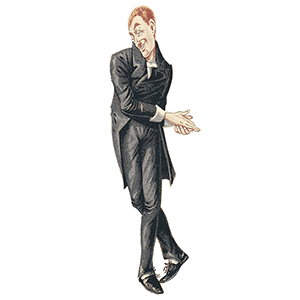
Confirmation bias is a tendency of people to favor information that confirms their beliefs or hypotheses. People display this bias when they gather or remember information selectively, or when they interpret it in a biased way. The effect is stronger for emotionally charged issues and for deeply entrenched beliefs. For example, in reading about gun control, people usually prefer sources that affirm their existing attitudes. They also tend to interpret ambiguous evidence as supporting their existing position.
Biased search, interpretation and memory have been invoked to explain attitude polarization (when a disagreement becomes more extreme even though the different parties are exposed to the same evidence), belief perseverance (when beliefs persist after the evidence for them is shown to be false), the irrational primacy effect (a greater reliance on information encountered early in a series), and illusory correlation (when people falsely perceive an association between two events or situations).
read more »
Posted in Money, Politics, Science |
1 Comment »
March 23, 2012

The Semmelweis reflex is a metaphor for the reflex-like tendency to reject new evidence or new knowledge because it contradicts established norms, beliefs or paradigms.
The term originated from Ignaz Semmelweis, who discovered that childbed fever mortality rates could be reduced ten-fold if doctors would wash their hands (we would now say disinfect) with a chlorine solution between having contact with infected patients and non-infected patients. His hand-washing suggestions were rejected by his contemporaries.
Posted in Health, Science |
2 Comments »
March 23, 2012

Selective Perception is a broad term to identify behavior where people tend to ‘see things’ based on their particular frame of reference. Selective perception may refer to any number of cognitive biases in psychology related to the way expectations affect perception.
For instance, several studies have shown that students who were told they were consuming alcoholic beverages (which in fact were non-alcoholic) perceived themselves as being ‘drunk,’ exhibited fewer physiological symptoms of social stress, and drove a simulated car similarly to other subjects who had actually consumed alcohol. The result is somewhat similar to the placebo effect.
read more »
Posted in Humor, Politics, Science |
Leave a Comment »
March 23, 2012

A hot-cold empathy gap is a cognitive bias in which a person underestimates the influences of visceral drives, and instead attributes behavior primarily to other, nonvisceral factors. The term was coined by psychologist and behavioral economist George Loewenstein. He argued that human understanding is ‘state dependent.’ For example, when one is angry, it is difficult to understand what it is like for one to be happy, and vice versa; when one is blindly in love with someone, it is difficult to understand what it is like for one not to be. The implications of this were explored in the realm of sexual decision-making, where young men in an unaroused ‘cold state’ fail to predict that when they are in an aroused ‘hot state’ they will be more likely to make risky sexual decisions, such as not using a condom.
The empathy gap has also been an important idea in research about the causes of bullying. In one study examining a central theory that, ‘only by identifying with a victim’s social suffering can one understand its devastating effects,’ researchers created five experiments. The first four examined the degree to which participants in a game who were not excluded could estimate the social pain of those participants who were excluded. The findings were that those were not socially excluded consistently underestimated the pain felt by those who were excluded.
Posted in Health, Science |
Leave a Comment »
March 23, 2012

The illusion of transparency is a tendency for people to overestimate the degree to which their personal mental state is known by others. Another manifestation of the illusion is a tendency for people to overestimate how well they understand others’ personal mental states. This cognitive bias is similar to the illusion of asymmetric insight.
Psychologist Elizabeth Newton created a simple test that she regarded as an illustration of the phenomenon. She would tap out a well-known song, such as ‘Happy Birthday’ or the national anthem, with her finger and have the test subject guess the song. People usually estimate that the song will be guessed correctly in about 50 percent of the tests, but only 3 percent pick the correct song. The tapper can hear every note and the lyrics in his or her head; however, the observer, with no access to what the tapper is thinking, only hears a rhythmic tapping.
read more »
Posted in Health, Science |
Leave a Comment »
March 23, 2012

The Thatcher effect is a phenomenon characterized by difficulty detecting local feature changes in an upside down face, despite identical changes being obvious in an upright face. It is named after British former Prime Minister Margaret Thatcher on whose photograph the effect has been most famously demonstrated by Peter Thompson of the University of York (UK) in 1980. The effect is thought to be due to psychological processes involved in face perception which are tuned especially to upright faces. Faces seem unique despite the fact that they are very similar. It has been hypothesized that we develop processes to differentiate between faces that rely as much on the configuration (the structural relationship between individual features on the face) as the details of individual face features, such as the eyes, nose and mouth. When a face is upside down, the configural processing cannot take place, and so minor differences are more difficult to detect.
This effect is not present in people who have some forms of prosopagnosia, a disorder where face processing is impaired, usually acquired after brain injury or illness. This suggests that their specific brain injury may damage the process that analyses facial structures. Rhesus monkeys also show the Thatcher effect, raising the possibility that some brain mechanisms involved in processing faces may have evolved in a common ancestor 30+ million years ago. The basic principles of the Thatcher Effect in face perception have also been applied to biological motion. The local inversion of individual dots is hard, and in some cases, nearly impossible to recognize when the entire figure is inverted.
Posted in Health, Science |
Leave a Comment »
March 23, 2012

Perceptual adaptation is the means by which the brain accounts for the differences that the subject may witness, particularly alternations in the visual field. For example, if an individual’s visual field is altered forty five degrees left, the brain accounts for the difference allowing the individual to function normally. The brain plays a crucial role in the inner workings of vision. The world that one perceives is processed via the brain. Images sensed through the eyes is relayed to the visual cortex of the brain, and if vision is altered slightly, the brain accounts for the difference and will allow one to perceive the world as ‘normal.’ Over time, the brain processes even acute difference as normal.
Psychologist George M. Stratton was intrigued by the idea of perceptual adaptation. Because the retina receives images upside down, he was intrigued to see what happens when the brain receives an image that is right side up. Stratton conducted experiments in the 1890s in which he wore a reversing telescope for 21½ hours over three days. To his disappointment, his vision was unchanged. After removing the glasses, ‘normal vision was restored instantaneously and without any disturbance in the natural appearance or position of objects.’ Determined to find results, Stratton wore the telescoping glasses for eight days straight. By day four, his vision was upright (not inverted). However on day five, images appeared upright until he concentrated on them; then they became inverted again.
Posted in Health, Science, Technology |
Leave a Comment »
March 16, 2012
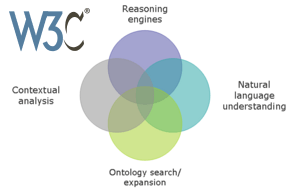

Semantic search seeks to improve search accuracy by understanding searcher intent and the contextual meaning of terms as they appear in the searchable dataspace, whether on the Web or within a closed system, to generate more relevant results. There are two major forms of search: Navigational and Research. In navigational search, the user is using the search engine as a navigation tool to navigate to a particular intended document.
Semantic Search is not applicable to navigational searches. In Research Search, the user provides the search engine with a phrase which is intended to denote an object about which the user is trying to gather/research information. There is no particular document which the user knows about that he is trying to get to. Rather, the user is trying to locate a number of documents which together will give him the information he is trying to find. Semantic Search lends itself well here.
read more »
Posted in Language, Science, Technology |
Leave a Comment »
March 14, 2012

In mathematics, the Menger [meng-er] sponge is a fractal curve. It is a universal curve, in that it has topological dimension one, and any other curve (more precisely: any compact metric space of topological dimension 1) is homeomorphic to some subset of it.
It is sometimes called the Menger-Sierpinski sponge or the Sierpinski sponge. It is a three-dimensional extension of the Cantor set and Sierpinski carpet. It was first described by Karl Menger (1926) while exploring the concept of topological dimension. The Menger sponge simultaneously exhibits an infinite surface area and encloses zero volume.
Posted in Science |
1 Comment »