March 5, 2012

PJ B Hancock and C Foster investigate the double face illusion, where the eyes and mouth are duplicated. On an identification task for briefly (80ms) presented faces, there are strong individual differences: doubling has little effect for the majority, but inhibits recognition for about a quarter of participants. A second experiment shows that some participants are unable to detect face doubling at this speed, while others are 100% correct at 50 ms.
Unlike the Thatcher illusion, a doubled face is still obvious when inverted, but it is less unsettling to look at and a third study found that participants were about 35 ms faster to decide that a face has been doubled when it is inverted. A final experiment tested visual search for normal and doubled faces; neither pops out from the other and the search time per item is again about 35 ms longer for double faces.
Posted in Science |
Leave a Comment »
March 4, 2012
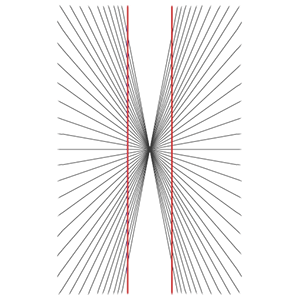
Researcher Mark Changizi of Rensselaer Polytechnic Institute in New York has a more imaginative take on optical illusions, saying that they are due to a neural lag which most humans experience while awake. When light hits the retina, about one-tenth of a second goes by before the brain translates the signal into a visual perception of the world. Scientists have known of the lag, yet they have debated how humans compensate, with some proposing that our motor system somehow modifies our movements to offset the delay.
Changizi asserts that the human visual system has evolved to compensate for neural delays by generating images of what will occur one-tenth of a second into the future. This foresight enables humans to react to events in the present, enabling humans to perform reflexive acts like catching a fly ball and to maneuver smoothly through a crowd. Illusions occur when our brains attempt to perceive the future, and those perceptions don’t match reality.
read more »
Posted in Science |
Leave a Comment »
March 1, 2012

A subtractive color model explains the mixing of paints, dyes, inks, and natural colorants to create a full range of colors, each caused by subtracting (that is, absorbing) some wavelengths of light and reflecting the others. The color that a surface displays depends on which colors of the electromagnetic spectrum are reflected by it and therefore made visible.
Subtractive color systems start with light, presumably white light. Next, colored inks, paints, or filters between the viewer and the light source subtract wavelengths from the light, giving it color. If the incident light is other than white, our visual mechanisms are able to compensate well, but not perfectly, often giving a flawed impression of the ‘true’ color of the surface. Conversely, additive color systems start without light (black). Light sources of various wavelengths combine to make a color. Often, three primary colors are combined to stimulate humans’ trichromatic color vision, sensed by the three types of cone cells in the eye, giving an apparently full range.
Posted in Science |
Leave a Comment »
March 1, 2012
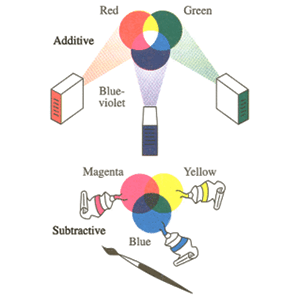
Additive color describes the situation where color is created by mixing the visible light emitted from differently colored light sources. This is in contrast to subtractive colors where light is removed from various part of the visible spectrum to create colors. Computer monitors and televisions are the most common form of additive light, while subtractive color is used in paints and pigments and color filters. The additive reproduction process usually uses red, green and blue light to produce the other colors. Combining one of these additive primary colors with another in equal amounts produces the additive secondary colors cyan, magenta, and yellow. The colored pixels in displays do not overlap on the screen, but when viewed from a sufficient distance, the light from the pixels diffuses to overlap on the retina.
Results obtained when mixing additive colors are often counterintuitive for people accustomed to the more everyday subtractive color system of pigments, dyes, inks and other substances which present color to the eye by reflection rather than emission. For example, in subtractive color systems green is a combination of yellow and blue; in additive color, red + green = yellow and no simple combination will yield green. Additive color is a result of the way the eye detects color, and is not a property of light. There is a vast difference between yellow light, with a wavelength of approximately 580 nm, and a mixture of red and green light. However, both stimulate our eyes in a similar manner, so we do not detect that difference.
Posted in Science |
Leave a Comment »
March 1, 2012

In academic publishing, the least publishable unit (LPU), colloquially ‘publon’ – the smallest measurable quantum of publication, is the minimum amount of information that can generate a publication in a peer-reviewed journal. The term is often used as a joking, ironic, or sometimes derogatory reference to the strategy of pursuing the greatest quantity of publications at the expense of their quality. Publication of the results of research is an essential part of science. The number of publications is sometimes used to assess the work of a scientist and as a basis for distributing research funds. In order to achieve a high rank in such an assessment, there is a trend to split up research results into smaller parts that are published separately, thus increasing the number of publications.
‘Salami publication’ or ‘salami slicing’ is a variant of the smallest-publishable-unit strategy. In salami slicing, data gathered by one research project is separately reported (wholly or in part) in multiple end publications. Salami slicing, apparently named by analogy with the thin slices made from larger pieces of salami meat, is generally considered questionable when not explicitly labeled, as it may lead to the same data being counted multiple times as apparently independent results in aggregate studies.
Posted in Education, Humor, Language, Science |
Leave a Comment »
March 1, 2012

An isometric illusion (also called an ambiguous figure or inside/outside illusion) is a type of optical illusion, specifically one due to multistable perception.
In general, any shape built entirely of same-length (i.e., isometric) lines that does not clearly indicate relative direction between its components will evoke such a perceptual ‘flip-flopping.’ The Necker Cube is a famous example of an isometric illusion.
Posted in Science |
Leave a Comment »
February 28, 2012

Cognitive inertia refers the tendency for beliefs or sets of beliefs to endure once formed. In particular, it describes the human inclination to rely on familiar assumptions and exhibit a reluctance and/or inability to revise them, even when supporting evidence no longer exists. The term is employed in the managerial and organizational sciences to describe the commonly observed phenomenon whereby managers fail to update and revise their understanding of a situation when that situation changes, a phenomenon that acts as a psychological barrier to organizational change.
However, not all instances of cognitive inertia result in negative outcomes. It is a key component of love, trust, and friendship. For instance, if evidence showed that a friend was dishonest, the cognitive inertia of the friendship would demand much more evidence to form an opinion than that required to form an opinion of a stranger.
Posted in Money, Science |
1 Comment »
February 28, 2012
Effort Justification refers to the tendency to attribute greater value to outcomes that one put effort into achieving. It is an idea in social psychology stemming from psychologist Leon Festinger’s theory of ‘Cognitive Dissonance,’ which explains changes in people’s attitudes or beliefs as the result of an attempt to reduce a dissonance (discrepancy) between contradicting ideas or cognitions. In the case of effort justification, there is a dissonance between the amount of effort exerted into achieving a goal or completing a task (high effort – high ‘cost’) and the subjective reward for that effort (lower than was expected for such an effort). By adjusting and increasing one’s attitude or subjective value of the goal, this dissonance is resolved.
This theory is clearly implicated in the effect of rites of passage and hazing rituals on group solidarity and loyalty. The hazing rituals, prevalent in military units, sports teams and Academic fraternities and sororities, often include demanding and/or humiliating tasks which lead (according to dissonance theory) the new member to increase the subjective value of the group. This contributes to his/her loyalty and to the solidarity of the entire group.
Posted in Health, Science |
Leave a Comment »
February 27, 2012
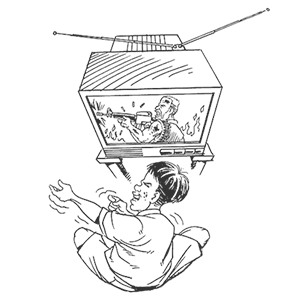
Cultivation theory is a social theory which examines the long-term effects of television. Developed by George Gerbner and Larry Gross of the University of Pennsylvania. They were ‘concerned with the effects of television programming (particularly violent programming) on the attitudes and behaviors of the American public.’
Gerbner asserts that the overall concern about the effects of television on audiences stemmed from the unprecedented centrality of television in American culture. He posited that television as a mass medium of communication had formed into a common symbolic environment that bound diverse communities together, socializing people in to standardized roles and behaviors. He compared the power of television to the power of religion, saying that television was to modern society what religion once was in earlier times.
read more »
Posted in Health, Science, Technology |
1 Comment »
February 27, 2012
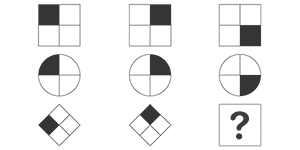
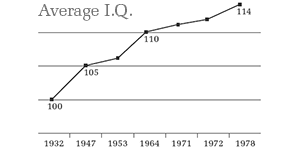
The Flynn effect is the name given to the observed rise in average IQ scores since the beginning of measurements. The rise in most industrialized countries is about three IQ points per decade. In 1984, based political scientist James R. Flynn described the phenomenon, which is named after him.
The rise is mostly due to the test scores of those who scored an IQ below 100. The number of those who are classified as mentally handicapped diminishes from year to year. In contrast, the test scores of those who scored more than 100, does not seem to be affected.
read more »
Posted in Education, Science, World |
Leave a Comment »
February 26, 2012


The wisdom of the crowd is the process of taking into account the collective opinion of a group of individuals rather than a single expert to answer a question. A large group’s aggregated answers to questions involving quantity estimation, general world knowledge, and spatial reasoning has generally been found to be as good as, and often better than, the answer given by any of the individuals within the group.
An intuitive and often-cited explanation for this phenomenon is that there is idiosyncratic noise associated with each individual judgment, and taking the average over a large number of responses will go some way toward canceling the effect of this noise. This process, while not new to the information age, has been pushed into the mainstream spotlight by social information sites such as Wikipedia and Yahoo! Answers, and other web resources that rely on human opinion. In the realm of justice, trial by jury can be understood as wisdom of the crowd, especially when compared to the alternative, trial by a judge, the single expert.
read more »
Posted in Education, Science |
Leave a Comment »
February 26, 2012


The Wisdom of Crowds is a 2004 book written by American journalist James Surowiecki about the aggregation of information in groups, resulting in decisions that, he argues, are often better than could have been made by any single member of the group. The book presents numerous case studies and anecdotes to illustrate its argument, and touches on several fields, primarily economics and psychology.
The opening anecdote relates Francis Galton’s surprise that the crowd at a county fair accurately guessed the weight of an ox when their individual guesses were averaged (the average was closer to the ox’s true butchered weight than the estimates of most crowd members, and also closer than any of the separate estimates made by cattle experts). The book relates to diverse collections of independently-deciding individuals, rather than crowd psychology as traditionally understood, however its title is an allusion to Charles Mackay’s ‘Extraordinary Popular Delusions and the Madness of Crowds,’ published in 1841 (which chronicled economic bubbles, witch-hunts, crusades, and similar phenomena).
read more »
Posted in Money, Science, War |
Leave a Comment »


 The Daily Omnivore