January 30, 2012

A maven [mey-vuhn] is a trusted expert in a particular field, who seeks to pass knowledge on to others. The word maven comes from Hebrew, via Yiddish, and means one who understands, based on an accumulation of knowledge. The Hebrew word ‘mevin’ (‘one who understands’) relates to the word ‘binah,’ which denotes understanding or wisdom in general.
It was first recorded in English around 1952, and popularized in the United States in the 1960s by a series of commercials created by Martin Solow for Vita Herring, featuring The Beloved Herring Maven. In network theory and sociology, a maven is someone who has a disproportionate influence on other members of the network. The role of mavens in propagating knowledge and preferences has been established in various domains, from politics to social trends.
Posted in Language, Money, Science |
Leave a Comment »
January 30, 2012
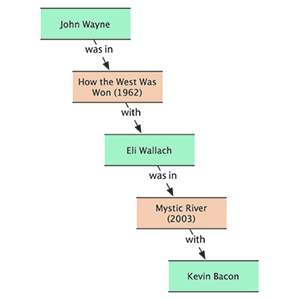
Connectors are said by author Malcolm Gladwell to be people in a community who know large numbers of people and who are in the habit of making introductions. A connector is essentially the social equivalent of a computer network hub. Connectors usually know people across an array of social, cultural, professional, and economic circles, and make a habit of introducing people who work or live in different circles. Although connectors are rare—only one in several thousand people might be thought of as a true connector they are, like mavens (experts) and salesmen, very important in the healthy function of civil society and business. Connectors are also important in trendsetting.
Malcolm Gladwell popularized the term connector in his 2000 book ‘The Tipping Point.’ Paul Revere, Roger Horchow, Ahmed Ibrahim, and Lois Weisberg are notable connectors. Gladwell also suggests that mavens may act most effectively when in collaboration with connectors – i.e., those people who have a wide network of casual acquaintances by whom they are trusted, often a network that crosses many social boundaries and groups. Connectors can thus easily and widely distribute the advice or insights of a maven.
Posted in Language, Science |
Leave a Comment »
January 30, 2012

Six degrees of separation refers to the idea that everyone is on average approximately six steps away, by way of introduction, from any other person on Earth, so that a chain of, ‘a friend of a friend’ statements can be made, on average, to connect any two people in six steps or fewer.
It was originally set out by Hungarian author Frigyes Karinthy and popularized by a play written by John Guare.
read more »
Posted in Art, Science, Technology, World |
Leave a Comment »
January 26, 2012

Dr. K. Anders Ericsson is a Swedish psychologist and Professor of Psychology at Florida State University who is widely recognized as one of the world’s leading theoretical and experimental researchers on expertise. He is the co-editor of ‘The Cambridge Handbook of Expertise and Expert Performance,’ a volume released in 2006.
Dr. Ericsson’s research with Herbert Simon on verbal reports of thinking is summarized in a book ‘Protocol Analysis: Verbal Reports as Data,’ which was revised in 1993. With Bill Chase he developed the Theory of Skilled Memory based on detailed analyses of acquired exceptional memory performance. Currently he studies the cognitive structure of expert performance in domains such as music, chess and sports, and how expert performers acquire their superior performance by extended deliberate practice.
Posted in Language, Science |
Leave a Comment »
January 25, 2012

Culturomics is a form of computational lexicology that studies human behavior and cultural trends through the analysis of digitized texts. Researchers data mine large digital archives to investigate cultural phenomena reflected in language and word usage. The term is an American neologism first described in a 2010 ‘Science’ article called ‘Quantitative Analysis of Culture Using Millions of Digitized Books,’ co-authored by Harvard researchers Jean-Baptiste Michel and Erez Lieberman Aiden. Michel and Aiden helped create the Google Labs project Google Ngram Viewer which uses n-gram’s to analyze the Google Book digital library for cultural patterns in language use over time.
In another study called ‘Culturnomics 2.0,’ Kalev H. Leetaru examined news archives including print and broadcast media (television and radio transcripts) for words that imparted tone or ‘mood’ as well as geographic data. The research was able to retroactively predict the 2011 Arab Spring and successfully estimate the final location of Osama Bin Laden to within 124 miles.
Posted in Language, Science, Technology |
Leave a Comment »
January 19, 2012

Carbon chauvinism is a neologism meant to disparage the assumption that the chemical processes of hypothetical extraterrestrial life must be constructed primarily from carbon (organic compounds), as carbon’s chemical and thermodynamic properties render it far superior to all other elements.
The term was used as early as 1973, when scientist Carl Sagan described it and other human chauvinisms that limit imagination of possible extraterrestrial life. It suggests that human beings, as carbon-based life forms who have never encountered any life that has evolved outside the Earth’s environment, may find it difficult to envision radically different biochemistries.
read more »
Posted in Science |
Leave a Comment »
January 19, 2012

Artificial life (alife) is a field of study and an associated art form which examine systems related to life, its processes, and its evolution through simulations using computer models, robotics, and biochemistry. The discipline was named by Christopher Langton, an American computer scientist, in 1986.
There are three main kinds of alife, named for their approaches: soft, from software; hard, from hardware; and wet, from biochemistry. Artificial life imitates traditional biology by trying to recreate biological phenomena, such as sexual reproduction and response to stimuli. The term ‘artificial life’ is often used to specifically refer to soft alife.
read more »
Posted in Games, Science, Technology |
Leave a Comment »
January 19, 2012

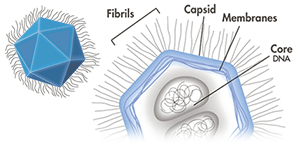
Non-cellular life is life that exists without a cellular structure. This term presumes the phylogenetic (evolutionary relatedness) scientific classification of viruses as lifeforms. Hypothesized artificial life, self-replicating machines, and most simple molecules capable of self-replication, such as crystals, are not usually considered living. Some biologists refer to wholly syncytial (containing multiple cell nuclei) organisms (such as many fungi) as ‘acellular’ because their bodies contain multiple nuclei which are not separated by cell walls, but they do contain cells. Viral self-assembly has implications for the study of the origin of life, as it lends further credence to the hypothesis that life could have started as self-assembling organic molecules.
The issue of life without cellular structure came again to the fore with the 2003 discovery that the large and complex Mimivirus can make some proteins. This discovery suggests that some viruses may have evolved from earlier forms that could produce proteins independent of a host cell. If so, there may at one time have been a viral domain of life. It is not clear that all small viruses have originated from more complex viruses by means of genome size reduction. A viral domain of life may only be relevant to certain large viruses such as nucleocytoplasmic large DNA viruses like the Mimivirus.
Posted in Health, Science |
Leave a Comment »
January 17, 2012
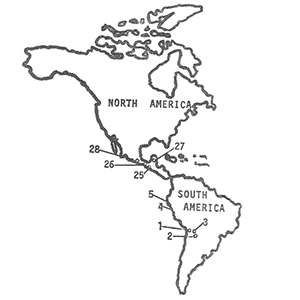
The word ‘bolide‘ [boh-lahyd] comes from the Greek ‘bolis,’ which can mean ‘missile’ or ‘to flash.’ The International Astronomical Union (IAU) has no official definition of ‘bolide,’ and generally considers the term synonymous with ‘fireball,’ a brighter-than-usual meteor. The IAU defines a fireball as ‘a meteor brighter than any of the planets’ (magnitude −4 or greater). Astronomers tend to use ‘bolide’ to identify an exceptionally bright fireball (magnitude −14 or brighter), particularly one that explodes (sometimes called a detonating fireball).
It may also be used to mean a fireball which creates audible sounds. If the magnitude of a bolide reaches −17 or brighter it is known as a ‘superbolide.’ Geologists use the term ‘bolide’ more often than astronomers do: in geology it indicates a very large impactor. For example, the U.S. Geological Survey uses the term to mean a generic large crater-forming projectile ‘to imply that we do not know the precise nature of the impacting body … whether it is a rocky or metallic asteroid, or an icy comet, for example.’
Posted in Language, Science |
Leave a Comment »
January 17, 2012
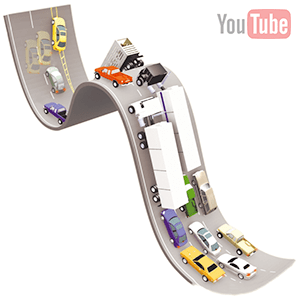
Traffic waves, also called stop waves or traffic shocks, are travelling disturbances in the distribution of cars on a highway. Traffic waves usually travel backwards in relation to the motion of the cars themselves, or ‘upstream.’ The waves can also travel downstream, however, more commonly become ‘pinned’ to a single spot on the road, as a soliton (solitary wave). Traffic waves are a type of traffic jam. A deeper understanding of traffic waves is a goal of the physical study of traffic flow, in which traffic itself can often be seen using techniques similar to those used in fluid dynamics.
It has been said that by knowing how traffic waves are created, drivers can sometimes reduce their effects by increasing vehicle headways and reducing the use of brakes, ultimately alleviating traffic congestion for everyone in the area.
Posted in Science |
Leave a Comment »
January 16, 2012
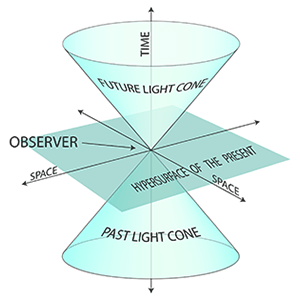
In philosophy, the Rietdijk–Putnam argument, named after C. W. Rietdijk and Hilary Putnam, uses 20th-century findings in physics—specifically in special relativity—to support the philosophical position known as four-dimensionalism.
If special relativity is true, then each observer will have their own plane of simultaneity, which contains a unique set of events that constitutes the observer’s present moment.
read more »
Posted in Science |
Leave a Comment »
January 14, 2012
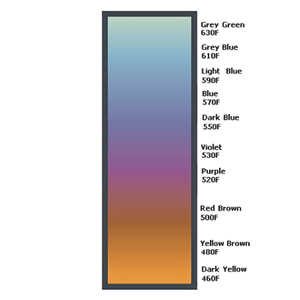
Bluing is a passivation process (‘passive’ in relation to being less affected by environmental factors such as air or water) in which steel is partially protected against rust, and is named after the blue-black appearance of the resulting protective finish. It is the result of an oxidizing chemical reaction with iron on the surface selectively forming magnetite (Fe3O4), the black oxide of iron. By comparison, rust is the red oxide of iron (Fe2O3). Bluing is most commonly used by gunsmiths to improve the cosmetic appearance of, and provide a measure of corrosion resistance to, their firearms.
Bluing also helps to maintain the metal finish by resisting tangential scratching, and also helps to reduce glare to the eyes of the shooter when looking down the barrel of the gun. All blued parts still need to be properly oiled to prevent rust. Bluing, being a chemical conversion coating, is not as robust against wear and corrosion resistance as plated coatings, and is typically no thicker than 2.5 micrometers (0.0001 inches). For this reason, it is considered not to add any appreciable thickness to precisely-machined gun parts. It is also used for providing coloring for steel parts of fine clocks and other fine metalwork, such as by machinists, who protected and beautified tools made for their own use.
Posted in Science, Technology |
Leave a Comment »


 The Daily Omnivore