January 6, 2012
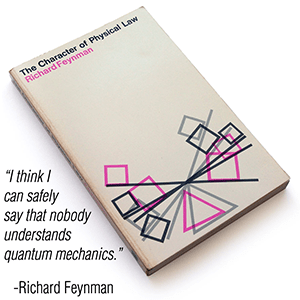
The Latin maxim ignoramus et ignorabimus, meaning ‘we do not know and will not know,’ stood for a position on the limits of scientific knowledge, in the thought of the nineteenth century. It was given credibility by Emil du Bois-Reymond, a German physiologist, in his book ‘On the limits of our understanding of nature,’ published in 1872.
In 1930, mathematician David Hilbert pronounced his disagreement with the maxim in a celebrated address to the Society of German Scientists and Physicians: ‘We must not believe those, who today, with philosophical bearing and deliberative tone, prophesy the fall of culture and accept the ignorabimus. For us there is no ignorabimus, and in my opinion none whatever in natural science. In opposition to the foolish ignorabimus our slogan shall be: Wir müssen wissen — wir werden wissen! (‘We must know — we will know!’).’
read more »
Posted in Education, Philosophy, Science |
1 Comment »
January 6, 2012
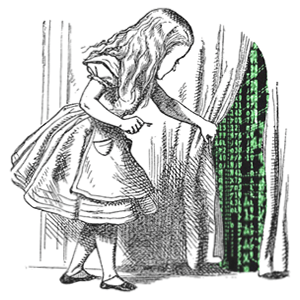
Sapere [sap-er-reh] aude [ow-day] is a Latin phrase meaning ‘dare to be wise,’ or more precisely ‘dare to know.’ Originally used by Horace, it is a common motto for universities and other institutions, after becoming closely associated with The Enlightenment by Immanuel Kant in his seminal essay, ‘What is Enlightenment?’
Kant claimed it was the motto for the entire period, and used it to explore his theories of reason in the public sphere. Later, Michel Foucault took up Kant’s formulation in an attempt for a place for the individual in his post-structuralist philosophy and come to terms with the problematic legacy of the Enlightenment.
read more »
Posted in Education, Philosophy, Science |
Leave a Comment »
January 3, 2012
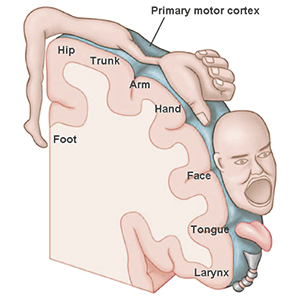
A cortical [kawr-ti-kuhl] homunculus [huh-muhng-kyuh-luhs] is a pictorial representation of the size of the brain areas for various parts of human anatomy. It is a visual representation of the concept of ‘the body within the brain’ that one’s hand or face exists as much as a series of nerve structures or a ‘neuron concept’ as it does a physical form. This concept relates to many neuro-biological phenomena including ‘phantom limb’ and ‘body integrity identity disorder’ (a psychological disorder wherein sufferers feel they would be happier living as an amputee).
There are two types of homunculus: sensory and motor. Each one shows a representation of how much of its respective cortex innervates certain body parts. The reason for the bizarre, distorted appearance of the homunculus is that the amount of cerebral tissue or cortex devoted to a given body region is proportional to how richly innervated and sensitive, or the number of muscles and motor units within that region is, not to its size. The resulting image is a grotesquely disfigured human with disproportionately huge hands, lips, and face in comparison to the rest of the body.
Posted in Health, Science |
Leave a Comment »
December 20, 2011
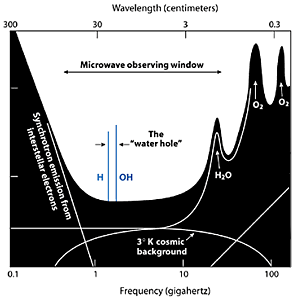
The waterhole refers to an especially quiet band of the electromagnetic spectrum between 1,420 and 1,666 megahertz, corresponding to wavelengths of 21 and 18 centimeters respectively. The term was coined by American scientist Bernard Oliver. The strongest hydroxyl radical spectral line radiates at 18 centimeters, and hydrogen at 21 centimeters. These two combined form water, and water is currently thought to be essential to extraterrestrial life advanced enough to generate radio signals.
Bernard M. Oliver theorized that the waterhole would be a good, obvious band for communication with extraterrestrial intelligence, hence the pun, in English a watering hole is a vernacular reference to a common place to meet and talk. Several programs involved in the search for extraterrestrial intelligence, including SETI@home, search in the waterhole.
Posted in Science, Technology |
Leave a Comment »
December 20, 2011
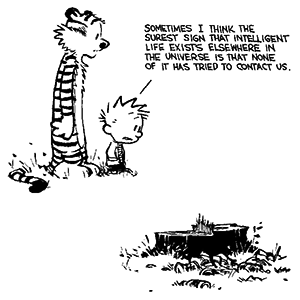
The Great Filter, in the context of the Fermi paradox, is whatever prevents ‘dead matter’ from giving rise, in time, to ‘expanding lasting life.’ The concept originates in Robin Hanson’s argument that the failure to find any extraterrestrial civilizations in the observable universe implies the possibility something is wrong with one or more of the arguments from various scientific disciplines that the appearance of advanced intelligent life is probable.
This observation is conceptualized in terms of a ‘Great Filter’ which acts to reduce the great number of sites where intelligent life might arise to the tiny number of intelligent species actually observed (currently just one: human). This probability threshold, which could lie behind us or in front of us, might work as a barrier to the evolution of intelligent life, or as a high probability of self-destruction. The main counter-intuitive conclusion of this observation is that the easier it was for life to evolve to our stage, the bleaker our future chances probably are.
read more »
Posted in Science, Technology |
Leave a Comment »
December 19, 2011
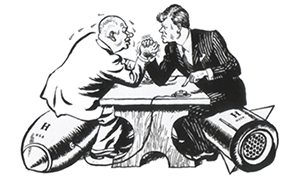

The game of chicken, also known as the hawk-dove or snowdrift game, is an influential model of conflict for two players in game theory. The principle of the game is that while each player prefers not to yield to the other, the worst possible outcome occurs when both players do not yield.
The name ‘chicken’ has its origins in a game in which two drivers drive towards each other on a collision course: one must swerve, or both may die in the crash, but if one driver swerves and the other does not, the one who swerved will be called a ‘chicken,’ meaning a coward; this terminology is most prevalent in political science and economics.
read more »
Posted in Games, Politics, Science |
Leave a Comment »
December 14, 2011

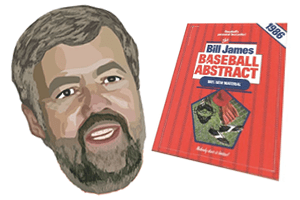
Sabermetrics is the specialized analysis of baseball through objective, empirical evidence, specifically baseball statistics that measure in-game activity. The term is derived from the acronym SABR, which stands for the ‘Society for American Baseball Research.’ It was coined by Bill James, who is one of its pioneers and is often considered its most prominent advocate and public face.
‘The Sabermetric Manifesto’ by David Grabiner (1994) begins: ‘Bill James defined sabermetrics as ‘the search for objective knowledge about baseball.’ Thus, sabermetrics attempts to answer objective questions about baseball, such as ‘which player on the Red Sox contributed the most to the team’s offense?’ or ‘How many home runs will Ken Griffey hit next year?’
read more »
Posted in Games, Money, Science |
1 Comment »
December 8, 2011
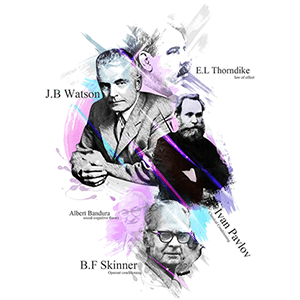
John B. Watson (1878 – 1958) was an American psychologist who established the psychological school of behaviorism. Through his behaviorist approach, Watson conducted research on animal behavior, child rearing, and advertising. In 1920 Johns Hopkins University asked Watson to leave his faculty position because of publicity surrounding the affair he was having with his graduate student-assistant Rosalie Rayner.
In addition, he and Rayner conducted the controversial ‘Little Albert’ experiment. After his divorce was finalized, Watson and Rayner married in 1921. They remained together until her death in 1935. In his post academic career, Watson worked for many years for J. Walter Thompson, a leading American advertising agency. He is credited with popularizing the ‘coffee break’ during an ad campaign for Maxwell House coffee.
read more »
Posted in Health, Money, Science |
1 Comment »
December 8, 2011
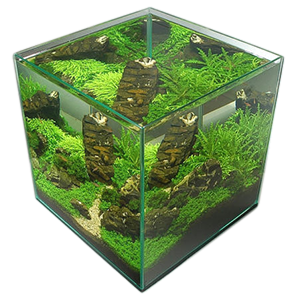
Aquascaping is the craft of arranging aquatic plants, as well as rocks, stones, cavework, or driftwood, in an aesthetically pleasing manner within an aquarium—in effect, gardening under water. Aquascape designs include a number of distinct styles, including the garden-like Dutch style and the Japanese-inspired nature style. Although the primary aim of aquascaping is to create an artful underwater landscape, the technical aspects of aquarium maintenance must also be taken into consideration.
Many factors must be balanced in the closed system to ensure the success of an aquascape, including filtration, maintaining carbon dioxide at levels sufficient to support photosynthesis underwater, substrate and fertilization, lighting, and algae control. Aquascape hobbyists trade plants, conduct contests, and share photographs and information via the internet.
read more »
Posted in Art, Games, Science |
2 Comments »
December 8, 2011

Pteridomania [tuh-rid-uh-mey-nee-uh] or Fern-Fever was a craze for ferns. Victorian decorative arts presented the fern motif in pottery, glass, metal, textiles, wood, printed paper, and sculpture, with ferns ‘appearing on everything from christening presents to gravestones and memorials.’
The term, a compound of ‘Pteridophytes’ and ‘mania,’ was coined in 1855 by Charles Kingsley in his book ‘Glaucus, or the Wonders of the Shore’: ‘Your daughters, perhaps, have been seized with the prevailing ‘Pteridomania’…and wrangling over unpronounceable names of species (which seem different in each new Fern-book that they buy)…and yet you cannot deny that they find enjoyment in it, and are more active, more cheerful, more self-forgetful over it, than they would have been over novels and gossip, crochet and Berlin-wool.’
read more »
Posted in Games, Money, Science |
Leave a Comment »
November 29, 2011
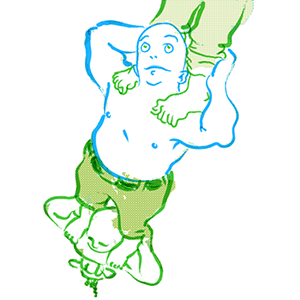
Dwarfs standing on the shoulders of giants (Latin: ‘nanos gigantium humeris insidentes’) is a Western metaphor meaning, ‘One who develops future intellectual pursuits by understanding the research and works created by notable thinkers of the past,’ a contemporary interpretation. However, the metaphor was first recorded in the twelfth century and attributed to Bernard of Chartres. It was famously uttered by seventeenth-century scientist Isaac Newton. In Greek mythology the blind giant Orion carried his servant Cedalion on his shoulders.
‘Bernard of Chartres used to say that we are like dwarfs on the shoulders of giants, so that we can see more than they, and things at a greater distance, not by virtue of any sharpness of sight on our part, or any physical distinction, but because we are carried high and raised up by their giant size.’
read more »
Posted in Education, Philosophy, Science |
1 Comment »
November 29, 2011
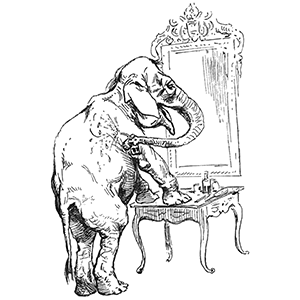
The mirror test is a measure of self-awareness, as animals either possess or lack the ability to recognize themselves in a mirror. The test was developed by Gordon Gallup Jr. in 1970, based in part on observations made by Charles Darwin. While visiting a zoo, Darwin held a mirror up to an orangutan and recorded the animal’s reaction, which included making a series of facial expressions.
Darwin noted that the significance of these expressions was ambiguous, and could either signify that the primate was making expressions at what it perceived to be another animal, or it could be playing a sort of game with a new toy.
read more »
Posted in Health, Science |
Leave a Comment »



 The Daily Omnivore