February 15, 2020

A message in a bottle is a form of communication in which a message is sealed in a container (typically a bottle) and released into a conveyance medium (typically a body of water).
Messages in bottles have been used to send distress messages, in crowdsourced scientific studies of ocean currents, as memorial tributes, to send deceased loved ones’ ashes on a final journey, to convey expedition reports, and to carry letters or reports from those believing themselves to be doomed. Invitations to prospective pen pals and letters to actual or imagined love interests have also been sent as messages in bottles.
read more »
Posted in Language, Science, World |
Leave a Comment »
February 3, 2020

A soundwalk is a walk with a focus on listening to the environment. The term was first used by members of the World Soundscape Project under the leadership of composer R. Murray Schafer in Vancouver in the 1970s.
Hildegard Westerkamp, from the same group of artists, defines soundwalking as ‘… any excursion whose main purpose is listening to the environment. It is exposing our ears to every sound around us no matter where we are.’
read more »
Posted in Art, Health, Science |
1 Comment »
January 28, 2020

Saturn’s hexagon is a persisting hexagonal cloud pattern around the north pole of Saturn. The sides of the hexagon are about 9,000 miles long, which is more than the diameter of Earth. The hexagon is about 18,000 miles wide, may be 190 miles high, and may be a jet stream made of atmospheric gases moving at 200 mph.
It rotates with a period of 10h 39m 24s, the same period as Saturn’s radio emissions from its interior. The hexagon does not shift in longitude like other clouds in the visible atmosphere.
read more »
Posted in Science |
Leave a Comment »
November 17, 2019

Bromide [broh-mahyd] in literary usage means a phrase, cliché, or platitude that is trite or unoriginal. It can be intended to soothe or placate; it can suggest insincerity or a lack of originality in the speaker. It can also refer to a commonplace or tiresome person, a bore.
A now outdated usage of ‘bromide’ is a photographic print, stemming from the use of silver bromide in photographic films, emulsions and papers. Its original usage was as a chemical term, referring to bromine salts.
read more »
Posted in Health, Language, Science |
Leave a Comment »
August 8, 2019
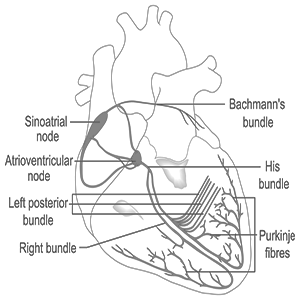
Autorhythmicity [aw-toh-rith-miss-uh-tee], or automaticity, refers to the heart’s ability to spontaneously generate an electric charge without outside help. Cardiac electrical activity originates in the sinoatrial node (SAN) and is propagated via the ‘His-Purkinje’ network, the fastest conduction pathway within the heart. This pathway is known as the electrical conduction system of the heart.
The electrical signal travels from the SAN, which stimulates the atria to contract, to the atrioventricular node (AVN), which slows down conduction of the action potential from the atria to the ventricles. This delay allows the ventricles to fully fill with blood before contraction. The signal then passes down through a bundle of fibers called the ‘bundle of His,’ located between the ventricles, and then to the ‘purkinje’ fibers at the bottom (apex) of the heart, causing ventricular contraction.
read more »
Posted in Health, Science |
Leave a Comment »
May 7, 2019

A cognitive bias is when someone makes a bad choice that they think is a good choice. This bias is an important part of the study of cognitive psychology, which looks at basic actions of the mind, such as thought, feeling, problem solving, memory, and language.
Cognitive biases are often a side effect of evolutionary changes. Some behaviors that were beneficial for primitive humans and animals are unsuited to modernity. Others are adaptive and may lead to more effective actions in a given context.
read more »
Posted in Health, Science |
Leave a Comment »
October 29, 2018
The Black Knight satellite conspiracy theory claims that there is a spacecraft in near-polar orbit of the Earth that is of extraterrestrial origin, and that NASA is engaged in a cover-up regarding its existence and origin. This conspiracy theory combines several unrelated stories into one narrative.
A 1998 NASA photo is believed by some to show the Black Knight satellite, but NASA has stated that this is likely space debris, specifically a thermal blanket lost during an EVA mission.
read more »
Posted in Politics, Science, Technology |
Leave a Comment »
October 18, 2018
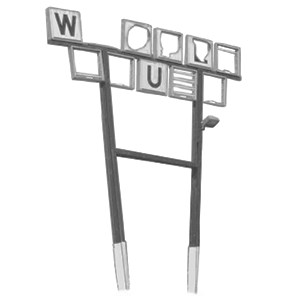
The Waffle House Index is an informal metric used by the Federal Emergency Management Agency (FEMA) to determine the effect of a storm and the likely scale of assistance required for disaster recovery. The measure is based on the reputation of the restaurant chain Waffle House for staying open during extreme weather and for reopening quickly, albeit sometimes with a limited menu, after very severe weather events such as tornadoes or hurricanes.
The term was coined by FEMA Administrator Craig Fugate in 2011, following the Joplin tornado, during which the two Waffle House restaurants in Joplin, Missouri, remained open.
read more »
Posted in Food, Politics, Science |
Leave a Comment »
September 23, 2018
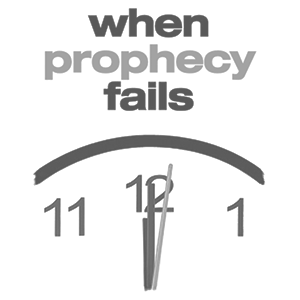
Belief perseverance (also known as ‘conceptual conservatism’) is maintaining a belief despite new information that firmly contradicts it. Such beliefs may even be strengthened when others attempt to present evidence debunking them, a phenomenon known as the ‘backfire effect.’ For example, journalist Cari Romm, in a 2014 article in ‘The Atlantic,’ describes a study in which people concerned about the side effects of flu shots became less willing to receive them after being told that the vaccination was entirely safe.
Since rationality involves conceptual flexibility, belief perseverance is consistent with the view that human beings act at times in an irrational manner. Philosopher F.C.S. Schiller holds that belief perseverance ‘deserves to rank among the fundamental ‘laws’ of nature.’
read more »
Posted in Philosophy, Science |
Leave a Comment »
September 18, 2018
The Pollyanna principle (also called ‘Pollyannaism’ or ‘positivity bias’) is the tendency for people to remember pleasant items more accurately than unpleasant ones. At the subconscious level, the mind typically focuses on the optimistic. At the conscious level, it tends towards the negative.
This subconscious bias towards the positive is often described as the Pollyanna principle and is similar to the ‘Forer’ or ‘Barnum’ effect, a tendency for individuals to give high accuracy ratings to descriptions of their personality that supposedly are tailored specifically to them, that are in fact vague and general enough to apply to a wide range of people (an impulse that fortune tellers and personality tests take advantage of).
read more »
Posted in Health, Science |
Leave a Comment »
September 7, 2018

Leucism [loo-kizm] is a condition in which there is partial loss of pigmentation in an animal resulting in white, pale, or patchy coloration of the skin, hair, feathers, scales or cuticle, but not the eyes. Unlike albinism, it is caused by a reduction in multiple types of pigment, not just melanin.
More common than a complete absence of pigment cells is localized or incomplete hypopigmentation, resulting in irregular patches of white on an animal that otherwise has normal coloring and patterning. This partial leucism is known as a ‘pied’ or ‘piebald’ effect; and the ratio of white to normal-colored skin can vary considerably not only between generations, but between different offspring from the same parents, and even between members of the same litter. This is notable in horses, cows, cats, dogs, the urban crow, and the ball python but is also found in many other species.
Posted in Science |
Leave a Comment »
April 19, 2018
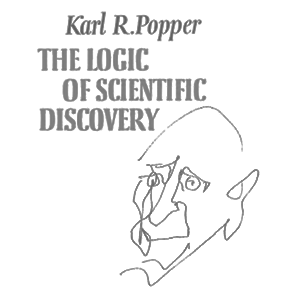
A statement, hypothesis, or theory has falsifiability or refutability if there is the possibility of showing it to be false. It is falsifiable if it is possible to conceive an empirical observation which could refute it. For example, the universal generalization that All swans are white is falsifiable since it is logically possible to falsify it by observing a single swan that is not white.
The concern with falsifiability gained attention by way of philosopher of science Karl Popper’s scientific epistemology referred to as ‘falsificationism.’ Popper stresses the problem of ‘demarcation’—distinguishing the scientific from the unscientific—and makes falsifiability the demarcation criterion, such that what is unfalsifiable is classified as unscientific, and the practice of declaring an unfalsifiable theory to be scientifically true is pseudoscience.
read more »
Posted in Philosophy, Science |
Leave a Comment »



