August 4, 2011

A stock market crash is a sudden dramatic decline of stock prices across a significant cross-section of a stock market, resulting in a significant loss of paper wealth. Crashes are driven by panic as much as by underlying economic factors. They often follow speculative stock market bubbles.
Stock market crashes are social phenomena where external economic events combine with crowd behavior and psychology in a positive feedback loop where selling by some market participants drives more market participants to sell. Generally speaking, crashes usually occur under the following conditions: a prolonged period of rising stock prices and excessive economic optimism, a market where P/E ratios exceed long-term averages, and extensive use of margin debt and leverage by market participants.
read more »
Posted in Money, Politics, Science |
1 Comment »
August 4, 2011
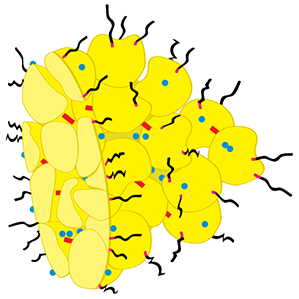
Milk is a white liquid produced by the mammary glands of mammals. It is the primary source of nutrition for infants before they are able to digest other types of food. Early-lactation milk contains colostrum, which carries the mother’s antibodies to the baby and can reduce the risk of many diseases in the baby. The precise components of raw milk vary by species and by a number of other factors, but it contains significant amounts of saturated fat, protein and calcium as well as vitamin C.
In almost all mammals, milk is fed to infants through breastfeeding, either directly or by expressing the milk to be stored and consumed later. Some cultures, historically or currently, continue to use breast milk to feed their children until they are seven years old. Human infants sometimes are fed fresh goat milk, but there are known risks in this practice, such as developing a host of allergic reactions.
read more »
Posted in Food, Health, Science |
Leave a Comment »
August 1, 2011

Stephen LaBerge (born 1947) is a psychophysiologist and a leader in the scientific study of lucid dreaming. In 1967 he received his Bachelor’s Degree in mathematics. He received his Ph.D. in Psychophysiology at Stanford University in 1980.
He developed a technique to enable himself and other researchers to enter a lucid dream state at will, MILD (mnemonic induction of lucid dreams), which was necessary for many forms of dream experimentation. In 1987, he founded The Lucidity Institute, an organization that promotes research into lucid dreaming, as well as running courses for the general public on how to achieve a lucid dream.
read more »
Posted in Health, Science |
1 Comment »
August 1, 2011

Freckles are clusters of concentrated melanin (an organic pigment ubiquitous in nature) which are most often visible on people with a fair complexion. A freckle is also called an ‘ephelis.’ In contrast to lentigines (liver spots) and moles, freckles do not have an increased number of melanin producing cells (melanocytes). Freckles can be found on anyone no matter their genetic background; however, having freckles is genetic and is related to the presence of a dominant gene.
The formation of freckles is triggered by exposure to sunlight: UV-B radiation activates melanocytes to increase melanin production, which can cause freckles to become darker. Freckles are predominantly found on the face, although they may appear on any skin exposed to the sun, such as the shoulders. They are rare on infants, and more commonly found on children before puberty. Upon exposure to the sun, freckles will reappear if they have been altered with creams or lasers and not protected from the sun, but do fade with age in some cases. They can also be treated with citric acid.
Posted in Health, Science |
Leave a Comment »
July 24, 2011


Scraping a chalkboard with the fingernails produces a sound which most people find unpleasant. The basis of this innate reaction has been studied in the field of psychoacoustics. One explanation for the adverse reaction is that the sound is similar to the warning call of a primate.
A 1986 study used a tape-recording of a three-pronged, metal garden tool being ‘grided’ across a chalkboard, which roughly reproduces the sound of fingernails on chalkboard. The recording was then manipulated, removing pitches at the extremities and the median. The results were then played back. It was determined that the median pitches are in fact the primary cause of the adverse reaction, not the highest pitches as previously thought. The authors hypothesized that it was due to predation early in human evolution; the sound bore some resemblances to the alarm call of macaque monkeys, or it may have been similar to the call of some predator.
Posted in Science |
Leave a Comment »
July 24, 2011

Knismesis [niz-muh-sis] and gargalesis [gar-gal-uh-sis] are the scientific terms, coined in 1897 by psychologists G. Stanley Hall and Arthur Allin, used to describe the two types of tickling. Knismesis refers to light, feather-like type of tickling, which generally does not induce laughter and is often accompanied by an itching sensation. Knismesis can also be triggered by crawling insects or parasites, prompting scratching or rubbing at the ticklish spot, thereby removing the pest. It is possible that this function explains why knismesis produces a similar response in many different kinds of animals. In a notable example, it is possible to tickle the area just under the snout of a great white shark, putting it into a near-hypnotic trance.
Gargalesis refers to harder, laughter-inducing tickling, and involves the repeated application of high pressure to sensitive areas. This ‘heavy tickle’ is often associated with play and laughter. The gargalesis type of tickle works on humans and primates, and possibly on other species. Because the nerves involved in transmitting ‘light’ touch and itch differ from those nerves that transmit ‘heavy’ touch, pressure and vibration, it is possible that the difference in sensations produced by the two types of tickle are due to the relative proportion of itch sensation versus touch sensation. While it is possible to trigger a knismesis response in oneself, it is usually impossible to produce gargalesthesia, the gargalesis tickle response, in oneself.
Posted in Health, Language, Science |
Leave a Comment »
July 24, 2011

The Selfish Gene is a book on evolution by Richard Dawkins, published in 1976. It builds upon the principal theory of George C. Williams’s first book ‘Adaptation and Natural Selection.’ Dawkins coined the term ‘selfish gene’ as a way of expressing the gene-centred view of evolution as opposed to the views focused on the organism and the group. From the gene-centred view follows that the more two individuals are genetically related, the more sense (at the level of the genes) it makes for them to behave selflessly with each other. Therefore the concept is especially good at explaining many forms of altruism, regardless of a common misuse of the term along the lines of a selfishness gene.
An organism is expected to evolve to maximize its inclusive fitness — the number of copies of its genes passed on globally (rather than by a particular individual). As a result, populations will tend towards an evolutionarily stable strategy. The book also coins the term ‘meme’ for a unit of human cultural evolution analogous to the gene, suggesting that such ‘selfish’ replication may also model human culture, in a different sense. Memetics has become the subject of many studies since the publication of the book.
read more »
Posted in Language, Science, Sex |
Leave a Comment »
July 22, 2011

The ‘Demon-Haunted World: Science as a Candle in the Dark’ is a book by astrophysicist Carl Sagan, which was first published in 1995. The book is intended to explain the scientific method to laypeople, and to encourage people to learn critical or skeptical thinking. It explains methods to help distinguish between ideas that are considered valid science, and ideas that can be considered pseudoscience. Sagan states that when new ideas are offered for consideration, they should be tested by means of skeptical thinking, and should stand up to rigorous questioning.
In the book, Sagan states that if a new idea continues in existence after an examination of the propositions has revealed it to be false, it should then be acknowledged as a supposition. Skeptical thinking essentially is a means to construct, understand, reason, and recognize valid and invalid arguments. Wherever possible, there must be independent validation of the concepts whose truth should be proved. He states that reason and logic would succeed once the truth is known. Conclusions emerge from premises, and the acceptability of the premises should not be discounted or accepted because of bias.
Posted in Language, Philosophy, Science |
Leave a Comment »
July 22, 2011

Nepeta [neh-puh-ta] is a genus of about 250 species of flowering plants in the family Lamiaceae, commonly known as ‘catnip’ because of their attractant effect on cats—the nepetalactone contained in nepeta binds to the olfactory receptors of cats, typically resulting in temporary euphoria. Catmints are also used in herbal medicine for their mild sedative effect on humans.
Nepetalactone is an organic compound, first reported in 1941 after it was isolated by steam distillation of catnip. The compound is also present in the wood of tartarian honeysuckle (Lonicera tatarica), shavings of which are often used in cat toys. Around 80% of cats are affected and susceptibility is gene-linked. The chemical interacts as a vapor at the olfactory epithelium. Nepetalactone has effects on some insects: it repels cockroaches and mosquitoes.
Posted in Drugs, Science, Sex |
1 Comment »
July 21, 2011

In astrophysics, a white hole is the opposite of a black hole. Where a black hole attracts and sucks in any nearby matter, a white hole does the opposite and pushes nearby matter away.
A theory about white holes is that they act as an exit for matter sucked in by a black hole, suggesting that black holes are a type of teleporter (something that can transport objects instantly without travelling through space). The black and white holes are connected by a wormhole.
Posted in Science |
Leave a Comment »
July 15, 2011

Lysenkoism [li-seng-koh-iz-uhm] is used colloquially to describe the manipulation or distortion of the scientific process as a way to reach a predetermined conclusion as dictated by an ideological bias, often related to social or political objectives. The word is derived from a set of political and social campaigns in science and agriculture by the director of the Soviet Lenin All-Union Academy of Agricultural Sciences, Trofim Lysenko and his followers, which began in the late 1920s and formally ended in 1964.
In 1928, Trofim Lysenko, a previously unknown plant scientist, claimed to have developed an agricultural technique, termed vernalization, which tripled or quadrupled crop yield by exposing wheat seed to high humidity and low temperature. While cold and moisture exposure are a normal part of the life cycle of fall-seeded winter cereals, the vernalization technique claimed to enhance yields by increasing the intensity of exposure, in some cases planting soaked seeds directly into the snow cover of frozen fields. In reality, the technique was neither new (it had been known since 1854, and was extensively studied during the previous twenty years), nor did it produce the yields he promised.
read more »
Posted in Politics, Science, World |
1 Comment »
July 15, 2011


Near-death studies is a school of psychology and psychiatry that studies the phenomenology and after-effects of a Near-death experience (NDE). The NDEs are reported by people who have come close to dying in a medical or non-medical setting.
Some researchers try to study the postulated role of physiological, psychological and transcendental factors associated with the NDE. These factors come together to form an overall pattern when numerous NDE reports are considered together. It is this pattern that is one of the main objects of interest for Near-Death studies.
read more »
Posted in Death, Health, Science |
1 Comment »


 The Daily Omnivore