August 7, 2011

A false awakening is a vivid dream about awakening from sleep. After a false awakening, subjects often dream they are performing daily morning rituals such as cooking, cleaning and eating. The experience is sometimes called a double dream, or a dream within a dream. A false awakening may occur following an ordinary dream or following a lucid dream (one in which the dreamer has been aware of dreaming). Particularly if the false awakening follows a lucid dream, the false awakening may turn into a ‘pre-lucid dream,’ that is, one in which the dreamer may start to wonder if they are really awake and may or may not come to the correct conclusion.
In a study by Harvard psychologist Deirdre Barrett, 2,000 dreams from 200 subjects were examined and it was found that false awakenings and lucidity were significantly more likely to occur within the same dream or within different dreams of the same night. False awakenings often preceded lucidity as a cue, but they could also follow the realization of lucidity, often losing it in the process.
read more »
Posted in Health, Philosophy, Science |
Leave a Comment »
August 7, 2011
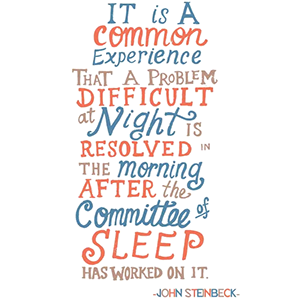
Dream incubation is a practiced technique of learning to ‘plant a seed’ in the mind, in order for a specific dream topic to occur, either for recreation or to attempt to solve a problem. For example, a person might go to bed repeating to themselves that they will dream about a presentation they have coming up, or a vacation they recently took, or a person they are interested in. While somewhat similar to lucid dreaming, dream incubation is simply focusing attention on a specific issue when going to sleep. Several studies have shown this method to be successful over a period of time.
For example, in a study at Harvard Medical School, Dr. Deirdre Barrett had her students focus on a problem, such as an unsolved homework assignment or other objective problem, before going to sleep each night for a week. She found that it was possible to develop novel solutions in dreams that were both satisfactory to the dreamer and rated as objectively solving the problem by an outside observer. In her study, two-thirds of participants had dreams that addressed their chosen problem, and one-third reached some form of solution within their dreams.
read more »
Posted in Science |
Leave a Comment »
August 6, 2011

Aposematism [app-uh-sem-uh-tizm], perhaps most commonly known in the context of warning coloration, describes a family of antipredator adaptations where a warning signal is associated with the unprofitability of a prey item to potential predators. It is one form of ‘advertising’ signal, with many others existing such as the bright colors of flowers which lure pollinators. The warning signal may take the form of conspicuous colors, sounds, odors, or other perceivable characteristics. Aposematic signals are beneficial for both the predator and prey, who both avoid potential harm.
This tendency to become highly noticeable and distinct from harmless organisms is the antithesis of crypsis, or avoidance of detection. Aposematism has been such a successful adaptation that harmless organisms have repeatedly evolved to mimic aposematic species, a pattern known as Batesian mimicry. Another related pattern is Müllerian mimicry, where aposematic species come to resemble one another.
read more »
Posted in Science |
Leave a Comment »
August 5, 2011
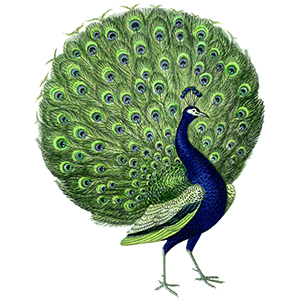
The handicap principle is a hypothesis originally proposed in 1975 by biologist Amotz Zahavi to explain how evolution may lead to ‘honest’ or reliable signaling between animals who have an obvious motivation to bluff or deceive each other. The handicap principle suggests that reliable signals must be costly to the signaler, costing the signaler something that could not be afforded by an individual with less of a particular trait.
For example, in the case of sexual selection, the theory suggests that animals of greater biological fitness signal this status through handicapping behavior or morphology that effectively lowers this quality. The central idea is that sexually selected traits function like conspicuous consumption, signalling the ability to afford to squander a resource simply by squandering it. Receivers know that the signal indicates quality because inferior quality signalers cannot afford to produce such wastefully extravagant signals.
read more »
Posted in Money, Science, Sex |
Leave a Comment »
August 4, 2011

A stock market crash is a sudden dramatic decline of stock prices across a significant cross-section of a stock market, resulting in a significant loss of paper wealth. Crashes are driven by panic as much as by underlying economic factors. They often follow speculative stock market bubbles.
Stock market crashes are social phenomena where external economic events combine with crowd behavior and psychology in a positive feedback loop where selling by some market participants drives more market participants to sell. Generally speaking, crashes usually occur under the following conditions: a prolonged period of rising stock prices and excessive economic optimism, a market where P/E ratios exceed long-term averages, and extensive use of margin debt and leverage by market participants.
read more »
Posted in Money, Politics, Science |
1 Comment »
August 4, 2011
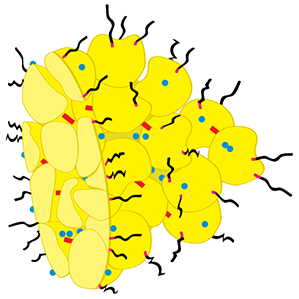
Milk is a white liquid produced by the mammary glands of mammals. It is the primary source of nutrition for infants before they are able to digest other types of food. Early-lactation milk contains colostrum, which carries the mother’s antibodies to the baby and can reduce the risk of many diseases in the baby. The precise components of raw milk vary by species and by a number of other factors, but it contains significant amounts of saturated fat, protein and calcium as well as vitamin C.
In almost all mammals, milk is fed to infants through breastfeeding, either directly or by expressing the milk to be stored and consumed later. Some cultures, historically or currently, continue to use breast milk to feed their children until they are seven years old. Human infants sometimes are fed fresh goat milk, but there are known risks in this practice, such as developing a host of allergic reactions.
read more »
Posted in Food, Health, Science |
Leave a Comment »
August 1, 2011
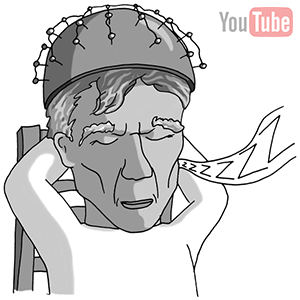
Stephen LaBerge (born 1947) is a psychophysiologist and a leader in the scientific study of lucid dreaming. In 1967 he received his Bachelor’s Degree in mathematics. He received his Ph.D. in Psychophysiology at Stanford University in 1980.
He developed a technique to enable himself and other researchers to enter a lucid dream state at will, MILD (mnemonic induction of lucid dreams), which was necessary for many forms of dream experimentation. In 1987, he founded The Lucidity Institute, an organization that promotes research into lucid dreaming, as well as running courses for the general public on how to achieve a lucid dream.
read more »
Posted in Health, Science |
1 Comment »
August 1, 2011

Freckles are clusters of concentrated melanin (an organic pigment ubiquitous in nature) which are most often visible on people with a fair complexion. A freckle is also called an ‘ephelis.’ In contrast to lentigines (liver spots) and moles, freckles do not have an increased number of melanin producing cells (melanocytes). Freckles can be found on anyone no matter their genetic background; however, having freckles is genetic and is related to the presence of a dominant gene.
The formation of freckles is triggered by exposure to sunlight: UV-B radiation activates melanocytes to increase melanin production, which can cause freckles to become darker. Freckles are predominantly found on the face, although they may appear on any skin exposed to the sun, such as the shoulders. They are rare on infants, and more commonly found on children before puberty. Upon exposure to the sun, freckles will reappear if they have been altered with creams or lasers and not protected from the sun, but do fade with age in some cases. They can also be treated with citric acid.
Posted in Health, Science |
Leave a Comment »
July 24, 2011


Scraping a chalkboard with the fingernails produces a sound which most people find unpleasant. The basis of this innate reaction has been studied in the field of psychoacoustics. One explanation for the adverse reaction is that the sound is similar to the warning call of a primate.
A 1986 study used a tape-recording of a three-pronged, metal garden tool being ‘grided’ across a chalkboard, which roughly reproduces the sound of fingernails on chalkboard. The recording was then manipulated, removing pitches at the extremities and the median. The results were then played back. It was determined that the median pitches are in fact the primary cause of the adverse reaction, not the highest pitches as previously thought. The authors hypothesized that it was due to predation early in human evolution; the sound bore some resemblances to the alarm call of macaque monkeys, or it may have been similar to the call of some predator.
Posted in Science |
Leave a Comment »
July 24, 2011

Knismesis [niz-muh-sis] and gargalesis [gar-gal-uh-sis] are the scientific terms, coined in 1897 by psychologists G. Stanley Hall and Arthur Allin, used to describe the two types of tickling. Knismesis refers to light, feather-like type of tickling, which generally does not induce laughter and is often accompanied by an itching sensation. Knismesis can also be triggered by crawling insects or parasites, prompting scratching or rubbing at the ticklish spot, thereby removing the pest. It is possible that this function explains why knismesis produces a similar response in many different kinds of animals. In a notable example, it is possible to tickle the area just under the snout of a great white shark, putting it into a near-hypnotic trance.
Gargalesis refers to harder, laughter-inducing tickling, and involves the repeated application of high pressure to sensitive areas. This ‘heavy tickle’ is often associated with play and laughter. The gargalesis type of tickle works on humans and primates, and possibly on other species. Because the nerves involved in transmitting ‘light’ touch and itch differ from those nerves that transmit ‘heavy’ touch, pressure and vibration, it is possible that the difference in sensations produced by the two types of tickle are due to the relative proportion of itch sensation versus touch sensation. While it is possible to trigger a knismesis response in oneself, it is usually impossible to produce gargalesthesia, the gargalesis tickle response, in oneself.
Posted in Health, Language, Science |
Leave a Comment »
July 24, 2011

The Selfish Gene is a book on evolution by Richard Dawkins, published in 1976. It builds upon the principal theory of George C. Williams’s first book ‘Adaptation and Natural Selection.’ Dawkins coined the term ‘selfish gene’ as a way of expressing the gene-centred view of evolution as opposed to the views focused on the organism and the group. From the gene-centred view follows that the more two individuals are genetically related, the more sense (at the level of the genes) it makes for them to behave selflessly with each other. Therefore the concept is especially good at explaining many forms of altruism, regardless of a common misuse of the term along the lines of a selfishness gene.
An organism is expected to evolve to maximize its inclusive fitness — the number of copies of its genes passed on globally (rather than by a particular individual). As a result, populations will tend towards an evolutionarily stable strategy. The book also coins the term ‘meme’ for a unit of human cultural evolution analogous to the gene, suggesting that such ‘selfish’ replication may also model human culture, in a different sense. Memetics has become the subject of many studies since the publication of the book.
read more »
Posted in Language, Science, Sex |
Leave a Comment »
July 22, 2011

The ‘Demon-Haunted World: Science as a Candle in the Dark’ is a book by astrophysicist Carl Sagan, which was first published in 1995. The book is intended to explain the scientific method to laypeople, and to encourage people to learn critical or skeptical thinking. It explains methods to help distinguish between ideas that are considered valid science, and ideas that can be considered pseudoscience. Sagan states that when new ideas are offered for consideration, they should be tested by means of skeptical thinking, and should stand up to rigorous questioning.
In the book, Sagan states that if a new idea continues in existence after an examination of the propositions has revealed it to be false, it should then be acknowledged as a supposition. Skeptical thinking essentially is a means to construct, understand, reason, and recognize valid and invalid arguments. Wherever possible, there must be independent validation of the concepts whose truth should be proved. He states that reason and logic would succeed once the truth is known. Conclusions emerge from premises, and the acceptability of the premises should not be discounted or accepted because of bias.
Posted in Language, Philosophy, Science |
Leave a Comment »



