June 8, 2011


Cognitive behavioral therapy (CBT) is a psychotherapeutic approach, a talking therapy, that aims to solve problems concerning dysfunctional emotions, behaviors and cognitions through a goal-oriented, systematic procedure. The title is used in diverse ways to designate behavior therapy, cognitive therapy, and to refer to therapy based upon a combination of basic behavioral and cognitive research.
There is empirical evidence that CBT is effective for the treatment of a variety of problems, including mood, anxiety, personality, eating, substance abuse, and psychotic disorders. Some clinicians and researchers are more cognitive oriented (e.g. cognitive restructuring), while others are more behaviorally oriented (in vivo exposure therapy). Other interventions combine both (e.g. imaginal exposure therapy).
read more »
Posted in Health, Science |
Leave a Comment »
June 8, 2011

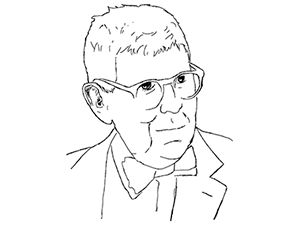
Cognitive therapy (CT) is a type of psychotherapy developed by American psychiatrist Aaron T. Beck. CT is one of the therapeutic approaches within the larger group of cognitive behavioral therapies (CBT) and was first expounded by Beck in the 1960s.
Cognitive therapy seeks to help the patient overcome difficulties by identifying and changing dysfunctional thinking, behavior, and emotional responses. This involves helping patients develop skills for modifying beliefs, identifying distorted thinking, relating to others in different ways, and changing behaviors. Treatment is based on collaboration between patient and therapist and on testing beliefs. Therapy may consist of testing the assumptions which one makes and identifying how certain of one’s usually unquestioned thoughts are distorted, unrealistic and unhelpful. Once those thoughts have been challenged, one’s feelings about the subject matter of those thoughts are more easily subject to change.
read more »
Posted in Health, Science |
1 Comment »
June 8, 2011

Behavior therapy (or behavior modification) is an approach to psychotherapy based on behaviorism which aims to treat psychopathology through techniques designed to reinforce desired and eliminate undesired behaviors. Precursors of certain fundamental aspects of behavior therapy have been identified in various ancient philosophical traditions, particularly Stoicism.
While the modern behavior therapist deliberately applies principles of learning to this therapeutic operations, empirical behavior therapy is probably as old as civilization – if we consider civilization as having begun when man first did things to further the well-being of other men. From the time that this became a feature of human life there must have been occasions when a man complained of his ills to another who advised or persuaded him of a course of action. In a broad sense, this could be called behavior therapy whenever the behavior itself was conceived as the therapeutic agent.
read more »
Posted in Health, Science |
Leave a Comment »
June 8, 2011

Behaviorism is the theory that all things organisms do should be seen as behavior. Behaviorism says that behavior can be studied scientifically, without knowing what the physiology of an event is, and without using theories such as that of the mind. According to behaviorism, all behavior can be observed. Behaviorists first argued that the study of behavior should be a natural science, such as chemistry or physics, without any reference to hypothetical inner states of organisms as causes for their behavior. From early psychology in the 19th century, the behaviorist school of thought ran concurrently and shared commonalities with the psychoanalytic and Gestalt movements in psychology into the 20th century; but also differed from the mental philosophy of the Gestalt psychologists in critical ways.
In the second half of the 20th century, behaviorism was largely eclipsed as a result of the cognitive revolution, which include the internal processes of the mind in its purview. While behaviorism and cognitive schools of psychological thought may not agree theoretically, they have complemented each other in practical therapeutic applications, such as in cognitive–behavioral therapy that has demonstrable utility in treating certain pathologies, such as simple phobias, PTSD, and addiction. People who influenced behaviorism include Ivan Pavlov, Edward Lee Thorndike, John B. Watson and B. F. Skinner. Pavlov investigated classical conditioning, but did not agree with Behaviorism or Behaviorists. Thorndike and Watson rejected introspective methods and wanted to restrict psychology to experimental methods. Skinner’s research focused on Operant conditioning.
read more »
Posted in Language, Science |
2 Comments »
June 8, 2011

Cognitive psychology is a branch of psychology that looks at basic actions of the mind, like problem solving, memory, and language. Cognitive psychologists most often look at mental changes than happen after a stimulus (things that can be felt by the five senses) and before a behavioral response (what a person does after of sensing something). Cognitive psychology had its beginnings in the Gestalt psychology of Max Wertheimer, Wolfgang Köhler, and Kurt Koffka, and in the work of Jean Piaget, who came up with a theory of ‘stages’ or ‘phases’ that describe children’s cognitive development.
Ulric Neisser coined the term ‘cognitive psychology’ in his book of the same name, published in 1967 wherein Neisser provides a definition of cognitive psychology characterizing people as dynamic information-processing systems whose mental operations might be described in computational terms. Cognitive psychology is one of the more recent additions to psychological research, having only developed as a separate area within the discipline since the late 1950s and early 1960s following the ‘cognitive revolution’ initiated by Noam Chomsky’s 1959 critique of behaviorism and empiricism more generally.
read more »
Posted in Science |
1 Comment »
June 7, 2011
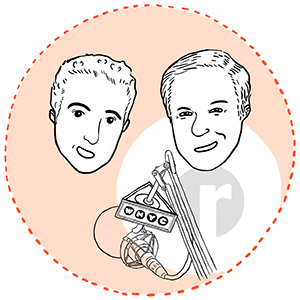
Radiolab is a radio program produced by WNYC, a public radio station in New York City. The show is nationally syndicated and is available as a podcast. Hosted by Jad Abumrad and Robert Krulwich, the show focuses on topics of a scientific and philosophical nature. The show attempts to approach broad, difficult topics such as ‘time’ and ‘morality’ in an accessible and light-hearted manner and with a distinctive audio production style.
Each Radiolab episode is elaborately stylized. For instance, thematic—and often discordant—music accompanies much of the commentary. Abumrad explained the choice in music thusly: ‘I put a lot of jaggedy sounds, little plurps and things, strange staccato, percussive things.’ In addition, previously recorded interview segments are interspersed in the show’s live dialogue, adding a layered, call-and-response affect to the questions posed by the hosts. These recordings are often unedited and the interviewee’s asides appear in the final product. Abumrad said, ‘You’re trying to capture the rhythms and the movements, the messiness of the actual experience…It sounds like life.’ And unlike traditional journalism, in which the reader is given only access to the final article, not the interview, Abumrad added that Radiolab’s process is more transparent.
Posted in Philosophy, Science |
Leave a Comment »
June 1, 2011
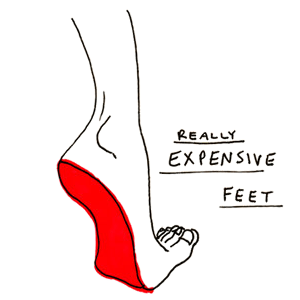
In economics, Veblen [veb-luhn] goods are a group of commodities for which people’s preference for buying them increases as a direct function of their price, as greater price confers greater status, instead of decreasing according to the law of demand. A Veblen good is often also a positional good. The Veblen effect is named after economist Thorstein Veblen, who first pointed out the concepts of conspicuous consumption and status-seeking.
Some types of high-status goods, such as high-end wines, designer handbags and luxury cars are Veblen goods, in that decreasing their prices decreases people’s preference for buying them because they are no longer perceived as exclusive or high status products. Similarly, a price increase may increase that high status and perception of exclusivity, thereby making the good even more preferable. Often such goods are no better or even worse than their lower priced counterparts.
read more »
Posted in Money, Science |
Leave a Comment »
June 1, 2011

Alex Grey (b. 1953) is an American artist specializing in spiritual and psychedelic art (or visionary art) that is sometimes associated with the New Age movement. Grey is a Vajrayana practitioner, one the three main sects of Buddhism. His body of work spans a variety of forms including performance art, process art, installation art, sculpture, and painting. He and his wife Allyson Grey are the co-founders of the Chapel of Sacred Mirrors, a non-profit institution supporting Visionary Culture in New York City.
Grey’s paintings can be described as a blend of sacred, visionary art and postmodern art. He is best known for his paintings of glowing anatomical human bodies, images that ‘x-ray’ the multiple layers of reality. His art is a complex integration of body, mind, and spirit. ‘The Sacred Mirrors,’ a life-sized series of 21 paintings, took 10 years to complete, and examines in detail the physical and metaphysical anatomy of the individual.
read more »
Posted in Art, Philosophy, Science |
1 Comment »
May 31, 2011


Edward Tufte (b. 1942) is an American statistician and professor emeritus of political science, statistics, and computer science at Yale University. He is noted for his writings on information design and as a pioneer in the field of data visualization.Tufte’s writing is important in such fields as information design and visual literacy, which deal with the visual communication of information. He coined the term ‘chartjunk’ to refer to useless, non-informative, or information-obscuring elements of quantitative information displays. Other key concepts of Tufte are the ‘lie factor,’ the ‘data-ink ratio,’ and the ‘data density’ of a graphic.
He uses the term ‘data-ink ratio’ to argue against using excessive decoration in visual displays of quantitative information. Tufte states, ‘Sometimes decorations can help editorialize about the substance of the graphic. But it’s wrong to distort the data measures—the ink locating values of numbers—in order to make an editorial comment or fit a decorative scheme.’
read more »
Posted in Art, Money, Science |
Leave a Comment »
May 31, 2011

Jellyfish Lake is located on Eil Malk island in Palau. Eil Malk is part of the Rock Islands, a group of small, rocky, mostly uninhabited islands in Palau’s Southern Lagoon. Jellyfish Lake is one of Palau’s most famous dive (snorkeling only) sites. It is notable for the millions of golden jellyfish which migrate horizontally across the lake daily.
The jellyfish found in the lake have stinging cells, but are not in general powerful enough to cause harm to humans. It has been reported that it is possible to notice the stings on sensitive areas like the area around the mouth.
read more »
Posted in Science, World |
Leave a Comment »
May 25, 2011

A tornado is a tube of violently spinning air that touches the ground. They are often referred to as a twister or a cyclone, although the word cyclone is used in meteorology in a narrower sense, only to name hurricanes or typhoons. Most tornadoes have wind speeds less than 110 miles per hour, are approximately 250 feet across, and travel a few miles before dissipating. The most extreme can attain wind speeds of more than 300 mph, stretch more than two miles across, and stay on the ground for dozens of miles.
Tornadoes often develop from a class of thunderstorms known as supercells. Other tornado-like phenomena that exist in nature include the gustnado (short-lived, low-level rotating cloud), dust devil, fire whirls, and steam devil. Tornadoes have been observed on every continent except Antarctica. However, the vast majority of tornadoes in the world occur in the Tornado Alley region of the United States (the area between the Rocky and Appalachian Mountains).
read more »
Posted in Science |
Leave a Comment »
May 24, 2011

Tafoni (singular: tafone) are small cave-like features found in granular rock such as sandstone, with rounded entrances and smooth concave walls. They often occur in groups that can riddle a hillside, cliff, or other rock formation.
They also frequently occur in granitic rocks. Small versions of tafoni are sometimes called alveoli; like the former, they are hypothesized to be results of salt weathering.
Posted in Language, Science |
Leave a Comment »






 The Daily Omnivore