May 10, 2011
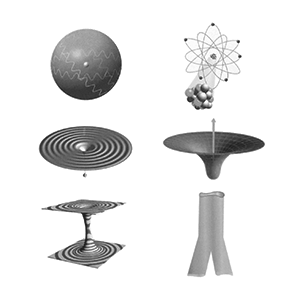
‘A Brief History of Time: From the Big Bang to Black Holes’ is a 1988 popular science book written by English theoretical physicist Stephen Hawking, which attempts to explain a range of subjects in cosmology (e.g. the Big Bang, black holes, and light cones) to the nonspecialist reader.
Its main goal is to give an overview of the subject but, unusual for a popular science book, it also attempts to explain some complex mathematics. The author notes that an editor warned him that for every equation in the book the readership would be halved, hence it includes only a single equation: E=mc2.
read more »
Posted in Education, Language, Science |
Leave a Comment »
May 9, 2011

The clustering illusion refers to the tendency to erroneously perceive small samples from random distributions as having significant ‘streaks’ or ‘clusters,’ caused by a human tendency to underpredict the amount of variability likely to appear in a small sample of random or semi-random data due to chance. Illusionary clusters were found in the locations of impact of V-1 flying bombs on London during World War II and as streaks in stock market price fluctuations over time.
The clustering illusion was central to a widely reported study by Gilovich, Robert Vallone and Amos Tversky. They found that the idea that basketball players shoot successfully in ‘streaks,’ sometimes called by sportcasters as having a ‘hot hand’ and widely believed by Gilovich et al.’s subjects, was false. In the data they collected, if anything the success of a previous throw very slightly predicted a subsequent miss rather than another success. Using this cognitive bias in causal reasoning may result in the Texas sharpshooter fallacy. It may also have a relationship with gambler’s fallacy. More general forms of erroneous pattern recognition are pareidolia and apophenia.
Posted in Games, Language, Science |
Leave a Comment »
May 9, 2011

The Texas sharpshooter fallacy is a logical fallacy in which information that has no relationship is interpreted or manipulated until it appears to have meaning. The name comes from a joke about a Texan who fires some shots at the side of a barn, then paints a target centered on the biggest cluster of hits and claims to be a sharpshooter.
The fallacy does not apply if one had a prior expectation of the particular relationship in question before examining the data. It is related to the clustering illusion, which refers to the tendency in human cognition to interpret patterns in randomness where none actually exist.
read more »
Posted in Humor, Language, Science |
Leave a Comment »
May 9, 2011

Buckyballs are a magnetic toy launched at the New York International Gift Fair in 2009 and sold in the hundreds of thousands before the U.S. Consumer Product Safety Commission issued a recall. In several cases, children swallowed them, and injured their intestines, resulting in at least one death. As a result, regulatory agencies banned them, and the magnets are no longer marketed as toys. This led to a debate over the risks of toys and parental responsibility.
In 2009, a number of US companies decided to repackage sphere magnets and sell them as toys. Despite existing toy regulations at the time, Maxfield & Oberton, maker of Buckyballs, told the ‘New York Times’ that he saw the product on YouTube and repackaged them as Buckyballs. After the recall all mentions of ‘toy’ were changed to ‘desk toy,’ positioning the product as a stress-reliever for adults and restricted sales from stores that sold primarily children’s products.
read more »
Posted in Games, Science |
Leave a Comment »
May 9, 2011

Discovered in 1965, buckyballs (formally known as buckminsterfullerenes) are hollow spheres made of carbon atoms named after American engineer, Buckminster Fuller (1895 – 1983), who popularized geodesic dome buildings. Buckyballs and nanotubes are an allotrope (structural configuration) of carbon called fullerenes, also after Fuller.
The discovery of fullerenes greatly expanded the number of known carbon allotropes, which until recently were limited to graphite, diamond, and amorphous carbon such as soot and charcoal. Buckyballs and buckytubes have been the subject of intense research, both for their unique chemistry and for their technological applications, especially in materials science, electronics, and nanotechnology.
Posted in Science, Technology |
Leave a Comment »
May 8, 2011

Graphene is an allotrope (structural configuration) of carbon atoms, in the form of one-atom-thick sheets of carbon atoms that are densely packed in a honeycomb lattice. Graphene is most easily visualized as an atomic-scale chicken wire made of carbon atoms and their bonds.
The crystalline or ‘flake’ form of graphite consists of many graphene sheets stacked together. Graphene is the basic structural element of some carbon allotropes including graphite, charcoal, carbon nanotubes and fullerenes.
Posted in Science |
1 Comment »
May 5, 2011

The boiling frog story is a widespread anecdote describing a frog slowly being boiled alive. The premise is that if a frog is placed in boiling water, it will jump out, but if it is placed in cold water that is slowly heated, it will not perceive the danger and will be cooked to death. It is a metaphor for the inability of people to react to significant changes that occur gradually. However, the premise of the story is not literally true; an actual frog submerged and gradually heated will jump out. (Similarly, the metaphor of an ostrich with its head buried in the sand is also not base in fact.)
The moral of the story is that people should make themselves aware of gradual change lest they suffer eventual undesirable consequences. At times it is told in support of a slippery slope argument. It is also used in business to illustrate the idea that change needs to be gradual to be accepted. It was used in 1960 to describe the dangers of sympathy towards the Soviet Union during the Cold War; in 1980 about the impending collapse of civilization anticipated by survivalists; and in the 1990s about inaction in response to climate change and staying in abusive relationships. It has also been used by libertarians to warn about slow erosion of civil rights. In philosophy the boiling frog story has been used as a way of explaining the ‘sorites paradox’: if you remove grains one at a time from a heap of sand, at what point does it cease to be a ‘heap.’
Posted in Language, Philosophy, Science |
Leave a Comment »
May 5, 2011


People watching is the act of observing people and their interactions, usually without their knowledge. This differs from voyeurism in that it does not relate to sex or sexual gratification. Though often a casual hobby, it can be used formally as a means for sociological, anthropological or psychological research.
Naturalistic observation is a more formal way of describing people watching in an academic sense, and involves observing subjects in their natural habitat, taking great care to avoid interfering with the behavior being observed. People watching is often accompanied by eavesdropping, surreptitiously listening to the private conversation of others without their knowledge.
Posted in Language, Science |
Leave a Comment »
May 3, 2011

The relationship between religion and science has been a focus of the demarcation problem, the question of where to the boundary between science and religion. Religion, is often argued to rely on revelation and faith.
The methods of science are elaborate and science does not depend on faith. Some scholars say the two are separate, as in John William Draper’s conflict thesis and Stephen Jay Gould’s non-overlapping magisteria, while others propose an interconnection.
Posted in Philosophy, Science |
Leave a Comment »
May 3, 2011

Theistic evolution is a concept that asserts that classical religious teachings about God are compatible with the modern scientific understanding about biological evolution. In short, theistic evolutionists believe that there is a God, that God is the creator of the material universe and (by consequence) all life within, and that biological evolution is simply a natural process within that creation. Evolution, according to this view, is simply a tool that God employed to develop human life.
Theistic evolution is not a scientific theory, but a particular view about how the science of evolution relates to religious belief and interpretation. Theistic evolution supporters can be seen as one of the groups who reject the conflict thesis regarding the relationship between religion and science – that is, they hold that religious teachings about creation and scientific theories of evolution need not contradict. Proponents of this view are sometimes described as Christian Darwinists.
Posted in Language, Philosophy, Science |
1 Comment »
May 3, 2011

In infrared photography, the film or image sensor used is sensitive to infrared light, which is the domain of thermal imaging. Wavelengths used for photography range from about 700 nm to about 900 nm. Usually an ‘infrared filter’ is used; this lets infrared (IR) light pass through to the camera, but blocks all or most of the visible light spectrum (the filter thus looks black or deep red).
When these filters are used together with infrared-sensitive film or sensors, very interesting ‘in-camera effects’ can be obtained; false-color or black-and-white images with a dreamlike or sometimes lurid appearance known as the ‘Wood Effect,’ an effect mainly caused by foliage (such as tree leaves and grass) strongly reflecting in the same way visible light is reflected from snow. There is a small contribution from chlorophyll fluorescence, but this is marginal and is not the real cause of the brightness seen in infrared photographs. The effect is named after the infrared photography pioneer Robert W. Wood.
Posted in Art, Science, Technology |
Leave a Comment »
May 3, 2011

The zoo hypothesis is one of a number of suggestions that have been advanced in response to the Fermi paradox, regarding the apparent absence of evidence in support of the existence of advanced extraterrestrial life. According to this hypothesis, aliens would generally avoid making their presence known to humanity, or avoid exerting an influence on human development, somewhat akin to zookeepers observing animals in a zoo, or experimental scientists observing a study that closer examination would ruin.
Adherents of the hypothesis consider that Earth and humans are being secretly surveyed using equipment located on Earth or elsewhere in the Solar System which relays information back to the observers. It is also suggested that overt contact will eventually be made with humanity once humans reach a certain level of development.
Posted in Science |
Leave a Comment »



 The Daily Omnivore