April 7, 2011
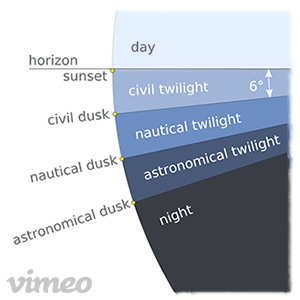
The Belt of Venus or Venus’s Girdle is the Victorian-era name for an atmospheric phenomenon seen at sunrise and sunset. Shortly after sunset or shortly before sunrise, the observer is, or is very nearly, surrounded by a pinkish glow or antitwilight arch that extends roughly 10°–20° above the horizon.
Often, the glow is separated from the horizon by a dark layer, the Earth’s shadow or ‘dark segment.’ The Arch’s light rose (pink) color is due to backscattering of reddened light from the rising or setting Sun. A very similar effect can be seen during a total solar eclipse.
Posted in Language, Science |
Leave a Comment »
April 7, 2011

In photography and cinematography, the golden or magic hour, is the first and last hour of sunlight during the day, when a specific photographic effect is achieved due to the quality of the light. Typically, lighting is softer (more diffuse) and warmer in hue. When the Sun is near the horizon, sunlight travels through more of the atmosphere, reducing the intensity of the direct light, so that more of the illumination comes from indirect light from the sky.
More blue light is scattered, so that light from the Sun appears more reddish. In addition, the Sun’s small angle with the horizon produces longer shadows. In the middle of the day, the bright overhead Sun can create too-bright highlights and dark shadows. Because the contrast is less during the golden hour, shadows are less dark, and highlights are less likely to be overexposed.
Posted in Art, Language, Science |
Leave a Comment »
April 6, 2011

Isaac Asimov (b. 1920 – 1992) was an American author and professor of biochemistry at Boston University, best known for his works of science fiction and for his popular science books. Asimov was one of the most prolific writers of all time, having written or edited more than 500 books. His works have been published in nine of the ten major categories of the Dewey Decimal System (The sole exception being the 100s: philosophy and psychology). Isaac Asimov is widely considered a master of hard science fiction and, along with Robert A. Heinlein and Arthur C. Clarke, he was considered one of the ‘Big Three’ science fiction writers during his lifetime. Asimov’s most famous works are the ‘Foundation’ and ‘Robot’ series.
The prolific Asimov also wrote mysteries and fantasy, as well as much non-fiction. Most of his popular science books explain scientific concepts in a historical way, going as far back as possible to a time when the science in question was at its simplest stage. He often provides nationalities, birth dates, and death dates for the scientists he mentions, as well as etymologies and pronunciation guides for technical terms. Examples include his ‘Guide to Science,’ the three volume set ‘Understanding Physics,’ ‘Asimov’s Chronology of Science and Discovery,’ as well as numerous works on astronomy, chemistry, mathematics, the Bible, and William Shakespeare’s works.
Posted in Art, Language, Science |
Leave a Comment »
April 6, 2011

The Dewey Decimal System is a way to sort books. It’s usually used in public libraries and schools. It sorts the books by subject using numbers from 000 to 999. Each subject is broken up into 10 smaller, more specific categories, and has its own set of numbers. The system was created by American librarian Melvil Dewey in 1876.
Posted in Education, Language, Science |
Leave a Comment »
April 5, 2011

Rumination [roo-muh-ney-shuhn] is a way of responding to distress that involves repetitively (and passively) focusing on the symptoms of distress, and on its possible causes and consequences. Rumination is more common in people who are pessimistic or neurotic. The tendency to ruminate is a stable constant over time and serves as a significant risk factor for clinical depression. There is also evidence that rumination is linked to general anxiety, post traumatic stress, binge drinking, eating disorders, and self-injurious behavior. Rumination is similar to worry except rumination focuses on bad feelings and experiences from the past, whereas worry is concerned over potential bad events in the future. Both rumination and worry are associated with anxiety and other negative emotional states.
Although rumination is generally unhealthy and associated with depression, thinking and talking about one’s feelings can be beneficial under the right conditions. Healthy self-disclosure can reduce distress and rumination when it leads to greater insight and understanding about the source of one’s problems. Thus, when people share their feelings with others in the context of supportive relationships, they are likely to experience growth. When people repetitively ruminate and dwell on the same problem without making progress, they are likely to experience depression.
Posted in Health, Science |
Leave a Comment »
April 5, 2011

Purely Obsessional Obsessive-Compulsive Disorder (Pure O) is a lesser-known form or manifestation of OCD. There are usually no observable compulsions (checking, counting, hand-washing, etc.). While ritualizing and neutralizing behaviors do take place, they are almost entirely in the form of excessive mental rumination. The nature and type of Purely Obsessional OCD varies greatly, but the central theme for all sufferers is the emergence of a disturbing intrusive thought or question, an unwanted/inappropriate mental image, or a frightening impulse that causes the person extreme anxiety because it is antithetical to closely-held religious beliefs, morals, or societal mores.
Neurotypicals instinctively respond to bizarre intrusive thoughts or impulses as insignificant and part of a normal variance in the human mind. Someone with Purely Obsessional OCD will respond with profound alarm followed by an intense attempt to neutralize the thought or avoid having it again. The person begins to ask themselves constantly ‘Am I really capable of something like that?’ or ‘Could that really happen?’ or ‘Is that really me?’ (even though they usually realize that their fear is irrational, which causes them further distress) and put tremendous effort into escaping or resolving the unwanted thought. They then end up in a vicious cycle of mentally searching for reassurance and trying to get a definitive answer.
Posted in Health, Language, Science |
Leave a Comment »
April 5, 2011
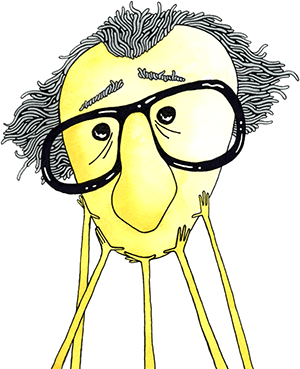

Neuroticism [noo-rot-uh-siz-uhm] is a fundamental personality trait in the study of psychology. It is an enduring tendency to experience negative emotional states. Individuals who score high on neuroticism are more likely than the average to experience such feelings as anxiety, anger, guilt, and depressed mood.
Neuroticism, along with other personality traits, has been mapped across states in the USA. People in eastern states such as New York, New Jersey, West Virginia, and Mississippi tend to score high on neuroticism, whereas people in many western states, such as Utah, Colorado, South Dakota, Oregon, and Arizona score lower on average. People in states that are higher in neuroticism also tend to have higher rates of heart disease and lower life expectancy.
read more »
Posted in Health, Language, Science |
Leave a Comment »
April 5, 2011
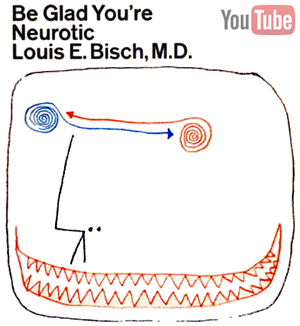

Neurosis [noo-roh-sis] is a class of functional mental disorders involving distress but neither delusions nor hallucinations, whereby behavior is not outside socially acceptable norms. Those suffering from it are said to be neurotic. The term essentially describes an ‘invisible injury’ and the resulting condition. The American Diagnostic and Statistical Manual of Mental Disorders (DSM) has eliminated the category of ‘Neurosis,’ reflecting a decision by the editors to provide descriptions of behavior as opposed to hidden psychological mechanisms as diagnostic criteria.
Neurosis should not be mistaken for psychosis, which refers to loss of touch with reality, or neuroticism, a fundamental personality trait characterized by an enduring tendency to experience negative emotional states.
read more »
Posted in Health, Language, Science |
Leave a Comment »
April 4, 2011
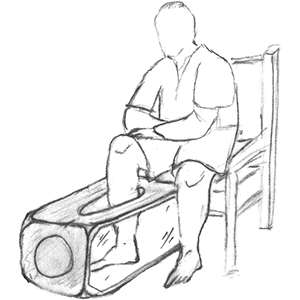
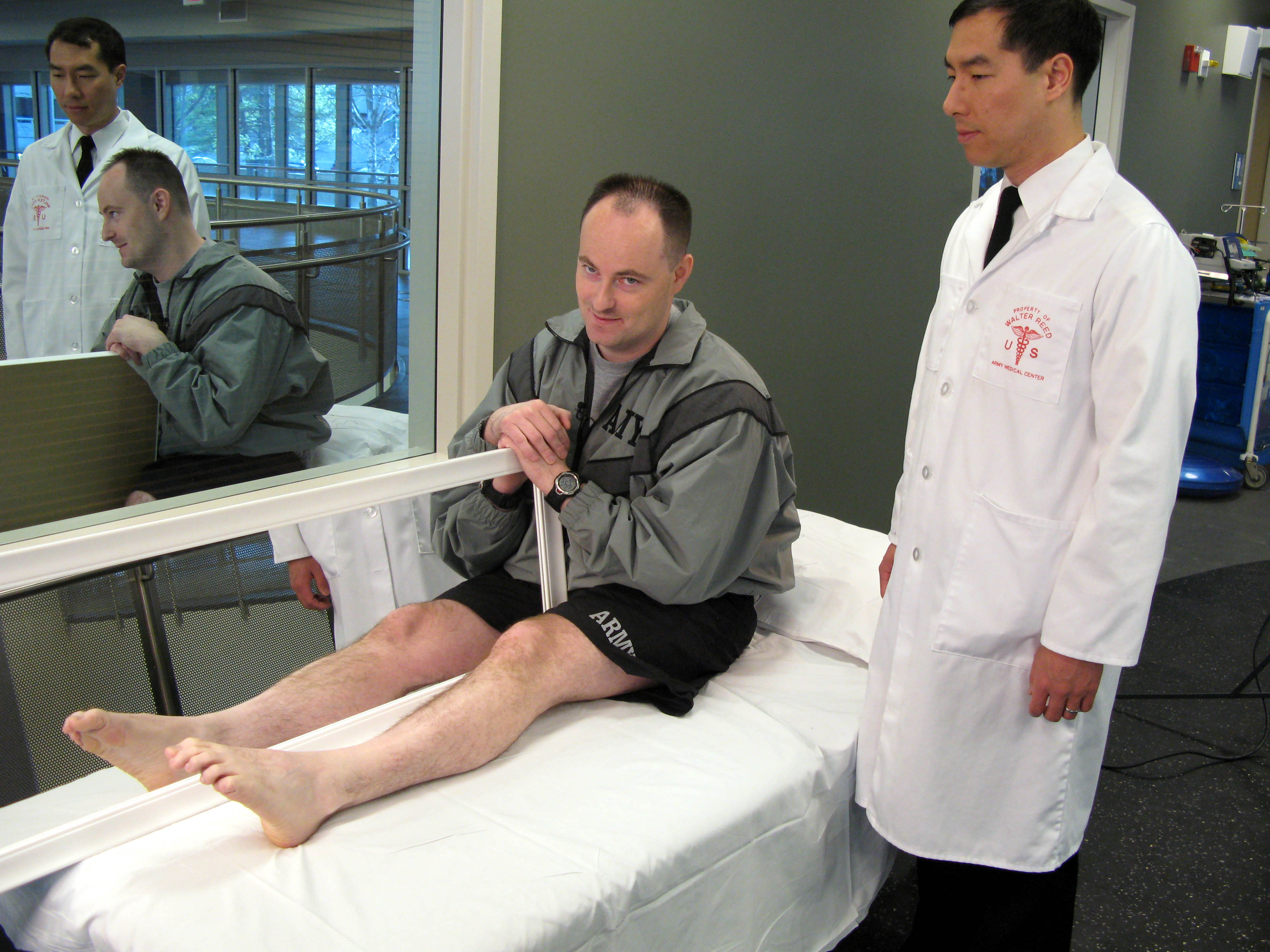
A mirror box is a box with two mirrors in the center (one facing each way), invented by neurologist Vilayanur S. Ramachandran to help alleviate phantom limb pain, in which patients feel they still have a limb after having it amputated.
read more »
Posted in Health, Science |
Leave a Comment »
April 4, 2011
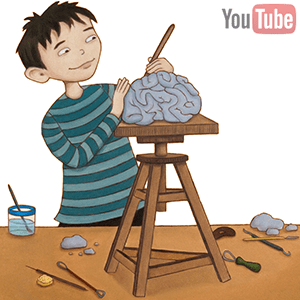
Neuroplasticity [noor-oh-pla-stis-i-tee] refers to the ability of the brain to change as a result of one’s experience, that the brain is ‘plastic’ and ‘malleable.’ The discovery of this feature of the brain is rather modern; the previous belief amongst scientists was that the brain does not change after the critical period of infancy.
Substantial changes occur in the lowest neocortical processing areas, changes that can profoundly alter the pattern of neuronal activation in response to experience. According to the theory of neuroplasticity, experience can actually change both the brain’s physical structure (anatomy) and functional organization (physiology) from top to bottom.
Posted in Health, Science |
Leave a Comment »
April 3, 2011

The Green Wall of China is a series of human-planted forest strips in the People’s Republic of China, designed to hold back the expansion of the Gobi Desert.
The project was begun in 1978, and is planned to be completed around 2074, at which point it is planned to be 2,800 miles (4,500 km) long. 1,390 square miles of Chinese grassland are overtaken every year by the Gobi Desert.
read more »
Posted in Money, Science, World |
Leave a Comment »
April 3, 2011
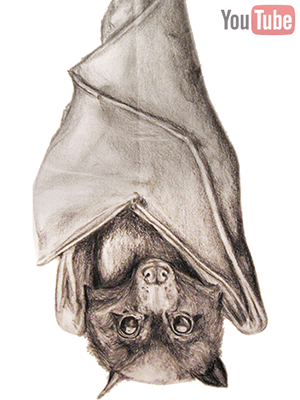
Bats of the genus Pteropus are the largest bats in the world. On average, P. vampyrus is the largest species, with a wingspan of up to 6 feet (1.83 meters). They are commonly known Flying Foxes. They live in the tropics and subtropics of Asia, Australia, Indonesia, islands off East Africa, and a number of remote oceanic islands in both the Indian and Pacific Oceans.
Characteristically, all species of flying foxes only feed on nectar, blossom, pollen, and fruit, which explains their limited tropical distribution. They do not possess echolocation, a feature which helps the other sub-order of bats, the Microbats, locate and catch prey such as insects in mid-air. Instead, smell and eyesight are very well-developed in flying foxes.
Posted in Science |
Leave a Comment »



 The Daily Omnivore