March 31, 2011
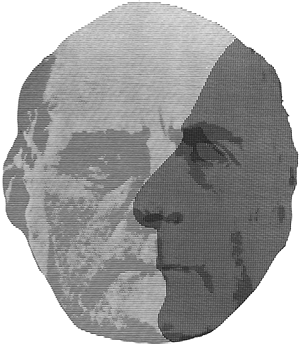
Francis Galton (1822 – 1911) was an English Victorian polymath: anthropologist, eugenicist, tropical explorer, geographer, inventor, meteorologist, and statistician. Galton had a prolific intellect, and produced over 340 papers and books throughout his lifetime. He also created the statistical concept of correlation. He was the first to apply statistical methods to the study of human differences and inheritance of intelligence, and introduced the use of questionnaires and surveys for collecting data on human communities.
He was a pioneer in eugenics, coining the term itself and the phrase ‘nature versus nurture.’ As the initiator of scientific meteorology, he devised the first weather map. He also invented the Dog Whistle for testing differential hearing ability.
Posted in Science, Technology, World |
Leave a Comment »
March 31, 2011

Infrasound [in-fruh-sound] is sound that is lower in frequency than 20 Hz or cycles per second, the ‘normal’ limit of human hearing. Hearing becomes gradually less sensitive as frequency decreases, so for humans to perceive infrasound, the sound pressure must be sufficiently high. The ear is the primary organ for sensing infrasound, but at higher levels it is possible to feel infrasound vibrations in various parts of the body.
The study of such sound waves is sometimes referred to as infrasonics, covering sounds beneath 20 Hz down to 0.001 Hz. This frequency range is utilized for monitoring earthquakes, charting rock and petroleum formations below the earth, and also to study the mechanics of the heart. Infrasound is characterized by an ability to cover long distances and get around obstacles with little dissipation.
read more »
Posted in Art, Health, Science |
Leave a Comment »
March 31, 2011
The Prisoner’s Cinema is a phenomenon reported by prisoners confined to dark cells and by others kept in darkness, voluntarily or not, for long periods of time. It has also been reported by truck drivers, pilots, and practitioners of intense meditation. Astronauts and other individuals that have been exposed to certain types of radiation have reported witnessing similar phenomena.
The ‘cinema’ consists of a light show of various colors that appear out of the darkness. The light has a form, but those that have seen it find it difficult to describe. Sometimes, the cinema lights resolve into human or other figures. Scientists believe it is a result of phosphenes (flashes of light, often associated with inflammation of the optic nerve) combined with the psychological effects of prolonged exposure to darkness.
Posted in Health, Science |
Leave a Comment »
March 31, 2011
Charles Bonnet syndrome (CBS) is a condition that causes patients with visual loss to have complex visual hallucinations, first described by Charles Bonnet in 1760, and first introduced into English-speaking psychiatry in 1982. Sufferers, who are mentally healthy people with often significant visual loss, have vivid, complex recurrent visual hallucinations. Often they come in the form of ‘lilliput hallucinations,’ in which objects are smaller than normal.
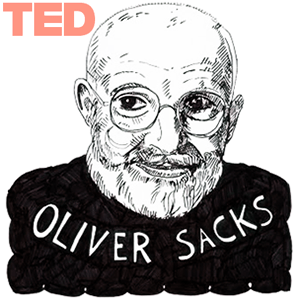
Sufferers understand that the hallucinations are not real, and the hallucinations are only visual. People suffering from CBS may experience a wide variety of hallucinations, such as images of complex colored patterns and images of people, or animals, plants or trees and inanimate objects. The hallucinations also often fit into the person’s surroundings. Oliver Sacks, a neurologist and author who suffers from a retinal tumor, gave a TED talk about this and other visual hallucinations.
Posted in Health, Science |
Leave a Comment »
March 31, 2011
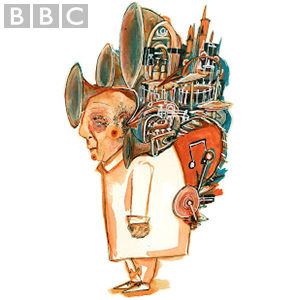
Musical ear syndrome (MES) refers to auditory hallucinations subsequent to hearing loss. It is comparable to Charles Bonnet syndrome (visual hallucinations by visually impaired people) and some have suggested this phenomenon could be included under that diagnosis. The occurrence of MES has been suggested to be very high among the hearing impaired. Sufferers typically hear music or singing and the condition is more common in women. The hallucinatory experiences differ from psychotic disorders although there may be some overlap.
The likely cause is a small cerebrovascular event affecting the auditory cortex. The ‘hole’ in the hearing range is ‘plugged’ by the brain confabulating a piece of information – in this case a remembered melody. A similar occurrence is seen with strokes of the visual cortex where a visual field defect occurs and the brain confabulates a piece of visual data to fill the spot. Towards the end of his life, Robert Schumann said he heard angelic music and music from other composers, which formed the basis for his violin concerto (however, his symptoms may also have been caused by syphilis or mercury poisoning).
Posted in Art, Health, Science |
1 Comment »
March 31, 2011

An aura [awr-uh] is a perceptual disturbance experienced by some migraine sufferers and epileptics before a migraine or seizure. It often manifests as the perception of a strange light, an unpleasant smell, or confusing thoughts or experiences. Some people experience aura without a subsequent migraine or seizure, which is called a silent migraine.
Auras allow epileptics time to prevent injury to themselves or others. The time between the appearance of the aura and the migraine lasts from a few seconds up to an hour. Most people who have auras have the same type every time. Visual changes can include bright lights and blobs, zigzag lines, distortions in the size or shape of objects, a vibrating visual field, pulsating patches, tunnel vision, blind or dark spots in the field of vision, kaleidoscope effects on the visual field, or temporary blindness.
read more »
Posted in Health, Science |
Leave a Comment »
March 31, 2011

A Migraine (Greek: ‘half skull’) is a neurological syndrome which often presents itself as a severe headache. There are different types of migraines, most give the sufferer a headache, and might make them dizzy or want to stay away from bright lights (photophobia) or loud noises (hyperacusis). They can also include visual disturbances (such as seeing funny patterns or lights/colors) and other disturbances of senses (funny smells or tastes). Migraines can last from 4 to 72 hours, but in most cases only last about 4 hours. The cause of migraines is unknown, but it is often believed to be linked to family medical history. It is about three times more common in women than in men.
The typical migraine headache is unilateral pain (affecting one half of the head) and pulsating in nature. Approximately one-third of people who suffer from migraine headaches perceive an aura—unusual visual, olfactory, or other sensory experiences that are a sign that the migraine will soon occur. Initial treatment is with analgesics for the headache, an antiemetic for the nausea, and the avoidance of triggering conditions. The cause of migraine headache is unknown; the most common theory is a disorder of the serotonergic control system.
Posted in Health, Science |
Leave a Comment »
March 31, 2011

A headache or cephalgia is pain anywhere in the region of the head or neck. The brain tissue itself is not sensitive to pain because it lacks pain receptors. Rather, the pain is caused by disturbance of the pain-sensitive structures around the brain. Several areas of the head and neck have these pain-sensitive structures, which are divided in two categories: within the cranium (blood vessels, meninges, and the cranial nerves) and outside the cranium (the periosteum of the skull, muscles, nerves, arteries and veins, subcutaneous tissues, eyes, ears, sinuses and mucous membranes). There are over 200 types of headache, and the causes range from harmless to life-threatening.
Posted in Health, Science |
Leave a Comment »
March 29, 2011

Groupthink is a type of thought within a deeply cohesive group whose members try to minimize conflict and reach consensus without critically testing, analyzing, and evaluating ideas. Research psychologist, Irving Janis studied a number of ‘disasters’ in American foreign policy, such as failure to anticipate the Japanese attack on Pearl Harbor (1941), the Bay of Pigs fiasco (1961), and the prosecution of the Vietnam War (1964–67) by President Lyndon Johnson. He concluded that in each of these cases, the decisions were made largely due to the cohesive nature of the committees which made them. Moreover, that cohesiveness prevented contradictory views from being expressed and subsequently evaluated.
Individual creativity, uniqueness, and independent thinking are lost in the pursuit of group cohesiveness, as are the advantages of reasonable balance in choice and thought that might normally be obtained by making decisions as a group. Members of the group avoid promoting viewpoints outside the comfort zone of consensus thinking to avoid being seen as foolish, or to avoid embarrassing or angering other members of the group. Groupthink may cause groups to make hasty, irrational decisions, where individual doubts are set aside, for fear of upsetting the group’s balance. The term is frequently used pejoratively, in hindsight, and was coined by journalist William H. Whyte in a 1952 ‘Fortune’ magazine article.
Posted in Money, Politics, Science |
Leave a Comment »
March 29, 2011

The Abilene paradox is a paradox in which a group of people collectively decide on a course of action that is counter to the preferences of any of the individuals in the group. It involves a common breakdown of group communication in which each member mistakenly believes that their own preferences are counter to the group’s and, therefore, does not raise objections. A common phrase relating to the Abilene paradox is a desire to not ‘rock the boat.’
read more »
Posted in Money, Science |
Leave a Comment »
March 29, 2011
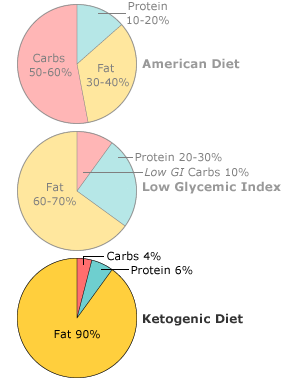
The ketogenic [kee-toh-jen-ik] diet is a high-fat, adequate-protein, low-carbohydrate diet that in medicine is used primarily to treat difficult-to-control epilepsy in children. The diet mimics aspects of starvation by forcing the body to burn fats rather than carbohydrates.
Normally, the carbohydrates contained in food are converted into glucose, which is then transported around the body and is particularly important in fuelling brain function. However, if there is very little carbohydrate in the diet, the liver converts fat into fatty acids and ketone bodies. The ketone bodies pass into the brain and replace glucose as an energy source. An elevated level of ketone bodies in the blood, a state known as ketosis, leads to a reduction in the frequency of epileptic seizures.
read more »
Posted in Food, Health, Science |
Leave a Comment »
March 28, 2011

Aloe polyphylla, or Spiral Aloe, is a species in the genus Aloe. Native to Lesotho, in South Africa, this aloe is well known for its strikingly symmetrical, five-pointed spiral growth habit.
Posted in Science |
Leave a Comment »






 The Daily Omnivore