March 28, 2011

A Spinthariscope [spin-thar-uh-skohp] is a device for observing individual nuclear disintegrations caused by the interaction of ionizing radiation with a phosphor (radioluminescence). It was invented by William Crookes in 1903. It consisted of a small screen coated with zinc sulfide affixed to the end of a tube, with a tiny amount of radium salt suspended a short distance from the screen and a lens on the other end of the tube for viewing the screen. Crookes named his device after the Greek word ‘spintharis’, meaning ‘a spark.’
It is said that for a short time after its invention, spinthariscopes were very popular among the social upper classes who gave them as gifts and used them in demonstrations to appear up to date with the most modern scientific advances of the day. Spinthariscopes were quickly replaced with more accurate and quantitative devices for measuring radiation in scientific experiments, but enjoyed a modest revival in the mid 20th century as children’s educational toys. They can still be bought today as instructional novelties, but they now use Americium or Thorium.
Posted in Games, Science |
Leave a Comment »
March 25, 2011

Dunbar’s number is a theoretical cognitive limit to the number of people with whom one can maintain stable social relationships. These are relationships in which an individual knows who each person is, and how each person relates to every other person.
Proponents assert that numbers larger than this generally require more restrictive rules, laws, and enforced norms to maintain a stable, cohesive group. No precise value has been set for Dunbar’s number; it has been proposed to lie between 100 and 230, with a commonly used value of 150.
read more »
Posted in Money, Science |
Leave a Comment »
March 25, 2011

The Dunning–Kruger effect is a cognitive bias in which unskilled people make poor decisions and reach erroneous conclusions, but their incompetence denies them the metacognitive ability to appreciate their mistakes. The unskilled therefore suffer from illusory superiority, rating their ability as above average, much higher than it actually is, while the highly skilled underrate their own abilities, suffering from illusory inferiority.
This leads to the situation in which less competent people rate their own ability higher than more competent people. It also explains why actual competence may weaken self-confidence. Competent individuals falsely assume that others have an equivalent understanding. The miscalibration of the incompetent stems from an error about the self, whereas the miscalibration of the highly competent stems from an error about others.
read more »
Posted in Health, Science |
Leave a Comment »
March 25, 2011

Depressive realism is the proposition that people with depression actually have a more accurate perception of reality, specifically that they are less affected by positive illusions of illusory superiority, the illusion of control, and optimism bias.
The concept refers to people with borderline or moderate depression, suggesting that while non-depressed people see things in an overly positive light and severely depressed people see things in overly negative light, the mildly discontented grey area in between in fact reflects the most accurate perception of reality.
read more »
Posted in Health, Language, Science |
Leave a Comment »
March 25, 2011

The intelligence of the Ashkenazi [ahsh-kuh-nah-zee] Jews has been the subject of studies which report higher a average intelligence quotient than among the general population. They are greatly overrepresented in occupations and fields with the high cognitive demands. During the 20th century, Ashkenazi Jews made up about 3% of the US population but won 27% of the US science Nobel Prizes, and half of the world’s chess champions were among their ranks.
read more »
Posted in Education, Philosophy, Science |
Leave a Comment »
March 25, 2011

Inbreeding depression is the reduced fitness in a given population as a result of breeding of related individuals. It is often the result of a population bottleneck. In general, the higher the genetic variation within a breeding population, the less likely it is to suffer from inbreeding depression. Inbreeding depression seems to be present in most groups of organisms, but is perhaps most important in hermaphroditic species. The majority of plants are hermaphroditic and thus are capable of the most severe degree of inbreeding depression.
Although severe inbreeding depression in humans is uncommon, there have been several cases. As with animals, this phenomenon tends to occur in isolated, rural populations that are cut off to some degree from other areas of civilization. A notable example is the Vadoma tribe of western Zimbabwe, many of whom carry the trait of having only two toes due to a small gene pool.
Posted in Health, Language, Science |
Leave a Comment »
March 25, 2011

Heterosis, or hybrid vigor or outbreeding enhancement, is the increased function of any biological quality in a hybrid offspring. It is the occurrence of a genetically superior offspring from mixing the genes of dissimilar parents. Heterosis is the opposite of inbreeding depression, which occurs in the offspring of closely related parents.
The term often causes controversy, particularly in regard to selective breeding of domestic animals, because sometimes it’s inaccurately claimed, that all crossbred plants or animals are genetically superior to their parents. It’s only true in certain circumstances. When a hybrid is seen to be superior to its parents, this is known as hybrid vigor. When the opposite happens, and a hybrid inherits traits from its parents that makes it unfit for survival, the result is referred to as outbreeding depression. Typical examples of this are crosses between wild and hatchery fish that have incompatible adaptations.
Posted in Health, Language, Science |
Leave a Comment »
March 24, 2011

Most ancient cultures had conceptions of a Flat Earth, including Greece until the fifth century BCE, the Near East until fourth century BCE, India until the fourth century CE. In ancient China, the prevailing belief was that the Earth was flat and square, while the heavens were round, an assumption virtually unquestioned until the introduction of European astronomy in the 17th century. It was also typically held in the aboriginal cultures of the Americas, and a flat Earth domed by the firmament in the shape of an inverted bowl is common in pre-scientific societies.
The paradigm of a spherical Earth was developed in Greek astronomy, beginning with Pythagoras (6th century BCE), although most Pre-Socratics retained the flat Earth model. Aristotle accepted the spherical shape of the Earth on empirical grounds around 330 BCE, and knowledge of the spherical Earth gradually began to spread beyond the Hellenistic world from then on. The misconception that educated people at the time of Columbus believed in a flat Earth, and that his voyages refuted that belief, has been referred to as ‘The Myth of the Flat Earth.’
Posted in Science, World |
Leave a Comment »
March 24, 2011

An aurora [uh-rawr-uh] is a flickering light caused by the sun’s radiation interacting with an atmosphere, usually found near the poles (Aurora borealis – Dawn of the North, or Aurora australis – Dawn of the South). They come in red, green and occasionally blue, and can sometimes resemble fire, and can be seen for a long way, many hundreds of kilometers or miles. Auroras can occur during the daytime, but are not visible to the naked eye.
The Sun emits a flow of charged particles into space called ‘solar wind.’ The Earth is shielded from these particles by its magnetosphere, a protective electromagnetic bubble created by the planet’s molten iron, outer core. The magnetic field is weakest at the cold areas, so at the poles some particles hit the atmosphere. They discharge their energy on impact, giving off light. An aurora can also happen in a coronal mass ejection, when charged particles are expelled so forcefully they that can penetrate electromagnetic fields.
Posted in Science, World |
Leave a Comment »
March 24, 2011
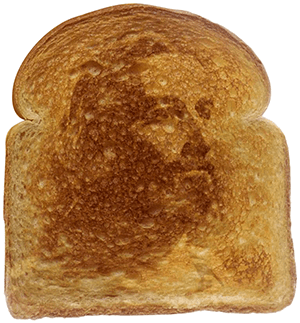
Pareidolia [pare-eye-doh-lee-uh] is a psychological phenomenon involving a vague and random stimulus (often an image or sound) being perceived as significant. Common examples include seeing images of animals or faces in clouds, the man in the moon or the Moon rabbit, and hearing hidden messages on records played in reverse. Pareidolia is a type of apophenia (seeing meaningful patterns in random data).
Carl Sagan hypothesized that as a survival technique, human beings are ‘hard-wired’ from birth to identify the human face. This allows people to use only minimal details to recognize faces from a distance and in poor visibility but can also lead them to interpret random images or patterns of light and shade as being faces.
Posted in Science |
Leave a Comment »
March 24, 2011
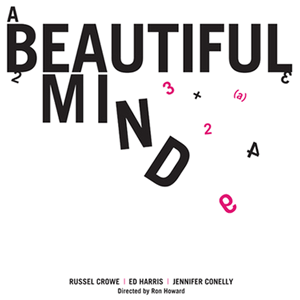
Apophenia [ap-uh-fee-nee-uh] is the experience of seeing meaningful patterns or connections in random or meaningless data. The term was coined in 1958 by German neurologist and psychiatrist Klaus Conrad, who defined it as the ‘unmotivated seeing of connections’ accompanied by a ‘specific experience of an abnormal meaningfulness.’
Conrad originally described this phenomenon in relation to the distortion of reality present in psychosis, but it has become more widely used to describe this tendency in healthy individuals without necessarily implying the presence of neurological differences or mental illness.
Posted in Health, Science |
Leave a Comment »
March 24, 2011

Synchronicity [sin-kro-nis-uh-tee] is the experience of two or more events, that are apparently causally unrelated or unlikely to occur together by chance, that are observed to occur together in a meaningful manner. The concept of synchronicity was first described by Swiss psychologist Carl Jung in the 1920s. The concept does not question, or compete with, the notion of causality. Instead, it maintains that just as events may be grouped by cause, they may also be grouped by their meaning.
read more »
Posted in Philosophy, Science |
Leave a Comment »



 The Daily Omnivore