January 12, 2011

A personality test aims to describe aspects of a person’s character that remain stable throughout their lifetime (patterns of behavior, thoughts, and feelings). The 20th century heralded a new interest in defining and identifying separate personality types, in close correlation with the emergence of the field of psychology. As such, several distinct tests emerged; some attempt to identify specific characteristics, while others attempt to identify personality as a whole. The Myers-Briggs Type Indicator describes categories of functioning where individuals differ, such as introverted or extroverted.
The Strength Deployment Inventory assesses motivation, or purpose, of behavior, rather than the behavior itself. The 5-factor test is popular a tool for career planning, and has been shown to predict job satisfaction and performance. However, it is easy for personality test participants to become complacent about their own personal uniqueness and instead become dependent on the description associated with them. This can be potentially dangerous with persons who are already suffering from a form of identity disorder or may be a catalyst to instigate particular behaviors in a person who was previously believed to be of sound mental health.
Posted in Health, Philosophy, Science |
Leave a Comment »
January 12, 2011

The theory of multiple intelligenceswas proposed by American Psychologist Howard Gardner in 1983. It describes nine types of intelligence: Spatial, Linguistic, Logical-mathematical, Bodily-kinesthetic, Musical, Interpersonal, Intrapersonal, Naturalistic, and Existential.
Of the schools implementing Gardner’s theory, the most well-known is New City School, in St. Louis, Missouri, which has been using the theory since 1988. Traditionally, schools have emphasized the development of logical intelligence and linguistic intelligence (mainly reading and writing). IQ tests focus mostly on those areas as well.
read more »
Posted in Education, Science |
Leave a Comment »
January 12, 2011

The Pale Blue Dot is a photograph of planet Earth taken in 1990 by Voyager 1 from a record distance, showing it against the vastness of space. By request of Carl Sagan, NASA commanded the Voyager 1 spacecraft, having completed its primary mission and now leaving the Solar System, to turn its camera around and to take a photograph of Earth across a great expanse of space. Subsequently, the title of the photograph was used by Sagan as the primary title of his 1994 book, ‘Pale Blue Dot: A Vision of the Human Future in Space.’
Posted in Science, Technology |
Leave a Comment »
January 6, 2011


A telomere [tel-uh-meer] is a protective region of repetitive DNA at the end of a chromosome, The telomere regions deter the degradation of genes near the ends of chromosomes by allowing for the shortening of chromosome ends, which necessarily occurs during chromosome replication. The telomeres are disposable buffers blocking the ends of the chromosomes and are consumed during cell division and replenished by an enzyme, the telomerase reverse transcriptase.
The telomere shortening mechanism normally limits cells to a fixed number of divisions, and animal studies suggest that this is responsible for aging on the cellular level and sets a limit on lifespans. Telomeres also protect a cell’s chromosomes from fusing with each other or rearranging — abnormalities that can lead to cancer — and so cells are destroyed when their telomeres are consumed. Most cancers are the result of ‘immortal’ cells that have ways of evading this programmed destruction.
Posted in Death, Health, Science |
Leave a Comment »
January 6, 2011

Palladium [puh-ley-dee-uhm] is a chemical element with the chemical symbol Pd and an atomic number of 46. Palladium is a rare and lustrous silvery-white metal that was discovered in 1803 by William Hyde Wollaston, who named it after the asteroid Pallas, which was named after the epithet of the Greek goddess Athena, acquired by her when she slew Pallas.
Palladium, along with platinum, rhodium, ruthenium, iridium and osmium form a group of elements referred to as the platinum group metals (PGMs). Platinum group metals share similar chemical properties, but palladium has the lowest melting point and is the least dense of these precious metals.
read more »
Posted in Money, Science |
Leave a Comment »
January 6, 2011

The tomacco is a hybrid of tomato and tobacco plants first described in a 1959 ‘Scientific American’ article. Both plants are members of the same family, Solanaceae or nightshade. The name ‘tomacco’ was given to the plant by Homer Simpson in a 1999 episode of ‘The Simpsons.’ Homer accidentally created it when he planted and fertilized his tomato and tobacco fields with plutonium. The result is a tomato that apparently has a dried, brown tobacco center, and, although being described as tasting terrible by many characters, is also immediately and powerfully addictive.
A Simpsons fan, Rob Baur of Lake Oswego, Oregon, was inspired by the episode. Remembering the article in a textbook, Baur cultivated real tomacco in 2003. The plant produced offspring that looked like a normal tomato, but Baur suspected that it contained a lethal amount of nicotine and thus would be inedible. The tomacco plant bore tomaccoes until it died after 18 months, spending one winter indoors. Baur was featured on audio commentary in the Simpsons Season 11 DVD box set discussing the plant and resulting fame.
Posted in Art, Humor, Science |
Leave a Comment »
January 5, 2011

Heiligenschein [hahy-li-guhn-shahyn] (German for ‘aureola,’ literally ‘Holy shine’) is an optical phenomenon which creates a bright spot around the shadow of the viewer’s head. It is created when the surface on which the shadow falls has special optical characteristics. Dewy grass is known to exhibit these characteristics, and creates a heiligenschein. Nearly spherical dew droplets act as lenses to focus the light on the surface beneath them. Some of this light ‘backscatters’ in the direction of the sunlight as it passes back through the dew droplet. This makes the antisolar point appear the brightest.
The opposition effect creates a similar halo effect, a bright spot of light around the viewer’s head when the viewer is looking in the opposite direction of the sun, but is instead caused by shadows being hidden by the objects casting them. When viewing the Heiligenschein, there are no colored rings around the shadow of the observer, as in the case of a glory. In the 2006 Scripps National Spelling Bee, this was the word which eliminated crowd and national favorite Rajiv Tarigopula and elicited the audience to give him a standing ovation for receiving 4th place for the second consecutive year in a show of immense respect.
Posted in Language, Science |
Leave a Comment »
January 5, 2011

Déjà vu (‘already seen’) is the experience of feeling sure that one has already witnessed or experienced a current situation, even though the exact circumstances of the previous encounter are uncertain and were perhaps imagined. The term was coined by a French psychic researcher, Émile Boirac (1851–1917). The experience of déjà vu is usually accompanied by a compelling sense of familiarity, and also a sense of eeriness or strangeness.
It is difficult to evoke the déjà vu experience in laboratory settings, therefore making it a subject of few empirical studies. Certain researchers claim to have found ways to recreate this sensation using hypnosis. Déjà vu is is thought to be an anomaly of memory. In particular, it may result from an overlap between the neurological systems responsible for short-term memory and those responsible for long-term memory (events which are perceived as being in the past). The events would be stored into memory before the conscious part of the brain even receives the information and processes it.
Posted in Science |
Leave a Comment »
January 5, 2011

Osteopathy [os-tee-op-uh-thee] or osteopathic medicine is an approach to healthcare that emphasizes the role of the musculoskeletal system in health and disease. The first school of Osteopathy was founded in 1892 by Andrew Taylor Still, an Army surgeon in the American Civil War. In the United States an American-trained D.O. (Doctor of Osteopathic Medicine) is legally and professionally equivalent to an M.D. in all 50 states, since their medical education and training is mostly identical.
read more »
Posted in Health, Language, Science |
Leave a Comment »
January 1, 2011
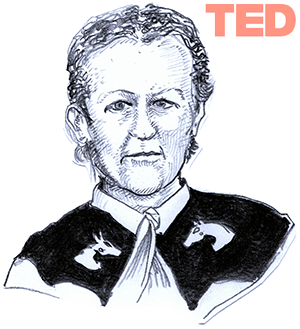
Temple Grandin (b. 1947) is an American doctor of animal science and professor at Colorado State University, bestselling author, and consultant to the livestock industry on animal behavior. As a person with high-functioning autism, Grandin is also widely noted for her work in autism advocacy and is the inventor of the ‘hug machine’ designed to calm hypersensitive persons.
Grandin became well known after being described by Oliver Sacks in the title narrative of his book ‘An Anthropologist on Mars’ (1995); the title is derived from Grandin’s description of how she feels around neurotypical people. She first spoke in public about autism in the mid-1980s at the request of Ruth C. Sullivan, one of the founders of the Autism Society of America.
read more »
Posted in Health, Science |
Leave a Comment »
December 24, 2010


Pulp from the Latin ‘pulpa’ (animal or plant pulp, pith of wood). Pulp is the fibrous material used to make paper. It is also refers to the juice vesicles of a citrus fruit. The adjective meaning ‘sensational’ is from pulp magazines, named for the wood pulp paper used in cheaply made magazines and books. Pulp magazines (often referred to as ‘the pulps’), also collectively known as pulp fiction, refers to inexpensive fiction magazines published from 1896 through the 1950s. Pulps were printed on inexpensive paper with ragged, untrimmed edges.
Pulp is also name of a 1972 British comedy thriller starring Michael Caine as a writer of cheap paperback detective novels. The English alternative rock band Pulp formed six years later drew its name from the film. Pulp is also the title of the last novel by American writer Charles Bukowski. Additionally, Pulp refers to the central part of a tooth, commonly referred to as the nerve, it branches out and continues down each root through the canals of the tooth and stops just shy of the apex, or tip of the tooth. Red pulp and white pulp describes tissue in the spleen, an organ which creates blood cells.
Posted in Language, Science |
Leave a Comment »
December 19, 2010


A sonic boom is created when an object travels faster than the speed of sound. When an airplane reaches the speed of sound, it makes such an explosive noise it can be seen with the naked eye. The visible part of a sonic boom is actually air that becomes compressed by sound waves. The thunder that a storm makes is also a sonic boom caused by lightning forcing air to move faster than the speed of sound.
The first plane to travel at the speed of sound was the Bell X-1 in 1947 and was piloted by Chuck Yeager. The cracking sound a bullwhip makes when properly wielded is, in fact, a small sonic boom. A bullwhip tapers down from the handle section to the cracker. The end of the whip, called the cracker, has much less mass than the handle section. When the whip is sharply swung, the energy is transferred down the length of the tapering whip.
Posted in Science |
1 Comment »




 The Daily Omnivore